





 Meet&Co
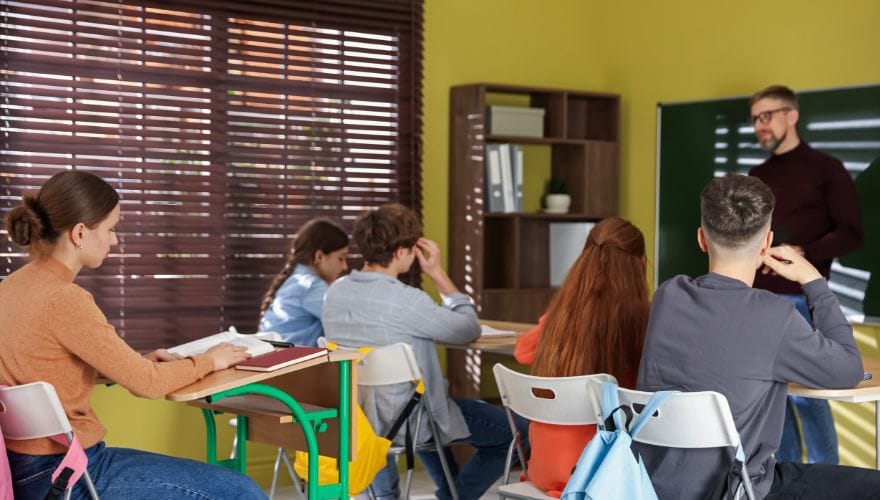
Classrooms today look different than they did ten years ago — and thank goodness. Gone are the days when every desk was bolted to the floor in straight rows, facing a blackboard. That setup worked for passive listening, but we now know that students learn better when they can move, collaborate, and engage with each other.
That‘s where mobile school desks come in. These desks have wheels, which sounds simple, but the impact on a classroom is surprisingly big. Teachers can rearrange the room in minutes — or sometimes seconds — to support whatever the lesson needs.
This guide walks you through the different types of mobile desks, what to look for when buying them, and a few smart picks worth considering — including a flip‑top training desk from Meet&Co that works beautifully for flexible classrooms.
Our editor’s note: The term “flexible classroom” sometimes gets dismissed as just another education buzzword. But tested in real classrooms, the furniture is genuinely different. The difference between a rigid classroom and a flexible one is often the difference between students who passively listen and students who actively engage. And mobile desks are the quiet heroes that make that shift possible.
Why Flexible Classrooms Are Becoming the New Standard
The shift toward flexible learning spaces is not just about aesthetics — it‘s backed by real educational research.
Traditional classrooms, with their immovable desks and chairs, were designed for an era when education meant one teacher lecturing to a room full of students who sat still and absorbed information. But we now know that effective learning doesn‘t work that way anymore. Students need to be able to collaborate, work independently, create, and sometimes move around — and flexible furniture makes all of that possible.
So what exactly is flexible school furniture? In simple terms, it‘s furniture designed to be easily moved, reconfigured, and adapted for different learning activities. Unlike traditional fixed furniture, flexible pieces are lightweight, often on casters, and intentionally versatile. Common types include mobile desks and tables with wheels, chairs that stack or nest for easy storage, soft seating, wobble stools, and whiteboards on wheels.
The research supports what many teachers already know from experience: when students have choice and control over their learning environment, engagement measurably improves. When a room can be quickly transformed from lecture rows to collaborative clusters to independent workstations, students spend less time waiting and more time engaging with each other and their tasks.
Our designer Daniel’s tip: The most successful flexible classrooms I have seen don’t just have mobile desks and hope for the best. They also have a clear storage plan — a designated corner for nesting desks, a wall rack for stacking chairs. Without that, the room can actually feel more chaotic, not less. Plan your storage before you buy your furniture.
Types of Mobile School Desks
Not all mobile desks are the same. Here‘s a quick guide to the most common types you‘ll come across.
1. Flip‑Top Mobile Training Tables
Best for: Classrooms that switch between multiple activities and need to clear floor space quickly.
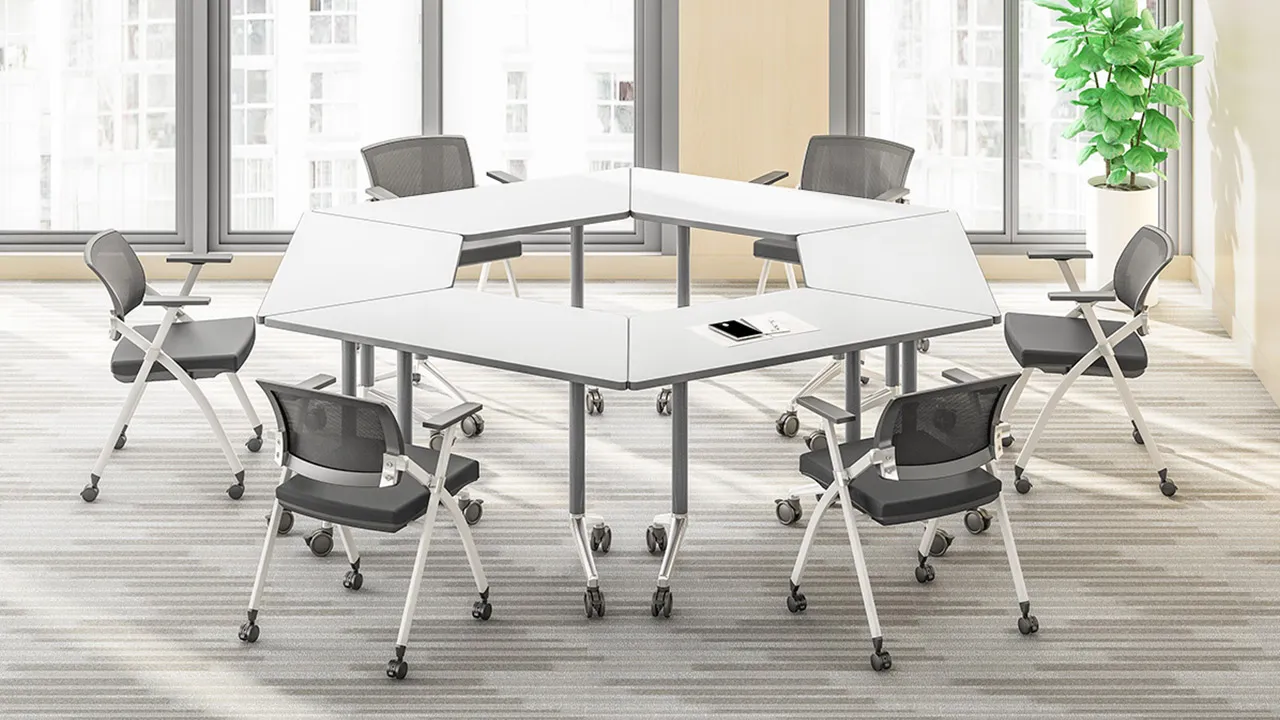
These tables have a desktop that flips up vertically, allowing the tables to nest together compactly when not in use. With locking casters, you can roll them into position — and when the lesson calls for open floor space, you flip up the tops and nest them against the wall. Some flip‑top tables also allow you to nest them with tables of different shapes, like trapezoids and wedges, so you can reconfigure into circles, pods, or even a U‑shape around a central teaching area.
Typical sizes: 48″×24″, 60″×24″, 66″×24″, 72″×24″
2. Nesting Desks
Best for: Schools where storage space is extremely limited.
Instead of flipping the desktop, nesting desks have a mechanism that allows you to tilt or fold the desktop upward slightly, then slide multiple desks together like a stack of shopping carts. This saves surprisingly large floor space compared to stacking desks vertically. Nesting desks are particularly popular in elementary and middle school classrooms because kids can help nest them at the end of the day without heavy lifting — a small thing that builds classroom responsibility.
Typical sizes: Around 27–28″ wide × 19–20″ deep
Meet&Co Mobile Foldable Training Table
3. Height‑Adjustable Sit‑Stand Desks
Best for: Classrooms where students need ergonomic flexibility (or just need a quick energy reset).
These mobile desks allow students to switch between sitting and standing during the day. Rather than confining students to a static seated position, these desks allow them to stand and stretch when their focus starts to fade. The ability to stand can also help reduce anxiety and restlessness, especially in younger learners.
The mechanism is usually pneumatic — a lever under the desktop releases the gas lift, allowing you to raise or lower the surface smoothly and quietly. No disruption to the class, just a quick adjustment and back to learning.
Height range: Typically 28–40 inches
Also see: 2026 Guide: 8 Best Height Adjustable Desks For Work & Play
4. Mobile Desks with Storage
Best for: Classrooms where students need to keep books, laptops, or personal items at their desks.
Some mobile desks include built‑in storage solutions like metal book boxes, mesh pockets, or open shelves under the worksurface. This keeps the classroom tidier because students aren‘t piling all their materials on top of the desk or scattering them around the room. It also helps students with organisational challenges by giving everything a designated place.
Storage types: Metal book box, lower storage shelf, bag hook
Mobile Desk Types at a Glance
| Type | Main Feature | Best for | Storage Space |
|---|---|---|---|
| Flip‑Top Mobile Training Table | Desktop flips up for nesting | Rooms that clear frequently for different activities | Minimal (under‑desk modesty panel only) |
| Nesting Desk | Desks slide together for compact storage | Classrooms with very limited storage space | None (open design, use under‑desk storage bins) |
| Height‑Adjustable Sit‑Stand Desk | Pneumatic lift for sitting/standing | Ergonomics, active learning, focus resets | Usually includes book box or mesh shelf |
| Mobile Desks with Storage | Built‑in book boxes or shelves | Classrooms where students keep multiple supplies | Integrated metal book box or lower shelf |
| Modular Connecting Desk | Tables connect with edge connectors | Team‑based learning and project work that needs stable, connected workspaces | None — designed for flush, wobble‑free connecting and easy separating |
What to Look for When Buying Mobile School Desks
Here are the key features that separate a genuinely useful mobile desk from one that will frustrate your teachers.
Casters That Actually Roll Smoothly
Casters are the most important part of a mobile desk. Look for dual‑wheel locking casters that swivel 360 degrees. Locking casters are crucial — when you‘re in the middle of a lesson, you don‘t want desks drifting across the floor because a student leaned on them. Dual-wheel casters also roll more smoothly over small bumps and floor joints than single‑wheel designs.
Check: Are the casters rubberised or hard plastic? Rubberised casters roll quieter on hard floors. Hard casters can be noisy and may scratch hardwood surfaces.
Durability for Daily Use
School furniture gets used hard — every day, all year long. Look for powder‑coated steel frames that resist rust and scratches. The worksurface should be stain‑resistant and scratch‑resistant, ideally sealed with edge banding to protect against moisture and dirt. A desk that looks good in September but is chipped and worn by May is a waste of money.
Check: Does the desk manufacturer mention commercial or institutional grade? Residential furniture won‘t survive a school year.
Height Adjustability
Fixed‑height desks work fine for some settings, but height‑adjustable desks are much more flexible. They can accommodate students of different ages and body sizes — and they also allow students to work in different positions (sitting, standing, perching) throughout the day.
Check: Does the adjustment lever or crank require adult strength? It‘s worth buying desks that a student can reasonably operate, so the flexibility actually gets used.
Storage Options
Think about how your students actually use their desks. Do they need to keep multiple textbooks accessible? A laptop? A water bottle? A small shelf or book box under the worksurface keeps materials organised and helps the classroom stay tidy.
Check: Can the storage be accessed while sitting, or does the student have to stand up to reach it?
Classroom Safety
Safety is essential in any classroom. Look for rounded corners and smooth edges to prevent injuries when students move around the room. The desk should also be stable even when the casters are unlocked — no tipping hazard if a student leans on the edge.
Check: Does the desk comply with GREENGUARD Gold or similar certifications for low chemical emissions?
Top 3 Mobile School Desks in 2026
Here are three solid options for different flexible classroom needs — collaboration, storage, and fast layout switching.
1. Meet&Co Mobile Flip‑Top Training Table
If your classroom needs to transform quickly from lecture rows to collaborative circles to open floor space, this table was built for exactly that rhythm.
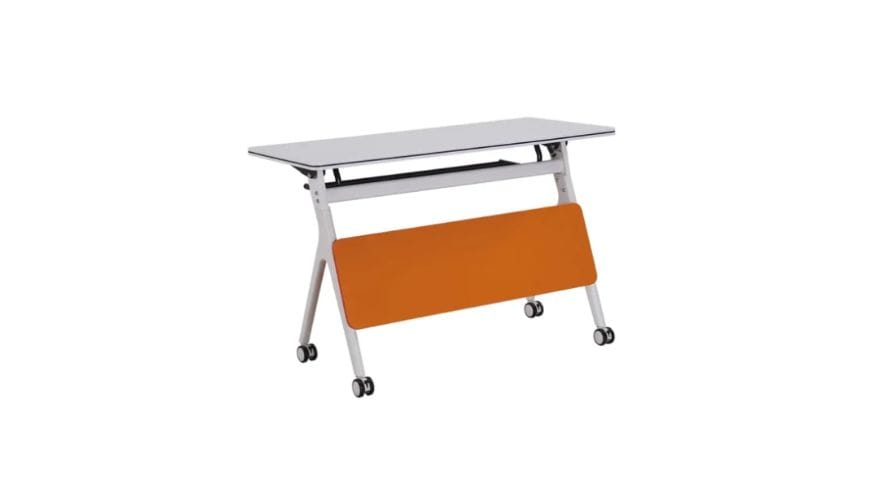
The Meet&Co Mobile Flip‑Top Training Table is designed specifically for active and evolving learning environments. The desktop flips up vertically with a simple lever mechanism, allowing multiple tables to nest together for compact storage when not in use. This means you can clear an entire classroom floor in minutes — perfect for activities that need open space, such as group presentations, movement‑based learning, or exam setups.
When the lesson calls for collaboration, the heavy‑duty locking casters allow the table to roll smoothly into any configuration — straight rows for testing, U‑shapes for class discussions, and pods for group projects. The durable laminate worksurface resists everyday classroom wear, and the sturdy steel frame holds up to the constant repositioning that defines a flexible classroom.
Best for: Teachers who frequently switch between lecture, group work, and open‑floor activities during a single school day. Also a solid choice for schools that use the same room for multiple purposes — classroom in the morning, training space in the afternoon.
Key strengths: Flip‑up nesting for compact storage, locking casters for stable positioning, durable steel frame, multiple size options
2. Steelcase Opti+ Pupil Mobile Desk
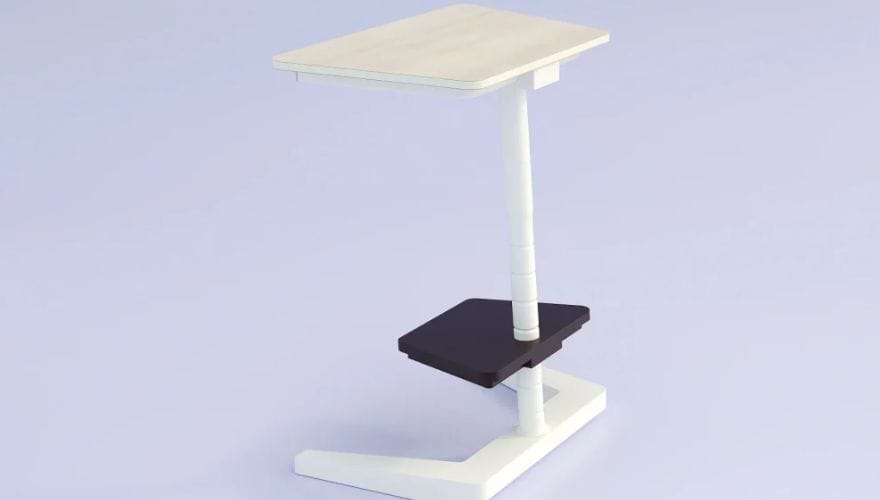
source: https://www.steelcase.com/eu-en/products/desks-benches/opti-desks/?drawer_main=images&drawer_sub=white-background#opti-lift
Steelcase is a well‑known name in educational furniture for good reason. The Opti+ Pupil is a mobile student desk designed for learners of all ages — from elementary school through secondary education.
The desk’s robust steel frame and built‑in casters support easy movement around the classroom, enabling teachers to quickly rearrange layouts. It is available in both fixed‑height and height‑adjustable versions, so you can choose what works best for your student population. The Opti+ Pupil comes in multiple shapes (rectangle, ecta, pebble, trapezoid) that allow for creative configurations — connecting into collaborative pods, forming a horseshoe for class discussion, or setting up traditional rows for tests.
One of the desk‘s most practical features is its durable finish, built to resist scratches and impacts from daily school use. Optional accessories include book boxes and trays for additional student storage.
Best for: Schools that want a highly customisable mobile desk with a trusted brand behind it and a five‑year warranty.
Key strengths: Multiple top shapes and heights, fixed or height‑adjustable, optional storage accessories, durable scratch‑resistant finish
3. ECR4Kids Nesting Student Desk
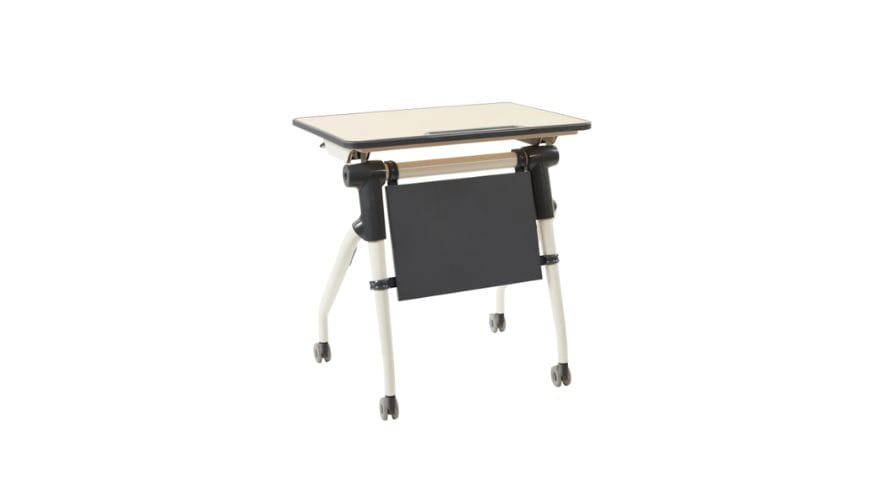
source: https://www.ecr4kids.com/products/nesting-student-desk-portable-table-maple-grey?srsltid=AfmBOopVDAW00WTZo_ffDwTdUy1eJsklmDtPUqrF94XR5CamJwFsp14A
For teachers who have walked into their classroom on a Monday morning only to find the desks haphazardly pushed against the wall in no discernible order, this desk offers a better solution.
The ECR4Kids Nesting Student Desk is designed specifically for space‑saving storage. The worksurface lifts up and folds flat with a one‑handed mechanism on either side — simple enough that even young elementary students can help. Once the tops are raised, the desks nest together, and four rolling locking casters make moving the whole stack easy.
The desk itself is GREENGUARD Gold Certified for low VOCs and built with rounded corners and smooth surfaces for student safety. The worksurface includes a built‑in pencil groove to prevent materials from rolling off during lessons.
Best for: Elementary and middle school classrooms with very limited storage space — or teachers who simply don‘t want to spend their prep time wrestling wobbly desks around the room.
Key strengths: One‑handed folding mechanism, nests for compact storage, locking casters, GREENGUARD Gold Certified, built‑in pencil groove
Frequently Asked Questions (FAQ)
1. What is the difference between a flip‑top training table and a nesting desk?
A flip‑top table has a worksurface that tilts up vertically, allowing the tables to nest together in a compact row. A nesting desk keeps the worksurface horizontal but tilts it slightly so the desks slide together like shopping carts. Both save floor space during storage, but flip‑top tables are generally better for classrooms that switch between multiple activities multiple times a day, as the mechanism is quick and the footprint when nested is very small.
2. How many casters should a mobile desk have?
Four casters is standard, and you want at least two of them to be locking casters. All four should swivel 360 degrees for smooth manoeuvrability. For stability, look for desks where the locking mechanism is easily accessible without bending down awkwardly — a small detail that matters when you‘re moving two dozen desks across the room.
3. What is the ideal desk size for elementary students?
Work surfaces generally range between 18–23 inches deep and 23–27 inches wide. Desks that are smaller than this can feel cramped for a student who needs to spread out worksheets and textbooks. For younger students (K‑2), you want a worksurface that comfortably holds a standard workbook side‑by‑side with a set of crayons — no balancing act. For upper elementary (3‑5), consider the added space for Chromebooks or laptops.
4. Can mobile desks be used for standing?
Some can. Height‑adjustable mobile desks allow students to change positions between sitting and standing throughout the day. This is a growing trend in flexible classrooms, as standing desks promote improved posture, reduce back and neck discomfort, and can increase focus during longer independent work periods. Just make sure the height adjustment range is wide enough — roughly 28 to 40 inches — to accommodate both seated and standing postures.
5. How do I maintain mobile desks in a classroom setting?
Maintenance is simpler than you might think. Monthly checks: wipe down worksurfaces, tighten any loose caster screws, and inspect locking mechanisms. At the end of each school year, give the casters a thorough cleaning — debris and hair can build up inside, making the wheels sticky. And always remind students that desks are for sitting and working, not for riding across the room like skateboards. A little classroom culture goes a long way toward keeping furniture in good shape.
_4.webp)