







 Meet&Co
Dealing with a persistent chewer can be one of the most frustrating aspects of pet ownership.
Whether you are dealing with a teething puppy or an anxious adult dog, learning how to protect furniture from dogs chewing is essential for maintaining a beautiful home environment.
Beyond just saving your investment, understanding the “why” behind the behavior ensures your pet stays safe from ingesting harmful splinters or chemicals.
This guide provides a comprehensive roadmap to prevent dogs from chewing wooden furniture, stop dogs from chewing leather sofas, and implement long-term behavioral fixes.
At Meet&Co, we believe that a well-designed space should be functional for both humans and their furry companions.
By combining the right furniture choices with proactive management, you can create a harmonious living or working area that survives even the most determined chewers.

Why Dogs Chew Furniture: Identifying the Root Cause
To effectively stop the destruction, you must first understand the motivation.
Not all chewing is created equal, and treating a teething puppy the same way you treat an anxious senior dog won’t yield results.
Physiological Needs: The Teething Phase
Puppies go through an intense teething phase between 3 and 6 months of age. Just like human infants, their gums are sore and inflamed.
Chewing provides mechanical relief by helping baby teeth fall out and adult teeth break through.
During this time, they aren’t being “bad”; they are simply seeking comfort.
Psychological Triggers: Boredom and Anxiety
Boredom: Dogs are intelligent, high-energy animals. If they aren’t physically or mentally stimulated, they will find their own “job,” which often involves deconstructing your coffee table.
Separation Anxiety: Many dogs chew furniture specifically when their owners are away. This is a coping mechanism for stress, where the act of gnawing releases endorphins that soothe their panic.
Habit and Play
Sometimes, chewing is simply a learned habit.
If a dog was allowed to chew old shoes as a puppy, they might not distinguish between a “trash” item and your expensive designer armchair.
Breed-Specific Tendencies
While any dog can be a chewer, certain breeds have higher oral fixations.
Retrievers, Terriers, and Beagles often use their mouths to explore the world more than other breeds.
High-energy working breeds (like Border Collies or German Shepherds) may turn to furniture destruction if they lack a structured outlet for their energy.
Large breeds can cause catastrophic damage in minutes, while small breeds might focus on more intricate details like tassels or sofa feet.
Furniture-Specific Protection Tips
Different materials require different defense strategies. What works for a mahogany desk could ruin a delicate leather armchair.
Here is how to handle the most common materials in your home.
2.1 Wooden Furniture
Wood is the most common target because its texture mimics the sticks and branches dogs naturally enjoy.
To prevent dogs from chewing wooden furniture, consider these steps:
Taste Deterrents: Apply a commercial bitter apple or cherry spray to the legs and corners.
Physical Barriers: For antique or high-value items, consider temporary plastic corner guards.
Regular Maintenance: Use furniture wax or sealant to ensure there are no tempting “loose” wood fibers for the dog to grab onto. Smooth surfaces are generally less appealing than rough ones.
2.2 Leather Furniture
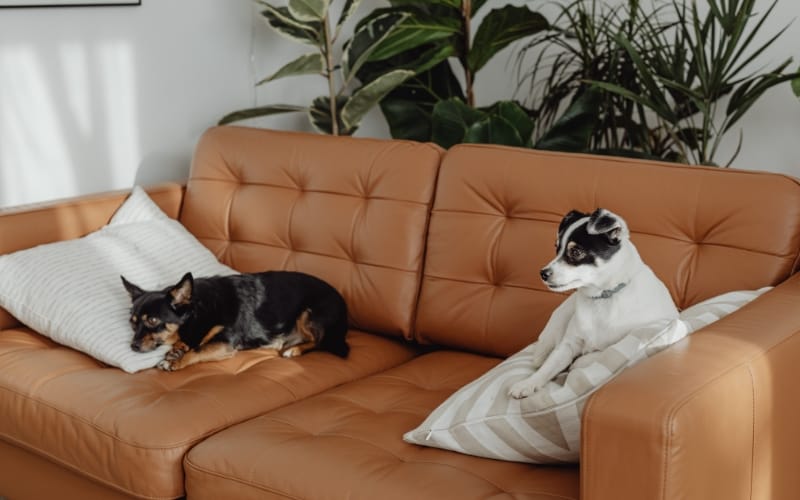
Leather is skin, and to a dog, it smells like a giant chew toy. To stop dogs from chewing genuine leather sofas, you need a more olfactory-based approach:
Avoid Scented Cleaners: Many leather cleaners contain fats or proteins that smell delicious to a dog. Use neutral, pet-safe cleaners.
Protective Covers: Use heavy-duty, pet-specific slipcovers that are resistant to punctures.
Restricted Access: Use indoor pet gates to block access to leather pieces when you aren’t there to supervise.
2.3 Fabric and Upholstery
Fabric is susceptible to both chewing and “scrubbing” (where a dog digs before lying down).
DIY Sprays: A mixture of water and lemon juice is often enough to keep a dog’s mouth away from fabric.
Texture Matters: Smooth, tightly woven fabrics like microfiber are less satisfying to chew than loose, looped fabrics like tweed or bouclé.
Washable Throws: Always keep a sacrificial layer on top of the fabric sofa that can be easily replaced or cleaned.
2.4 Outdoor Furniture
Outdoor furniture is often made of softer woods or wicker, which are highly tempting.
Protective Films: Use heavy-duty waterproof covers when the furniture is not in use.
Provide Outdoor Alternatives: Ensure your yard has durable outdoor toys so the dog doesn’t turn to the patio set for entertainment.
Behavioral Training and Management
Physical barriers are only half the battle. You must train your dog to understand what is “theirs” versus what is “yours.”
The “No Chew” Command
Consistency is key. If you catch your dog in the act, use a sharp, firm “No” or “Leave it.” Immediately hand them a legal chew toy.
When they begin chewing the toy, provide heavy praise. This teaches them that chewing isn’t the problem—the target is.
Positive Reinforcement
Reward-based training is far more effective than punishment.
Punishing a dog after the fact (e.g., coming home to a chewed chair) is useless, as the dog cannot link the past action to the current anger.
Instead, reward them frequently when they choose their bed or toy over the furniture.
Managing Separation Anxiety
If the chewing happens only when you’re gone, focus on calming the environment:
Interactive Puzzles: Leave a frozen treat-filled toy to keep them occupied during your departure.
Exercise: A tired dog is a well-behaved dog. Ensure they have had a long walk before you leave.
DIY and Natural Protection Solutions
If you prefer to avoid commercial chemicals, several household items can serve as effective deterrents.
These are especially useful for puppies with sensitive systems.
Apple Cider Vinegar Spray: Mix one part white vinegar with two parts apple cider vinegar. The smell is pungent and the taste is bitter, which effectively keeps dogs away.
Citrus Water: Dogs generally dislike the smell of citrus. Boiling orange or lemon peels and using the cooled water as a spray can act as a natural repellent.
Texture Deterrents: Using double-sided tape on furniture corners can stop chewing, as dogs dislike the sticky sensation on their snouts.
Preventive Measures and Long-Term Maintenance
Long-term success in protecting your home involves smart furniture choices and spatial management.
If you are currently outfitting a professional or home space, choosing durable pieces from Meet&Co Office Furniture can make a significant difference.
Metal-framed desks and high-density laminate surfaces are far less appealing to chewers than soft pine or exposed upholstery.
Choose “Pet-Friendly” Materials
Metal and Chrome: Dogs generally dislike the cold, hard sensation of metal.
High-Pressure Laminate (HPL): Extremely durable and difficult to puncture.
Distressed Finishes: If you must have wood, a distressed finish hides minor marks better than a high-gloss polish.
Home Layout Optimization
Use baby gates to cordoning off “formal” rooms. This allows the dog to be part of the family in “safe” zones without having access to the $5,000 real leather sofa in the den.
FAQ: Frequently Asked Questions
Q: My puppy won’t stop chewing the sofa even with toys available. Why?
A: Puppies explore with their mouths. If the sectional sofa is more “fun” (softer, smells like you, or gives a reaction when they chew it), they will choose it. Increase the “value” of their toys by using flavored chews or rotating toys to keep them novel.
Q: Why do adult dogs occasionally chew furniture?
A: In adults, it is usually a sign of boredom, sudden stress (like a thunderstorm), or a lack of dental hygiene. If it starts suddenly, consult a vet to ensure there isn’t a toothache.
Q: Are bitter sprays really effective?
A: For about 80% of dogs, yes. However, a small percentage of dogs actually like the taste. Always monitor your dog’s reaction the first time you use a spray.
Q: Which furniture material is best for a dog-heavy household?
A: Metal, high-density plastics, and performance fabrics (like those used in high-end office furniture) are the most resistant to dog damage.
Conclusion
Learning how to protect furniture from dogs chewing is a marathon, not a sprint.
It requires a three-pronged approach: protecting the physical items, providing appropriate outlets for the dog’s energy, and consistent behavioral training.
By combining physical deterrents like bitter sprays with high-quality, durable furniture choices and dedicated mental stimulation, you can protect your home’s aesthetic while keeping your dog happy and healthy.
Consistency is your greatest tool—stay firm, provide plenty of alternatives, and your furniture will remain intact for years to come.