






 Meet&Co
Chronic back pain shouldn’t be your “office normal.”
If you are ready to reclaim your health, you must first understand what to look for in a standing desk converter?
This essential upgrade is the fastest way to end pain by breaking the cycle of sedentary work.
Unlike a standard desk, a high-quality converter adapts to your body, not the other way around.
At Meet&Co, we believe ergonomics is a necessity, not a luxury.
To avoid a wasted investment, you need to evaluate more than just price.
This guide cuts through the marketing noise to focus on the technical precision, stability, and lift mechanisms that define a truly professional workstation.
Stop enduring the ache and start making a data-driven choice for your workspace.
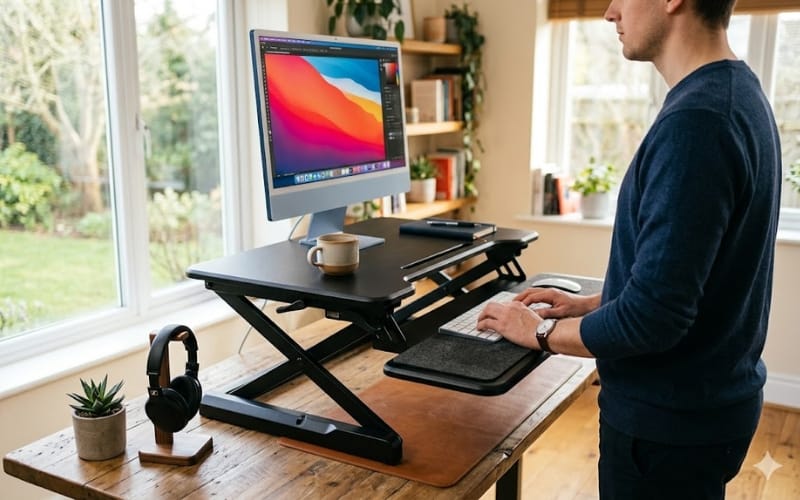
Understanding Your Needs: The Foundation of Choice
Before browsing models, you must audit your specific work style.
A converter is a supplement to your existing furniture, meaning its success depends on how well it integrates with your current setup.
1. Work Environment and Space
Your physical environment is the first filter.
A desk for office settings in a corporate skyscraper often has different depth requirements than a compact setup in a home studio.
The Footprint: Measure your current desk. Most converters require at least 24 to 30 inches of depth. If your desk is shallow, a “Z-lift” converter might push you too far back from your screen.
The Surroundings: Consider overhead shelving. Ensure that when the converter is at full height, your monitors won’t hit any upper cabinets.
2. Usage Frequency
Are you a “transitional” user or a “static” user?
Transitional: You switch between sitting and standing every 30–60 minutes. You need a fast, effortless lift mechanism (Gas spring or Electric).
Static: You plan to leave it in the standing position most of the day. You can prioritize surface area over lift speed.
3. The User Profile
Your height is the most critical technical variable.
If you are over 6’1” (185cm), many budget converters will not rise high enough to keep your neck neutral.
Conversely, if you are shorter, ensure the keyboard tray doesn’t sit too high when in the “seated” position, which can cause shoulder shrugging.
Key Features to Consider: The Technical Breakdown
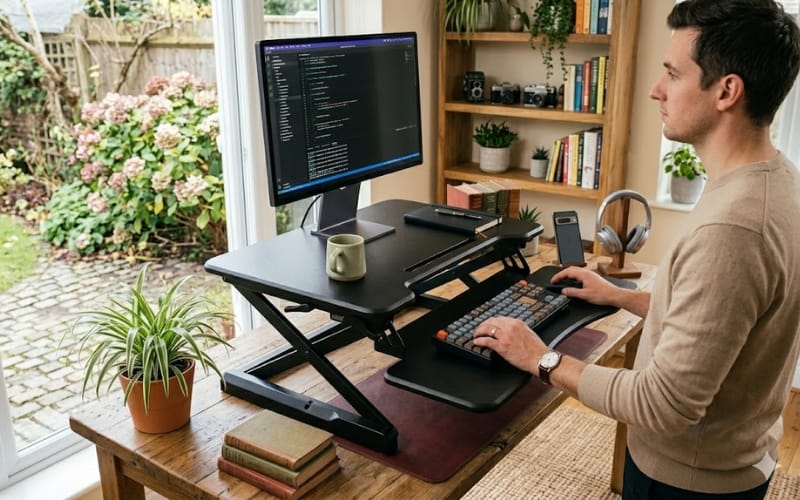
When evaluating what to look for in a standing desk converter?, the magic is in the engineering.
1. Height Adjustment Mechanism
How the desk moves determines how often you will actually use it.
Gas Spring: The most popular. It uses air pressure to neutralize the weight of your equipment. It is quiet and smooth.
Electric: Features a modern electric standing desk motor. Best for users with heavy triple-monitor setups who want “set it and forget it” height memory.
Manual/X-Lift: Uses a simple locking notch. While durable, it requires more physical strength to lift, especially with heavy gear.
2. Weight Capacity and Stability
Stability is the enemy of distraction. A converter that wobbles while you type will cause micro-vibrations in your monitors, leading to significant eye strain.
Load Rating: Look for a capacity of at least 35 lbs (15kg).
The “Typing Test”: High-quality models use heavy steel bases to lower the center of gravity, preventing the “bounce” common in plastic-heavy budget models.
3. Surface Size and Layout
Don’t underestimate the space you need for your mouse and accessories.
Dual-Tier Design: Always look for a separate keyboard tray. This ensures your elbows remain at 90 degrees while your eyes stay level with the screen.
Worksurface Width: Ensure it can accommodate your monitor base and a notepad or phone dock.
4. Materials and Build Quality
A standing desk accessory is an investment in durability.
Frames: Industrial-grade steel is non-negotiable for long-term stability.
Laminates: Look for 3D laminates or thermofoil that wrap around the edges, preventing the peeling and moisture damage common in cheap edge-banded boards.
Common Mistakes to Avoid
Many buyers focus on the wrong metrics. Avoid these pitfalls:
Ignoring the “Bottom” Height: If the converter adds 2 inches to your desk height while sitting, it may ruin your seated ergonomics.
Underestimating Cable Length: When you stand, your cables need to stretch. Always buy longer DisplayPort and power cables than you think you need.
Overlooking Keyboard Tray Depth: If the tray is too narrow, your wrists will hang off the edge, leading to carpal tunnel issues.
Matching Your Budget to Value
Entry Level ($100-$180): Good for laptops, but often lack the stability for dual monitors.
Mid-Range ($200-$400): The sweet spot. You get premium gas springs and heavy-duty steel construction.
Premium ($400+): Features like silent electric motors and solid wood finishes.
The Ultimate Alternative: A Full Desk Upgrade
While converters are excellent for retrofitting, they often clutter the desk surface and limit your total workspace.
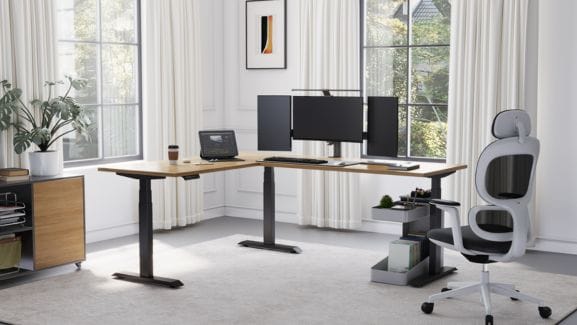
If you are designing a space from scratch or want a cleaner aesthetic, a full-size electric adjustable standing desk is the superior choice.
For those who want a seamless, professional-grade solution, we highly recommend the Sendi E Height Adjustable Standing Desk. Unlike a converter, the Sendi E offers:
Full Desktop Utility: The entire surface moves, meaning your coffee, documents, and monitors stay in the same relative position.
Superior Stability: As a dedicated sit to stand desk, it eliminates the wobbling associated with top-heavy converters.
Modern Aesthetics: Its minimalist design integrates perfectly into a modern corporate or home office.
Long-term Experience and Health
Transitioning to a standing routine takes time.
Experts suggest a 1:1 or 2:1 sitting-to-standing ratio. Using a converter correctly can lead to:
Increased Caloric Burn: Standing burns roughly 50 more calories per hour than sitting.
Mood Elevation: Studies link standing work with reduced fatigue and lower stress levels.
Focus: Standing naturally keeps the body in a more “alert” state, perfect for tackling complex spreadsheets or creative design work.
Conclusion: Take Action
Choosing a workstation isn’t just about furniture; it’s about how you want to feel at 5:00 PM.
By focusing on stability, height range, and high-quality mechanisms, you can transform your productivity.
Quick Checklist for Buyers:
Does it fit my current desk depth?
Is there a dedicated, spacious keyboard tray?
Is the lift mechanism smooth enough for daily use?
Does the brand offer a reliable warranty?
Whether you choose a versatile converter or a premium solution from Meet&Co Office Furniture, the goal is movement.
Your body was designed to move—give it the workspace it deserves.


_2.webp)