





 Meet&Co
For decades, the standard image of a professional involved a swivel chair and a fixed-surface desk.
However, as the digital age accelerated our sedentary lifestyles, a quiet revolution began.
The Standing Desk vs Sitting Desk debate is no longer just a niche topic for Silicon Valley techies; it has become a central conversation for anyone who spends more than four hours a day in front of a screen.
At Meet&Co, we believe that your environment dictates your output.
The core question isn’t just about whether you should stand or sit—it’s about which choice fosters long-term health and peak cognitive performance during a demanding workday.
While some swear by the calorie-burning potential of standing, others defend the focused comfort of a traditional seat.
This article serves as a comprehensive deep dive into the science, the logistics, and the personal experience of both setups.
By examining peer-reviewed research and real-world ergonomics, we aim to help you bridge the gap between “working hard” and “working healthy.”
Standing Desk vs Sitting Desk: The Fundamental Comparison
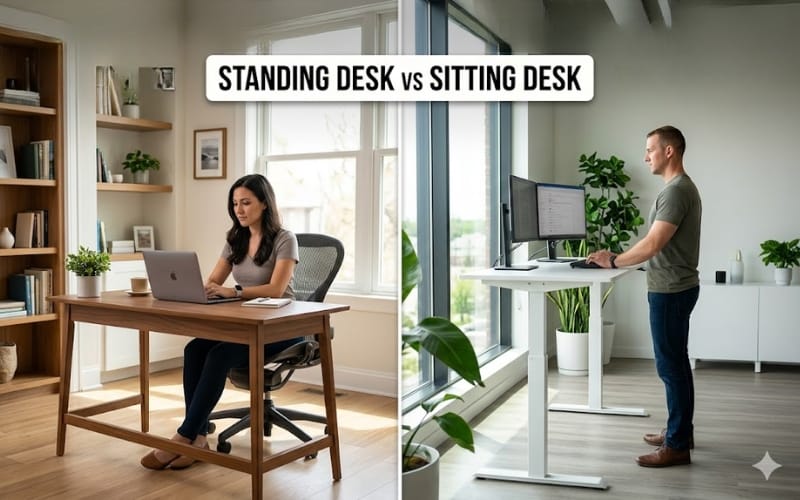
When we strip away the marketing jargon, the choice between these two workstations comes down to three pillars: design, mobility, and price.
Design and Functionality
A traditional sitting desk is a study in stability.
It is designed to be a permanent fixture, often offering deep drawers and a large surface area for heavy hardware.
However, its fixed height is its greatest limitation.
Unless you are the exact percentile of height the desk was designed for, you are likely compromising your posture.
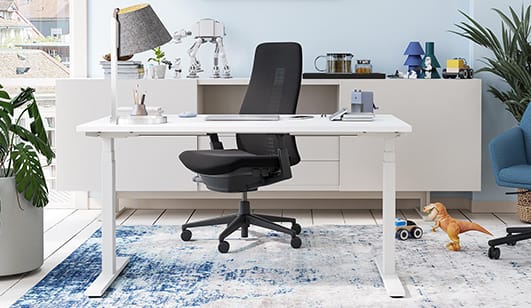
In contrast, an office height adjustable desk offers a dynamic range.
These desks are engineered to cater to the user’s micro-needs, allowing for a transition from a seated position to a standing one in seconds.
This flexibility is the hallmark of modern office design, accommodating everyone from the shortest to the tallest employees without the need for custom-built furniture.
Mobility and Space Utilization
Sitting desks often feel “heavy.” They are anchored by their storage capacity.
Standing desks, particularly electric models, tend to have a sleeker, more minimalist footprint.
While they require a power source for the motors, their open-frame design often makes a room feel larger and more airy.
The Cost-Benefit Ratio
It is no secret that a high-quality standing desk carries a higher price tag than a basic fixed-height desk.
For corporate procurement, the decision involves calculating the “Return on Ergonomics.”
A sitting desk is a lower upfront investment, but if it leads to increased absenteeism due to back pain, the long-term cost is significantly higher.
For home office users, the investment in a versatile desk is often viewed as an investment in preventative healthcare.
The Health Impact: Sitting Disease vs. Standing Fatigue
The human body was designed to move.
When we analyze the adjustable height ergonomic desk, we are looking at a tool designed to combat “Sitting Disease”—a term coined by researchers to describe the metabolic and physical toll of prolonged inactivity.
The Dangers of the “Deep Sit”
Prolonged sitting is linked to a host of issues:
Cardiovascular Strain: When you sit for hours, blood flow slows down, and fatty acids can build up in the blood vessels more easily.
Lumbar Compression: Even with an ergonomic chair, sitting puts significant pressure on the lower spine. Over time, this leads to the “C-shape” slouch that wreaks havoc on neck and shoulder nerves.
Metabolic Slowdown: In a seated state, the body’s ability to process glucose and fats drops significantly.
The Standing Advantage
Research from the American Heart Association and various occupational health journals suggests that standing can:
Lower Blood Sugar Levels: Standing after a meal can help stabilize glucose levels more effectively than sitting.
Burn More Calories: While not a replacement for the gym, standing burns roughly 15-20 more calories per hour than sitting. Over a year, this adds up to significant metabolic benefit.
Improve Core Engagement: Standing requires micro-movements from your legs and core, which keeps the body in a “ready” state.
The Risk of Over-Standing
However, standing is not a magic bullet.
Standing for 8 hours straight can lead to varicose veins, joint pressure in the knees, and lower back fatigue.
The goal isn’t to replace sitting with standing, but to embrace movement.
Productivity and Cognitive Performance
Does your office desk actually affect how you think? The answer is a resounding yes.
Task-Type Matching
Research indicates that certain tasks are better suited for different positions:
Deep Work and Analysis: Tasks requiring intense focus, such as coding or complex writing, are often performed better while sitting. The lack of physical “noise” from the legs allows the brain to enter a flow state.
Meetings and Brainstorming: Standing tends to increase urgency and energy. Standing meetings are historically shorter and more collaborative.
Routine Tasks: Checking emails or data entry is ideal for a standing position, as it keeps the user alert during repetitive work.
Attention and Energy
Sitting for long periods can lead to “post-lunch fatigue.”
By transitioning to a standing position during the mid-afternoon slump, users often report a spike in adrenaline and focus.
The act of physically changing your environment—even by just 20 inches of desk height—resets the brain’s “monotony filter.”
Practical Buying Guide: Finding Your Perfect Match
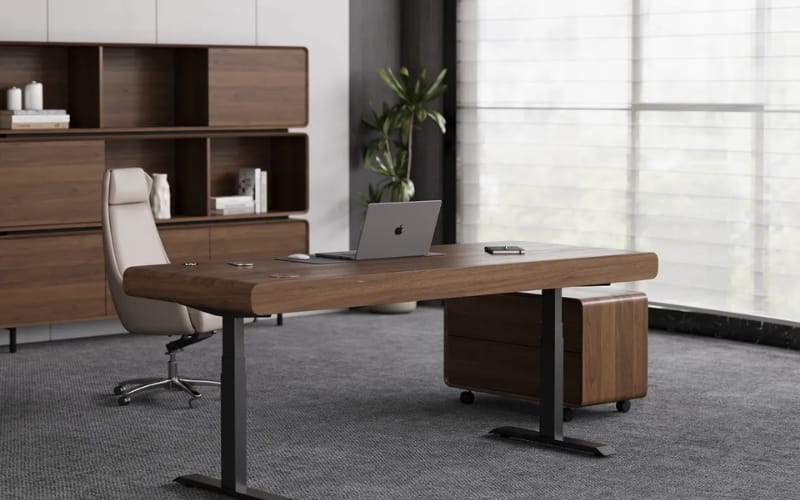
Choosing the right desk depends on your environment.
Are you a freelancer in a 10×10 bedroom, or an HR manager overseeing a floor of 50 people?
The Mid-Range Champion
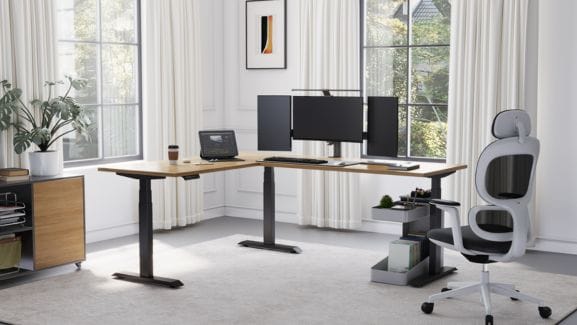
If you are looking for the perfect balance of durability, speed, and aesthetics, we highly recommend the Sendi E Height Adjustable Standing Desk.
The Sendi E is a sit stand electric height adjustable desk that addresses the common complaints of wobbly transitions.
It features a quiet, dual-motor system that allows for seamless movement without vibrating your coffee cup off the edge.
Its sleek T-style leg design ensures that even at maximum height, the surface remains stable—a crucial factor for those using multiple monitor arms.
Budget and Tiers
Entry-Level: Manual crank desks. Good for the budget-conscious, but the effort to change height often leads users to stop using the feature entirely.
Mid-Range: Single or dual-motor electric desks like the Sendi E. This is the “sweet spot” for most users.
Premium: Desks with integrated cable management, memory presets, and anti-collision technology.
Usage Tips: How to Transition Without Pain
One of the biggest mistakes new owners of standing desks make is trying to stand for the entire first day.
This is a recipe for sore calves and a quick return to the chair.
The 20-8-2 Rule
Ergonomic experts often recommend a specific cycle:
20 Minutes Sitting: Use this for your most focused work.
8 Minutes Standing: Use this for calls, emails, or light tasks.
2 Minutes Moving: Walk to the kitchen, stretch, or do a quick lap around the room.
Essential Accessories
To make standing viable, you need the right support:
Anti-Fatigue Mats: These provide a cushioned surface that encourages micro-movements in the feet, reducing joint pressure.
Monitor Arms: When you stand, your eye level changes. A monitor arm allows you to tweak the screen height so you aren’t looking down, which saves your neck from “Tech Neck.”
Footrests: Even when sitting, a footrest can help maintain the correct pelvic tilt.
Conclusion: The Hybrid Path
In the battle of Standing Desk vs Sitting Desk, the winner isn’t one or the other—it is the adjustable solution.
The ability to listen to your body and change your posture throughout the day is the ultimate luxury in the modern workplace.
Whether you are looking to revitalize your home office or overhaul a corporate headquarters, choosing high-quality, ergonomic furniture is the first step toward a more sustainable career.
As a leader in the industry, Meet&Co Office Furniture is dedicated to providing the tools that make this transition effortless.
Invest in your health, invest in your focus, and stop being a static worker in a dynamic world.
Also see:
FAQ: Common Questions About Desk Ergonomics
Q: Is standing really healthier than sitting?
A: Yes, but only in moderation. The health benefits come from the change in posture, which stimulates circulation and metabolic activity. Standing all day has its own set of orthopedic risks.
Q: How often should I switch between sitting and standing?
A: A good rule of thumb is to switch every 30 to 60 minutes. Listen to your body; if your lower back feels tight while sitting, stand up. If your feet feel heavy while standing, take a seat.
Q: What is the ideal height for a standing desk?
A: Your desk should be at “elbow height.” With your shoulders relaxed, your elbows should be at a 90-degree angle, and your wrists should rest neutrally on the keyboard.
Q: Will a standing desk help with weight loss?
A: It is a supplement, not a solution. While you burn more calories standing, the real weight-loss benefit comes from the increased energy levels that might encourage you to be more active throughout the rest of your day.
Q: How do I choose the right size for a home office?
A: Measure your equipment first. If you use two monitors and a laptop, you’ll likely need a surface at least 55 inches wide. Ensure there is enough clearance for the desk to rise without hitting shelves or cables.