






 Meet&Co
School desks play a much bigger role in the learning process than many people realize. A desk is not just a place to write or to put books. It influences the way students sit, move, and pay attention during the day. If desks are uncomfortable or the wrong size, students slouch, become tired, and lose attention more quickly. The right classroom furniture helps students to sit properly and feel comfortable, and keeps them engaged during lessons.
Through the years, the classrooms have evolved. In the past, most rooms were full of rows of fixed desks in which every student was seated the same way. Today, flexible seating classrooms are being introduced in many schools. These spaces are equipped with various types of student desks, tables, and chairs, which are used to support group work, discussion, and movement. This shift enables teaching students in a way that suits them and their needs and learning styles.
Also See: Types of Desks
This is a guide to the various school desks found in classrooms today. This range from traditional desks, adjustable desks, group tables, to flexible seating options. It is meant to help schools, teachers, and buyers understand what desks work best for different learning environments. Whether you are planning a new classroom or updating existing school furniture, this guide will help you make informed choices.
Top School Furniture Products You Can Consider
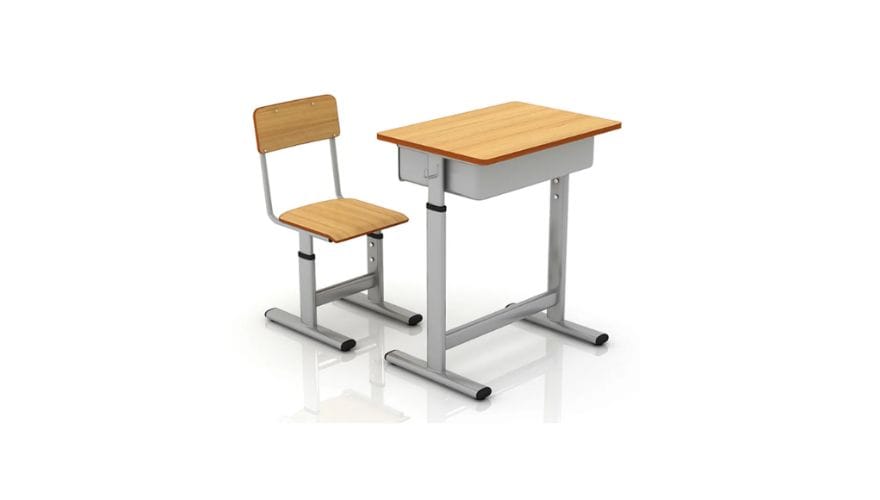
1. Meet&Co Wholesale Student Desk and Chair Set
The Meet&Co Wholesale Student Desk and Chair Set is a durable piece of classroom furniture designed for daily student use. It has an adjustable desk with a matching chair that has a strong steel frame to provide long-lasting support. The desk has a built-in drawer and ergonomic design to help students stay organized and comfortable. This set is great for schools, learning centers, and classrooms where durable, adjustable seating is a requirement.
Pros & Cons
| Pros | Cons |
| Height-adjustable design grows with students | May require assembly by classroom staff |
| Durable steel frame for daily use | Limited colors or finishes |
| Built-in drawer for student storage | Chair may not be ideal for older students |
| Ergonomic shape for posture support | Not suitable for very bulky students |
| Suitable for primary and secondary classrooms |
2. Meet&Co Tablet Computer Chair
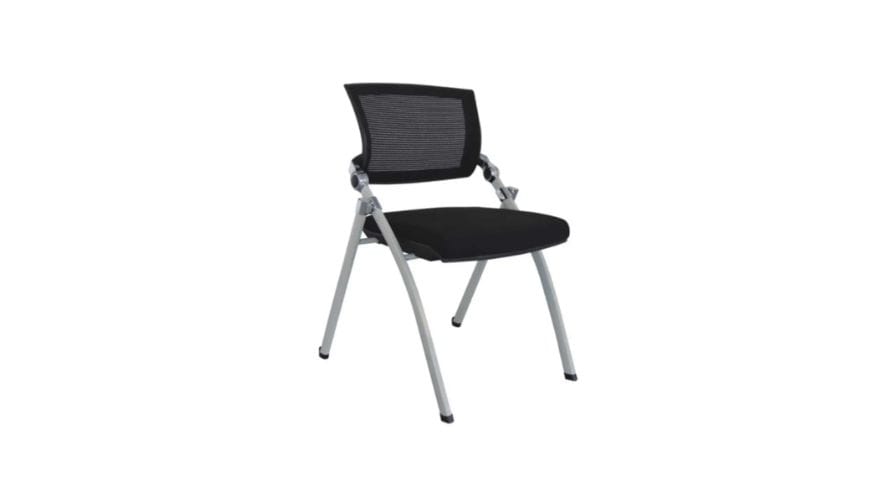
The Meet&Co Tablet Computer Chair is a convenient multi-purpose seating solution that blends a comfortable chair with a built-in writing tablet. It has contoured lumbar support and an airy mesh back to keep the students cool during long lessons. The tablet arm is a hard surface for writing, note-taking, or using a tablet or laptop in class. This chair is suitable for training rooms, flexible seating classrooms, and spaces where mobility and small footprint seating are required.
Pros & Cons
| Pros | Cons |
| Integrated tablet arm for writing and devices | Tablet arm may not fit all hand dominant students |
| Breathable mesh back improves airflow | Not ideal for large group tables |
| Contoured support for comfortable seating | Tablet surface may be small for large notebooks |
| Compact footprint saves space | Limited height adjustability |
| Easy to reposition within classroom |
3. Meet&Co Wood Training Table with Wheels
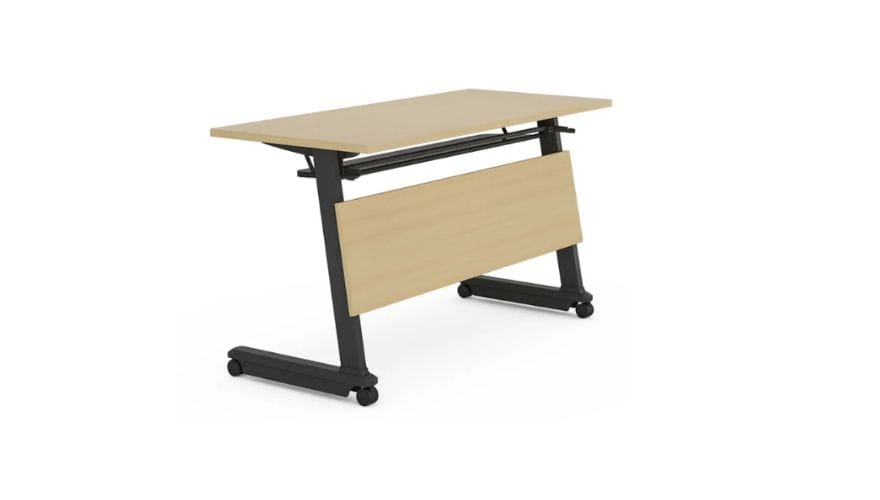
The Meet&Co Wood Training Table with Wheels combines the natural wood look with easy mobility to be a flexible option for classrooms and training spaces. For example, this table has smooth rolling casters to allow for quick reconfiguration of learning spaces, from group work to individual study stations. The wood surface gives it a warm, professional appearance, as well as providing a long-lasting writing and activity space. It is suitable for collaborative classrooms, flexible seating configurations, and multipurpose education spaces.
Also See: Best Flexible Seating Classroom Ideas
Pros & Cons
| Pros | Cons |
| Wheels allow fast layout changes | May require floor locks for stability |
| Wood surface adds durable, stylish look | Heavier than plastic tables |
| Ideal for collaborative work | Wheels may leave marks on some floors |
| Works with many chair types | Limited built-in storage |
| Suitable for training and classroom settings |
4. National Public Seating Computer Lab Desk
The National Public Seating Computer Lab Desk is intended for the classroom environment, where students will be working on laptops, tablets, or desktop computers. It has a long-lasting laminate working surface and sturdy steel legs for long-term use in daily functions. The design of the desk makes it easy for cables to run, and technology workstations are kept organized. It fits perfectly in computer labs, blended learning classrooms, and tech-oriented school settings.
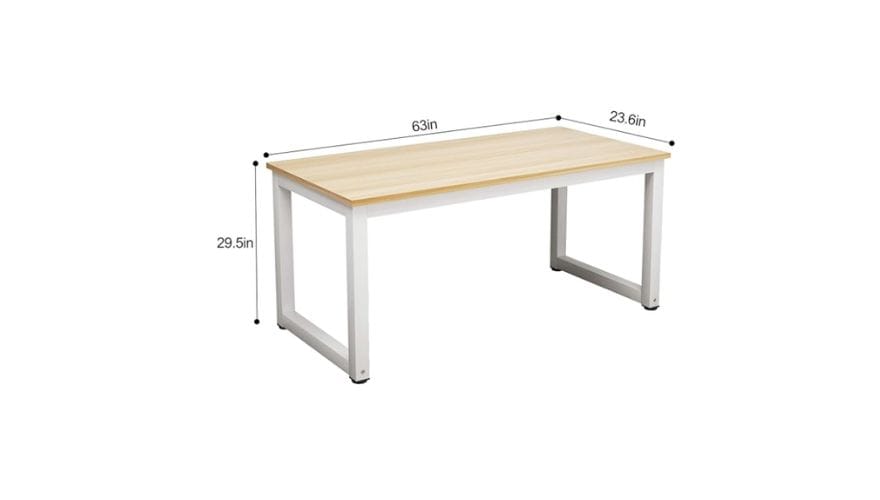
Image Source: Amazon
Pros & Cons
| Pros | Cons |
| Durable laminate surface resists scratches | No built-in storage |
| Cable management options included | Larger footprint requires space |
| Stable frame supports devices securely | Not height-adjustable |
| Easy to clean and maintain | No wheels for mobility |
| Works well in labs and classrooms |
5. OFM ESS Collection Adjustable Height Activity Desk
The OFM ESS Adjustable Height Activity Desk allows teachers to easily adjust the desk height to help students of different sizes. It comes with a large work surface and smooth height adjustment without tools. The durable construction is appropriate for daily activities in the classroom and mixed-grade environments. This desk works well in traditional classroom seating AND a flexible seating classroom too.
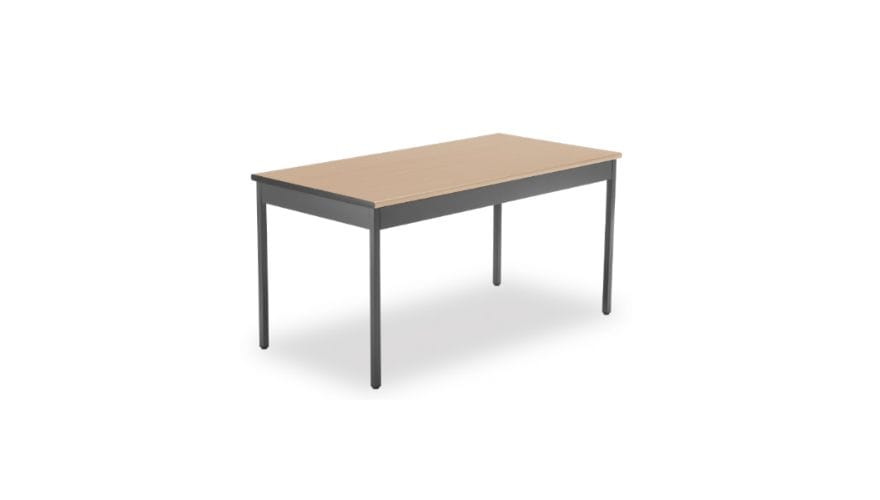
Image Source: Walmart
Pros & Cons
| Pros | Cons |
| Tool-free height adjustment | Adjustment may feel stiff at first |
| Spacious, easy-clean surface | No drawer or storage |
| Durable construction for schools | Slightly heavier desk |
| Works for multiple age groups | |
| Supports ergonomic seating |
6. Flash Furniture Contemporary School Desk with Chair
The Flash Furniture School Desk with Chair combo is a traditional student unit that features a built-in seat and desk surface. The chair has a contoured seat for comfort, and the desk has a large writing surface. This is a perfect design for classroom learning, where fixed seating is most suitable for daily learning. The unit’s small footprint makes it easy to put in rows or clusters.

Image Source: Amazon
Pros & Cons
| Pros | Cons |
| Integrated desk and chair save space | Less flexible than separate pieces |
| Contoured seat improves comfort | Not adjustable in height |
| Compact design fits small classrooms | Not ideal for group work |
| Easy to clean surface | Limited storage |
| Affordable for large orders |
7. Lorell Stackable Student Desk
The Lorell Stackable Student Desk is suited for classrooms that need to be flexible in seating and configuration. The lightweight desk has a laminate top and a high-strength steel frame, which provides both durability and ease of handling. Desks stack up when not in use, making them ideal for multipurpose rooms or activity areas. They have a design that permits rapid layout changes from rows to clusters.
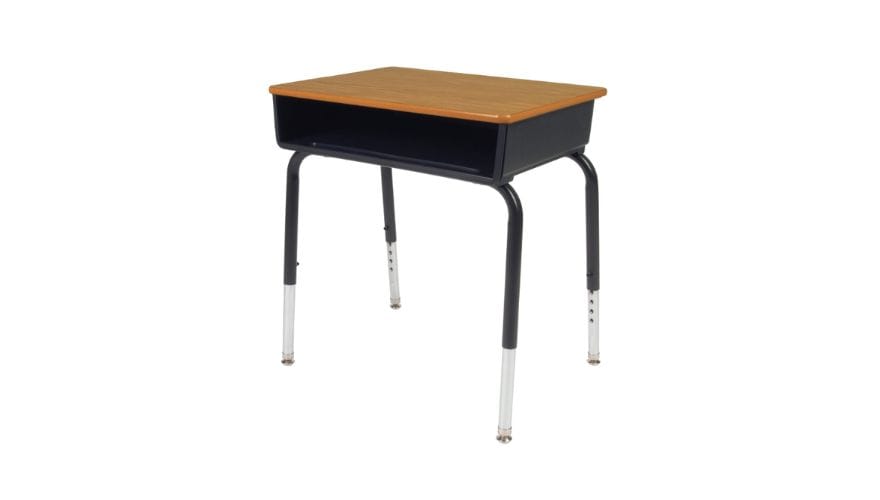
Image Source: LORELL
Pros & Cons
| Pros | Cons |
| Stackable for easy storage | Not height-adjustable |
| Lightweight yet sturdy | No built-in storage |
| Works in flexible seating classrooms | Limited desktop space |
| Durable laminate top | |
| Easy to move and organize |
8. Flash Furniture Rolling Training Table
The Flash Furniture Rolling Training Table has a flip-top design with built-in wheels, making for easy movement and storage. Its sturdy frame and large table surface make it suitable for group lessons, teamwork, and collaborative learning stations. This table works well in flexible seating classrooms and large meeting spaces in schools. It pairs easily with student chairs, stools, or training chairs.
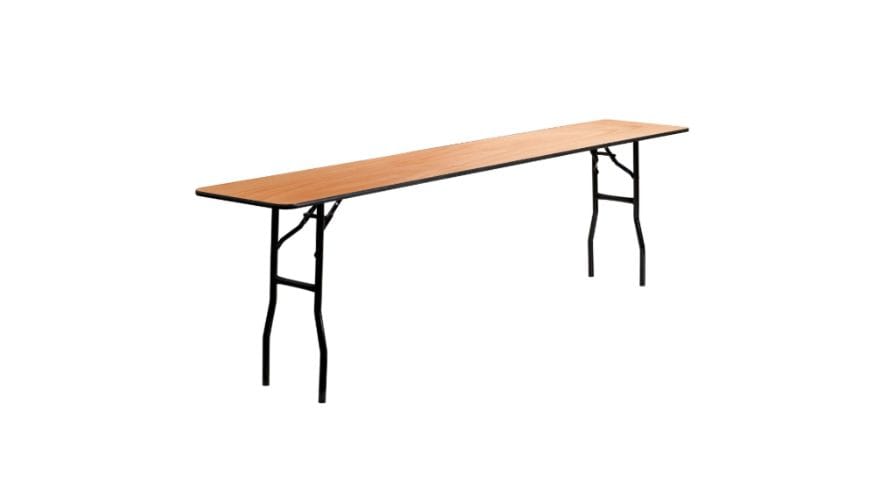
Image Source: Amazon
Pros & Cons
| Pros | Cons |
| Wheels make reconfiguration simple | Table may be heavy to push uphill |
| Flip-top stores compactly | No built-in cable management |
| Large work surface | |
| Supports group learning | |
| Works with many chair types |
9. Virco 2000 Series Sled‑Based Combo Unit
The Virco 2000 Series Sled-Based Combo Unit is a traditional school desk and chair combo used in schools for decades. The sled base frame makes it easy for students to access and exit classes from either side; this facilitates transitions in class layouts.
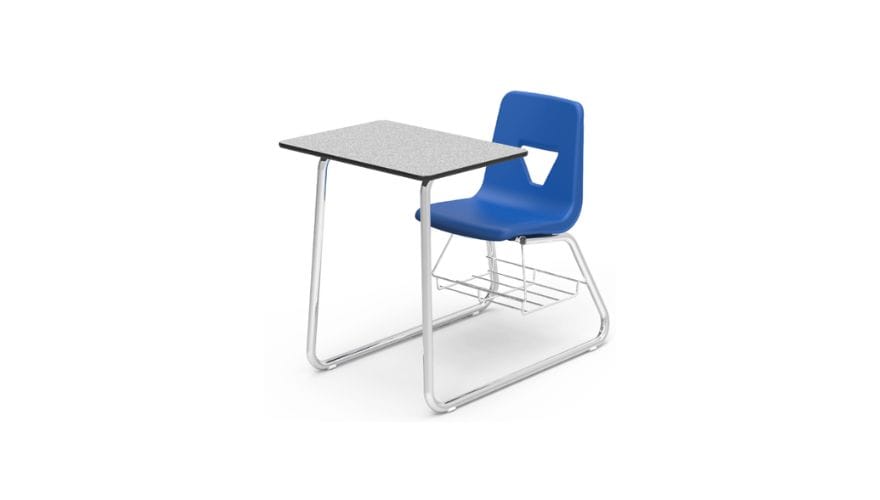
Image Source: VIRCO
Pros & Cons
| Pros | Cons |
| Durable school-grade construction | Not height-adjustable |
| Sled base allows dual-entry seating | Fixed combo unit may limit arrangement |
| Easy-clean laminate desktop | No desktop storage drawers |
| Built-in bookrack for student storage | |
| Comfortable molded seat supports posture |
10. Bestar Pro Linea
The Bestar Pro Studio Drafting/Activity Desk is a multitasking desk. Thus, this is a desk suited for art, drawing, and hands-on projects. The work surface moves to different angles as the base is stable. It has a durable top and adjustable legs to accommodate different student heights. This desk surprisingly works great in art rooms, design labs, and STEAM spaces where specialty desks are in need.
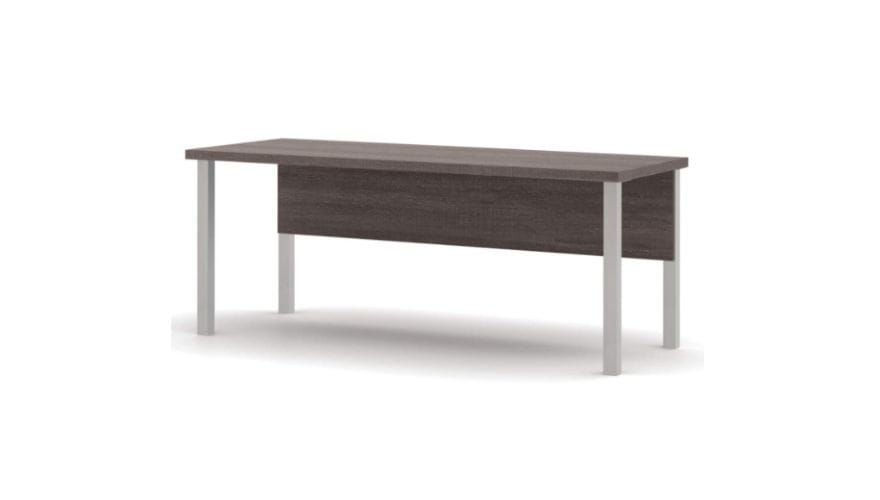
Image Source: Amazon
Pros & Cons
| Pros | Cons |
| Adjustable tilt surface | Less suitable for regular writing |
| Stable and sturdy build | Larger footprint |
| Supports art and project work | |
| Adjustable legs for comfort | |
| Durable laminate top |
Also See: Is Standing Better than Sitting?
How to Choose the Right School Desk

1. Consider Student Age and Grade Level
The first place is the age and size of the student compared to the age and size of the desk. Younger students need desks that are low enough that they feel stable and safe, and older students need desks that are large enough to support writing, reading, and using devices. Using desks that are too high or too small can lead to poor posture and discomfort while in class.
2. Match Desk to Classroom Size & Layout
Classroom size is a huge factor in desk selection. Small classrooms are served well by small desks that fit nicely in rows. Large rooms can employ group desks or flexible seating arrangements. There should be clear paths for walking in every direction so that teachers can move freely and that students can safely enter and exit their desks.
3. Think About Teaching Style and Daily Activities
Different teaching styles require different types of desks. Traditional lessons work well with conventional desks. Group discussions and projects benefit from shared desks or tables. Classrooms that inspire motion might require mobile desks or flexible seating options that are conducive to easy changes.
4. Focus on Durability and Easy Maintenance
School desks are used daily, thus they need to be strong and easy to clean. Do not allow the desks to be built of weak material that chips, wobbles, or becomes stained easily. A last important function of desks is that they make repairs less likely and make classrooms appear neat.
5. Avoid Common Mistakes When Making a Purchase
Do not select school desks just on price alone. Low-cost desks can wear out rather quickly and may require frequent repairs or replacement, adding to long-term costs. Avoid desks that have sharp edges, weak joints, or unstable frames, as these can pose safety risks in busy classrooms. Poor height sizing is another common problem and may cause discomfort and poor posture for students. Always look for long-term value by selecting desks that are safe, comfortable, and made to handle day-to-day classroom usage.
Also see: How to Find the Best School Furniture Suppliers in Singapore: A Practical Guide
Types of School Desks FAQs
Q1. What is the most popular type of school desk?
Traditional single-student desks are still most prevalent in many classrooms.
Q2. Are adjustable desks better for students?
Yes, adjustable desks are beneficial for students who can sit comfortably as they grow.
Q3. What are the best desks for flexible seating classrooms?
Mobile desks, group tables, and adjustable desks are best.
Q4. How long do desks at school usually last?
Properly cared-for quality school desks can last for 10 years or more.
Q5. Should there be separate desks and chairs or a combination of both?
Separate desks and chairs are found to offer more flexibility, whereas combined units save space.
Conclusion
School desks play an important role in the way students learn, sit, and stay focused. From traditional desks to adjustable and flexible types of seating, every type of seating serves a different purpose. Choosing the right desk involves finding the appropriate desk according to the age of the students, the size of the class, and the style of teaching in the classroom. Durable, well-designed classroom furniture is good for supporting long-term comfort and learning. By planning carefully and choosing the right desks, schools can create modern, flexible learning spaces that can meet the needs of both the students and the teachers.