





 Meet&Co
Walk into a classroom built in the 1950s, and you’d see a familiar sight: rigid rows of identical desks, each bolted to the floor, all facing forward toward the teacher. This setup reflected a teaching philosophy where knowledge was delivered from the front, and students were passive recipients.
Fast forward to today, and the modern classroom looks radically different. Desks move, students collaborate, and furniture adapts to the lesson rather than dictating it. The transformation from fixed rows to flexible learning environments mirrors a broader shift in educational philosophy—from teacher-centered instruction to student-centered, active learning.
This article traces the evolution of school furniture, explores the drivers behind today’s flexible designs, and helps you understand how to choose the right furniture for 21st-century learning.
Why Did Classrooms Use Fixed Rows?
For much of the 20th century, the fixed row configuration was the standard. Desks were often made of cast iron and wood, with attached seats and a small writing surface. In many cases, they were physically bolted to the floor.
This design served a specific educational model:
Teacher as authority: The layout reinforced the teacher as the sole source of knowledge.
Discipline and order: Fixed seating made it easy to maintain control and monitor students.
Standardized instruction: Every student faced forward, ideal for lectures and textbook-based lessons.
Efficiency: Maximized the number of students in a given space.
While functional for its time, the fixed-row classroom left little room for collaboration, movement, or differentiated instruction.
What Drove the Shift to Flexible Learning?
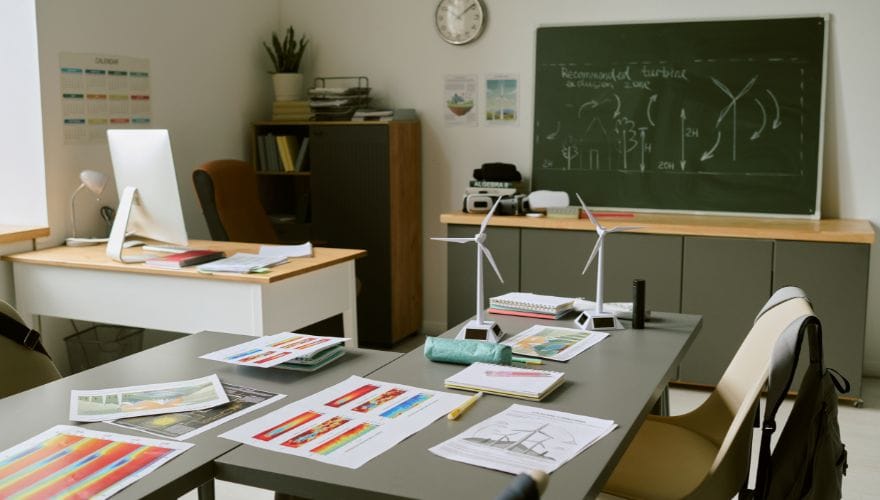
Several converging trends in education and design sparked the move away from rigid seating.
1. Pedagogical Shifts
Educational research increasingly supports active learning approaches where students engage with material through discussion, problem-solving, and hands-on activities. Group work, peer teaching, and project-based learning require furniture that can be reconfigured quickly.
2. Technology Integration
Laptops, tablets, and interactive whiteboards changed how students interact with information. Fixed rows facing a chalkboard no longer made sense when students needed to collaborate on screens or share devices.
3. Recognition of Diverse Learning Styles
Not all students learn best sitting still in a forward-facing seat. Some need movement, others need quiet corners, and some thrive in small groups. Flexible furniture accommodates these varied needs.
4. Emphasis on Student Agency
Modern education values giving students choices about where and how they learn. When furniture is movable and adaptable, students can select the environment that suits their task and preference—building autonomy and engagement.
The Evolution at a Glance
| Era | Typical Desk | Configuration | Teaching Philosophy |
|---|---|---|---|
| 1900s–1950s | Cast iron frame, attached seat, inkwell | Fixed rows bolted to floor | Teacher-centered, rote memorization |
| 1960s–1980s | Lightweight tubular steel, open front | Rows, but movable | Still teacher-led; some flexibility emerging |
| 1990s–2000s | Trapezoidal or “kidney” shapes | Clusters, pods | Collaborative learning gains traction |
| 2010s–present | Modular desks, mobile seating, writable surfaces | Fluid, reconfigurable | Active learning, student choice, technology integration |
What Defines Modern Flexible Learning Furniture?
Today’s flexible learning furniture is designed with adaptability as the core principle. Here are the key characteristics.
Modular Desks
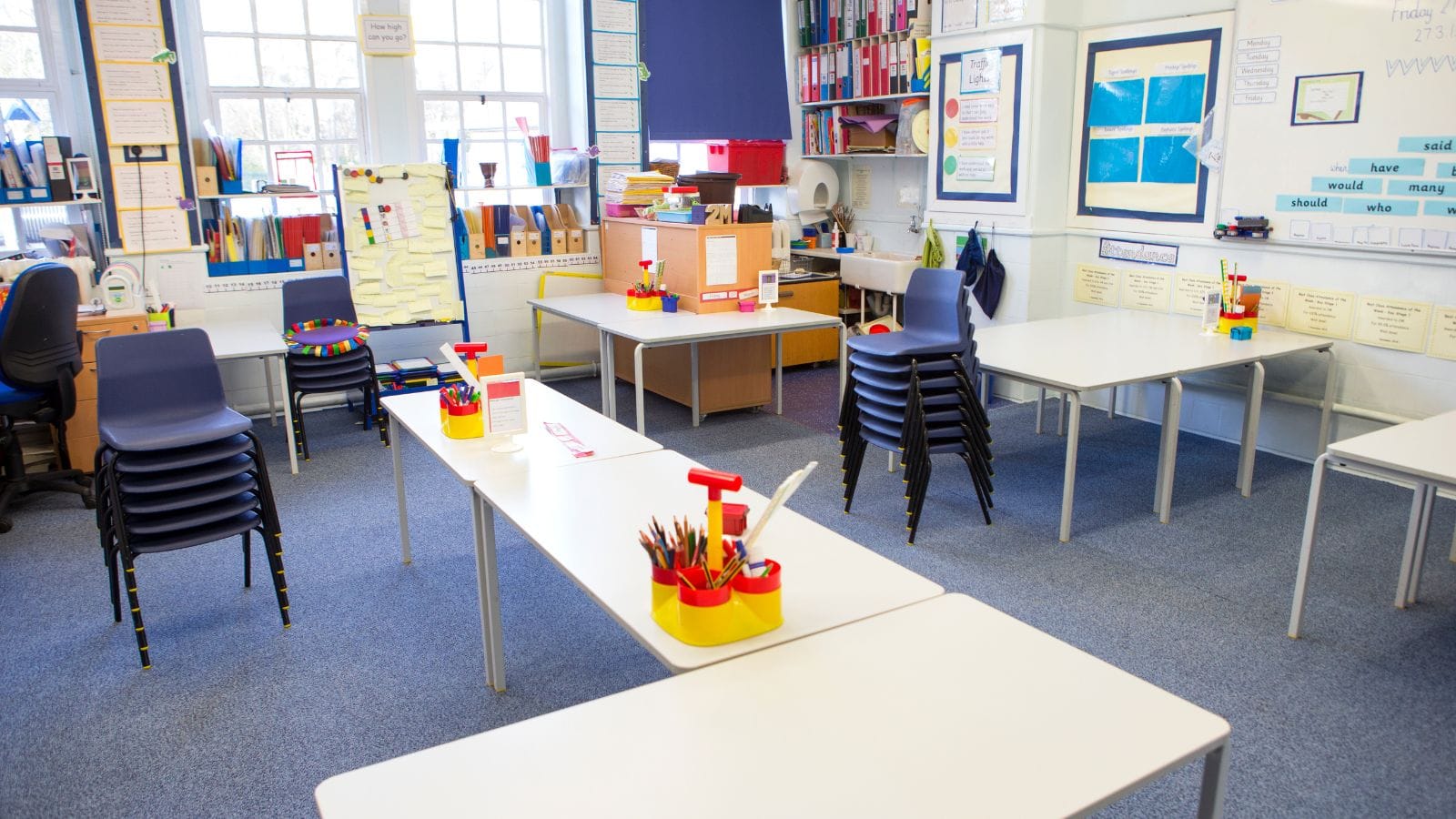
Desks with lightweight frames and casters allow students to move them effortlessly. Many feature trapezoidal or curved shapes that can be arranged in endless configurations—rows for assessments, clusters for group work, or a circle for discussions.
Mobile Seating
Stools, soft seating, and even wobble chairs give students options beyond the traditional chair. Mobility allows learners to reposition themselves based on comfort or collaboration needs.
Also see: Are Rocking Chairs Good for Students? 2026 Guide
Writable Surfaces
Desktops made of whiteboard material turn every desk into a brainstorming surface. Students can sketch ideas, solve problems, and share their work instantly—encouraging active engagement.
Varied Heights and Postures
Standing-height tables, floor cushions, and adjustable desks support different postures. Research shows that allowing students to stand or move can improve focus and reduce restlessness.
Technology Integration
Power outlets, USB ports, and cable management are now standard features in modern school furniture, ensuring that devices remain charged and accessible without creating tripping hazards.
How Does Furniture Support Different Teaching Approaches?
The beauty of flexible furniture is its ability to support multiple instructional methods within the same space.
Direct Instruction
When a teacher needs to present to the whole class, modular desks can quickly be arranged in rows or a horseshoe facing the front. Desks with casters make this transition seamless—often taking just a few minutes.
Collaborative Learning
For group projects, desks can be clustered into pods of 4–6 students. Mobile whiteboards or flip charts can be positioned nearby for shared brainstorming.
Individual Work
When students need focused, independent work time, they can move to individual desks, soft seating areas, or even quiet corners with high-backed lounge seating.
Socratic Seminars and Discussions
Arrange chairs and desks in a circle or double circle to encourage open dialogue where every student can see and hear one another.
What Are the Challenges of Implementing Flexible Learning?
While the benefits are clear, transitioning from fixed rows to a flexible learning environment comes with practical considerations.
1. Storage
Movable furniture requires storage space when not in use—especially if the classroom serves multiple purposes or teachers share rooms. Stackable chairs and nestable desks help.
2. Management
Some teachers worry about chaos if students can move furniture freely. Clear protocols and student training can turn movement into an organized routine rather than a disruption.
3. Durability
Furniture that moves constantly faces more wear and tear than fixed installations. Investing in commercial-grade casters, reinforced frames, and high-quality laminates is essential.
4. Cost
Flexible furniture can have a higher upfront cost than traditional desks. However, its versatility often reduces the need for multiple specialized rooms, and durability offsets long-term replacement costs.
Frequently Asked Questions
1. Is flexible furniture only for younger students?
No. Flexible learning environments benefit students of all ages. In elementary schools, movement and choice support developmental needs. In middle and high schools, flexible seating supports project-based learning and differentiated instruction. Even in higher education, universities are replacing fixed lecture hall seating with movable furniture to support active learning pedagogies.
2. How do I start transitioning from fixed rows to flexible learning?
You don’t need to replace everything at once. Start with one classroom as a pilot. Introduce a mix of mobile desks, a few alternative seating options, and writable surfaces. Gather feedback from teachers and students. Use what you learn to scale gradually. Many schools phase in flexible furniture over 2–3 years.
Also see: Best Flexible Seating Classroom Ideas for Modern Learning in 2026
3. What’s the best desk shape for flexible classrooms?
Trapezoidal and curved desks are the most versatile because they can be configured in rows, clusters, circles, and even complex organic shapes. Rectangular desks are less adaptable for collaboration but can work well alongside modular pieces. Consider a mix of shapes to maximize configuration options.
4. How do I manage technology with movable furniture?
Look for desks with built-in power outlets and USB ports that connect to floor boxes or ceiling drops. Mobile power towers are another solution—portable units that provide charging stations wherever desks are arranged. Cable management arms under desks prevent tangled cords and tripping hazards.
5. Does flexible furniture actually improve learning outcomes?
Research indicates that flexible learning environments, when paired with appropriate teaching practices, can improve student engagement, collaboration, and academic performance. A 2020 study from the University of Minnesota found that students in flexible classrooms showed higher levels of engagement and reported feeling more empowered in their learning. However, the furniture alone isn’t the magic—it must be paired with instructional strategies that leverage the flexibility.
Conclusion
The evolution from fixed rows to flexible learning spaces reflects a deeper transformation in how we understand education. Today’s classrooms are no longer places where students sit passively while knowledge is poured into them. Instead, they are dynamic environments where students move, collaborate, create, and take ownership of their learning.
Modern school furniture plays a crucial role in enabling this shift. Modular desks, mobile seating, writable surfaces, and integrated technology give teachers and students the tools to shape their environment around their needs—not the other way around.
Whether you’re planning a new school, renovating existing classrooms, or simply looking to add flexibility to one room, the principles outlined here will help you create spaces that support every learner. The furniture of the past served its purpose. The furniture of today opens possibilities.
Ready to bring flexible learning to your school? Contact our team for expert guidance on selecting modular desks, mobile seating, and adaptable classroom solutions.