





 Meet&Co
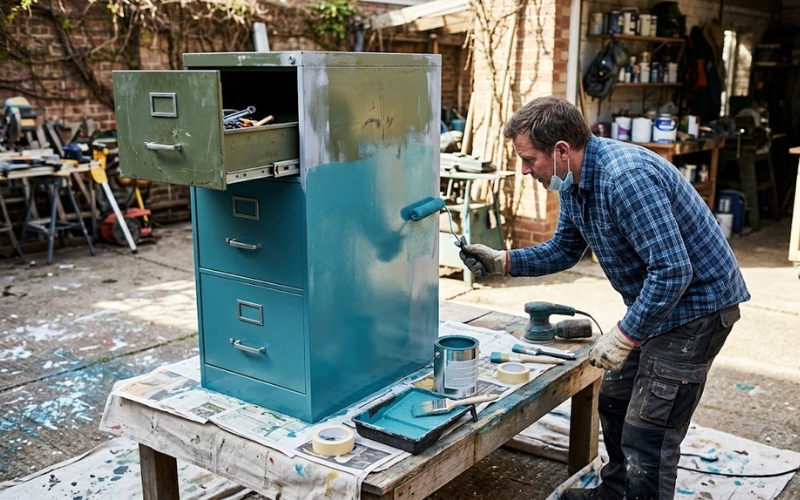
To refresh your office budget-friendly, learn how to repaint a filing cabinet by cleaning the surface, sanding away rust, applying a dedicated metal primer, and adding two thin coats of durable oil-based enamel or appliance spray paint.
Key Takeaways
Massive Cost Efficiency: Refinishing commercial steel storage saves up to 85% of the cost of purchasing new industrial office furniture.
Prep Controls 80% of Outcomes: Skipping chemical degreasing or mechanical sanding is the #1 cause of immediate paint peeling.
The Durability Winner: Oil-based enamels or appliance sprays create a molecular bond that resists daily office chair impacts.
7-Day Full Cure Window: While dry to the touch in hours, the paint requires a full week to chemically harden against deep scratches.
Why Repainting is the Best Value Office Upgrade
Upgrading office storage doesn’t require buying brand-new furniture.
Steel and aluminum storage units frequently suffer from surface rust, deep scratches, and a dull finish long before their structural integrity fails.
Industry data shows that salvaging and refinishing commercial steel storage costs roughly 15% to 20% of the price of buying brand-new industrial pieces.
By revitalizing an old unit, you extend its lifespan by up to a decade, making it a highly sustainable choice for modern workspaces looking to optimize budgets.
Before You Start: Metal vs. Wood Preparation
Painting metal requires a completely different approach than working with wood.
Metal surfaces are non-porous and naturally reject water-based paints, meaning a specialized rust-inhibiting primer is non-negotiable for a lasting bond.
Statistics from commercial refinishing projects indicate that over 70% of DIY paint failures stem directly from poor surface preparation.
Beginners often make the mistake of painting over hidden oils or active rust, which causes the new coating to lift within months.
Tools & Materials Checklist
Achieving a smooth, professional finish depends entirely on using the correct supplies.
Ensure you have the following materials ready before beginning your project:
Chemical Degreaser: Trisodium phosphate (TSP) or a heavy-duty dish soap.
Sandpaper: 120-grit for rust removal and 220-to-400-grit for smoothing.
Metal Primer: A dedicated rust-preventative bonding primer.
Topcoat Paint: High-quality oil-based enamel or specialized appliance spray paint.
Application Tools: High-density microfiber rollers, high-quality synthetic brushes, or ergonomic spray triggers.
Surface Preparation: The Foundation of Longevity
A flawless finish requires a perfectly clean foundation.
Begin by wiping the entire surface with a heavy-duty degreaser to remove fingerprints, factory oils, and accumulated office grime.
Next, assess the existing finish to determine your sanding strategy.
If the original factory paint is intact, a light scuff sanding with 220-grit sandpaper is sufficient to create a “tooth” for the new paint to grip.
However, if active rust is present, you must sand down to bare metal using 120-grit sandpaper or a wire brush, followed by a chemical rust converter to halt further oxidation.
You can only skip sanding if the original coating is completely immaculate, unglossy, and you are using a specialized maximum-adhesion bonding primer.
Step-by-Step Guide to Repainting Your Cabinet
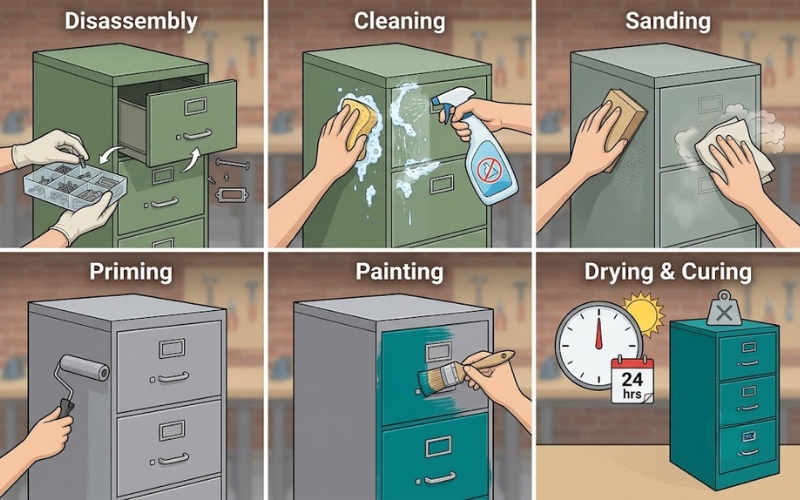
Follow these precise steps to ensure an optimal finish:
Disassembly: Remove all drawers, handles, lock mechanisms, and label holders. Never attempt to paint around hardware, as this leads to sticking and uneven edges.
Cleaning: Scrub all exterior surfaces with your degreaser and allow them to dry completely.
Sanding: Scuff-sand the entire body and drawer fronts using 220-grit sandpaper. Wipe away all micro-dust with a tacky cloth.
Priming: Apply one even coat of rust-inhibiting primer. If you plan to use a vibrant topcoat, choose a gray primer to ensure accurate color depth.
Painting: Apply your chosen paint in thin, consistent layers.
Drying & Curing: Allow the final coat to dry for at least 24 hours before reassembling the hardware. Keep heavy objects off the surface for a full week until it cures completely.
If your workspace requires a complete layout overhaul rather than a DIY fix, it may be time to consult professionals like Meet&Co to design an efficient, modern office layout.
Application Methods: Spray Paint vs. Roller vs. Brush
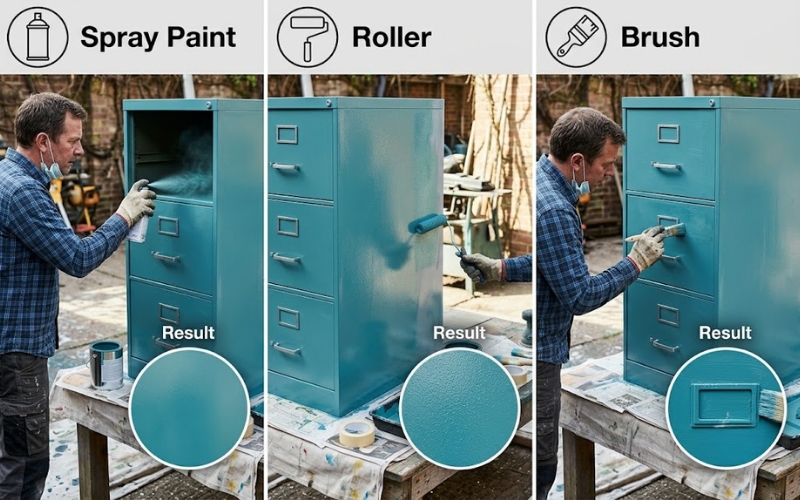
Spray Paint Method
Spray painting is the fastest route to a flawless, factory-like finish. It completely eliminates brush strokes and easily reaches tight corners or recessed handles.
However, it requires an outdoor setup or a professional ventilation mask, as overspray can travel far. It is best used for complex designs or when a flawless gloss finish is desired.
Roller Method
Using a high-density foam roller is the cleanest method for indoor projects. It allows you to apply a thicker, highly durable layer of paint with minimal mess.
To avoid roller texture or stippling, apply light pressure and use long, overlapping vertical strokes.
This method is highly effective when upgrading standard office filing cabinets.
Brush Method
While a brush is rarely recommended for large, flat panels due to inevitable streaking, a high-quality synthetic brush is acceptable for touching up tight crevices, tracking rails, or intricate trim work.
Always use a self-leveling paint to minimize visible brush marks.
Best Paint for Metal Surfaces
Selecting the right chemical composition determines how well your storage handles daily wear and tear.
| Paint Type | Primer Required? | Durability | Best For |
|---|---|---|---|
| Oil-Based Enamel | Yes | Exceptionally High | High-traffic commercial offices |
| Appliance Spray Paint | Optional (but recommended) | High | Smooth, factory-like gloss finishes |
| Chalk Paint | Yes (to prevent rust bleed) | Moderate | Decorative, matte, or vintage aesthetics |
For industrial settings, oil-based enamels provide the highest impact resistance against daily bumps from office chairs.
If you are updating multiple cabinets for filing, stick to a single paint formulation to maintain visual consistency across your workspace.
Common Problems & How to Fix Them
Paint Peeling: This occurs when paint is applied over dirt, grease, or a glossy surface. Fix it by scraping away the loose areas, sanding smooth, priming, and repainting.
Bubbling (Blistering): Caused by moisture or solvent trapped beneath the paint film, often from painting in direct sunlight or high humidity. Pop the bubbles, sand the area flat, and reapply paint under controlled temperatures.
Uneven Coating: Resulting from inconsistent pressure or moving too fast. Allow the coat to dry completely, sand lightly with 400-grit sandpaper, and apply a slower, more deliberate final coat.
Rust Bleed-Through: Occurs when active rust wasn’t fully removed or sealed with a dedicated rust-preventative primer. You must sand back to bare metal, apply a rust converter, prime thoroughly, and repaint.
Pro Tips for a Flawless Finish
The secret to a commercial-grade finish lies in patience and environmental control.
Always adhere to the multiple thin coats rule: applying three paper-thin coats will always yield a smoother, harder finish than trying to cover the metal in one thick, runny layer.
Proper ventilation is vital, not just for personal safety, but to help paint solvents evaporate efficiently.
Additionally, track your local weather before starting; high humidity levels (above 65%) can trap moisture inside the drying paint, permanently clouding glossy topcoats and extending drying times by days.
If your current storage units are too structurally damaged to salvage, it might be more cost-effective to browse high-quality modern filing cabinets to elevate your workplace productivity.
Beyond the Paint: Future-Proofing Workspace Storage
Refreshing your office furniture is an excellent way to maintain a clean, organized, and professional environment.
When budgeting for an office refresh, remember that a mix of refurbished pieces and strategic new investments often yields the best functional results.
For organizations undergoing larger corporate transformations or looking to completely scale their workspaces, exploring commercial office solutions and choosing to buy filing cabinets built with ergonomic, modern features will ensure long-term efficiency and employee satisfaction for years to come.
Discover premium workplace configurations at Meet&Co Furniture to build your ideal office today.