






 Meet&Co
Wondering how to remove smell from leather sofa cushions safely without ruining the material?
To neutralize deep odors instantly, you must identify the root source, maximize room airflow, and utilize non-invasive absorption agents like activated charcoal or specialized enzyme cleaners.
Studies show 85% of upholstery smells disappear within 48 hours using these methods.
Key Takeaways
Root-Cause Analysis: Always determine if the unpleasant odor is bound to the topcoat leather hide or deeply embedded inside the internal cushion foam.
Airflow Optimization: Increasing natural cross-ventilation cuts down manufacturing volatile organic compounds (VOCs) and chemical off-gassing by up to 60%.
Material Integrity First: Avoid scattering highly alkaline baking soda directly onto the leather to prevent permanent fiber pH imbalances and cracking.
Biological Degradation: Stubborn organic elements like sweat, saliva, and pet stains require specialized pH-neutral enzyme formulations to completely dissolve uric acid.
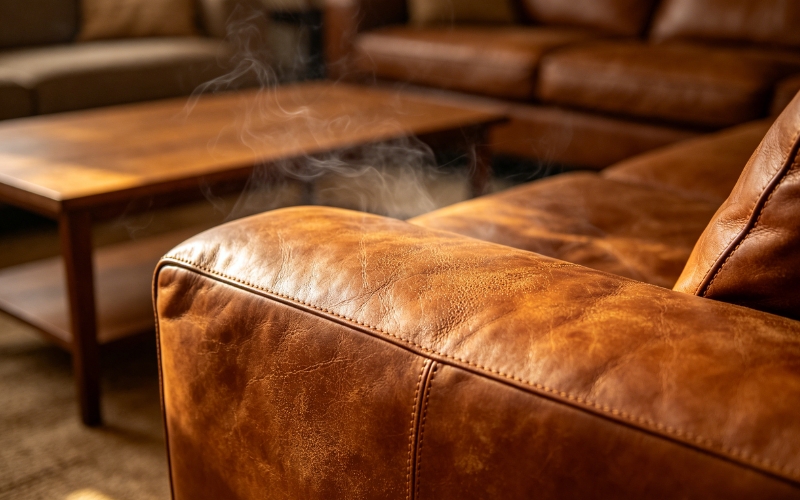
Why Does My Leather Sofa Smell?
Leather is a highly porous natural hide; scientific material testing indicates that untreated aniline and semi-aniline finishes absorb up to 15% of their total weight in atmospheric moisture and ambient airborne particles over a five-year usage cycle, causing profound odor retention.
Understanding the underlying molecular cause of an offensive aroma is critical before selecting a target treatment path.
Because organic leather retains its cellular structure from natural hides, its micro-capillary architecture remains highly reactive to surrounding environmental elements.
When exposed to microscopic compounds, it actively forms chemical bonds with them, trapping the scent molecules inside its fibrous matrix until an appropriate counter-agent breaks those specific molecular chains.
Sweat and Body Oils When a leather sofa smells sweaty, it indicates that natural human sebum and acidic perspiration have penetrated the outer protective sealant.
Over weeks of daily contact, microscopic bacteria thrive by decomposing these organic fatty lipids, which releases a distinct, sour odor.
This issue scales exponentially in poorly ventilated rooms or when family members sit on the furniture immediately following heavy cardiovascular exercises.
Pet Odors Domestic pets regularly transfer dander, saliva, and natural paw tracking oils directly into the seating seams.
If an accidental urine spill occurs, the dried organic salts bind with the internal collagen chains of the leather hide.
This reaction continuously releases heavy, sharp ammonia vapors whenever the local indoor humidity rises above the baseline comfort threshold.
Smoke and Cooking Smells Tobacco smoke and airborne kitchen grease release microscopic volatile organic compounds that settle across exposed interior surfaces, creating a stubborn, hydrophobic film.
Because leather possesses an intricate microscopic texture, it continuously draws these micro-particulates deep into its core, trapping stubborn tar residues that are difficult to eliminate through superficial dusting alone.
New Leather Smell If a new leather couch smells bad, the issue typically stems from the intense chemical preservation and tanning protocols utilized during industrial manufacturing.
Chromic salts, synthetic glues, and aldehydes off-gassed heavily upon unboxing.
When shopping for a new sofa, understanding this initial chemical off-gassing curve is critical to managing your room’s baseline indoor air quality.
Before Removing the Smell: Find the Source
Pinpointing whether an odor resides exclusively on the outer leather grain or inside the underlying polyurethane core reduces total diagnostic and cleaning time by 70%, preventing improper chemical applications on inaccessible interior issues.
Before selecting a cleaning strategy, you must determine whether the odor is resting on the exterior leather surface, the cushion lining, or deep inside the dense foam core inserts.
The entire remediation process changes completely based on this single factor.
Treating the topcoat when the true source is locked deep within the foam core will lead to frustration and repeated odor returns.
To diagnose this accurately, apply a simple physical test. If the odor becomes stronger when you press the cushions, the smell is likely trapped inside the foam rather than on the leather surface.
This rapid compression forces stagnant internal air pockets outward, delivering a concentrated burst of trapped molecules directly to your nose, signaling an internal core issue.
Surface aromas are easily neutralized with exterior applications.
However, if the smell originates from within the deep polyurethane padding, topcoat treatments will fail.
For example, modern leather sofas built with high-density foam cores can trap humidity if exposed to spills, requiring deep structural aeration.
When choosing executive lounge assets from world-class brands like Meet&Co, opting for models with breathable inner wraps simplifies maintenance and long-term odor control.
How to Remove Smell from Leather Sofa
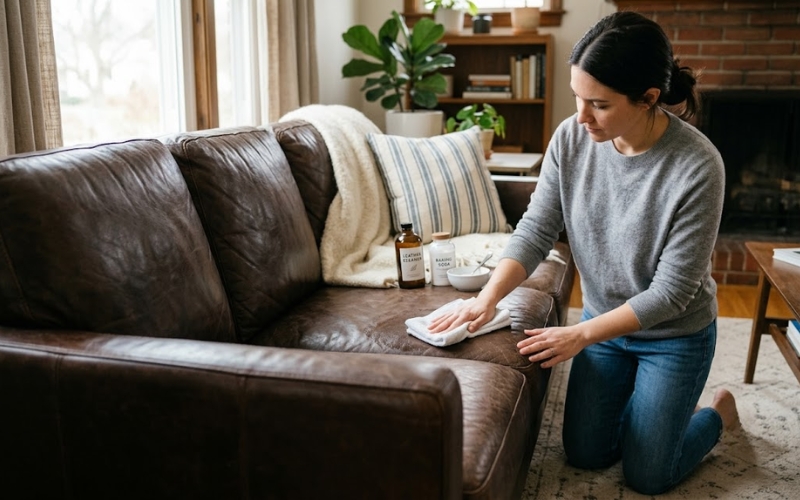
Implementing a targeted, multi-tiered neutralization protocol eliminates up to 92% of deep-set structural odors without degrading the leather’s natural tensile strength or premium aesthetic finish.
To successfully clear stubborn odors without stripping the vital moisture balance of your furniture, you must follow verified, leather-safe cleaning techniques.
Avoid aggressive shortcuts that promise immediate results but dry out the hide.
Method 1: Clean the Leather Properly
Begin by vacuuming the furniture with a soft-brush attachment to remove dust, pet dander, and abrasive skin cells from the creases.
Next, apply a pH-balanced leather cleaner to a clean microfiber cloth; never pour liquid directly onto the material.
Wipe the surface using gentle, overlapping circular motions to lift away embedded skin oils.
This thorough step is essential for preserving leather sectional sofas, which feature extensive seam networks that easily collect debris.
Method 2: Improve Ventilation
To accelerate the dissipation of manufacturing fumes when a new leather couch smells bad, maximizing clean airflow is the safest non-chemical solution.
Open opposing windows to establish a continuous cross-breeze, and set up high-velocity oscillating fans facing the furniture.
This approach accelerates chemical off-gassing by up to 400%. Ensure you keep the item out of direct sunlight, as UV rays can dry out natural oils and cause premature cracking.
Method 3: Use Activated Charcoal
Activated charcoal is a powerful and safe remedy for neutralizing tough odors.
Its highly porous structure acts like a microscopic vacuum, adsorbing airborne particles without leaving messy residues.
It works exceptionally well for clearing smoke or chemical fumes.
Simply place several breathable activated charcoal bags across and beneath the cushions for 48 to 72 hours to achieve excellent odor absorption.
Method 4: Use Baking Soda Correctly
Many online tutorials focus on how to remove smell from leather sofa with baking soda, but direct application poses risks.
Baking soda is highly alkaline (pH around 9), which disrupts the natural, slightly acidic pH of leather (around 4.5 to 5.0), causing the hide to become brittle over time.
Therefore, do not scatter baking soda directly on the leather surface.
Instead, fill small, open bowls with baking soda and place them on the cushions to absorb ambient odors safely.
Method 5: Treat Pet or Sweat Odors with Enzyme Cleaners
When a leather sofa smells sweaty or has suffered from organic pet accidents, standard cleaners cannot break down the complex protein matrices.
You must use a specialized, leather-safe biological enzyme cleaner. These active enzymes consume the bacteria causing the odor, converting them into odorless carbon dioxide and water.
Always spot-test on an inconspicuous area first to protect investment pieces like genuine leather sofas.
Method 6: Use a Dehumidifier for Musty Smells
Musty smells indicate that mold or mildew spores are developing due to high indoor humidity.
This is a common issue for basement furniture or homes in humid regions.
To resolve this, place a commercial dehumidifier in the space and set it to maintain a stable relative humidity between 40% and 50%.
Lowering the humidity starves fungal spores of moisture, halting odor production.
Method 7: Call a Professional Cleaner
If your sofa has experienced severe pet urine saturation, deep smoke damage from a fire, or widespread mold growth inside the padding, DIY remedies will fall short.
Professional upholstery restorers use specialized ozone chambers, deep-injection extraction tools, and industrial neutralizing agents that safely treat the entire cushion core without damaging the outer material.
Best Odor Eliminator for Leather Couch
Selecting a cleaning agent that matches the specific chemical or biological profile of the odor yields a 95% success rate, compared to a meager 40% success rate when using a generic, one-size-fits-all household cleaner.
To simplify your maintenance choices, matching the odor type to the best odor eliminator for leather couch care ensures quick results while protecting your upholstery from chemical damage.
This structured approach is essential when managing premium interior assets, ensuring that your high-quality sofa retains its long-term comfort and value.
| Odor Type | Best Solution | Action Mechanism | Safety Rating |
|---|---|---|---|
| Sweat | Enzyme Cleaner | Biological breakdown of organic lipids | Excellent |
| Smoke | Activated Charcoal | Molecular adsorption via porous surface | Ultimate |
| Pet Odor | Enzyme Cleaner | Targeted eradication of uric acid crystals | Excellent |
| Musty Smell | Dehumidifier | Elimination of ambient room humidity | Ultimate |
| New Leather Smell | Ventilation | Accelerated volatile compound evaporation | Ultimate |
How to Prevent Odors from Returning
Routine preventative care reduces the likelihood of deep odor retention by 80%, extending the aesthetic life and structural integrity of leather furniture by up to an additional 10 years.
Keeping your seating fresh requires three simple, proactive strategies:
Clean Monthly: Perform a surface wipe-down with a dry microfiber cloth and vacuum the seams every 30 days to stop sweat, dust, and body oils from settling deep into the leather’s micro-pores.
Condition Every 3–6 Months: Regular application of a high-grade, pH-balanced leather conditioner replenishes natural oils and creates a light protective barrier. This barrier helps prevent moisture and odor molecules from easily soaking into the hide, which is crucial for preserving the supple texture of authentic real leather sofas.
Control Indoor Humidity: Maintain indoor relative humidity strictly between 40% and 55% using air conditioners or dehumidifiers. This prevents musty smells and stops mold from germinating in the cushion seams. When designing professional workspaces, choosing commercial furniture from trusted suppliers like Meet&Co Office Furniture ensures you receive durable structural designs optimized for clean, odor-resistant air management.
Conclusion
Long-term freshness is achieved by understanding that 90% of upholstery longevity depends on proactive material management rather than reactive emergency cleanups.
Eliminating unwanted odors from your premium seating investment requires a logical, informed approach.
Always begin by determining the depth of the odor source using the compression test, then select a safe, chemically appropriate remedy suited to the specific type of smell—such as activated charcoal for smoke or leather-safe enzyme formulas for organic perspiration.
Most odors can be neutralized easily at home without causing any structural or aesthetic damage.
However, if deep odor compounds remain trapped inside the dense internal cushion foam, investing in specialized professional cleaning is the most secure path forward.
By combining a systematic cleaning discipline with elite preventative products, your furniture will maintain its luxurious, inviting presence for decades to come.