








 Meet&Co
You know that feeling. You look at your office chair, your sofa, or your favorite reading armchair and notice it’s… not quite as fresh as it used to be. Maybe there’s a coffee stain from last week, or the fabric just looks a little dull. Your first instinct might be to grab whatever cleaning product is under the sink and go to town.
Upholstered furniture is surprisingly delicate. What works on a countertop can permanently stain fabric. What kills germs on a doorknob can strip the finish off leather. And that aggressive scrubbing motion? It can push dirt deeper into fibers, making things worse.
The good news is that cleaning upholstery properly isn’t difficult. You just need to know what you’re dealing with and follow a few simple rules. Meet&Co will walk you through everything you need to know—how to identify your fabric type, which cleaning methods work for each, how to disinfect safely, and how to avoid the common mistakes that ruin good furniture.
Why Cleaning and Disinfecting Upholstery Is Different
Upholstered furniture is essentially a sandwich: a decorative outer fabric (or leather), a layer of foam or padding underneath, and a frame. The problem is that most cleaning mistakes affect the layers you can’t see.
When you over-wet fabric, moisture seeps into the foam. That foam can take days to dry completely. In the meantime, you’ve created the perfect environment for mold and mildew—right in the cushion you sit on every day.
Similarly, using the wrong cleaning product can break down the chemical treatments that make fabric stain-resistant or water-repellent. On leather, harsh chemicals can strip the protective finish, leading to cracking and peeling months down the road.
The key principle is simple: gentle cleaning, minimal moisture, and always test first.
Step 1: Identify Your Fabric Type
Before you clean anything, you need to know what you’re cleaning. Upholstery manufacturers use a standardized code system that tells you exactly how to treat the fabric.
The Cleaning Code System
Look for a tag on the bottom of your furniture. It should have one of these letters:
| Code | Meaning | What You Can Use |
| W | Water-based cleaners only | Water, mild detergent, steam cleaners |
| S | Solvent-based cleaners only | Dry cleaning solvent, no water |
| W/S | Either water or solvent | Most versatile—both methods safe |
| X | Vacuum only | No liquid cleaners; professional cleaning only |
If you can’t find the tag, do a spot test in an inconspicuous area (under the seat or on the back) before cleaning visible surfaces.
Common Fabric Types
| Fabric | Typical Code | Characteristics |
| Cotton, linen | W or W/S | Natural fibers, absorbent, can shrink |
| Polyester, nylon | W/S | Synthetic, durable, quick-drying |
| Velvet | S (usually) | Pile fabric, water can damage texture |
| Microfiber | W/S | Dense weave, cleans easily |
| Wool | W or S | Natural fiber, test first |
| Acrylic | W/S | Synthetic, colorfast |
Step 2: Gather the Right Tools
Using the correct tools makes cleaning easier and safer. You likely already have most of these at home.
Essential Tools
- Vacuum with upholstery attachment (brush head is best)
- White microfiber cloths (colored cloths may transfer dye)
- Soft-bristle brush (toothbrush works for small areas)
- Spray bottle for applying cleaning solution
- Clean, dry towels for blotting
Cleaning Solutions
- Mild dish soap (a few drops in warm water)
- White vinegar (diluted 1:1 with water)
- Baking soda for odors
- Rubbing alcohol (70%) for disinfecting on water-safe fabrics
- Hydrogen peroxide (for stubborn stains, test first)
Products to Avoid
- Bleach (destroys fibers, discolors)
- Ammonia (can damage fabric finishes)
- Harsh solvents (acetone, nail polish remover)
- WD-40 (leaves oily residue)
- Steam cleaners on solvent-clean fabrics
Step 3: Cleaning by Fabric Type
Fabric Upholstery (W or W/S Code)
Daily care:
- Vacuum weekly with brush attachment to remove dust and debris
- Spot-clean spills immediately—blot, never rub
Deep cleaning (every 6–12 months) :
- Vacuum thoroughly, including under cushions
- Test cleaning solution in hidden area
- Apply solution with spray bottle—mist lightly, don’t soak
- Gently blot with microfiber cloth
- For stains, work from outside edge inward
- Rinse with clean damp cloth
- Dry with fan or open windows—never use heat
For stubborn odors:
- Sprinkle baking soda liberally over fabric
- Let sit for 6–8 hours or overnight
- Vacuum thoroughly
Pro tip: For microfiber, use rubbing alcohol in a spray bottle. Lightly mist, then scrub with a clean white sponge. Alcohol dries quickly and lifts dirt without saturating the foam.
Also see: How to Clean Microfiber Couches
Mesh and Outdoor Fabric
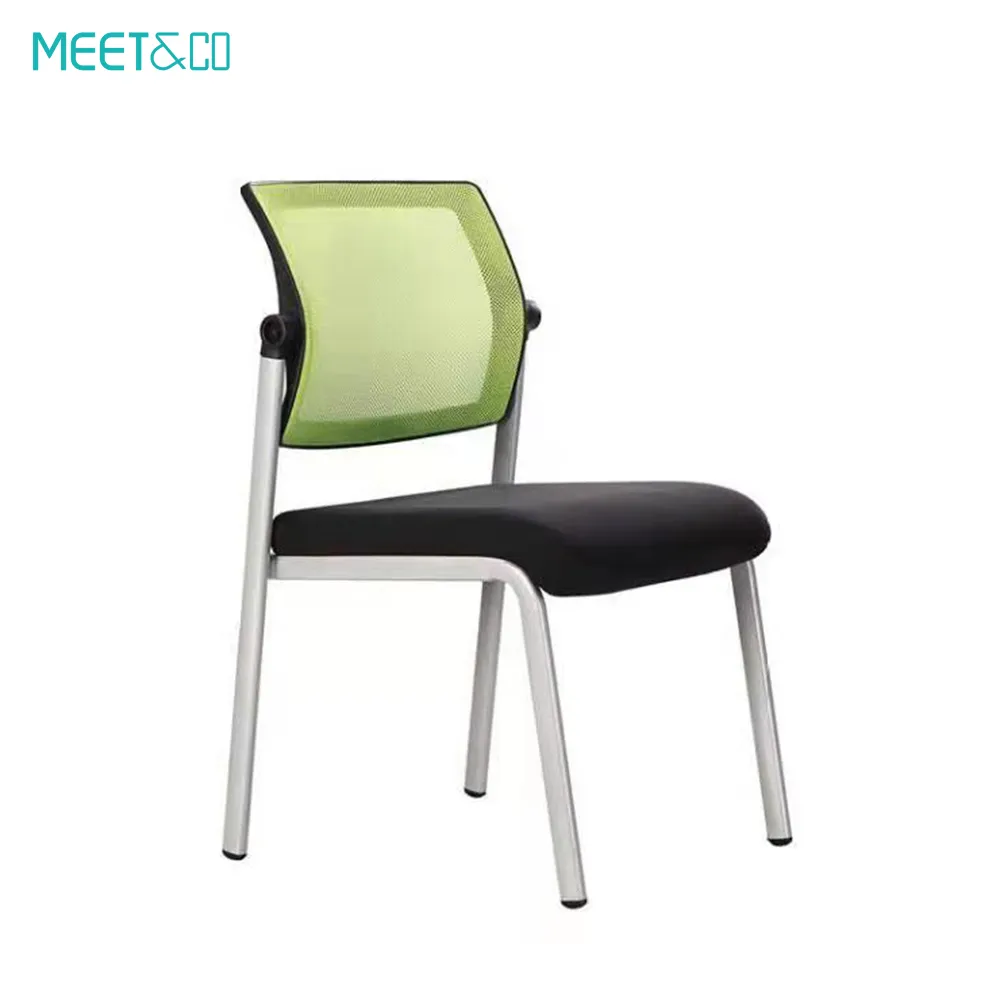
Mesh is popular in office chairs for its breathability. It’s also one of the easiest fabrics to clean since dirt doesn’t embed deeply.
Weekly:
- Vacuum with brush attachment
- Wipe with damp cloth
Deep cleaning (every 3–6 months) :
- Mix mild dish soap with warm water
- Spray onto soft brush—never directly onto chair
- Gently scrub mesh in circular motions
- Wipe away soap with damp cloth
- Air dry completely
For stubborn dirt in mesh weave:
- Use compressed air to blow out trapped particles
- Soft toothbrush works for detailed cleaning
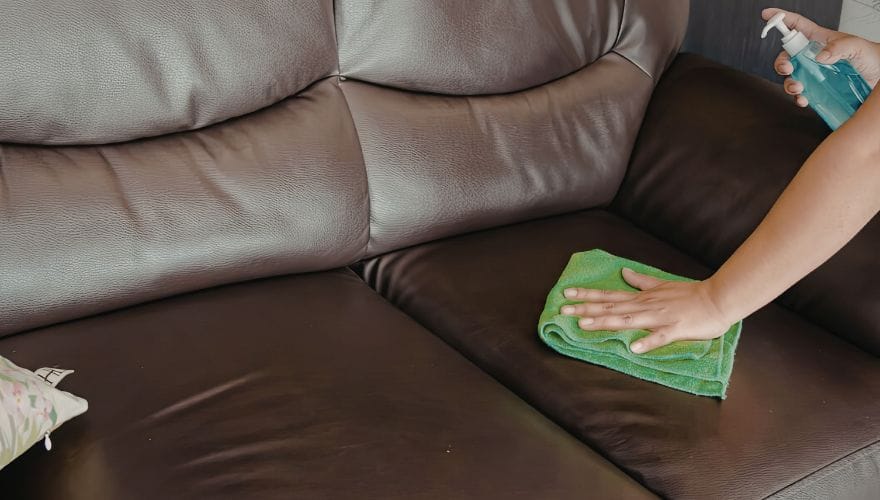
Leather and Faux Leather
Leather requires a completely different approach. Real leather needs conditioning; faux leather (including bonded leather and PU) needs gentle cleaning only.
For genuine leather:
Weekly:
- Wipe with dry microfiber cloth
- For light cleaning, use cloth slightly dampened with water
Deep cleaning (every 3–6 months) :
- Use dedicated leather cleaner or mild saddle soap
- Apply with soft cloth using circular motions
- Wipe away residue with damp cloth
- Condition with leather conditioner (test first)
For stains:
- Ink: Dab with rubbing alcohol immediately
- Oil: Blot with cornstarch, let sit overnight, wipe away
- General grime: Diluted white vinegar (1 part vinegar to 2 parts water)
For bonded leather (critical warning) :
Bonded leather cannot be conditioned. The polyurethane coating will peel if over-wet or treated with oils. Stick to:
- Dry dusting weekly
- Damp cloth with water only when necessary
- Never use alcohol, vinegar, or leather conditioner
Vinyl
Vinyl is durable and forgiving, making it common in medical settings, schools, and budget office chairs.
Weekly:
- Wipe with damp cloth and mild soap
- Dry thoroughly to prevent moisture sitting in seams
Deep cleaning (every 3–6 months) :
- Clean with mild detergent and water
- For deeper shine, use diluted vinegar solution
- Apply protectant made for vinyl to prevent drying and cracking
For stubborn marks: Magic eraser (gentle side) works wonders—test first.
Step 4: Disinfecting Upholstery Safely
Disinfecting fabric is trickier than cleaning it. Many disinfectants require staying wet for several minutes to be effective—but leaving fabric wet that long risks damaging the foam underneath.
When You Actually Need to Disinfect
Not every cleaning session requires disinfection. Focus on:
- After illness in the household
- After pets have accidents
- When visibly soiled with bodily fluids
- In high-touch areas (armrests, seat edges)
How to Disinfect Safely
For water-safe fabrics (W or W/S code) :
- Vacuum first to remove loose soil
- Spot test any disinfectant in hidden area
- Use EPA-registered disinfectants labeled for fabric—look for products with a “fabric safe” claim
- Apply with spray in well-ventilated area
- Allow proper dwell time (check label—usually 1–10 minutes)
- Blot excess moisture, then air dry completely
- Consider alternative: 70% rubbing alcohol dries quickly and kills most pathogens
For fabrics that can’t get wet (S code or delicate) :
- Use fabric-safe disinfectant sprays designed for dry cleaning
- Consider UV-C light sanitizers (available as handheld wands)
- Professional cleaning is safest
What Not to Do
- Never mix bleach and ammonia (creates toxic gas)
- Don’t use disinfectant wipes meant for hard surfaces—they leave residue that attracts dirt
- Avoid soaking fabric to achieve dwell time—the foam underneath will suffer
- Skip aerosol sprays that don’t require dwell time—most are fresheners, not disinfectants
Step 5: Tackling Specific Stains
| Stain Type | Immediate Action | Cleaning Method |
| Coffee, tea, soda | Blot immediately | Mix 1 tablespoon white vinegar with 1 cup water; blot, don’t rub |
| Wine | Blot, sprinkle salt | Let salt absorb liquid, vacuum, then gentle detergent |
| Grease, oil | Sprinkle cornstarch or baking soda | Let sit 15 minutes, vacuum, then mild detergent |
| Ink | Blot with rubbing alcohol | Dab with cotton swab—work from outside in |
| Blood | Cold water only | Blot with cold water—heat sets protein stains |
| Pet urine | Blot, apply enzyme cleaner | Enzyme cleaners break down proteins; test first |
| Mud | Let dry, then vacuum | Don’t scrub wet mud—it pushes deeper |
Common Mistakes to Avoid
| Mistake | Why It’s Bad | Better Approach |
| Rubbing stains aggressively | Spreads stain, damages fibers | Blot gently from edges inward |
| Over-wetting fabric | Creates mold in foam | Mist lightly, blot excess |
| Using bleach or ammonia | Destroys fibers, discolors | Stick to mild soap or vinegar |
| Ignoring cleaning codes | May damage fabric permanently | Check tag before cleaning |
| Heat drying | Shrinks fabric, sets stains | Air dry with fan only |
| Using colored cloths | Dye transfer | White microfiber only |
When to Call a Professional
Some situations are best left to the experts:
- Heavy soiling over large areas
- Water damage or mold
- Delicate fabrics (silk, wool, antique)
- Furniture with X cleaning code
- After flood or fire damage
- When DIY attempts made things worse
Professional cleaners have equipment that extracts moisture effectively—something home methods can’t replicate. They also have access to commercial-grade products that clean without leaving residue.
Maintenance Schedule
| Task | Frequency |
| Vacuum | Weekly |
| Spot-clean spills | Immediately |
| Rotate cushions | Monthly |
| Deep clean (W fabrics) | Every 6–12 months |
| Condition leather | Every 3–6 months |
| Professional cleaning | Every 2–3 years |
FAQ
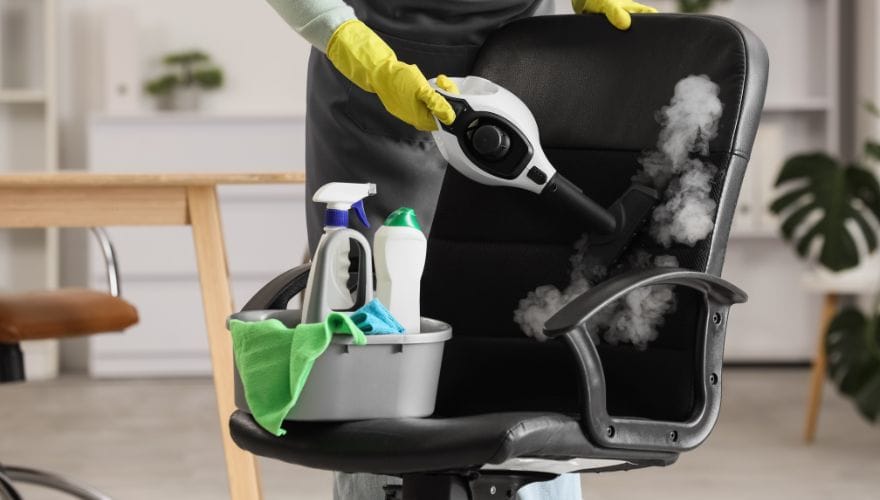
1. Can I use a steam cleaner on upholstery?
Only on fabrics labeled W or W/S. Steam cleaning uses minimal moisture and can be effective. Never steam S-code fabrics—solvent-clean fabrics will be damaged by heat and moisture.
2. How do I get rid of musty smells?
Musty smells usually mean moisture trapped in foam. Sprinkle baking soda generously, let sit overnight, vacuum thoroughly. If smell persists, place furniture in sunlight for several hours (if fabric is sun-safe) or call a professional.
3. Is rubbing alcohol safe for all fabrics?
No. Rubbing alcohol is safe for most synthetics and microfiber but can damage natural fibers like wool or silk. Always test first. Alcohol dries quickly, which makes it safer for foam than water-based cleaners.
4. How do I clean white upholstery without ruining it?
White fabric shows everything, but the cleaning principles are the same: test first, minimal moisture, blot don’t rub. For tough stains, consider professional cleaning. Using a fabric protector after cleaning helps future stains wipe away.
5. Can I machine-wash removable cushion covers?
Only if the care tag says so. Even then, air dry—machine heat can shrink covers, making them impossible to refit. Some manufacturers recommend dry cleaning for removable covers.
6. How do I clean upholstery after bed bugs or fleas?
This requires professional treatment. Do not attempt DIY—insects can survive cleaning, and improper treatment can spread the problem. Call a pest control professional and follow their guidance.
Conclusion
Cleaning upholstered furniture doesn’t have to be intimidating. The key is knowing what you’re working with and being patient. Start by checking the cleaning code, test everything in a hidden spot, and always err on the side of gentler methods.
Remember the golden rules:
- Vacuum first—removing loose dirt prevents grinding during cleaning
- Minimal moisture—damp cloths, not soaked cushions
- Blot, never rub—rubbing spreads stains and damages fibers
- Air dry only—heat shrinks fabric and sets stains
- Test before you treat—every fabric reacts differently
With regular maintenance and the right techniques, your upholstered furniture can stay fresh, clean, and inviting for years—without the risk of permanent damage.
_15.webp)
_5-1.webp)


