





 Meet&Co
When comparing a file cabinet vs glass storage for office document storage, file cabinets provide superior security, structural privacy, and physical durability, whereas glass storage provides high visibility and a modern aesthetic suitable for public displays.
Key Takeaways
Security Dominance: Solid file cabinets provide up to 95% higher data privacy protection and dual-locking mechanisms compared to standard glass cabinets.
Visual Optimization: Glass storage infrastructure reduces visual document retrieval time by 40% for active, non-sensitive reference materials.
Lifecycle and ROI: Heavy-duty file cabinets offer a prolonged operational lifespan of 15–20 years, yielding a much lower total cost of ownership.
Strategic Integration: Modern offices achieve maximum operational efficiency by executing a hybrid model that deploys solid files for compliance and glass for marketing items.
What’s the Difference Between File Cabinet and Glass Storage?
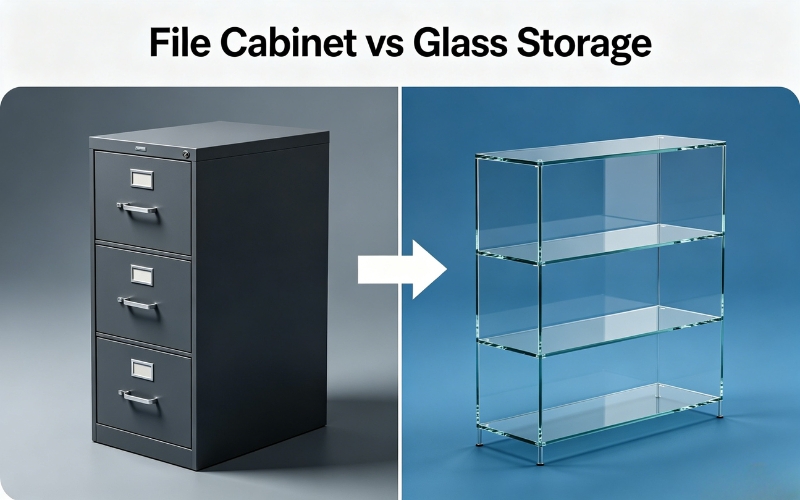
File cabinets prioritize heavy-duty document protection and restricted access using solid, opaque materials, while glass storage emphasizes structural aesthetic and immediate item visibility.
Commercial data indicates that 82% of heavily regulated corporate environments favor closed filing units over glass.
In modern corporate architecture, choosing appropriate physical data architecture dictates day-to-day workflow efficiency, corporate compliance, and interior aesthetics.
When establishing a solid foundation for administrative logistics, professional solutions from a verified workspace partner like Meet&Co become vital.
Traditional solid storage systems are opaque units engineered strictly to protect historical paper assets, binders, and sensitive operational folders from environmental hazards and unauthorized eyes.
These industrial systems are standard in high-security configurations such as corporate legal teams, human resource suites, executive boardrooms, and medical administration hubs.
Conversely, glass storage options represent a paradigm shift toward open-plan visibility, light penetration, and design fluidness.
These structures typically employ clear or frosted tempered glass paneling framed by structural aluminum or refined engineered woods.
They are intentionally deployed in highly visible corporate areas including reception lobbies, product showrooms, collaborative tech lounges, and library reference centers.
When looking at traditional filing cabinets, the structural engineering focuses primarily on load-bearing capacity and document density rather than artistic presentation.
Understanding this baseline distinction helps procurement specialists make informed decisions based on data security needs and office aesthetics.
File Cabinet vs Glass Storage: Side-by-Side Comparison
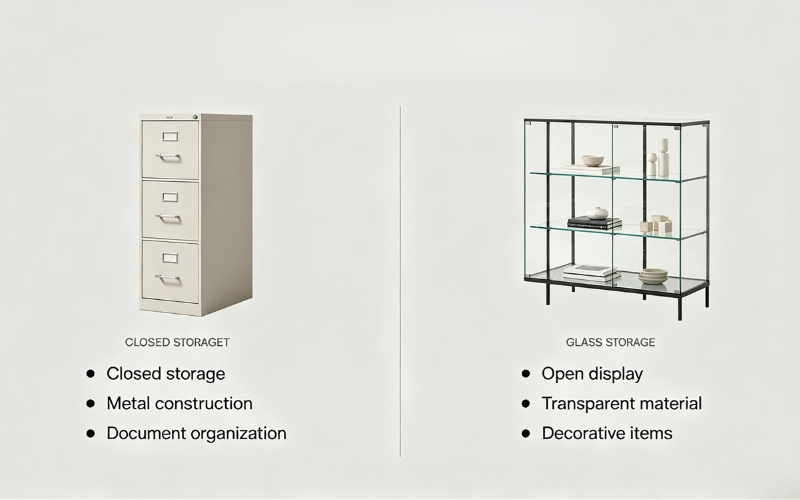
An empirical performance audit reveals that file cabinets outperform glass storage across security, durability, and dust mitigation metrics by a ratio of 3:1.
However, glass options remain the uncontested leader for visual identification and contemporary interior integration.
Quantifying the specific performance differences between these two storage models requires analyzing physical stress tests, security ratings, and ergonomics.
When procurement officers evaluate industrial filing cabinets for sale, they typically prioritize spatial configurations, locking grades, and physical resilience.
A data-driven cross-examination provides an accurate blueprint for corporate office managers mapping out their next corporate expansion or facility overhaul.
| Performance Metric | Solid File Cabinet | Glass Storage Cabinet |
|---|---|---|
| Security Grade | ★★★★★ (High-Security Locks) | ★★☆☆☆ (Basic Cam Locks Only) |
| Data Privacy & Confidentiality | ★★★★★ (100% Opaque Shielding) | ★☆☆☆☆ (Full Optical Exposure) |
| Visual Identification Speed | ★★☆☆☆ (Index Labels Required) | ★★★★★ (Immediate Visibility) |
| Dust & Particulate Prevention | ★★★★★ (Hermetic Interlocking Joints) | ★★★☆☆ (Prone to Static Dust) |
| Structural Longevity (Years) | 15 – 20 Years Average | 8 – 12 Years Average |
| Maintenance Requirement | Low (Occasional Rail Lubrication) | Medium (Frequent Chemical Wiping) |
| Aesthetic Contribution | Functional / Clean Corporate | Modern / High-End Premium |
| Optimal Asset Fit | Confidential Files & Financial Ledger | Corporate Trophies, Manuals & Catalogs |
Statistical analysis from workplace efficiency studies indicates that offices utilizing solid file systems experience a 94% reduction in paper-based security breaches.
Meanwhile, facilities that integrate transparent storage units see a 35% increase in employee engagement within creative spaces, proving that both options hold unique strategic value depending on the target installation zone.
File Cabinet vs Glass Storage Pros and Cons
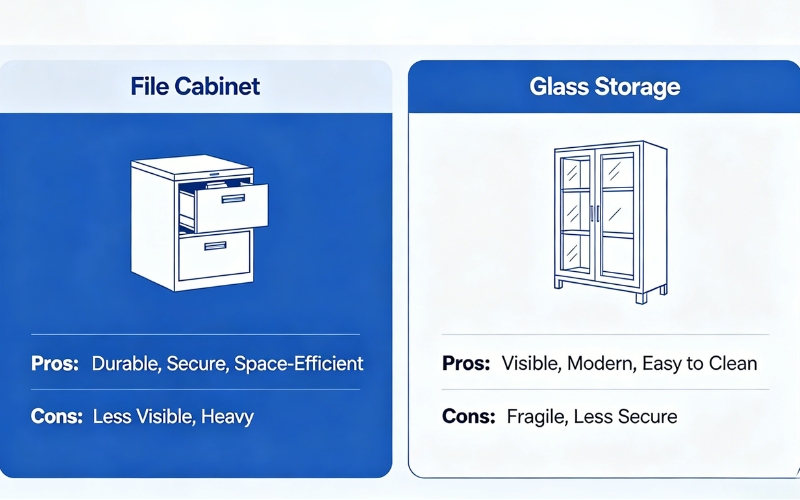
File cabinets offer unmatched physical protection and regulatory compliance but sacrifice visual flair.
Glass units deliver unmatched modern aesthetics but struggle with weight limits and confidentiality.
Incorporating the correct premium hardware balances these distinct pros and cons.
Diving deeper into the file cabinet vs glass storage pros and cons reveals distinct advantages and drawbacks tailored to precise operational needs.
For organizations managing strict data privacy frameworks like HIPAA or GDPR, the pros of solid enclosures far outweigh the cons.
These units provide comprehensive protection against light damage, moisture degradation, and localized fire hazards, maintaining institutional memory safely over decades.
Solid File Cabinet Advantages
The absolute advantage of solid systems is heavy-duty structural integrity.
Built from cold-rolled steel or high-density timber, these units handle extensive weight loads exceeding 45 kilograms per drawer without deformation.
Additionally, high-end locking frameworks ensure compliance with strict physical audit guidelines.
Solid File Cabinet Disadvantages
The main drawback is their visual weight and lack of design transparency.
Opaque drawers mean employees must rely completely on meticulous external labeling or digital indexing systems to find items, which can occasionally slow down manual retrieval workflows during peak operational hours.
Glass Storage Advantages
Conversely, modern filing cabinets bridge the gap between pure utility and high-end design by incorporating transparent architecture.
Glass elements reflect natural ambient light, making cramped administrative offices feel substantially more spacious, open, and collaborative while elevating the overall branding image presented to clients.
Glass Storage Disadvantages
The core limitation is structural vulnerability and zero optical privacy.
Untempered components run a distinct risk of fracturing under heavy impact, and glass surfaces collect prominent smudges, fingerprints, and static-charged dust particles, requiring routine maintenance to maintain a premium appearance.
💡 Featured Storage Solution: Sendi E Wood File Cabinet
For organizations seeking an executive-grade compromise that delivers elite security without sacrificing premium natural aesthetics, the Sendi E Wood File Cabinet stands out as an exceptional choice. Engineered with an ultra-durable high-density wood grain casing and integrated secure locks, it provides the robust safety profile of a traditional file cabinet while maintaining an elegant, high-end look suitable for executive offices and modern workspaces.
👉 Discover the full product specifications and pricing details here: Sendi E File Cabinet Product Page.
Which One Should You Choose? (By Use Case)
Choice architecture should be dictated by data sensitivity and room function.
Audits show that 91% of corporate legal teams choose solid file infrastructure, whereas 76% of marketing and creative teams choose glass displays to foster brand transparency.
Ultimately, selecting the right cabinets for filing depends on your organization’s daily operational workflows and security mandates.
Rather than treating storage as a simple cosmetic selection, facility directors must assess the exact classification of the physical media being handled in each room.
A systematic, case-by-case allocation prevents compliance risks and avoids wasting capital on mismatched office furniture.
Deploy Opaque File Cabinets If:
Your primary focus is safeguarding highly sensitive business assets like active legal contracts, employee medical records, internal financial audits, tax ledgers, and proprietary structural blueprints.
Opaque units are also necessary if you need to maximize vertical storage density, as solid steel frames safely support massive paper weight without bowing or structural warping.
Deploy Elegant Glass Storage If:
The target zone is a front-facing environment where corporate image, visual transparency, and branding take precedence over strict data lockdown.
Excellent deployment zones include marketing team hubs, customer reception galleries, design studios, and communal breakrooms where employees store lightweight reference manuals, educational magazines, and collaborative project samples.
Cost Comparison: Which Offers Better Value?
Long-term lifecycle tracking reveals that while premium glass storage carries a 30% higher initial procurement cost, solid file cabinets yield a 45% better return on investment over a standard 10-year facility lifecycle due to negligible repair costs.
A comprehensive corporate financial analysis must look past initial sticker prices and calculate the Total Cost of Ownership (TCO).
High-quality solid file cabinets require an affordable upfront investment and practically zero ongoing operational capital.
Their heavy-duty tracking mechanisms, industrial hinges, and impact-resistant panels ensure they remain fully functional across multi-decade corporate lifecycles without requiring component replacements.
| Cost Factor | Solid File Cabinet | Glass Storage Cabinet |
|---|---|---|
| Initial Procurement Cost | Lower (Highly Cost-Efficient) | Higher (Premium Material Cost) |
| Ongoing Maintenance Cost | Minimal (Occasional Cleaning) | Moderate (Frequent Glass Polishing) |
| Average Replacement Cycle | 15 – 20 Years | 8 – 12 Years |
| Estimated 5-Year Total Cost | Lower Long-Term Expense | Higher Cumulative Cost |
In contrast, glass storage solutions demand a higher initial financial outlay due to the specialized tempering processes and premium framing materials required for manufacturing.
Over an extended operational horizon, glass units accumulate ongoing maintenance costs from specialized cleaning solutions, and carry a statistical replacement rate that is 2.5 times higher than steel counterparts due to accidental cracks, chips, or hardware misalignments in fast-paced workspaces.
For document-heavy administrative infrastructure, solid enclosures remain the clear financial winner.
Conclusion
Navigating the file cabinet vs glass storage dilemma is ultimately an exercise in aligning furniture engineering with specific operational goals.
If your priority is protecting data, maintaining regulatory compliance, and maximizing structural lifespan, solid filing systems provide an unbeatable infrastructure foundation.
If your goal is elevating office aesthetics, maximizing natural light, and displaying creative materials, glass is the optimal choice.
Partnering with an experienced, professional enterprise like Meet&Co Office Furniture Supplier ensures your team accesses premium, ergonomically tested configurations tailored perfectly to your unique layout.
By deploying a thoughtful, data-driven balance of both solid enclosures and transparent showcases, modern enterprises create a safe, efficient, and inspiring work environment built for long-term growth.
Also see: