






 Meet&Co
Walk into a classroom built in 2026, and you might not recognize it. Gone are the rigid rows of identical desks bolted to the floor. Gone are the one-size-fits-all chairs that force every student into the same posture. In their place: lightweight tables on casters, seating options that invite choice and movement, and technology woven invisibly into every surface.
The shift isn’t about aesthetics—it’s about how learning happens. Today’s classrooms must support direct instruction, small-group collaboration, independent work, and whole-class discussion, often within a single class period. Teachers are managing multiple learning modes at once, and students are expected to move fluidly between them. Furniture that can’t adapt becomes a barrier.
This guide explores the key trends shaping school furniture in 2026, from flexible layouts to biophilic design, and what they mean for educators, administrators, and students.
Why Classroom Design Matters More Than Ever

Before diving into specific trends, it’s worth understanding the forces driving this transformation.
1. Enrollment Shifts and Budget Pressures
Declining birth rates, regional migration, and expanding school choice are creating uneven enrollment patterns across districts. Schools are no longer planning for predictable growth—families are actively choosing schools based on programs, culture, and the overall student experience.
At the same time, pandemic-era funding is sunsetting, leaving districts with tighter budgets and rising operational costs. Rather than building new facilities, many schools are focusing on modernization and phased upgrades. High-impact areas—classrooms, libraries, and shared commons—are being reimagined to serve multiple functions throughout the day.
2. The Physical Environment as a Signal
The physical environment often communicates a school’s values before a single conversation happens. Entry spaces, shared commons, and classrooms send strong signals about whether a school feels welcoming, current, and responsive to student needs. Furniture that reflects student voice and choice helps foster emotional safety—a prerequisite for engagement and learning.
Trend 1: Flexible and Modular Furniture
The End of Fixed Classrooms
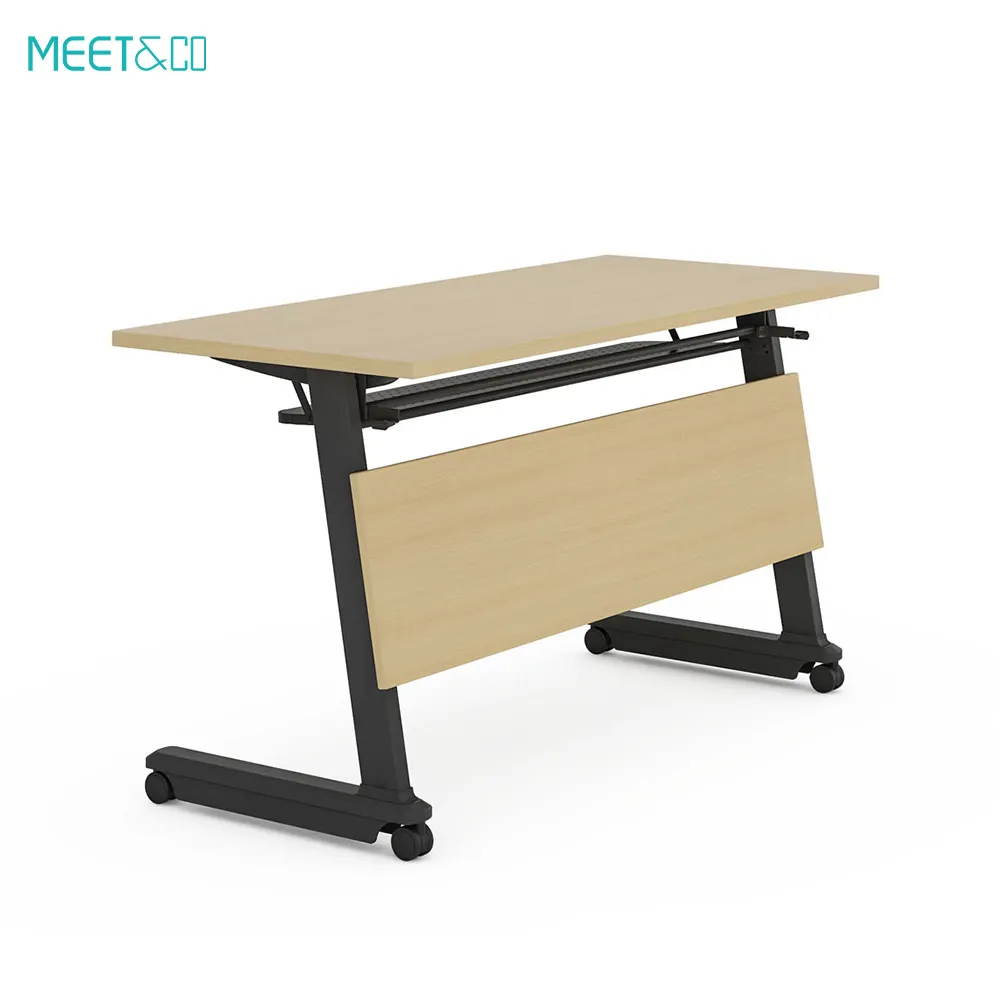
The most fundamental shift in 2026 is the move away from single-purpose spaces. Classrooms must now support multiple teaching methods—often simultaneously. This requires furniture that can be reconfigured in seconds, not hours.
| Feature | What It Looks Like | Why It Matters |
| Mobile tables | Tables with casters and quick-lock brakes | Teachers can rearrange layouts between classes or even within a single period |
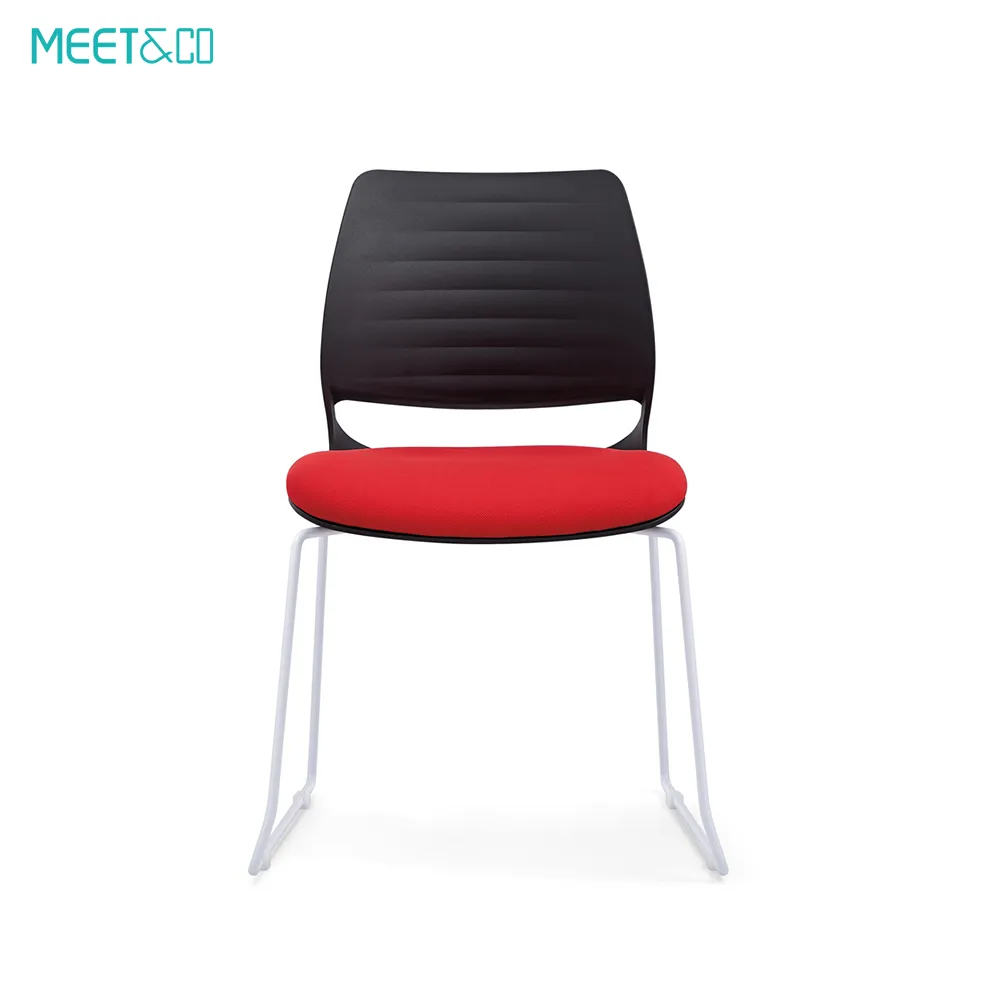
| Nesting and stacking | Chairs that stack, tables that nest | Maximizes floor space when not in use; enables quick transitions |
| Modular components | Trapezoid, wedge, and curved tables | Connect in different configurations for groups, circles, or rows |
| Lightweight materials | Desks and chairs from recycled materials | Students can move furniture themselves, taking ownership of their space |
Also see: What Are the Different Types of School Desks?
Trend 2: Technology Integration (Without the Clutter)
The Smart Classroom
Digital devices are everywhere in modern classrooms, but that doesn’t mean cords should be. One of the most consistent furniture requests in K-12 is power access that feels invisible.
| Technology Feature | Description | Benefit |
| Integrated power ports | Outlets built into tables and desks | Devices charge without cord clutter |
| Cable management systems | Channels and grommets that hide wiring | Safe circulation paths, easy supervision |
| Smart furniture | Desks with posture monitoring, height memory | Personalized ergonomics, classroom feedback |
| Charging carts | Secure storage with integrated power | Device management for 1:1 programs |
From Smart Products to Smart Environments
The trend is moving beyond individual “smart” products toward connected learning environments. Furniture, lighting, air quality systems, and projection equipment increasingly work together to optimize the classroom experience. For example, desks might communicate with teaching terminals to enable real-time feedback during lessons.
Early coordination between IT and facilities teams is essential. Tamper-resistant outlets, power modules that match furniture placement, and avoiding cords in walkways all require planning before installation.
Trend 3: Active Learning and Collaborative Configurations
Beyond Rows and Desks
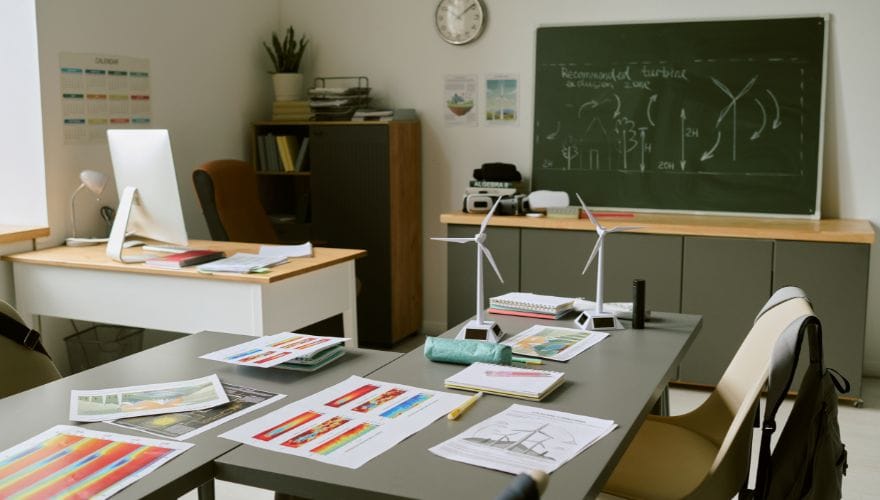
Active learning environments rely on collaboration and interaction, which are difficult to achieve with stationary, heavy furniture. The focus has shifted from accommodating people to enhancing instructional strategies.
| Configuration | Typical Use | Furniture Needed |
| Small group pods | Project work, discussion | Tables for 3–6 students, mobile |
| Whole-class circle | Socratic seminars, community meetings | Lightweight chairs, clear sightlines |
| Individual focus zones | Quiet work, assessment | Carrels, soft seating away from traffic |
| Stations/rotations | Different activities simultaneously | Multiple table types defining zones |
Intentional Seating Variety
Flexible seating has matured beyond a random mix of novelty chairs. Schools now choose intentional variety that supports different postures and attention needs :
- Ergonomic student chairs in multiple sizes
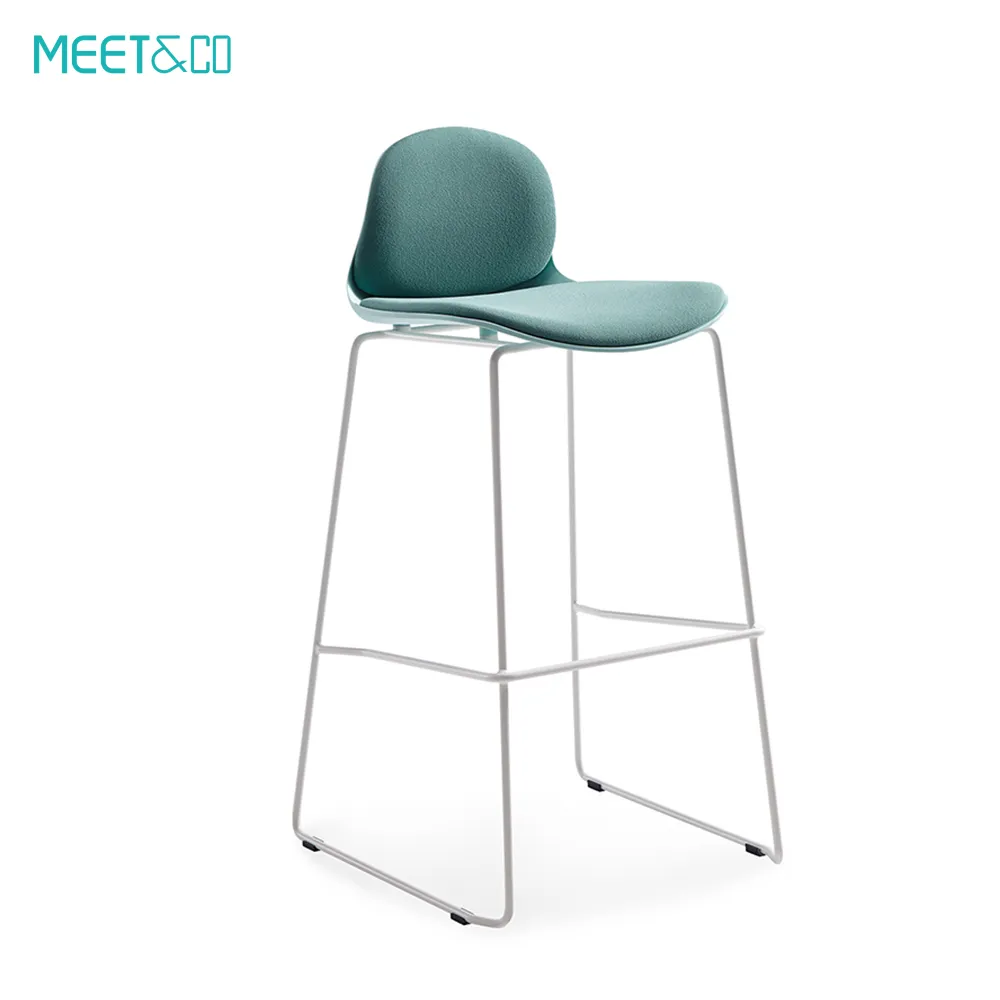
- Stools and perch seating for quick transitions
- Soft seating zones for reading and small-group instruction
- Standing-height options, especially in upper grades
The goal isn’t chaos—it’s choice. Research links seating choice with motivation and engagement, especially when clear procedures and expectations are in place.
Also see: Best Flexible Seating Classroom Ideas for Modern Learning in 2026
Trend 4: Inclusive Design as the Baseline
Universal Design in Practice
Inclusive design is moving from special purchase to standard specification. Districts want learning spaces that support a wide range of physical, sensory, and attention needs from day one.
| Inclusive Feature | What It Looks Like | Who It Helps |
| Height-adjustable desks | Electric or crank adjustment | Wheelchair users, standing preferences |
| Tilt-top work surfaces | Angled for reading/writing | Students with visual or fine motor needs |
| Sensory-friendly seating | Rocking chairs, wobble stools | Neurodivergent students needing regulation |
| Varied seat sizes | Multiple chair dimensions available | Students of all body types |
The Kerala Example
In a significant policy shift, Kerala’s education department has recommended replacing traditional bench-and-desk systems with individual chairs equipped with writing pads. The goal: eliminate the concept of “backbenches” and create classrooms that encourage independent seating, group activities, and active participation.
The expert committee also recommended:
- U-shaped seating for pre-primary and primary classes
- Circular or semi-circular arrangements for high school
- Locker facilities in classrooms
- A shift from fixed classrooms to subject-based classrooms
As the report states, “Replacing the traditional ‘sit-and-listen’ method, modern seating patterns encouraging standing, movement and activity are proposed”.
Trend 5: Acoustic Comfort and Sensory Wellness
The Noise Challenge
As classrooms become more collaborative, noise becomes a bigger barrier to learning. Open-plan areas, learning commons, and even cafeterias used for instruction all face acoustic challenges.
| Acoustic Solution | How It Works | Best Application |
| Upholstered panels | Sound-absorbing fabric surfaces | Walls, partitions |
| Soft seating | Furniture that absorbs rather than reflects | Reading nooks, collaboration zones |
| Acoustic screens | Mobile partitions between groups | Open-plan classrooms |
| Carpet | Reduces noise from moving furniture | Whole-room installation |
Biophilic Design and Color Psychology
The psychological impact of learning environments is gaining attention. Schools are moving away from clinical, grey spaces toward designs that incorporate natural elements and thoughtful color palettes.
- Nature-inspired greens and blues create calm “quiet zones” for independent reading
- Warm earth tones reduce anxiety and foster belonging
- Natural light and views connect students to the outdoors
- Organic shapes soften institutional edges
Leiden University’s pilot classroom specifically chose “calming colour such as green or beige” for walls, paired with carpet for better acoustics. These choices aren’t decorative—they’re functional.
Trend 6: Sustainability and Material Innovation
The Shift to Eco-Friendly Materials
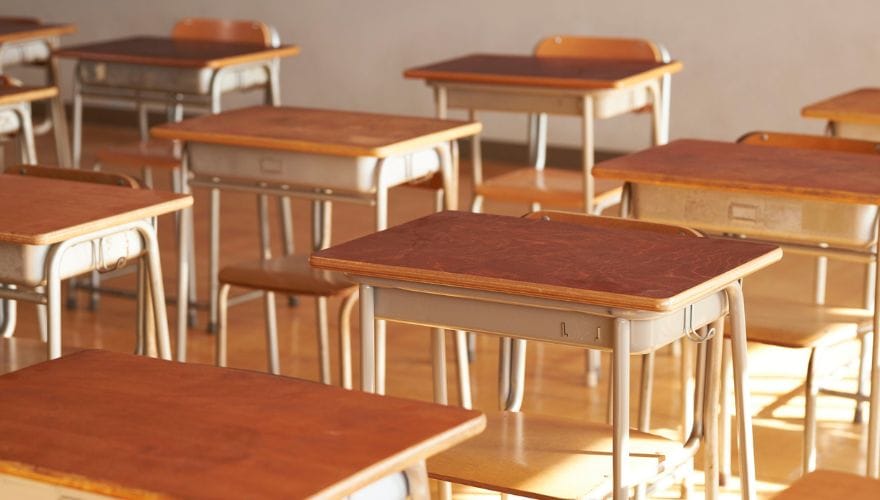
Sustainability in school furniture is increasingly measured by lifecycle value, not just marketing claims. Districts want long warranties, replaceable parts, and materials that hold up to real student use.
| Material | Properties | Applications |
| HDPE (High-Density Polyethylene) | 100% recyclable, weather-resistant, splinter-free | Outdoor furniture |
| Engineered bamboo | Climate-resilient, fast-growing, durable | Tables and chairs |
| Recycled steel | Strong, sustainable frame material | Desk bases, chair frames |
| PET acoustic panels | Made from recycled plastic bottles | Sound absorption |
Real-World Implementation
The Philippines Department of Education began rolling out bamboo school furniture in February 2026, with 144,081 sets for learners and 3,235 sets for teachers. The move implements Executive Order No. 879, which mandates that at least 20 percent of school furniture be made from bamboo—a policy issued over a decade ago but now being actively enforced.
Manufacturers increasingly prioritize non-toxic, low-VOC materials that protect indoor air quality. Testing disinfectant compatibility and confirming cleaning protocols with custodial staff are now standard procurement steps.
Trend 7: Outdoor Learning Environments
Learning Beyond Four Walls
As educators look for meaningful ways to balance digital learning with hands-on experiences, outdoor learning spaces are gaining traction—particularly in early childhood education.
In February 2026, School Specialty launched its Childcraft Out2Grow Outdoor Furniture line, designed to extend learning beyond traditional classrooms. The collection includes:
- Sand and water tables for sensory play
- Planters for gardening and science observation
- Play kitchens for dramatic play
- Collaborative benches for group activities
The furniture is manufactured from HDPE, which withstands sun, rain, and daily wear without rotting, cracking, or fading. Rust-resistant hardware, splinter-free rounded corners, and limited lifetime warranties make these investments practical for schools.
As Jennifer Fernandez, Early Childhood Education Strategist at School Specialty, explains: “Knowing the many benefits of outdoor learning—academic, health, social and emotional—I’m thrilled that we can help early childhood programs create engaging environments where PreK–2 students can truly reap those benefits”.
Comparison: Key Trends at a Glance
| Trend | Core Idea | 2026 Implementation |
| Flexible furniture | Spaces adapt to teaching needs | Mobile tables, nesting chairs, modular components |
| Tech integration | Power and connectivity built-in | USB ports, cable management, smart furniture |
| Active learning | Furniture supports collaboration | Small-group tables, whiteboard surfaces, varied seating |
| Inclusive design | Universal access from day one | Height-adjustable desks, sensory options, multiple sizes |
| Acoustic comfort | Managing noise in active spaces | Soft surfaces, acoustic screens, carpet |
| Sustainability | Lifecycle value, eco-materials | HDPE, bamboo, recycled steel, low-VOC |
| Outdoor learning | Learning beyond four walls | Weather-resistant furniture, nature-based activities |
FAQ
1. How quickly can a flexible classroom be reconfigured?
With quality furniture on casters and established routines, a 24-seat room can transition between configurations in under two minutes. Teachers report that students quickly learn to participate in reconfiguration when expectations are clear.
2. Is flexible seating actually effective?
Evidence and educator reporting link seating choice with motivation and engagement, especially when clear procedures and expectations are in place. Research from the University of Salford indicates that well-designed classroom layouts can boost academic performance by up to 16 percent.
3. What should schools prioritize if budgets are limited?
Start with mobility and versatility—student tables and chairs that reconfigure easily. Then add targeted upgrades like soft seating zones, integrated power, and acoustic elements as funding allows.
4. How do outdoor classrooms work in varying weather?
Quality outdoor furniture uses materials like HDPE that resist sun, rain, and snow without rotting, cracking, or fading. Schools can also create sheltered outdoor areas or plan outdoor learning around favorable weather windows.
5. What about students with physical disabilities?
Inclusive design means adjustable-height furniture in every classroom, not just specialized rooms. Consistent, predictable layouts support wayfinding, and varied seating options ensure all students can participate comfortably.
6. How long should school furniture last?
Quality furniture from reputable manufacturers is designed to withstand 10–15 years of daily classroom use. Modular systems with replaceable components extend lifespan further.
Also see: How to Find the Best School Furniture Suppliers in Singapore: A Practical Guide
Conclusion
The classroom of 2026 is no longer a static space where students passively receive information. It’s an adaptive environment that responds to different teaching methods, learning needs, and activities throughout the day. Furniture isn’t just equipment—it’s a pedagogical tool that shapes how students interact, collaborate, and engage.
Seven key trends define this transformation:
- Flexible and modular furniture that reconfigures instantly
- Seamless technology integration that powers devices without clutter
- Active learning configurations that support collaboration
- Inclusive design that welcomes all learners
- Acoustic comfort that manages noise in active spaces
- Sustainable materials that protect both students and the planet
- Outdoor learning environments that extend education beyond four walls
For schools planning upgrades, the message is clear: start with educational goals, not furniture catalogs. Involve teachers and students in the process. Test configurations before committing. And remember that quality matters—well-made furniture costs more upfront but delivers better long-term value and student outcomes.
As one school furniture expert noted, “Learning environments that reflect student voice and choice help foster emotional safety. When students feel supported by their surroundings, participation follows”. In 2026, that’s not a luxury—it’s the baseline.
References:
- https://www.eschoolnews.com/newsline/2026/02/03/school-specialty-expands-learning-beyond-the-screen-with-new-outdoor-furniture-line/?ITnewsletter23
- https://www.eschoolnews.com/newsline/2026/02/03/school-specialty-expands-learning-beyond-the-screen-with-new-outdoor-furniture-line/?ITnewsletter23
- https://tribune.net.ph/2026/01/19/deped-to-roll-out-bamboo-school-furniture-starting-february
_35.webp)


