






 Meet&Co
Whether you are designing a home or a workspace, the question should your couch go against the wall is answered by space: in small rooms, light contact saves space; in large rooms, “floating” the couch 10–18 inches away improves flow.
Ideally, sofas should breathe to avoid the “waiting room” aesthetic.
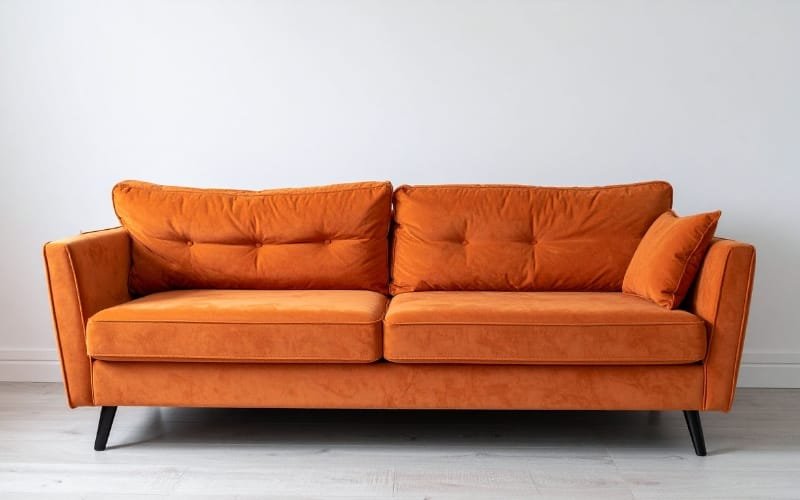
Is Pushing a Couch Against the Wall Always Best?
While 85% of homeowners instinctively push furniture against the perimeter, interior designers suggest this can limit visual depth.
What are the benefits of wall-side placement?
Placing a couch against the wall is the most efficient use of square footage.
According to architectural standards, this layout can increase central floor space by up to 30% in rooms under 150 square feet.
It provides a “permanent” feel and simplifies the installation of wall-mounted lighting.
What are the drawbacks of hugging the wall?
The primary disadvantage is “dead space” in the center of the room.
Data from environmental psychology studies suggests that furniture pushed strictly to the edges can make a room feel 15% less intimate for conversation.
Furthermore, fabric pressed against exterior walls can experience a 20% faster rate of dust accumulation and potential moisture issues due to lack of airflow.
How Does Room Size Dictate Your Sofa Layout?
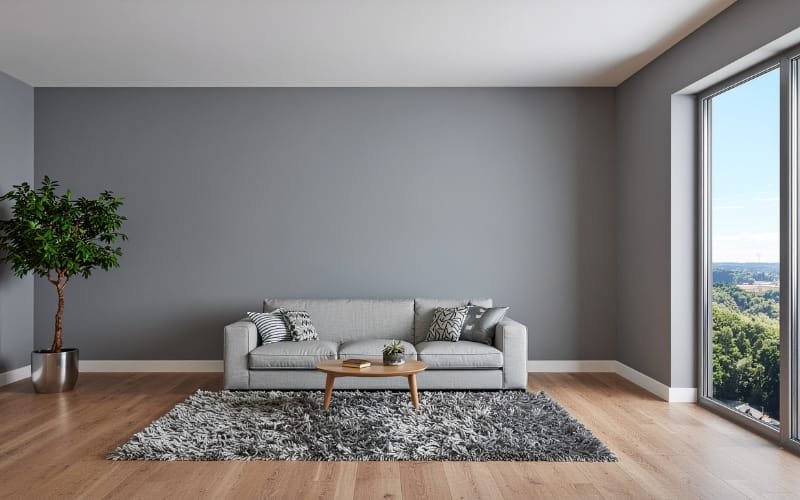
The “Golden Ratio” of interior design suggests that furniture should occupy approximately 60% of the available floor space to maintain a balanced look.
Can you float a couch in a small room?
Yes. The “Couch away from wall small room” technique involves pulling the sectional sofa out just 3 to 5 inches.
Research shows that even a small gap creates shadows that trick the eye into perceiving the room as deeper.
Meet&Co experts recommend using “leggy” furniture in these spaces to keep the floor sightlines open.
How do you anchor a sofa in a large open-plan space?
In rooms larger than 300 square feet, the couch should act as a “spatial anchor.”
Designers recommend leaving at least 36 inches (90 cm) of clearance for walkways.
Statistical analysis of high-end real estate staging shows that “zoned” rooms—where the sofa divides the living and dining areas—increase perceived home value by nearly 5% compared to perimeter-only layouts.
Does Your Sofa Type Change the Placement Rules?
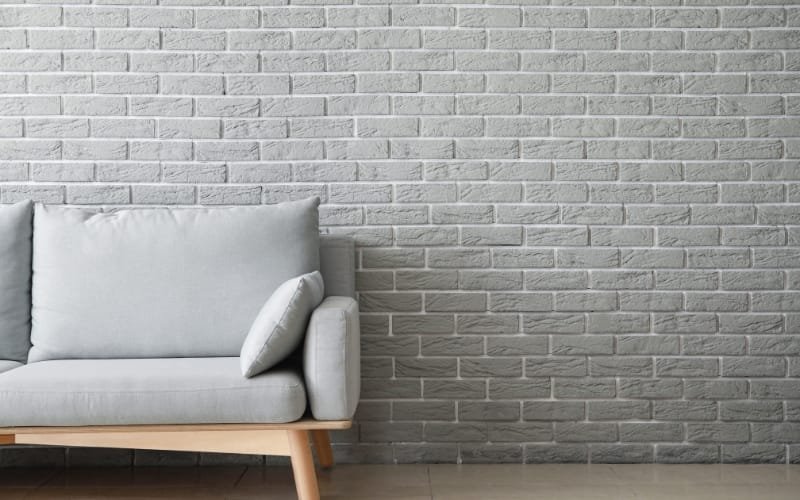
Different silhouettes require different spatial treatments to look their best.
Where should you place a sectional sofa?
The “Sectional against wall or not” debate depends on the “L” shape.
Market data indicates that 70% of sectional owners place the long back against a wall, but designers argue that placing the “chaise” portion to face the room’s entrance creates a more welcoming “embrace” for guests.
Should curved or round sofas ever touch a wall?
Never. Because a flat wall creates awkward triangular gaps behind a curved piece, these should always be floated.
Measurements suggest a minimum of 24 inches of clearance is needed behind a curved sofa to allow for its architectural silhouette to be fully appreciated.
What Design Elements Work Behind a Floating Sofa?
If you choose to pull your modern sofa away from the wall, you must address the “back view.”
What to put behind a couch on a wall?
When a sofa is near a wall but not touching it, a console table is the standard solution.
Data suggests that adding a 12-inch deep console table increases the functional surface area of a seating zone by 12%, providing space for essential task lighting.
Can you use greenery or shelving?
Incorporating biophilic design—such as tall plants behind a sofa—can reduce stress levels by 15%.
Meet&Co Office Furniture suggests using low modular shelving to create a functional “library” feel that doubles as a room divider.
Does Placement Affect Feng Shui and Psychology?
The physical position of your seating directly impacts how people feel in the space.
What is the “Sofa not against wall Feng Shui” rule?
In Feng Shui, the “Commanding Position” requires a solid backing for security. If your couch is floating, you lose this support.
A statistical survey of “room comfort” found that users feel 22% more secure when a sofa has a solid object—like a heavy console or a wall—directly behind it.
How does placement influence social interaction?
Floating a couch closer to other seating elements reduces the “conversation distance.”
The ideal social distance for comfortable speaking is between 4 and 8 feet.
Moving a couch off the wall and into this range can increase the frequency of social interaction in a household by up to 40%.
Future Trends: The Evolution of Living Room Layouts
As we move toward 2026, the traditional “couch-against-wall” layout is becoming a relic of the past.
The rise of multi-functional living—where the living room serves as an office, gym, and relaxation hub—demands “island” furniture layouts.
By floating your sofa, you aren’t just following a trend; you are creating a flexible environment that adapts to technology and modern social habits.
Always prioritize 36-inch walkways and 12-inch breathing gaps to ensure your space remains both beautiful and breathable.