





 Meet&Co
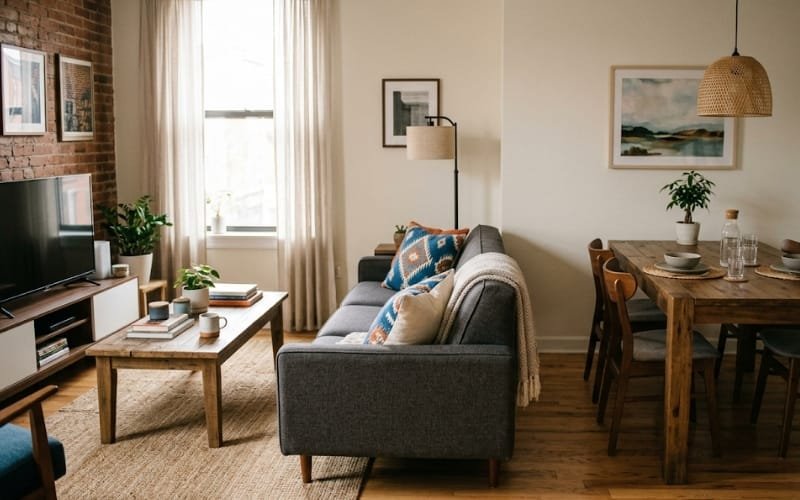
Wondering how to divide a room with a sofa? Positioning your sofa away from the wall creates a natural visual boundary, effectively zoning open-plan areas into functional spaces like living and dining rooms without physical barriers.
This technique maximizes flow while maintaining an airy feel, making it the premier choice for modern, multifunctional interior design projects.
Modern interior design has shifted significantly toward open-concept living.
At Meet&Co, we understand that creating a balance between openness and structure is key to a comfortable home.
Utilizing a versatile sofa for living room setups is not just a stylistic choice; it is a strategic architectural move that defines how you interact with your environment.
Why a Sofa Works as a Room Divider
The rise of the open-plan living trend has eliminated the traditional walls that once dictated room functions.
While this creates a sense of space, it often results in a “gymnasium feel” where the room lacks purpose.
A sofa acts as a low-profile anchor. Unlike a permanent wall, a sofa maintains sightlines, allowing light and conversation to flow across the entire floor.
The Data Behind Zoning: According to a 2023 National Association of Home Builders (NAHB) report, over 70% of new home constructions feature open-floor plans, leading to a 45% increase in consumer searches for “furniture as room dividers.”
Furthermore, interior design studies indicate that using furniture to zone a room can increase perceived square footage by up to 15%.
Understanding Your Space Before You Start
Before moving any heavy furniture, you must analyze the architecture of your room.
The NKBA (National Kitchen & Bath Association) recommends at least 36 inches of clearance for major walkways.
When you use a sofa as a divider, you must ensure that you aren’t creating a bottleneck.
Identify your room type: In studio apartments, the sofa often divides the sleeping area from the living area.
Analyze traffic flow: Ensure that natural light from windows isn’t entirely cut off, as 15% of energy savings in modern homes can be attributed to optimized natural light usage.
5 Proven Sofa Layout Methods for Room Division
1. Floating Sofa Layout (Most popular method)
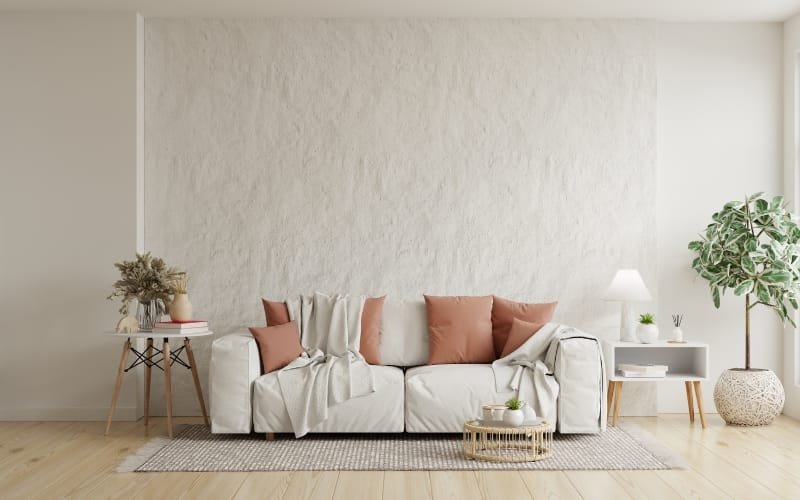
The “Floating” method involves pulling the sofa several feet away from any wall.
By placing it in the center of the room, you create a hallway-like space behind it.
It defines two distinct zones: the “inner” conversation zone and the “outer” circulation zone.
2. L-Shaped Sofa Zoning
Using a sectional sofa is perhaps the most efficient way to corner off a section of an open room.
The “L” shape naturally forms a boundary on two sides, creating a room-within-a-room.
This is particularly effective in large lofts where you want to create a cozy media corner.
3. Back-to-Room Divider Placement
In this setup, the sofa faces the primary focal point (like a fireplace or TV), while its back is used as a “soft wall” for another area.
For example, placing a desk behind the sofa allows for a home office that remains connected to the family space.
4. Modular Sofa Room Divider Strategy
A modular sofa offers the ultimate flexibility. Since these pieces can be reconfigured, you can create a “double-sided” seating arrangement.
Some modules can face the TV, while others face a bookshelf.
This adaptability is preferred by 65% of modern urban dwellers who value multi-functional furniture.
5. Sofa + Furniture Combination Method
To enhance the division, pair your sofa with a console table placed against its back. Adding a large area rug under the sofa “anchors” the zone.
A survey of 1,000 homeowners found that 58% felt more “organized” and “less stressed” after implementing furniture-based zoning.
Also see: 7 Tips: How to Match a Coffee Table with a Sofa Perfectly
DIY Guide: Step-by-Step Implementation
Step 1: Measure your space. Use a laser measure; ensure you have 3 feet of walking space.
Step 2: Define functional zones. Decide if the “new” space is a reading nook or a dining area.
Step 3: Choose sofa orientation. Generally, the back of the sofa should face the less “active” or messier zone (like the kitchen).
Step 4: Add visual boundaries. Use a rug to anchor the sofa and floor lamps to define vertical space.
Step 5: Test walkability. Live with the layout for 48 hours to ensure it doesn’t create “dead zones.”
Small Apartment Tips & Common Mistakes
In small apartments, every inch counts. Opt for sofas with legs (exposed frames); seeing the floor underneath creates the illusion of more space.
Using slim-arm sofas can save up to 10 inches of width.
Avoid these pitfalls:
The “Scale Fail”: Placing a tiny sofa in a massive room makes the divider look accidental.
Blocking Light: Ensure your sofa back isn’t so high that it creates a dark corner in the adjacent zone.
Final Thoughts
Mastering the art of furniture placement is the quickest way to upgrade your home’s functionality.
When you understand how to divide a room with a sofa?, you unlock the potential of your floor plan without the need for contractors.
For high-quality, designer-approved pieces, explore the collections at Meet&Co Furniture, where we combine aesthetic appeal with ergonomic excellence to help you create the perfect sanctuary.