





 Meet&Co
STEM classrooms are not like traditional learning spaces. They are dynamic environments where students assemble robots, prototype with 3D printers, conduct chemistry experiments, and store works-in-progress across multiple class periods. The storage needs are vastly different—and vastly more demanding.
Without the right storage systems, STEM classrooms quickly devolve into chaos. Materials get lost. Tools go missing. Projects get damaged. Teachers spend precious minutes hunting for supplies instead of teaching. According to STEM educators, space and organization are precious commodities for any STEM classroom, and having the ability to store and organize commonly used tools and supplies is especially important where hands-on learning and creating is the norm — an environment that often lends itself to the accumulation of clutter.
This guide covers the unique storage challenges of STEM education, the types of solutions available, and four top-rated storage products to keep your classroom organized and functional.
Why STEM Classrooms Need Specialized Storage
Traditional classroom storage—a few cabinets and a teacher’s desk—does not work for STEM. Here is what makes STEM storage different:
| Challenge | Why It Matters |
|---|---|
| Small, loose parts | Screws, resistors, connectors, and building pieces get lost without compartmentalized storage |
| Works-in-progress | Projects span multiple days or weeks; need secure, labeled storage between sessions |
| Shared equipment | 3D printers, microscopes, robotics kits, and soldering stations move between students and classes |
| Chemical and tool safety | Hazardous materials and sharp tools require locked, compliant storage |
| Frequent reconfiguration | Classrooms shift between direct instruction, group work, and open build sessions |
| High wear and tear | Storage units must withstand daily student use, spills, and heavy equipment |
Makerspace furniture, in particular, needs to be built differently. Heavy equipment, power tools, and student experimentation mean furniture takes considerably more wear than standard classroom pieces. Work surfaces need to withstand soldering irons, paint spills, and the weight of manufacturing equipment.
Types of Storage Solutions for STEM Classrooms
| Storage Type | Best For | Key Features |
|---|---|---|
| Mobile storage carts | Shared materials, device charging, moving supplies between zones | Locking casters, multiple shelves or bins, power integration |
| Modular bin systems | Small parts, robotics components, sorted materials | Clear bins, color-coded labels, stackable design |
| Lockable chemical cabinets | Hazardous materials, acids, flammables | Double-wall steel, spill-proof sills, ventilation, NFPA/OSHA compliant |
| Pegboard and tool organizers | Hand tools, frequently used equipment | Visual organization, easy access, foam-fit or magnetic |
| Under-desk storage | Individual student supplies, personal project kits | Trays that slide under desks, durable metal or plastic construction |
| Vertical storage towers | Maximizing limited floor space | Multi-tiered shelves, bin storage, secure in-progress projects |
| Workstation-integrated storage | Keeping materials at the point of use | Built-in drawers, shelves, or bins within worktables |
Top 4 Storage Solutions for STEM Classrooms
Here are four excellent storage products covering different STEM needs—from mobile materials management to chemical safety.
| Product | Type | Key Feature | Best For |
|---|---|---|---|
| Meet&Co Yunsen Series A Wood Storage Cabinet | Fixed wooden cabinet | Solid wood construction, multiple compartments, lockable | General classroom storage, teacher supplies, STEM materials |
| 1st Maker Space Traveling Tool Cart | Specialized tool cart | Integrated power station, six identical toolboxes, foam-fit tool panels | Makerspaces, robotics labs, CTE programs |
| Seville Classics 10-Drawer Organizer Cart | Mobile drawer cart | 10 clear plastic drawers, rolling casters, lightweight | Small parts storage, student supplies, arts & crafts |
| IKEA Raskog Trolley | Open wire trolley | 3-tier mesh baskets, slim footprint, multi-purpose | Classroom supplies, group materials, mobile project caddies |
1. Meet&Co Yunsen Series A Wood Storage Cabinet
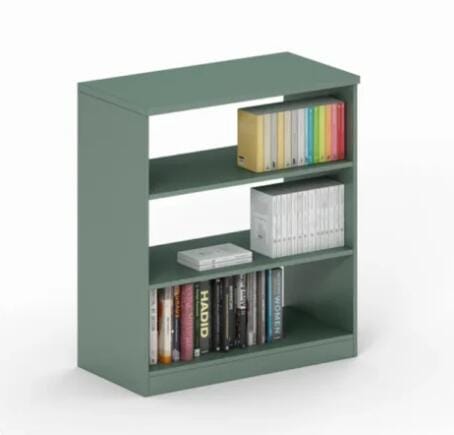
The Meet&Co Yunsen Series A Wood Storage Cabinet is a solid wood storage solution designed for classrooms that value durability, aesthetics, and organization. Its natural wood finish brings warmth to STEM environments, while the sturdy construction and multiple compartments provide secure, accessible storage for materials, tools, and student projects. The cabinet can be locked to secure valuable or hazardous items, making it suitable for both general supplies and sensitive equipment.
Key Features:
-
Solid wood construction: Built to withstand daily classroom use; natural finish resists scratches and stains.
-
Multiple compartments: Adjustable shelves and internal bins for organizing small parts, kits, and larger equipment.
-
Lockable doors: Secure materials when not in use; keys included.
-
Stable, stationary design: Ideal for permanent placement along classroom walls or in storage corners.
-
Eco-friendly materials: Low-VOC finish suitable for indoor learning environments.
-
Customizable options: Available in various sizes and configurations (contact factory).
Why it is great for STEM classrooms: The Yunsen cabinet provides a permanent home for frequently used but not mobile items—like bulk supply boxes, extra robotics kits, or teacher resources. Its solid wood construction is more durable than particle board alternatives, and the lockable feature adds safety for tools or chemicals that require restricted access.
Best for: General classroom storage, teacher supplies, STEM materials that do not require mobility, and any space where a warm, natural aesthetic is desired.
2. 1st Maker Space Traveling Tool Cart
https://1stmakerspace.com/makerspace-furniture/
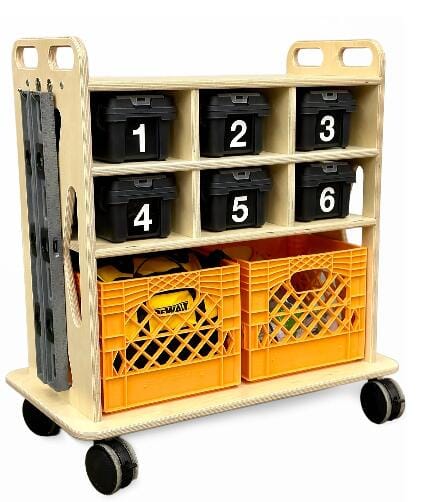
The 1st Maker Space Traveling Tool Cart is purpose-built for makerspaces, robotics labs, and Career & Technical Education (CTE) programs. This cart exemplifies purpose-built mobile storage with integrated power stations and six identical toolboxes equipped with essential small hand tools. The design prevents equipment loss while teaching students professional workspace habits.
Key Features:
-
Integrated power station: Keeps equipment ready for immediate use without extension cords tangling across the floor.
-
Six identical toolboxes: Contains essential small hand tools; identical sets across carts mean students can find what they need regardless of which cart they use.
-
Foam-fit tool panels: Show exactly where each hand tool belongs, making cleanup intuitive and teaching organization skills.
-
Purpose-built mobility: Designed for constant movement between workstations and class periods.
-
Equipment-specific options: Also available as dedicated 3D printing carts and laser cutter carts with optimal working height, material storage, and ventilation access.
Why it is great for STEM classrooms: The Traveling Tool Cart solves the two biggest problems in makerspaces: lost tools and tangled cords. The foam-fit panels make it immediately obvious when a tool is missing, and the integrated power means no tripping hazards. For schools with specialized technology, the equipment-specific carts position printers and lasers at the right height while providing dedicated material storage.
Best for: Makerspaces, robotics labs, CTE programs, and any hands-on classroom where tools move between students and stations.
3. Seville Classics 10-Drawer Organizer Cart
https://www.amazon.co.jp/-/en/Seville-Classics-Organizer-Classroom-Scrapbooking/dp/B00394HMS2
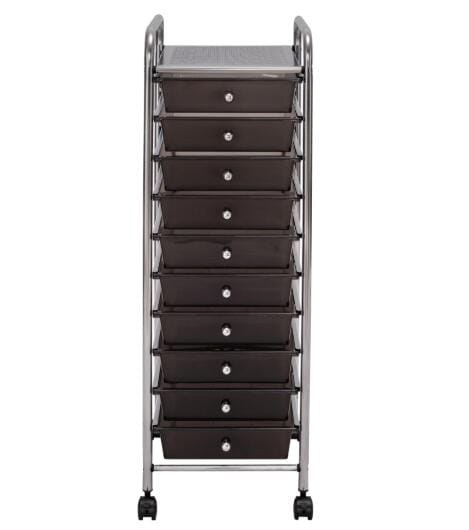
The Seville Classics 10-Drawer Organizer Cart is a lightweight, mobile storage solution perfect for organizing small STEM components like resistors, connectors, robotics screws, and crafting supplies. Its ten clear plastic drawers allow students and teachers to see contents at a glance, eliminating rummaging and saving precious class time. The cart rolls easily on smooth-rolling casters, and the durable plastic construction is easy to wipe clean after spills or messy projects.
Key Features:
-
10 clear drawers: Each drawer is transparent, making contents immediately identifiable.
-
Mobile on casters: 4 rolling casters (2 locking) for easy repositioning between workstations.
-
Lightweight yet sturdy: Plastic frame resists dents and is easy to move, even for students.
-
Compact footprint: Fits on a countertop or under a desk; ideal for tight classroom spaces.
-
Tool-free assembly: No tools required – snap together in minutes.
-
Multi-purpose use: Perfect for electronics components, 3D printing filament spools, art supplies, or student project kits.
Why it is great for STEM classrooms: The Seville Classics cart solves the problem of loose small parts. Each drawer can be labeled (tape or sticker) to organize resistors, LEDs, screws, and other tiny components. Students can roll the cart to their workstation, grab what they need, and return items to the correct drawer – teaching organization and responsibility.
Best for: Small parts storage, electronics components, robotics screws and connectors, arts and crafts supplies, and any classroom where quick visual access to materials is essential.
4. IKEA Raskog Trolley
https://www.ikea.com/jp/en/p/raskog-trolley-grey-blue-10591771/
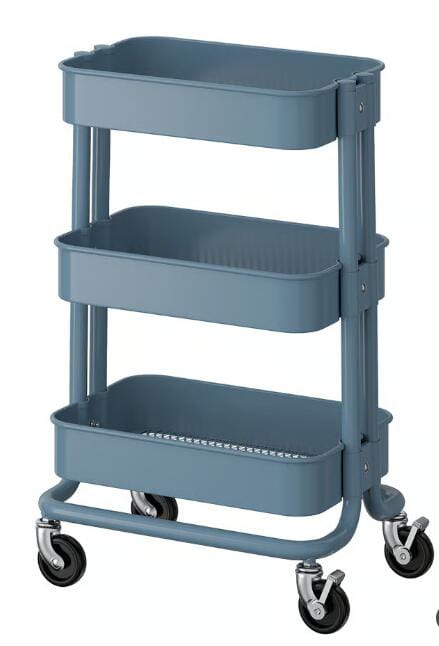
The IKEA Raskog Trolley is a beloved, versatile storage solution found in classrooms, makerspaces, and homes worldwide. Its three deep wire mesh baskets are perfect for holding larger STEM materials – robotics kits, toolboxes, 3D printing tools, or class sets of supplies. The slim, tall design fits into narrow spaces between desks or against walls, and the four swivel casters (two locking) make it incredibly easy to move wherever it is needed.
Key Features:
-
Three spacious wire baskets: Deep enough for books, toolboxes, project bins, or 3D printing tools.
-
Slim footprint: Only 13¾” wide (35 cm); fits in tight spaces.
-
Four swivel casters (two locking): Rolls smoothly; locks keep it stable during use.
-
Sturdy steel construction: Powder-coated finish resists rust and scratches.
-
Easy to clean: Wipe down with disinfectant wipes – ideal for messy STEM projects.
-
Available in multiple colors: Grey-blue, white, dark grey, and other seasonal colors.
Why it is great for STEM classrooms: The Raskog is a teacher favorite for good reason. Use one trolley for each group or station – load it with all the materials a team needs for a project, and roll it to their workspace. At the end of class, roll the trolley back to storage. The open baskets make it easy to see what is inside without opening drawers, and the slim design means you can store several trolleys side by side.
Best for: Group project supplies, mobile workstation caddies, robotics kit storage, 3D printing tool organization, and any STEM activity where materials need to move with student teams.
| Feature | Meet&Co Yunsen Cabinet | 1st Maker Space Tool Cart | Seville Classics Cart | IKEA Raskog Trolley |
|---|---|---|---|---|
| Primary Use | General materials, teacher supplies | Tools + power | Small parts, electronics | Group supplies, project caddies |
| Mobility | Stationary | Mobile (casters) | Mobile (casters) | Mobile (4 swivel casters) |
| Power Integration | No | Yes (integrated) | No | No |
| Organization Method | Shelves + compartments | Foam-fit panels + toolboxes | 10 clear drawers | 3 open wire baskets |
| Lockable | Yes (doors) | No | No | No |
| Material | Solid wood | Steel + plastic | Plastic frame | Powder-coated steel |
| Footprint | Standard cabinet | Large | Compact (countertop or floor) | Slim (13.75″ wide) |
| Best For | Permanent classroom storage | Tool-heavy makerspaces | Small loose parts | Mobile group materials |
How to Choose the Right Storage for Your STEM Classroom
Step 1: Assess Your Materials Inventory
Walk through your classroom and categorize everything you need to store:
-
Small loose parts (screws, resistors, connectors): Need compartmentalized bins with lids.
-
Robotics kits and electronics: Need dedicated totes or bins to keep sets complete.
-
Hand tools (pliers, screwdrivers, soldering irons): Need foam-fit tool panels or pegboards for visual organization.
-
Chemicals and hazardous materials: Need lockable, compliant safety cabinets.
-
Works-in-progress (student projects): Need labeled shelves or bins that can be secured between classes.
-
Shared devices (Chromebooks, tablets, probeware): Need charging carts with cable management.
Step 2: Choose Between Mobility and Permanence
-
Mobile storage works best for shared materials that move between activity zones or classrooms. Carts on locking casters can be rolled to wherever students are working.
-
Fixed storage works best for heavy equipment, chemicals, and items that do not need to move. Wall-mounted pegboards and stationary cabinets maximize floor space.
Step 3: Plan for Student Access
Who will access the storage?
-
Teacher-only storage (chemicals, sharp tools, expensive equipment): Lockable cabinets placed in secure areas.
-
Student-accessible storage (supplies, project bins, hand tools): Open shelving or labeled bins at student height. The SAFFE tote cart is designed specifically for student use with easy-grip handles.
-
Hybrid approach: Some materials open to students, some locked. This teaches responsibility while maintaining safety.
Step 4: Label Everything
One of the best ways to keep your STEM classroom organized is to simply know what goes where. Try sorting materials into bins based on similarity of use, then label them accordingly to allow students to find them quickly and return them correctly at the end of the day.
Labeling tips:
-
Use color-coded bins for different subjects or class periods.
-
Include visual labels (photos or drawings) for younger students.
-
Tape a map of the storage system to the cart or cabinet so students can see at a glance what belongs where.
-
Keep tools used most often easily accessible; less frequently used items can go on higher shelves or in closets.
Additional Organization Tips from STEM Educators
1. Use Clear Bins
Clear storage containers help prevent lids from being tossed around as students open the tops looking for supplies. When students can see what is inside, they spend less time rummaging and more time building.
2. Create Individual Kits
“I had plastic pencil/school boxes that I used for individual Strawbees use. That way everyone had their own set of Strawbees and could start off with a specific amount. If students needed more, they could always go to the main storage box and get more,” said Sara Hays, Student Enrichment Specialist. Individual kits promote student responsibility and reduce mess.
3. Use Tackle Boxes for Small Parts
Fishing tackle boxes offer customizable compartments that can grow with your needs. By adding color-coded masking tape and labels, educators can make it easy for even the youngest builders to find and sort pieces correctly. As a bonus, stackability saves shelf space.
4. Keep Works-in-Progress Secure
Vertical storage towers secure in-progress projects and shared materials without consuming valuable work area, and the modular design scales as your program grows. Consider labeled milk crates or wire shelving for larger projects.
5. Plan for Future Lessons
Regularly, there needs to be advance consideration for what projects are up next and what the special needs will be. Consider the weekly task of organizing colored bins for each day of the week. In advance, place the items you will need in the corresponding bins.
Frequently Asked Questions
1. What is the most important storage solution for a new STEM classroom?
Start with mobile storage carts. They are versatile, affordable, and immediately useful for any STEM activity. A single cart can transport supplies between stations, store in-progress projects, and be reconfigured as your needs evolve. Once you have mobility covered, add specialized storage: tool organizers for makerspaces, chemical cabinets for science labs, and bin systems for small parts.
2. How do I store student projects that span multiple days?
Use labeled shelves, bins, or vertical storage towers. Assign each student or group a numbered bin or shelf space. Take a photo of the project and attach it to the bin for easy identification. Ensure the storage area is secure so projects are not disturbed between classes.
3. What are the requirements for chemical storage in a school STEM lab?
Chemical storage must meet NFPA and OSHA standards. Key requirements include:
-
Lockable cabinets (teacher access only)
-
Corrosion-resistant construction for acids (wood or coated metal)
-
Spill containment sills (minimum 2″ deep)
-
Ventilation for flammable storage
-
Segregation of incompatible chemicals (acids separate from bases, flammables separate from oxidizers)
-
Cabinets securely anchored to prevent tipping
The Flinn Stak-a-Cab meets these requirements and is designed specifically for school science labs.
4. How do I prevent tools from getting lost in a makerspace?
Foam-fit tool panels are the most effective solution. Each tool has a cutout in foam, making it immediately obvious when a tool is missing. This teaches students professional workspace habits and makes cleanup intuitive. Pegboards with outlined tool positions work well too, but foam provides better organization for small tools.
5. Should storage be open or closed?
Both. Open storage (bins on shelves, pegboards) keeps frequently used supplies accessible and visible, promoting student independence. Closed storage (cabinets with doors) hides clutter and secures expensive or hazardous materials. A good STEM classroom uses a mix: open for everyday consumables, closed for special equipment and chemicals.
6. How can I maximize storage in a small STEM classroom?
-
Go vertical: Use vertical storage towers that maximize limited floor space.
-
Use under-desk storage: Trays that slide under student desks keep personal supplies accessible without cluttering workspaces.
-
Choose stackable solutions: Cabinets and bins that stack (like Stak-a-Cab) use vertical space efficiently.
-
Install wall-mounted pegboards: Keep tools off countertops and within easy reach.
-
Use mobile carts: Roll storage out of the way when floor space is needed for activities.
7. What is the best way to organize small electronic components (resistors, LEDs, wires)?
Small parts organizers with adjustable compartments are ideal. Look for:
-
Clear lids so students can see contents
-
Removable dividers to customize compartment sizes
-
Stackable design to save shelf space
-
Labels (printed or color-coded) for quick identification
Fishing tackle boxes, craft organizers, and specialized electronic component storage cases all work well.
Conclusion
The best storage solutions for STEM classrooms are not one-size-fits-all. They are a system of complementary solutions that work together to keep materials accessible, organized, and safe.
-
Choose Meet&Co Mobile Storage Cart for general-purpose mobility and durability—the workhorse of classroom organization.
-
Choose 1st Maker Space Traveling Tool Cart for tool-heavy makerspaces and robotics labs that need integrated power and foam-fit organization.
-
Choose SAFFE Mobile Tote Cart for project-based learning environments where students manage their own supplies in individual totes.
-
Choose Flinn SciMatCo Stak-a-Cab™ for safe, compliant chemical storage in middle school and high school science labs.
Start with the storage that addresses your biggest pain point. If tools go missing, invest in foam-fit organizers. If chemicals are a concern, prioritize safety cabinets. If you are constantly moving supplies around the room, a mobile cart is your first purchase. Layer in additional solutions as your program grows, and always—always—label everything.
With the right storage systems in place, your STEM classroom will be a place where materials are easy to find, projects stay intact, and students spend their time creating—not searching.
Ready to organize your STEM classroom? Explore our storage solutions, including mobile carts and classroom organization systems. Contact us for a free space planning consultation.