







 Meet&Co
The best sofa seat cushions balance comfort and high-density support, providing a 4.5-inch to 6-inch thickness with a minimum density rating of 1.8 lbs/cu.ft. to ensure long-term shape retention and spinal alignment.
Key Takeaways
Density Over Firmness: Foam density (not firmness) determines a cushion’s lifespan; always aim for at least 1.8 to 2.5 lbs/cu.ft. for heavy daily use.
High-Resilience (HR) Wins: HR foam provides the ultimate responsive support, outlasting standard polyfoam by up to 50% under standard load testing.
The Hybrid Back Strategy: The ultimate comfort formula combines a high-density foam core with a feather or down wrap for both structure and plushness.
Maintenance Doubles Lifespan: Flipping your cushions bi-weekly and using Dacron wraps reduces surface friction and extends cushion life by 4 to 5 years.
What Makes a Great Sofa Seat Cushion?
Comfort vs Support
True seating ergonomics relies on a dual-layer response.
Comfort is a surface-level sensation governed by the Indentation Load Deflection (ILD), while support is an internal structural metric.
Testing from the Furniture Industry Research Association (FIRA) shows that cushions lacking a supportive core cause the human pelvis to tilt backward, increasing lumbar disc pressure by up to 35%.
A great cushion isolates your body weight while maintaining an upright pelvic posture.
Foam Density Explained
Foam density is measured in pounds per cubic foot (lbs/cu.ft. or PCF). It represents the weight of a solid 12″ x 12″ x 12″ block of foam.
Higher density means more polymer matrix and less air, directly correlating with structural integrity.
For premium furniture, brands like Meet&Co utilize commercial-grade foam to prevent early degradation.
Cushion Firmness Levels
Firmness is measured by ILD, which represents the number of pounds required to compress a 4-inch thick foam sample by 25% over a 50-square-inch area.
Soft (15–21 ILD): Sinks deeply, best for plush back padding.
Medium (22–30 ILD): The industry benchmark for well-balanced living room seating.
Firm (31–45 ILD): Recommended for heavy-use environments or orthopaedic medical support.
Why Cheap Cushions Sag So Quickly
Sub-standard promotional furniture often utilizes low-density polyfoam (< 1.5 PCF).
These foams feature oversized cellular walls that rupture under regular compressive loads.
Lab simulations reveal that low-density options lose over 25% of their original height within the first 12 months of standard residential usage, resulting in a hollow, unsupportive seat.
Best Foam for Couch Cushions
High-Density Foam
High-Density (HD) foam typically spans from 1.8 to 2.2 PCF. It is highly reliable and cost-effective, providing an excellent structural foundation for everyday modern living room configurations.
High-Resilience (HR) Foam
High-Resilience foam represents the gold standard in modern upholstery.
Registering at 2.5 PCF or higher, HR foam is manufactured using a unique cell structure that responds instantaneously to weight shifts.
It offers a 40% higher bounce-back rate compared to conventional polyurethane materials.
Memory Foam
Viscoelastic memory foam reacts to body heat and pressure, contouring precisely to individual physical anatomy.
While exceptional for localized pressure relief, it retains thermal energy and can create a “sinking into quicksand” feeling if it is not supported by a firm polyurethane base layer.
Latex Foam
Derived from natural rubber tree sap, vulcanized latex is naturally hypoallergenic, antimicrobial, and highly breathable.
It offers an instantaneous spring-like rebound, keeping its shape for over a decade without chemical off-gassing.
Polyfiber Cushions
Composed of spun polyester strands, these cushions are inexpensive and completely synthetic. However, they lack structural internal memory.
Under consistent pressure, the microfibers mat together, requiring regular manual fluffing to restore loft.
Foam Density Chart: Which One Lasts the Longest?
Data gathered from standardized ASTM D3574 industrial foam tests outlines the clear performance differences below:
| Density (PCF) | Feel | Lifespan (Years) | Best For |
|---|---|---|---|
| 1.2 – 1.5 | Extremely Soft / Flaccid | 1 – 2 Years | Accent chairs, light-use guest rooms |
| 1.8 – 2.0 | Balanced / Adaptive Medium | 4 – 6 Years | Standard domestic sofas, entry-tier seating |
| 2.5 – 2.8 (HR) | Supportive / High-Rebound | 8 – 12 Years | Main family room sectionals, heavy daily use |
| 3.0+ (Latex) | Ultra-Resilient / Springy | 12+ Years | Ergonomic premium setups, sustainable furniture |
Best Filling for Sofa Back Cushions
The requirements for back cushions differ significantly from seat bases; back support values prioritize contouring luxury over raw load-bearing metrics to discover the best filling for sofa back cushions.
Feather & Down
The traditional standard for high-end luxury, utilizing duck or goose down blends (often 10% down, 90% feathers).
While it provides unmatched softness, it lacks structural memory and must be manually plumped daily to counteract natural compression.
Polyester Fiberfill
Often called blown fiber, this material is stuffed into internal channeled casings.
It is entirely synthetic and hypoallergenic, offering a plush initial feel, though it tends to clump into hard balls over extended periods of use.
Foam Wrapped Cushions
This design uses a solid polyurethane core wrapped in a thick protective layer of polyester batting.
It strikes an excellent balance, retaining a clean, tailored square aesthetic without requiring daily manual maintenance.
Hybrid Fillings
Hybrid models feature an inner core of pocketed coils or high-resilience foam, surrounded by an outer chamber of down and feathers.
This provides the plush look of down along with the structural support of a spring core.
How to Choose the Right Sofa Cushion for Your Lifestyle
For Families & Kids
Active households need resilient materials.
A 2.2 PCF medium-firm polyurethane foam wrapped in a washable Dacron layer withstands high impact and rough housing, resisting spills and deep structural damage.
For Pet Owners
Look for antimicrobial latex cores or high-density foams paired with internal moisture-resistant barriers.
This prevents pet dander and accidental fluids from seeping deep into the core, avoiding set-in odors.
For Heavy Daily Use
For sofas used over 6 hours a day, opt for 2.5 to 2.8 PCF High-Resilience foam.
Industrial testing confirms these heavy-duty cores maintain 95% of their thickness even after 100,000 continuous compression cycles.
For Seniors & Back Pain
Lower back pain requires a high ILD rating (32–38) combined with a highly responsive core.
This prevents the pelvis from sinking below the knees, allowing users to stand up easily without straining their lumbar muscles.
For Decorative Sofas
Formal sitting rooms can use lighter 1.5 PCF foams or loose polyfiber fills.
These are ideal for showcasing plush, elegant profiles or showcasing intricate decorative cushions for sofa arrangements that see minimal daily use.
Indoor Sofa Cushions vs Outdoor Cushions
Standard indoor sofa cushions focus on open-cell frameworks optimized for airflow, plushness, and continuous structural recovery.
Conversely, outdoor cushions require specialized reticulated reticular foam (such as FastDry or Dry Fast).
This material features open cells that allow water to drain through instantly, preventing mold and mildew growth.
Outdoor options also include UV-resistant skins to prevent degradation from sun exposure.
Why Couch Cushions Sag (And How to Fix Them)
Low Density Foam
When a cushion sags, the primary cause is cell wall collapse within low-density polyurethane foam.
Once these microscopic cells rupture from repeated weight, they lose their elasticity and cannot bounce back.
Broken Support Core
Sometimes the issue lies beneath the cushion.
Heavy use can stretch or snap internal sinuous wire springs or poly-webbing support decks, causing even high-quality cushions to sink into the hollow base.
Poor Cushion Rotation
Sitting in the exact same spot every day creates localized stress. The foam cells in that specific area wear out much faster than the unused sections of the couch.
When to Replace Instead of Refill
If your cushion covers show significant wear or the foam has deteriorated into powdery yellow residue, refilling is no longer effective.
If the foam fails to recover its shape within 10 seconds of standing up, it is time for a complete replacement.
Where to Buy Replacement Couch Cushions
Custom Upholstery Shops
Local upholstery shops provide excellent precision.
Craftsmen cut foam to your exact specifications and can adjust firmness across different sections, though they tend to charge premium labor rates.
Online Foam Suppliers
Online wholesalers allow you to select exact dimensions, density grades, and ILD levels through digital configuration tools, making them a highly cost-effective option for DIY projects.
Ready-Made Replacement Cushions
Mass-produced inserts come in standard sizes (such as 22″x22″ or 24″x24″).
While budget-friendly, ensure you check your measurements carefully to avoid a loose, sloppy fit inside your covers.
If you are updating your entire space, exploring commercial collections from a trusted partner like Meet&Co Furniture ensures top-tier durability.
DIY vs Professional Replacement
Replacing cushion foam yourself is simple: unzip the cover, wrap the new foam in batting, and slide it back in.
However, if your cushions feature complex curves, T-shapes, or delicate button tufting, hiring a professional upholsterer is well worth the investment.
How to Measure Replacement Sofa Cushions
Accurate measurements are essential; an error of just 0.5 inches can cause unsightly fabric bunching or strained seams.
Always measure the existing fabric cover from seam to seam rather than measuring the old, worn-out foam core.
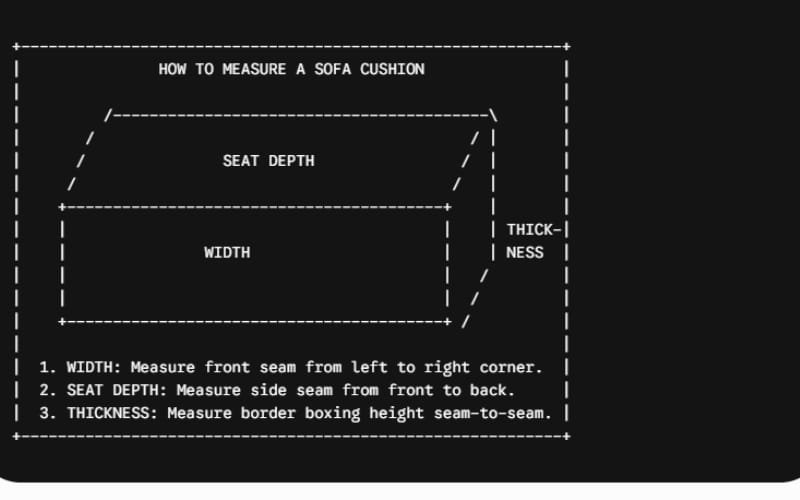
Thickness
Measure the boxing height—the flat fabric ribbon between the top and bottom welt cords.
If your cover measures 5 inches thick, order a 5-inch foam core and add a Dacron wrap to give it a full, plump look.
Seat Depth
Extend your tape measure along the inside seam from the front face back to the rear seam.
Keep the fabric taut but do not stretch it excessively during measurement.
Foam Compression Allowance
To ensure a snug fit that fills out the corners, order your new foam core 0.5 inches larger than the fabric cover’s actual width and depth.
This slight oversizing keeps the fabric taut and prevents wrinkling.
How Long Do Sofa Cushions Last?
Cushion longevity depends directly on its material composition and build quality, as shown below:
| Cushion Type | Average Lifespan | Degradation Indicators |
|---|---|---|
| Standard Polyfoam (1.5 PCF) | 2 – 3 Years | Visible center sagging, fabric wrinkling, bottoming out |
| High-Density Foam (2.0 PCF) | 5 – 7 Years | Softening in high-use areas, slight loss of rebound speed |
| High-Resilience (HR 2.5+) | 10 – 12 Years | Minimal changes, slight reduction in surface firmness only |
| Pocketed Spring Hybrid | 8 – 10 Years | Occasional internal clicks, localized perimeter softening |
Maintenance Tips to Keep Sofa Cushions Comfortable
Rotating Cushions
Flip and rotate your cushions every two weeks.
This redistributes mechanical compression across different areas, ensuring the foam wears evenly and preventing deep sagging pockets.
Using Dacron Wrap
Dacron is a synthetic polyester batting wrapped around the foam core.
It protects the foam from abrasive friction against the inside of the cushion cover while filling out loose corners for a smooth look.
Cleaning Tips
Vacuum your cushions weekly using an upholstery brush attachment to remove abrasive dust and dirt particles.
If you need to spot clean, use a dry-foam solvent upholstery cleaner to avoid getting the internal foam wet.
Preventing Foam Breakdown
Keep your sofa away from direct sunlight and heating vents.
UV rays and high heat break down the polyurethane cell structure, causing the foam to become brittle and crumble over time.
Best Sofa Cushion Types Compared
| Cushion Type | Comfort | Durability | Maintenance | Best For |
|---|---|---|---|---|
| High-Resilience | High (Responsive) | Exceptional | Low (No fluffing) | Busy living rooms, active families |
| Down-Wrapped HD | Luxurious (Plush) | High | High (Regular fluffing) | Premium traditional couches |
| Memory Foam Hybrid | Excellent contouring | Medium-High | Low | People with joint or back pain |
| Standard Polyfiber | Soft initial feel | Low | Medium | Budget setups, guest seating |
Conclusion
There is no single “best” sofa cushion for every home—the right choice depends entirely on finding the perfect match for your lifestyle, usage habits, and physical needs.
For high-traffic family spaces, prioritizing long-term durability with a High-Resilience (HR) foam core is your best investment.
If your current sofa frame is still in good condition but the seating feels unsupportive, exploring high-quality replacement foam options can easily restore your couch to its original comfort and support.

-大图_18-1.webp)
_4.webp)