





 Meet&Co
The hospital waiting room is often the first—and longest—touchpoint a patient has with a healthcare facility. It shapes first impressions, influences perceived wait times, and directly impacts patient satisfaction. Yet many waiting rooms still rely on outdated designs: rows of identical chairs facing a blank wall, creating a space that feels more like a holding pen than a place of care.
Research indicates that the physical environment of a healthcare practice plays a direct role in patient satisfaction and perceived quality of care. A well-designed waiting room can reduce anxiety, improve patient flow, and even enhance clinical outcomes. In fact, the American Academy of Family Physicians (AAFP) suggests that a waiting room should feel more like a hotel lobby than a hospital.
This guide explores the best seating layouts for hospital waiting rooms, balancing patient needs, staff workflows, accessibility requirements, and modern design principles.
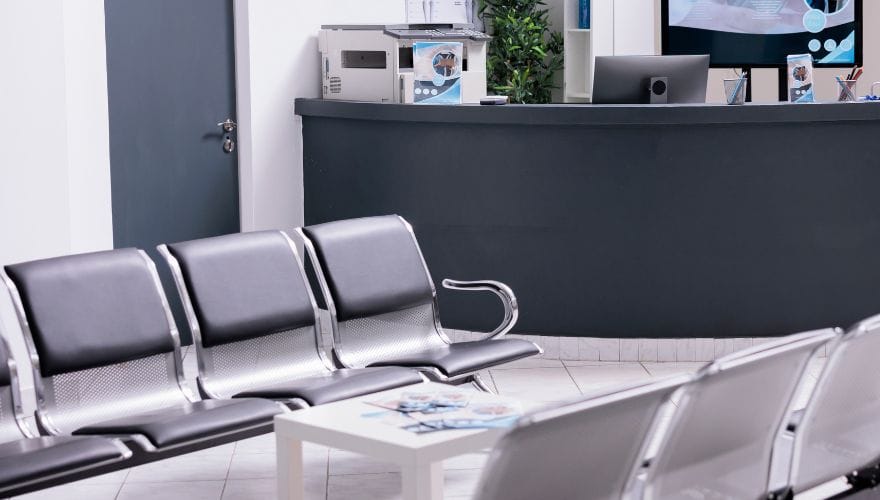
The Core Principles of Waiting Room Layout
Before diving into specific layouts, it is essential to understand the guiding principles that make any waiting room functional and welcoming.
Balance Sightlines, Density, and Privacy
Research suggests that healthcare organizations should focus on three guiding principles for waiting room design: balance sightlines, rethink density, and create both separation and togetherness. Patients need to see the reception desk and entrance doors to feel informed, but they also need visual privacy from strangers sitting nearby.
Design for sightlines to staff and visitor entry points, but also use spacing and screens to create privacy for conversations or appointment check-in.
Design for Diverse Patient Populations
Hospital waiting rooms serve people of all ages, mobility levels, and comfort preferences. A single seating type will not meet everyone‘s needs. Add a variety of seating styles to support different postures, body types, and activities while people wait. This includes individual chairs for those who prefer solitude, grouped seating or small loveseats for families, and child-friendly options for young patients.
Prioritize Accessibility
Waiting rooms must comply with accessibility regulations such as the Americans with Disabilities Act (ADA). Provide wide pathways for wheelchairs, walkers, and strollers to navigate without obstruction. Ensure the reception desk has a lowered, accessible counter section for wheelchair users. Allow approximately 1.5m² for additional wheelchair spaces as needed.
Create a Sense of Control
Patients often feel anxious because they lack control over their situation. Giving them choices—where to sit, whether to be near others or alone, what to look at—restores a sense of agency. Offer seating options that face different directions, provide access to natural light, and include small tables or armrests for personal belongings.
Layout Type 1: Mixed Hybrid Layout
The most effective waiting room layout combines individual chairs, small clusters, and modular elements into a cohesive space. This approach provides maximum flexibility and accommodates diverse patient needs simultaneously.
How it works: The room is divided into distinct zones. Individual chairs line the perimeter, offering privacy and clear sightlines to the reception desk. Small clusters of 2–4 seats occupy the center or corners for families and companions. Modular seating can be rearranged for different group sizes or privacy needs as patient volumes fluctuate.
Why it works: Individual chairs are ideal for those who prefer to sit alone, while grouped seating or small loveseats can comfortably accommodate couples or families. The AAFP and designers note that individual chairs work better than couches or benches because chairs are easier for people with mobility issues or wheelchairs to use.
Best for: Most hospital and clinic waiting rooms, especially those serving mixed patient populations.
Also see: The Complete Guide to Choosing the Perfect Waiting Room Furniture
Layout Type 2: Defined Zonal Layout
This layout creates separate, dedicated areas for different patient groups within the same waiting room.
How it works: The waiting room is subdivided into clear zones: a quiet zone for solo adults needing privacy, a family zone with larger seating and tables, a children‘s zone with smaller chairs and play elements, and an accessible zone with ample space for wheelchairs and walkers. Defined zones reduce crowding and anxiety, as people intuitively find the area that suits their needs.
Why it works: Separate areas for adults, children, and those who may need more privacy allow patients to self-select their comfort level. Child-friendly furniture or play areas are beneficial for families, while older patients or those with disabilities may need chairs with armrests and the right height to help them sit and stand safely.
Best for: Large hospital waiting rooms, emergency departments, and multi-specialty clinics with diverse patient demographics.
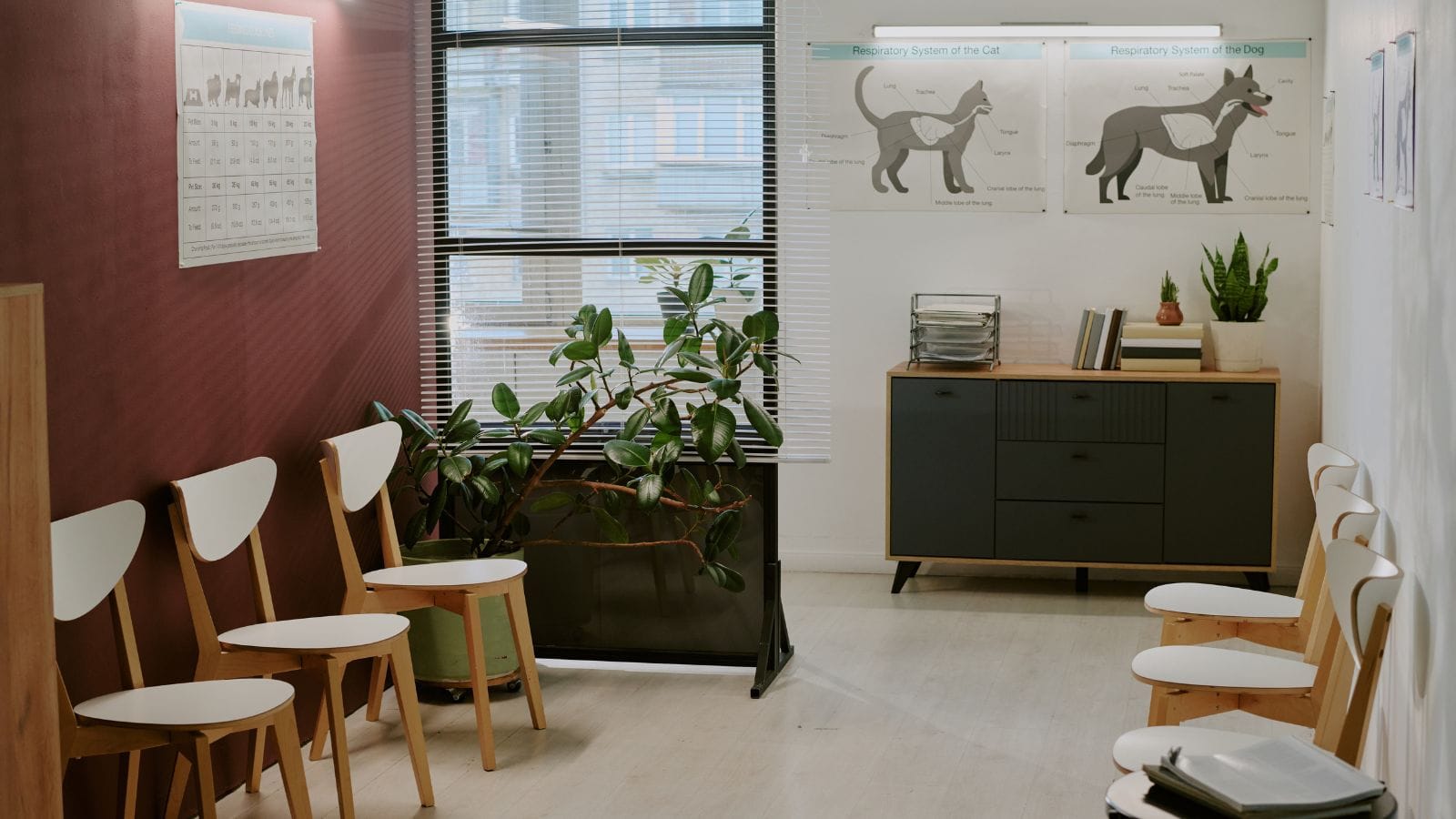
Layout Type 3: Open Layout with Micro-Zones
This layout creates a spacious feel by avoiding heavy partitions, while still offering subtle separation through furniture placement and visual cues.
How it works: Instead of walls or screens, the space is organized using furniture arrangements, area rugs, lighting changes, and planters to define micro-zones. Clear aisles and clear wayfinding throughout help patients navigate intuitively.
Why it works: This approach reduces crowding and anxiety while maintaining a sense of openness. Patients can see the reception desk and entrance doors, which reduces uncertainty and perceived wait time. Micro-zones reduce crowding and anxiety; people intuitively find the check-in and seating area.
Best for: Smaller waiting rooms, clinics with limited square footage, and spaces where a calm, uncluttered aesthetic is desired.
Layout Type 4: Curved or Organic Layout
Moving away from rigid rows, curved and organic layouts arrange seating along gentle arcs or around focal points such as windows, planters, or artwork.
How it works: Seating is positioned along curved lines rather than straight rows. Chairs may face inward toward a central gathering space or outward toward windows and nature views. Benches and modular seating follow organic floor patterns.
Why it works: Seating planned with clear sightlines to doorways helps patients feel informed and reduces anxiety. Curved layouts feel less institutional and more welcoming. Orienting seating perpendicular to exterior views and the reception area enables patients to maintain visibility to the check-in area while enjoying natural light and scenery.
Best for: Modern hospital lobbies, cancer treatment centers, and spaces designed with biophilic principles.
Seating Types and Their Strategic Placement

The best waiting room uses a mix of seating types, each placed intentionally.
1. Individual Chairs with Armrests
Firm, high-backed chairs with sturdy armrests help older adults and individuals with limited mobility to sit and stand with greater ease. Armrests also define personal space, discouraging strangers from sitting too close.
Strategic placement: Position individual chairs along walls and near windows, with clear sightlines to the reception desk and entrance. Avoid placing chairbacks directly in circulation paths.
2. Bariatric Chairs
Bariatric chairs offer wider, more durable seating for larger patients. Heavy-duty bariatric chairs with 500 lb weight capacity and extra-wide seat widths (over 33 inches) provide comfortable support for patients and guests who require additional space and stability.
Strategic placement: Position bariatric chairs at the ends of rows or in accessible zones with extra clearance for transfers. Avoid placing them in tight corners.
3. Loveseats and Benches
Loveseats or benches can accommodate families or patients who need to sit close to a caregiver. Benches offer flexible seating and can accommodate more patients.
Strategic placement: Position loveseats and benches in family zones, away from high-traffic corridors. Provide side tables for personal items.
4. Modular Seating Systems
Fully modular design allows components to be installed, relocated, added, or replaced on site. Seats, backs, tables, legs, and rails can be added or replaced as needs change. Modular soft seating can be scaled and configured to create spaces to meet the needs of patients and their families.
Strategic placement: Use modular systems in large waiting areas that host fluctuating patient volumes. Rearrange configurations for different group sizes or privacy needs.
5. Child-Friendly Seating
Incorporate smaller chairs or benches for young patients, and dedicated play areas or family zones to make the waiting experience more manageable for families.
Strategic placement: Position child-friendly seating near the children‘s zone, away from quiet adult areas but within sightline of parents.
Space Planning: How Many Seats and How Much Space?
Calculating the right number of seats requires balancing patient volume, room size, and circulation needs.
General Space Guidelines
-
Allow approximately 10m² per staff member in administration areas
-
Add 1.2m² per additional person for waiting areas
-
Add 1.5m² for additional wheelchair spaces as required
-
Maintain 1.5m distance between staff at reception where possible, or use physical barriers such as plexiglass screens
Seating Density Recommendations
| Room Type | Seats per 100 sq ft (approx) | Notes |
|---|---|---|
| Small clinic (1–2 providers) | 8–12 | Prioritize mixed seating types |
| Medium practice (3–5 providers) | 15–25 | Include distinct zones |
| Large hospital waiting area | 30–50+ | Modular seating recommended |
Aisle and Pathway Widths
-
Main aisles: Minimum 36–42 inches (91–107 cm) for wheelchair passage
-
Between seating rows: 24–30 inches (61–76 cm) minimum
-
Accessible seating areas: 30 x 48 inches (76 x 122 cm) clear floor space adjacent to accessible seating positions
Top 4 Hospital Waiting Room Chairs and Seating Systems
Here are four excellent seating options specifically designed for healthcare waiting environments.
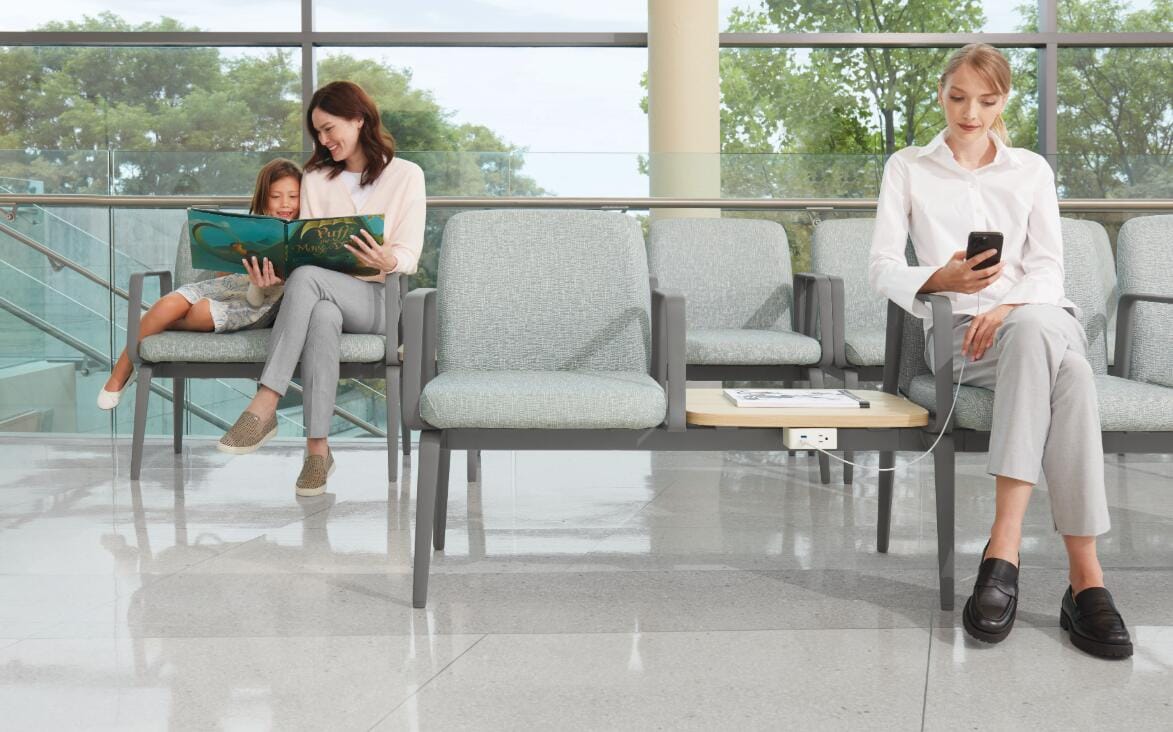
1. Global Comprise Healthcare Seating Series
Source: https://www.globalfurnituregroup.com/healthcare/products/comprise#models-show-all
| Attribute | Details |
|---|---|
| Brand | Global Furniture Group |
| Type | Modular healthcare seating system |
| Key Features | Injection molded nylon arms/legs, impervious to infection control protocols, optional moisture barrier |
| Configurations | Single, two-seat, three-seat chairs and benches; bariatric options; two back heights |
| Warranty | Lifetime (BIFMA certified) |
| Best For | High-traffic hospital waiting areas, infection control priority |
Launching Fall 2025, the Comprise™ series advances the benchmark for healthcare seating in waiting areas, community spaces, and consultation rooms. The injection molded nylon arms and legs are gently contoured, warm to the touch, easy to clean, and impervious to infection control cleaning protocols. Available in freestanding and modular configurations with optional sealed seams and a moisture barrier.
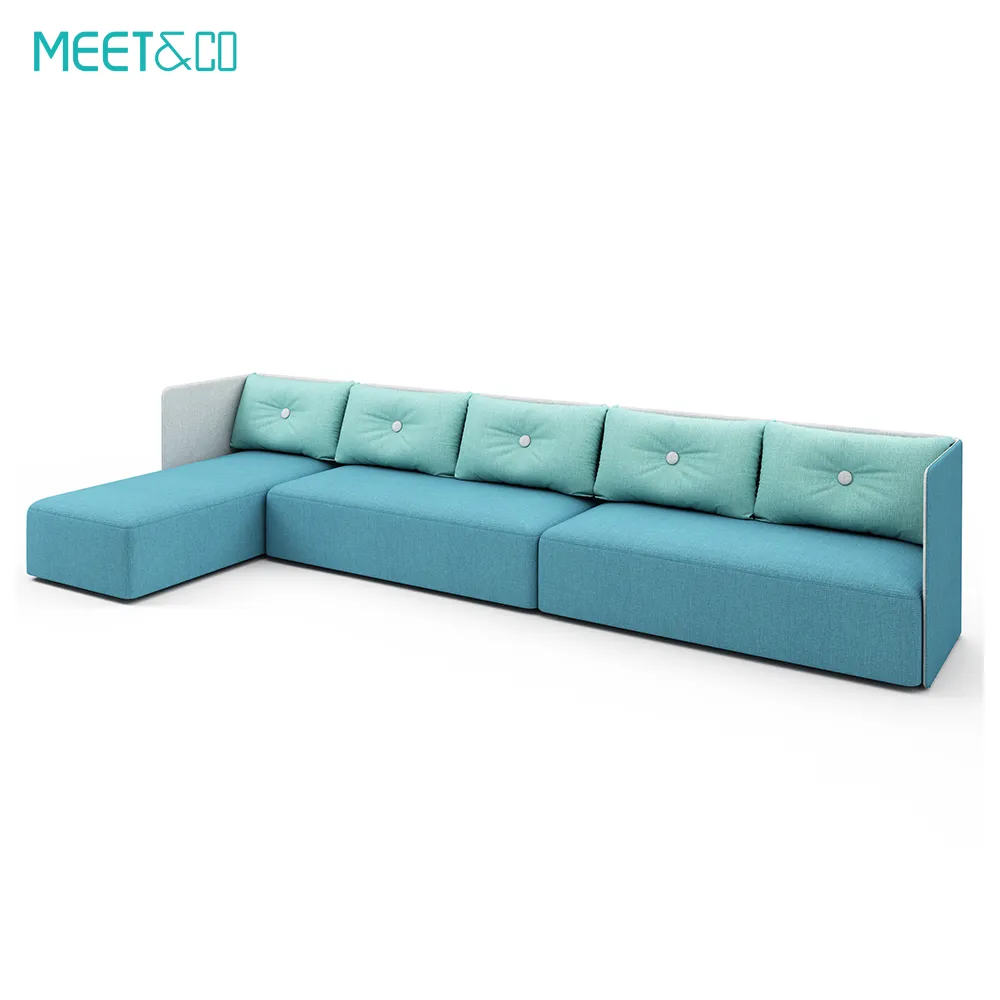
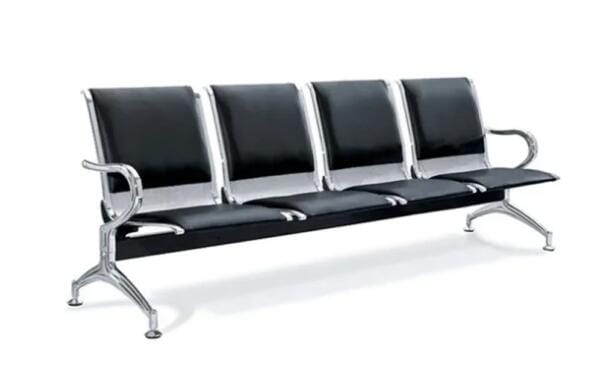
2. Meet&Co PU Leather Waiting Room Chairs
| Attribute | Details |
|---|---|
| Brand | Meet&Co |
| Sofa Type | PU leather waiting room chairs (single or multi-seat configurations) |
| Size (Dimensions) | Single: 680×770×700 mm / 3-seat: 1850×770×700 mm (additional configurations available) |
| Customizable? | Yes (size, color, fabric, configuration) |
| Approx. Price | Factory direct; contact for pricing |
| Material | PU leather, high-density foam, steel frame |
| Warranty | 1–3 years |
The Meet&Co PU Leather Waiting Room Chairs are designed specifically for high-traffic healthcare environments. The PU leather upholstery is non-porous and easy to disinfect, making it ideal for infection control protocols. High-density foam cushions provide patient comfort during extended waits, while the sturdy steel frame ensures long-term durability. Available in single and multi-seat configurations, these chairs can be arranged in rows, clusters, or as standalone seating. Factory-direct pricing offers exceptional value for clinics and hospitals outfitting large waiting areas.
Best for: General hospital waiting rooms, urgent care centers, dental clinics, and any healthcare facility requiring easy-clean, durable seating at a competitive price.
3. Keilhauer Canal Lounge Seating
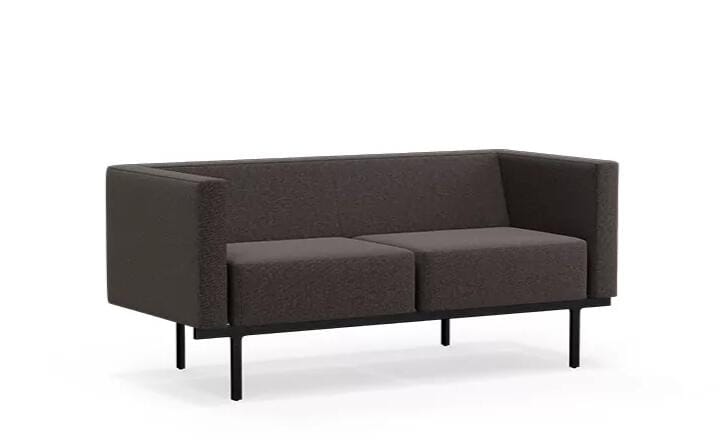
Source: https://keilhauer.com/product-family/canal/?main_category=528&sub_category=529
| Attribute | Details |
|---|---|
| Brand | Keilhauer |
| Type | Lounge seating collection |
| Key Features | 18″ seat height, reinforced armrests, removable seat for cleaning, BIFMA Large Occupant certified |
| Configurations | 2 and 3-seater sofas, benches, lounge chair |
| Warranty | Commercial-grade |
| Best For | Inclusive waiting areas, easy-clean priority |
With a design inspired by strong, architectural elements, Canal brings a structured softness to healthcare lobbies, waiting rooms, and library spaces. The collection‘s 18-inch seat height and reinforced armrests optimize ease of sitting and standing, while the subtle gap between the back, sides, and removable seat offers enhanced access for cleaning. Canal meets the rigorous BIFMA Large Occupant Public and Lounge Seating standard.
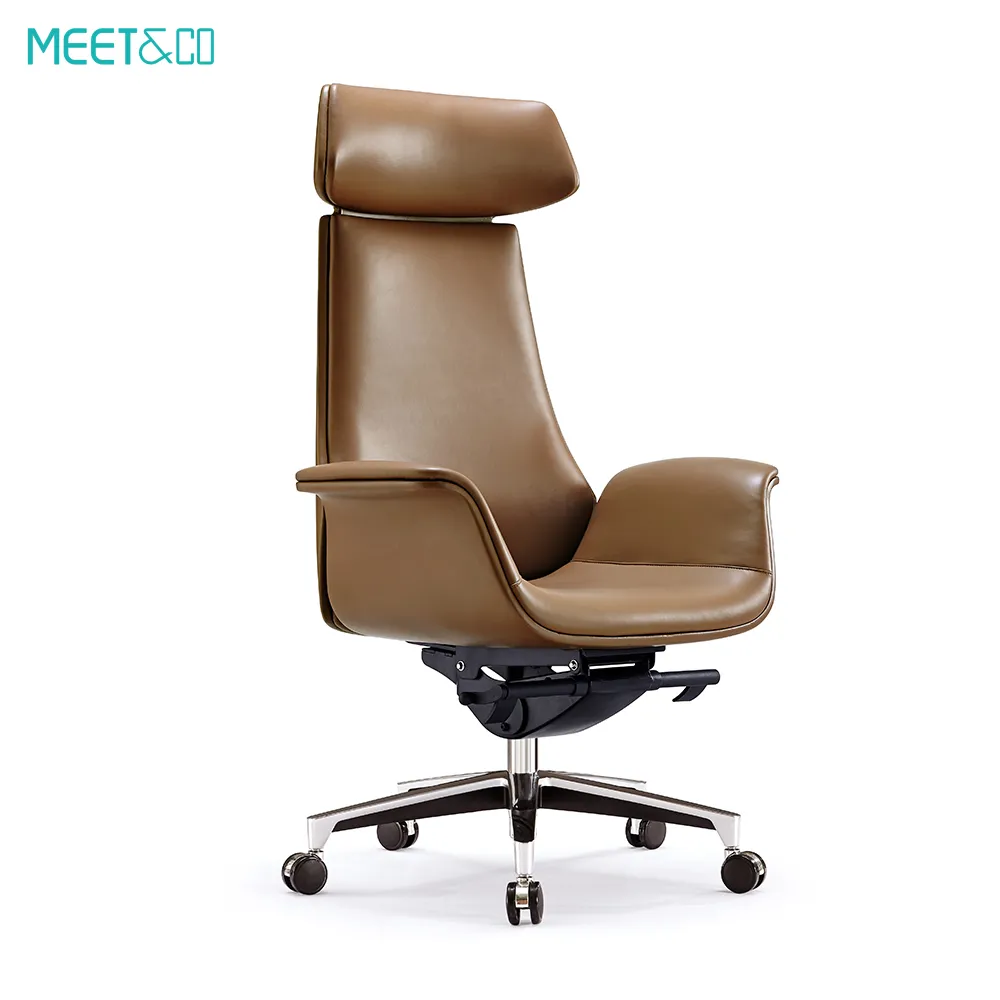
4. Meet&Co Verta Lounge Chair
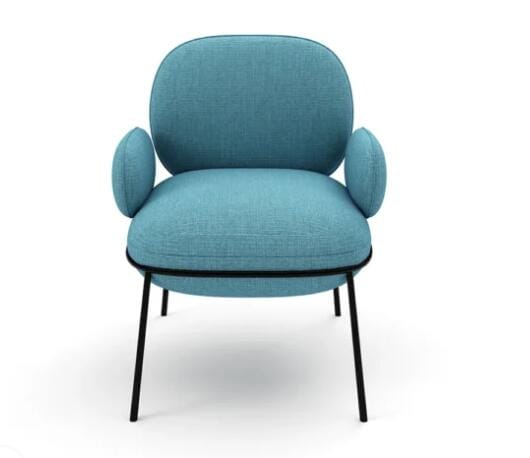
| Attribute | Details |
|---|---|
| Brand | Meet&Co |
| Sofa Type | Lounge chair (single-seat) |
| Size (Dimensions) | Standard lounge dimensions (contact for specifications) |
| Customizable? | Yes (multiple colors and fabric options) |
| Approx. Price | Factory direct; contact for pricing |
| Material | High-density foam, commercial-grade fabric or PU leather, metal or wood legs |
| Warranty | 1–3 years |
The Meet&Co Verta Lounge Chair offers a more residential, comfortable aesthetic while maintaining commercial durability. Its ergonomic curved backrest provides lumbar support, and the generously padded seat ensures patient comfort during longer waits. The Verta is available in a wide range of colors and upholstery options—including easy-clean PU leather or breathable fabric—allowing you to match your facility‘s brand and design scheme. The compact footprint makes it ideal for smaller waiting areas, consultation rooms, or as accent seating alongside larger modular systems.
Best for: Boutique medical practices, dental offices, smaller waiting areas, and spaces where a more inviting, living-room aesthetic is desired.
Beyond Seating: Complementary Design Elements
The best seating layout works in harmony with other design elements to create a truly patient-centered environment.
1. Sightlines to Information Sources
There was not enough seating with direct sightlines to information sources, such as near digital monitors or in optimal proximity to the door separating clinical spaces from which names are called. Ensure seating areas have clear views of digital signage displaying wait times, check-in kiosks, and staff entrances.
2. Technology Integration
Provide charging stations, free Wi-Fi, and digital check-in kiosks to enhance the waiting experience. Interactive screens displaying wait times, hospital information, or health resources keep patients informed and engaged. Technology is now common in waiting rooms and impacts both patient experience and office efficiency.
3. Lighting and Ambiance
Maximize natural light whenever possible—it boosts mood and makes a space feel more open and welcoming. For artificial lighting, avoid harsh, overhead fluorescents. Instead, consider using multiple softer light sources like floor lamps or wall sconces to create a warm, relaxed ambiance.
4. Plants and Biophilic Elements
Incorporating greenery is one of the most effective ways to brighten a waiting room. Well-maintained plants improve air quality, reduce stress, and add an element that makes a room feel cared for. Choose low-maintenance varieties like snake or ZZ plants.
5. Acoustic Management
Incorporate soundproofing materials and soothing background music to help mask clinical noises and create a peaceful ambiance. This is crucial in ensuring that the waiting experience is as stress-free as possible.
Frequently Asked Questions
1. What is the best seating arrangement for a medical office waiting room?
The best arrangement prioritizes comfort and accessibility, featuring a mix of individual chairs and benches, with clear pathways for movement. Individual chairs are ideal for solo patients, while loveseats or benches work well for families. The layout should feel open and avoid crowding, allowing patients to feel at ease the moment they walk in.
Also see: How to Choose Waiting Room Chairs for Medical Offices
2. How do I calculate how many seats I need in my waiting room?
Start by analyzing your average patient volume per hour and average wait time. A general guideline: allow approximately 1.2m² per additional person and 1.5m² for additional wheelchair spaces. For family practices, the AAFP suggests having about three exam rooms and one procedure room, with the waiting area sized to fit these numbers comfortably.
3. Are individual chairs better than benches for waiting rooms?
The AAFP and healthcare designers suggest that individual chairs work better than couches or benches in many settings because chairs are easier for people with mobility issues or wheelchairs to use. However, a mix is ideal—individual chairs for privacy and personal space, plus benches or loveseats for families and companions.
4. How much space should I leave between seating rows?
Main aisles should be at least 36–42 inches wide for wheelchair passage. Between seating rows, allow 24–30 inches minimum. For accessible seating areas, provide 30 x 48 inches of clear floor space adjacent to accessible seating positions.
5. What type of seating is best for infection control in hospitals?
Seating with non-porous, easy-to-clean surfaces is essential. The Global Comprise series features injection molded nylon arms and legs that are impervious to infection control cleaning protocols. Look for options with sealed seams, moisture barriers, and cleanout space design between seat and back cushions to support thorough housekeeping.
6. Should I include child-friendly seating in my waiting room?
Yes. Child-friendly furniture or play areas are beneficial for families, as they help keep young patients occupied and reduce stress for parents. Incorporate smaller chairs or benches for young patients, and consider dedicated family zones with interactive elements such as games or art stations.
7. How can I make a small waiting room feel less cramped?
Use an open layout with micro-zones instead of heavy partitions. Narrow-leg lounge chairs and wall-mounted shelves expose more floor, creating visual spaciousness. Position seating to maintain clear sightlines to the entrance and reception desk, which reduces the feeling of confinement.
Conclusion
The best seating layout for a hospital waiting room is not a single configuration but a thoughtful combination of principles: balance sightlines, density, and privacy; design for diverse patient populations; prioritize accessibility; and give patients a sense of control over their environment.
-
Mixed hybrid layouts work for most hospital and clinic settings, combining individual chairs with small clusters.
-
Defined zonal layouts suit large waiting areas with diverse patient demographics.
-
Open layouts with micro-zones maximize spaciousness in smaller rooms.
-
Curved or organic layouts create a modern, welcoming atmosphere in design-forward spaces.
Choose seating that supports your layout strategy: modular systems like Global Comprise for flexibility, bariatric options for inclusive care, and easy-clean designs for infection control. Layer in natural light, plants, technology, and acoustic management to complete the patient experience.
A well-designed waiting room is not just a place where patients wait—it is a strategic space that shapes perception, trust, and even clinical outcomes. When patients feel comfortable, informed, and respected from the moment they arrive, their entire healthcare journey improves