





 Meet&Co
When choosing conference chairs, the base is easy to overlook. Most people focus first on the seat, backrest, upholstery, or overall appearance, but the base can also affect how a chair moves, how much space it occupies, and how it fits into a conference room. Understanding the differences can make it easier to match conference chairs with the way a meeting room is actually used.
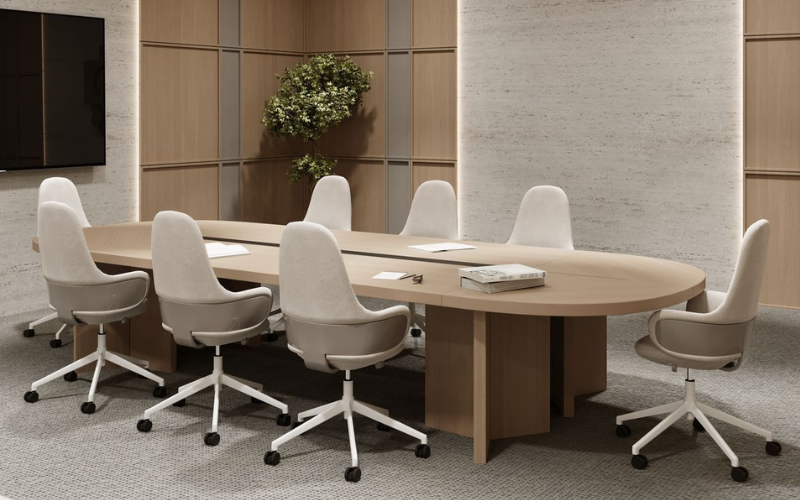
So, what is the difference between a 5-star, sled, and cantilever base?
3 Common Types of Conference Chair Base
5-Star Base: Mobility and Adjustability
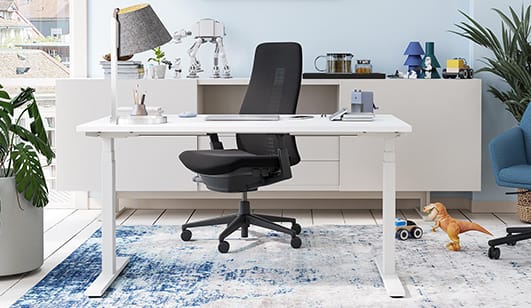
A 5-star base is easy to recognize. It consists of five legs extending from a central hub, and the base is often paired with casters. This structure is widely used for task chairs and can also be found on some conference chairs designed for more flexible workplace environments.
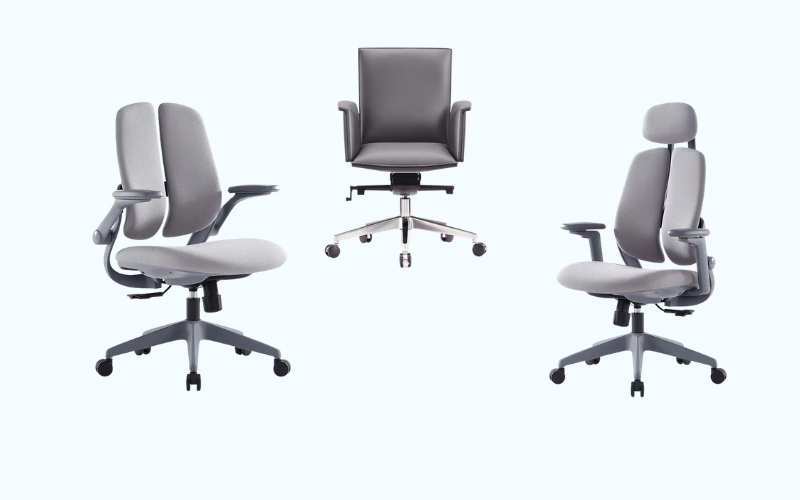
Unlike a fixed conference chair, a chair with a 5-star base can usually swivel 360 degrees. Many models also offer seat-height adjustment, although this depends on the specific chair design. Casters can further make it easier for users to move the chair toward or away from the conference table.
What Makes a 5-Star Base Suitable for Conference Rooms?
The main advantage of a 5-star base is mobility.
In a traditional conference room, chairs may stay in roughly the same position throughout a meeting. However, modern meeting spaces are often used for more than formal discussions. The same room may accommodate team collaboration, presentations, workshops, video conferences, or short individual tasks.
In these situations, a mobile chair can make the room easier to adapt.
For example, an employee move closer to the table during a discussion, or reposition their chair when working with another person. A swivel base makes these movements possible without requiring the user to move the entire chair manually.A 5-star base can therefore work particularly well in flexible conference rooms and collaborative spaces where seating arrangements change frequently.
However, its mobility can also be unnecessary in a highly formal boardroom where chairs are expected to remain in consistent positions. The larger base footprint and casters may also create a different visual impression from the clean lines of a fixed conference chair.
Sled Base: A Stable and Streamlined Look
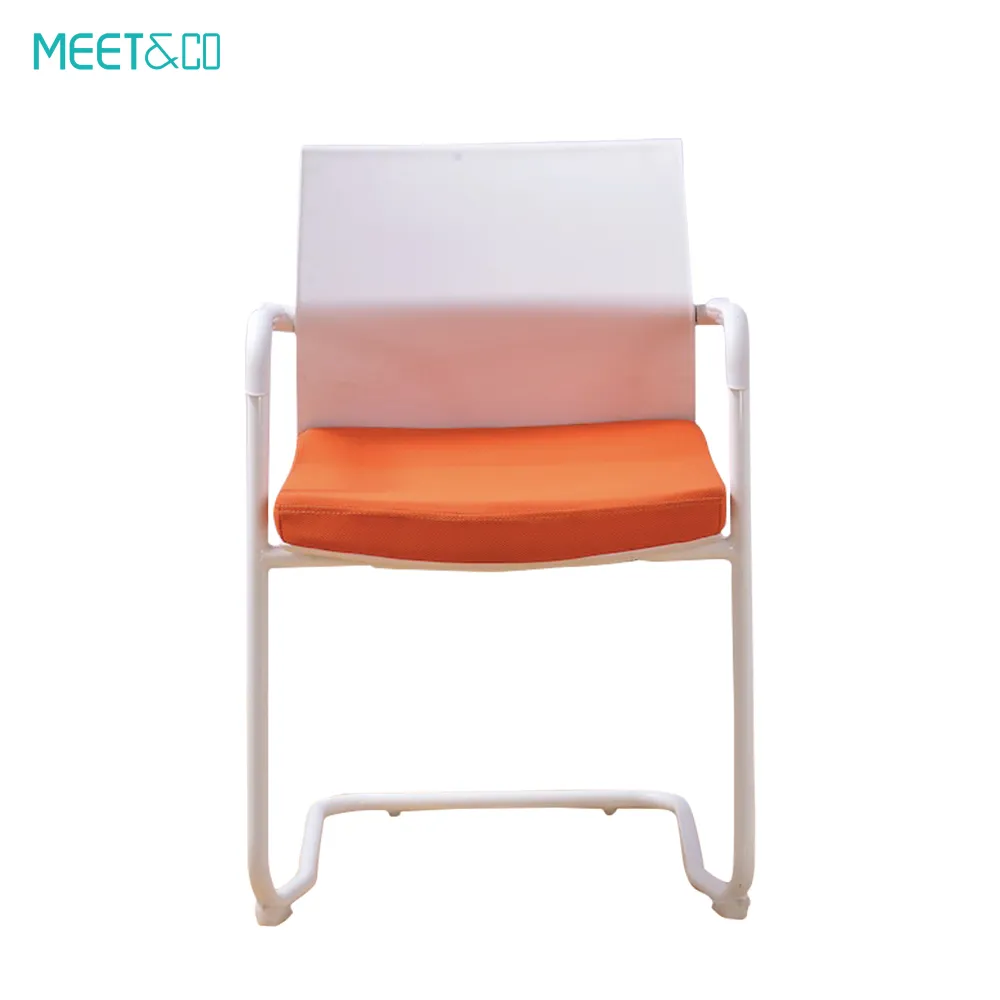
A sled base uses a continuous metal frame that runs from the front of the chair to the back, creating a structure that resembles a sled. Instead of four individual legs, the frame supports the chair from both sides.
Sled bases are frequently used on conference, visitor, reception, and training chairs. Their simple structure gives the chair a clean and consistent appearance, which is one reason they work well in formal commercial interiors.
Where Does a Sled Base Work Well?
A sled base is particularly suitable for formal conference rooms, client meeting areas, training rooms, and multipurpose spaces.
Unlike a 5-star base, a typical sled-base chair does not have casters or height adjustment.
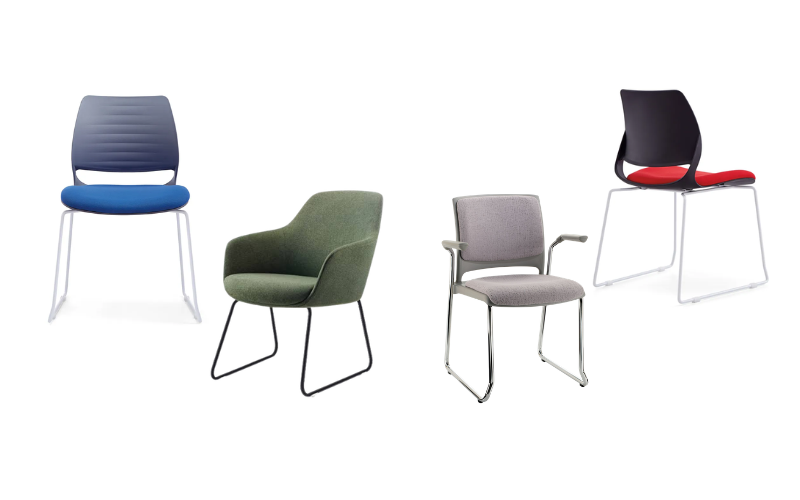
The visual character of a sled base is another important consideration. Because the metal frame creates a continuous line beneath the seat, the chair can appear structured and visually cohesive when several chairs are arranged around a conference table.
This can be especially useful in formal meeting environments where consistency matters. For example, a series of matching sled-base chairs can create a more uniform appearance around a long conference table than chairs with larger mobile bases.
The sled base does not provide the same movement as a wheeled base, but it can still support changing room arrangements when chairs need to be manually repositioned.
Cantilever Base: A More Flexible Seating Structure
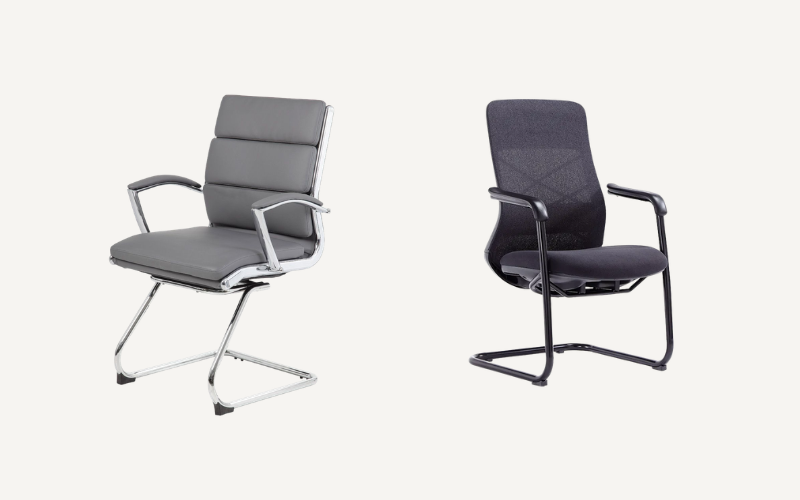
A cantilever base has a distinctive structure in which the metal frame extends underneath the seat and supports it without traditional rear legs. When viewed from the side, the frame creates a continuous or curved profile that gives the chair a visually lighter appearance.
Cantilever chairs are commonly used as conference and visitor seating, particularly in interiors where users want a formal chair without making the seating area look visually heavy.
What Kind of Meeting Space Suits a Cantilever Base?
Cantilever chairs can work well in executive meeting areas, formal conference rooms, client-facing spaces, and visitor seating areas.
One feature often associated with cantilever construction is a certain degree of flex when the user shifts their weight or leans back. However, this should not be treated as a universal feature of every cantilever chair. The amount of movement depends on factors such as the frame material, frame shape, construction, and overall chair design.
This distinction is important because two chairs may both have cantilever bases but provide different seating experiences.
From a visual perspective, the absence of conventional rear legs can make the chair appear less bulky. This can be useful around a conference table where multiple chairs are placed close together. The open space beneath the seat can also contribute to a lighter overall appearance.
Cantilever bases are therefore often chosen not simply because of their structure, but because they combine a formal appearance with a visually lighter seating profile.
5-Star vs. Sled vs. Cantilever: What Actually Changes?
Although all three bases can be used for conference seating, they create different relationships between the chair and the room.
Feature | 5-Star Base | Sled Base | Cantilever Base |
Mobility | High | Moderate | Moderate |
Swivel | Common | Usually not | Usually not |
Height Adjustment | Common | Rare | Rare |
Casters | Common | Usually not | Usually not |
Visual Style | Functional and flexible | Clean and structured | Light and contemporary |
Typical Use | Flexible meeting spaces | Formal and multipurpose rooms | Conference and visitor seating |
The biggest difference is how the chair moves.
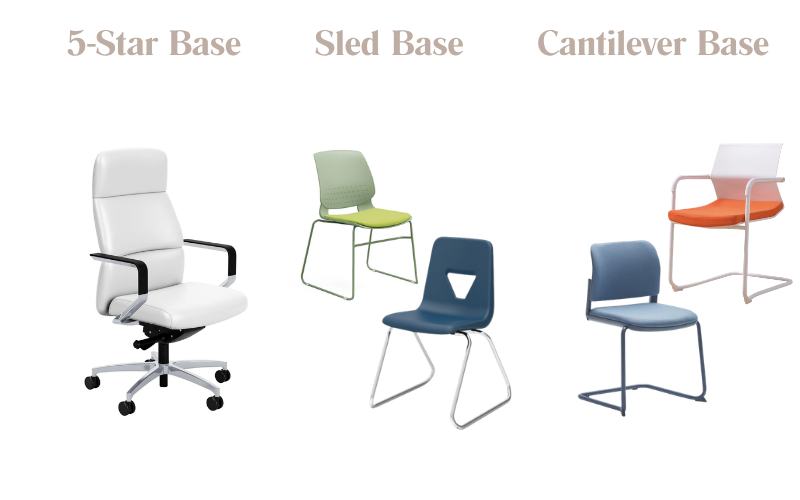
A 5-star base is generally designed for frequent movement. With casters and swivel functionality, the user can easily change position without lifting the chair.
A sled base offers a more grounded seating experience. It can be moved when necessary, but it is not intended for constant rolling around the room.
A cantilever base follows a similar fixed-seating approach, but its frame gives it a different visual character and may provide some structural flex depending on the design.
There is therefore no universal hierarchy between the three. Each base addresses a different combination of mobility, stability, appearance, and room functionality.
How the Chair Base Affects Conference Room Layout
The base of a conference chair can also influence how the room feels and functions.
With a 5-Star Base
A 5-star chair is useful when people need to move frequently around the table.
For example, in a collaborative meeting room, participants may turn between a conference table, presentation screen, and other team members. A swivel chair with casters allows users to make these adjustments without repeatedly lifting or dragging the chair.
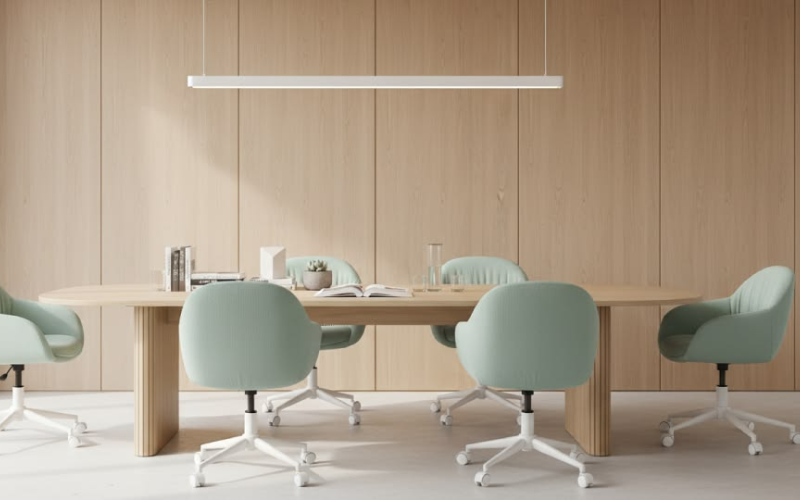
This makes the 5-star base particularly relevant to rooms that combine meetings and collaborative work.
However, the base itself generally takes up more visual space than a simple sled or cantilever frame. When chairs are positioned tightly around a conference table, the available clearance should therefore be considered.
With a Sled Base
Sled chairs can help create a more orderly seating arrangement. Their relatively simple frame works well when chairs are positioned around a fixed conference table or arranged in rows for training and presentations.
Because there are no casters to roll around, the chairs are less likely to move unintentionally while someone is seated. This can be useful in formal meetings where a consistent seating arrangement is preferred.
The base can also contribute to a clean visual rhythm when multiple chairs are placed around the same table.
With a Cantilever Base
Cantilever chairs can provide a lighter visual profile while maintaining a formal appearance.
This can be useful in conference rooms where the chairs are positioned close to one another and the designer wants to avoid a visually heavy collection of chair legs.
Clearance is still important. The distance between chairs, the edge of the conference table, and nearby circulation areas should be considered together rather than evaluating the chair base in isolation.
Ultimately, the right base should support the actual movement pattern of the room. A highly mobile chair does not necessarily make sense in a room where seating rarely changes, while a fixed-looking chair may be less practical in a highly flexible collaborative environment.
What to Consider Beyond the Base?
Although the base is an important part of conference chair design, it should not be evaluated by itself.
- Seat and Backrest Design
The seat and backrest have a direct effect on how the chair supports the user. Seat depth, backrest shape, padding, and overall proportions can all influence the seating experience.
A well-designed base cannot compensate for a poorly designed seat or backrest.
- Upholstery
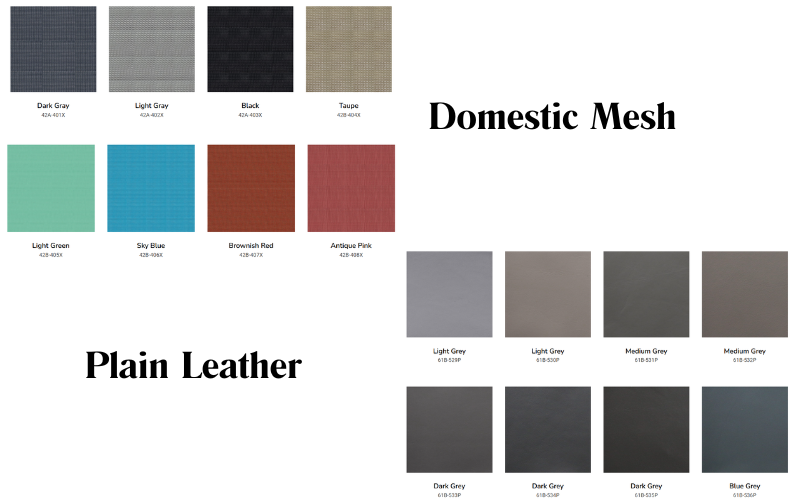
Upholstery affects both appearance and maintenance. Fabric can create a softer and more welcoming impression, while other upholstery materials may offer a different balance of durability and visual character.
For conference rooms that host frequent visitors, the material should also be considered for ease of cleaning and long-term use.
- Armrests
Armrests can provide additional support, but they also affect how closely chairs can be positioned around a conference table. Their height and width should work with the table dimensions rather than being considered separately.
- Casters or Glides
For mobile conference chairs, the type of caster matters. For fixed-base chairs, glides help the chair remain stable while also allowing it to be moved when necessary.
The flooring should also be considered when selecting the appropriate chair configuration.
- Swivel and Height Adjustment
Swivel and height adjustment can increase flexibility, particularly in rooms used for both meetings and individual work. However, these features are not necessary for every conference chair.
A formal boardroom, for example, may have different requirements from a multipurpose meeting space.
- Weight Capacity and Overall Dimensions
Weight capacity is another specification that should be checked when selecting conference chairs. At the same time, overall chair width, depth, and height should be considered alongside the conference table and available circulation space.
These details become particularly important when several chairs are placed around one table.
The key point is that the base is only one part of the chair's overall design. Seating comfort, dimensions, materials, adjustability, and structural construction all contribute to the final result.
Conclusion
A conference chair base does more than hold the seat above the floor. It influences how people move, how chairs occupy space, and how the seating arrangement fits into the overall meeting environment.
The most useful way to compare these bases is therefore not to ask which one is universally better, but to consider how the conference room is used, how often the seating needs to move, and what kind of visual environment the furniture needs to create.