





 Meet&Co
For decades, the traditional living room—anchored by a massive sofa facing a dominant TV wall—served as the undisputed center of the domestic realm. Similarly, corporate offices were long defined by cubicles and static conference rooms designed for top-down broadcasts.
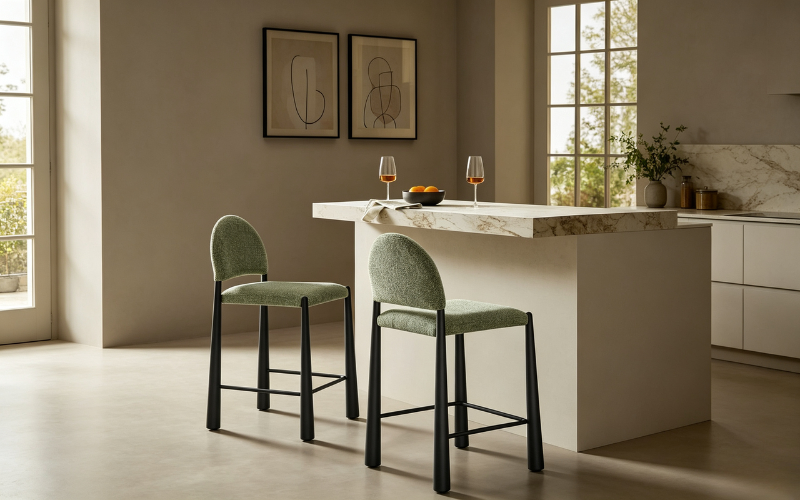
Today, the traditional TV wall is fading as open-concept kitchen islands take center stage in residential design, transforming from mere meal-prep zones into vibrant hubs for morning coffee, evening wine, and spontaneous family conversations. In the corporate world, progressive organizations are actively dismantling physical and cultural barriers, seeking fluid environments that encourage democratic, casual interaction over formal announcements.
At the intersection of these two spatial shifts sits a piece of furniture that has quietly evolved from an afterthought into a design necessity: the modern bar chair.
 Source: https://www.pinterest.com/
The Evolution of High Seating
The precursor to today’s refined bar chairs grew out of evolving commercial hospitality and spatial needs. In 19th-century American saloons, patrons primarily stood along the counter, relying on simple brass footrails while high wooden stools were sparse and reserved for narrow perches.
As public drinking cultures evolved into 20th-century speakeasies and modern diners, fixed counter seating became essential for maximizing floor layout while inviting patrons to linger.
The true design revolution, however, occurred during the Mid-Century Modern movement. Mid-century designers began experimenting with bent plywood, molded fiberglass, and tubular steel, transforming the simple perch into a piece of ergonomic, sculptural furniture. High chairs were no longer just utilitarian seats for crowded commercial spaces; they became thoughtful architectural elements that harmonized industrial production with human-centered comfort.
Redefining the Kitchen Island
In contemporary home design, the bar chair is the key catalyst that unlocks the potential of the kitchen island.
No longer confined to formal dining rooms for structured evening meals, modern families lean into informal, multi-functional living.
The kitchen island equipped with appropriate bar chairs is very versatile. It serves as a convenient temporary spot to set down a laptop, check emails, or take a quick call without needing to retire to a separate home office. When hosting friends, guests can also sit with a drink right where the food is being prepared, keeping the host part of the conversation rather than isolated in the kitchen.
To maintain this multi-functional harmony, residential bar chairs must meet dimensional and spatial criteria. Interior designers calculate that a minimum of 10 to 12 inches (25 to 30 cm) of clearance is required between the top of the seat cushion and the underside of the counter to ensure comfortable legroom. Furthermore, spacing chairs 24 to 30 inches (60 to 75 cm) apart from center to center prevents elbows from clashing while preserving intuitive traffic flow around the island. When these spatial proportion rules are respected, bar chairs enhance rather than interrupt the architectural flow of the home.
Also, right bar chairs help strike a balance between comfort and spatial flow, so that family members can linger comfortably for hours without cluttering the visual sightlines of an open floor plan.
Creating an open and inclusive atmosphere at work
The transition toward hybrid corporate models has fundamentally altered the design of workplaces. When employees sink into traditional office chairs, energy levels naturally drop over extended periods. To combat this fatigue, progressive workplaces are replacing traditional huddle spaces with high-table collaboration zones equipped with bar chairs.
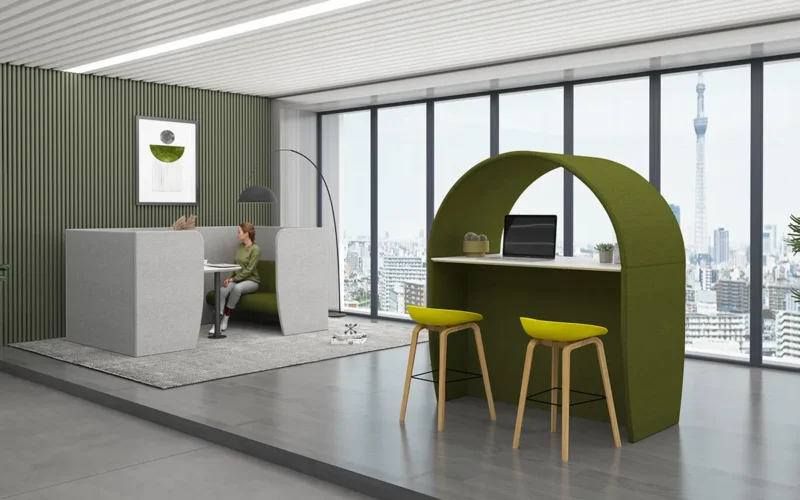
In office breakrooms, high seating also helps transform a purely functional refreshment area into a more social and inviting space. A bar table paired with bar chairs gives employees a comfortable place to enjoy coffee, have a quick snack, or chat informally with colleagues.
This can be particularly valuable in hybrid workplaces, where employees may spend less time physically together and need more opportunities for spontaneous interaction. Rather than separating people into individual seats, a shared high table naturally encourages employees to gather, exchange ideas, and build social connections during everyday breaks.
The primary functional benefit of bar chairs is the "easy-in, easy-out" dynamic it fosters. Sitting on a high bar chair is closer to a "perch" than a deep lounging. Whether two colleagues are grabbing a quick morning espresso together or taking five minutes to align on a project between calls, high seating encourages brief, efficient interactions. Because the seating posture is elevated, employees can drop in for a quick conversation and head back to their desks without the psychological friction of getting stuck in a long, formal sit-down meeting.
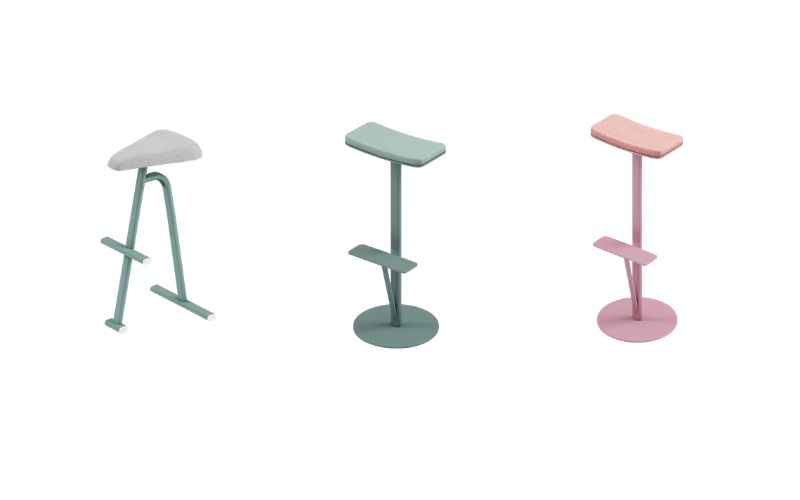
Beyond social dynamics, high seating contributes directly to physical ergonomics and movement in the workplace. Static, low-level sitting for eight consecutive hours is widely recognized as a major contributor to lower back strain and reduced metabolic rate. Bar chairs encourage a dynamic sitting posture—often referred to as "perching"—where the angle between the torso and the thighs exceeds beyond 90 degrees.
This open hip angle reduces strain on the lumbar spine, encourages active core engagement, and makes it effortless for employees to transition between sitting and standing throughout the workday. Furthermore, changing seating posture throughout the workday boosts circulation and mental focus, directly supporting employee well-being.
The Art of Material Fusion: Blending Metals, Woods, and Textiles
One of the defining characteristics of modern high-end bar chairs is the sophisticated fusion of different materials.
Rather than constructing a chair entirely from steel or solid timber, contemporary designers often pair a clean structural frame with a soft, tactile seat. This targeted contrast creates a balanced look that is both functional and visually engaging.
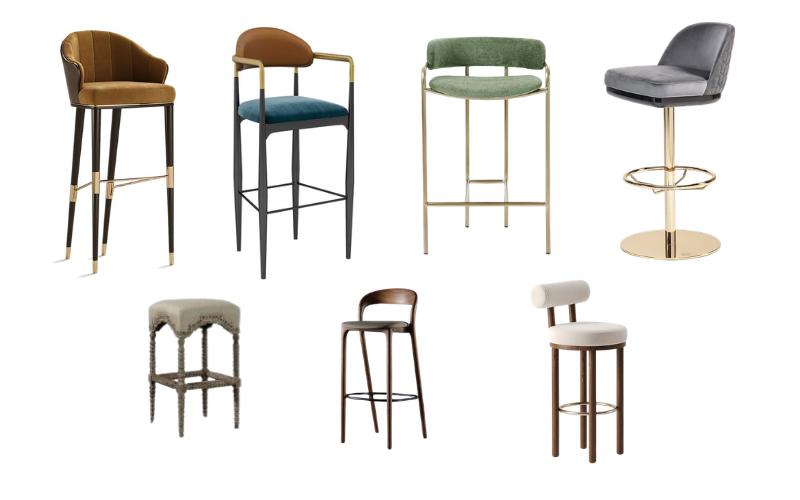
Two classic material combinations dominate contemporary living and working spaces. The first is the pairing of a matte metal frame—such as powder-coated steel or brushed brass—with a soft fabric or leather seat. The slim metal legs give the chair a light, floating appearance, while the upholstered seat provides rich texture and comfort. The second popular approach pairs solid wood legs—like walnut or white oak—with a contoured fabric seat, bringing organic warmth and tactile softness to the kitchen island or coffee bar.
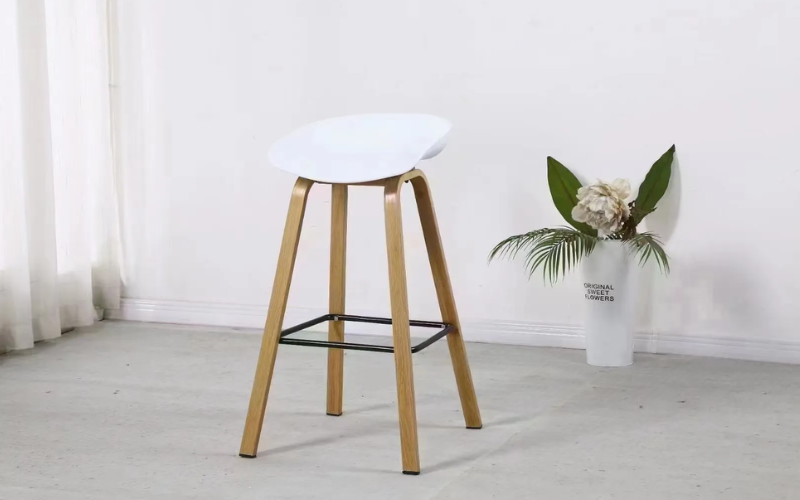
Besides, plastic is also a practical alternative for frame or seat components, offering lightweight, cost-effective options for commercial projects. These varied material selections let brands match different budget and aesthetic requirements.
By keeping the seat and backrest unified in material or color, the chair maintains a clean aesthetic while bridging its frames and other surfaces in the room.
What Defines a premium Bar Chair
While visual style determines initial appeal, structural performance dictates whether a bar chair can withstand high-traffic environments. A reliable bar chair must balance four critical engineering pillars: durability, cleanability, mobility, and ergonomics.
Durability
Commercial seating operates under significantly higher physical stress than standard dining chairs. Elevated centers of gravity multiply the torque applied to joints whenever a user leans, swivels, or steps onto the footrest. Heavy-duty construction—such as TIG-welded steel frames, reinforced mortise-and-tenon wooden joinery, and high-density molded foam—prevents joint fatigue and seat sagging over years of constant use. Commercial-grade finishes, tested for abrasion, stains and impact resistance (such as BIFMA standards for office furniture or high Martindale rub counts for upholstery), also represent a key criterion.
Cleanability
In high-traffic office pantries, cafes, and hospitality spaces, commercial chairs must resist frequent spills, friction, and daily chemical cleaning. Fabrics are specified to satisfy stringent Martindale abrasion ratings, while surface treatments feature liquid-repellent and stain-resistant finishes. Liquid and dirt can be easily wiped clean with a microfiber cloth, allowing spaces to stay hygienic without requiring intensive maintenance.
Mobility
Commercial spaces require high seating to adapt seamlessly to changing layouts and collaborative needs. Modern commercial bar chairs often incorporate smooth-swivel mechanisms, integrated cut-out handles, or lightweight structural frames to make repositioning effortless. Whether users are pivoting to join a quick group alignment or clearing space for an event, high mobility allows effortless spatial adaptation.
Ergonomics
A high-quality chair incorporates precisely calculated footrest heights to relieve pressure on the lower lumbar spine and hamstrings, preventing leg numbness during extended seating.
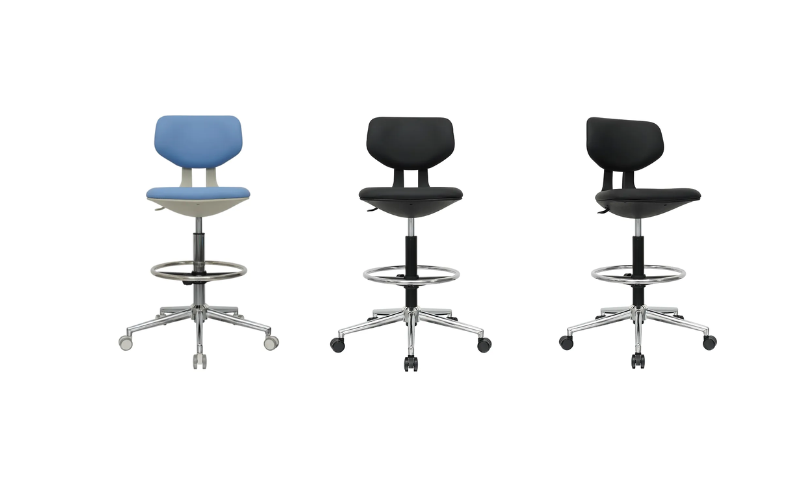
If footrests and contours are incorrectly proportioned,extended high seating can cause lower-back fatigue and circulation discomfort. A commercial-grade bar chair incorporates contoured seat shells to support natural pelvic alignment, along with precisely elevated footrests placed 16 to 18 inches below the cushion to relieve strain on the hamstrings. Proper posture support reduces fatigue, ensuring users remain comfortable during long work sessions.
Conclusion
As the boundaries between work, leisure, and domestic life continue to blur, the demand for versatile, multi-scene furniture will only grow. The modern bar chair is no longer a niche piece confined to commercial pubs. It has become a design element that fosters human connection, supports physical well-being, and elevates spatial aesthetics across both living rooms and corporate landscapes.
Discover how Meet&Co's premium bar chair collection brings together craftsmanship and design for your next residential or commercial project—explore the full range today or contact us for custom solutions.