







 Meet&Co
To effectively learn how to restore pigment and finish loss on a leather sofa, you must clean the surface, apply a color-matched pigment, and seal it with a protective top coat.
This process restores both the aesthetic depth and the durable shield of your Meet&Co furniture.
Key Takeaways
Identification is Crucial: Pigment loss is a color issue, while finish loss is the failure of the clear protective layer.
Preparation Wins: 70% of repair failures are due to improper degreasing and cleaning before applying new color.
Thin Layers Matter: Multiple thin coats of pigment prevent cracking and ensure a factory-like feel.
Protection is Final: A high-quality top coat (finish) is mandatory to prevent the new pigment from rubbing off on clothing.
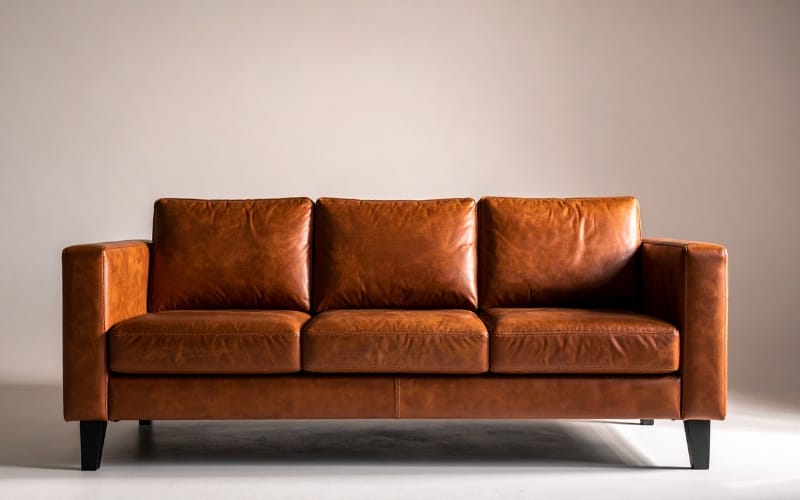
What Causes Pigment and Finish Loss on a Leather Sofa?
Daily friction and environmental exposure are the primary drivers of leather degradation.
According to industry data, nearly 60% of leather sofas show signs of finish wear within the first five years if not maintained.
When you own a sectional sofa, high-traffic seating areas are particularly prone to this type of damage.
Daily Wear and Friction
Friction is the most common cause of finish loss. Every time someone sits or moves, microscopic layers of the protective finish are abraded.
Over time, this exposes the pigment underneath, which eventually rubs away.
UV Exposure and Sunlight Damage
UV rays act as a powerful bleaching agent.
Research shows that leather exposed to direct sunlight for more than 4 hours a day can lose up to 15% of its color intensity annually. This leads to brittle fibers and significant pigment fading.
Body Oils and Sweat
The pH balance of human skin is slightly acidic. When oils and sweat accumulate on the leather surface, they chemically break down the finish.
Data suggests that areas where heads and hands rest (armrests and headrests) experience 3x faster finish degradation.
Harsh Cleaning Products
Using high-pH cleaners or household chemicals like dish soap can strip the leather’s natural oils and its protective coating.
Professional restorers find that 25% of finish loss cases are exacerbated by “DIY” cleaning using inappropriate solvents.
Poor Leather Maintenance
Leather is organic. Without regular conditioning, the finish becomes dry and brittle, leading to “cracking” or “crazing.”
Maintaining a high-quality sofa requires replenishing moisture every 6 to 12 months to keep the finish flexible.
Pigment Loss vs Finish Loss: How to Identify the Problem
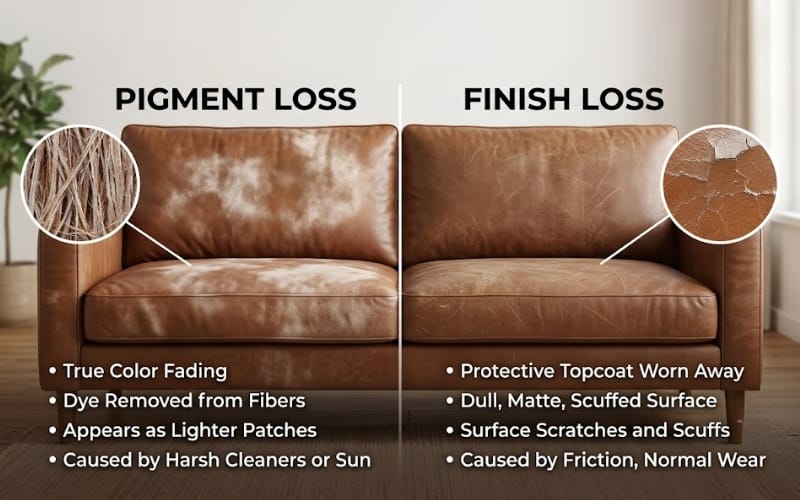
Distinguishing between pigment loss and finish loss determines the complexity of your restoration project.
While they often occur together, treating them as separate issues ensures a more durable result.
Signs of Pigment Loss
Pigment loss is purely visual. You will notice the color becoming pale or the base color of the hide showing through.
This is common in leather sectional sofas where the dye has faded due to light or abrasion but the leather still feels relatively smooth.
Signs of Finish Loss
Finish loss feels physical. The leather might feel sticky, rough, or “tacky.”
You may see clear flakes peeling off the surface, similar to a sunburn. This indicates the protective lacquer has failed.
Simple Home Test
Apply a drop of water to the damaged area. If it stays as a bead, the finish is intact.
If it absorbs and darkens the leather instantly, both the finish and the pigment are gone, leaving the porous hide exposed.
When Both Problems Exist
In most old sofas, you will find a combination. The finish wears off first, followed rapidly by the pigment.
Statistics from repair shops indicate that 80% of residential leather restorations require both a colorant and a new top coat.
Types of Leather and Their Restoration Requirements
The success of your restoration depends entirely on the type of leather you are working with.
Different hides absorb pigments differently.
For instance, genuine leather sofas require much more care than synthetic alternatives to maintain their natural breathability.
Pigmented (Protected) Leather
This is the most common type. It has a heavy coat of pigment and a thick finish. It is the easiest to restore because the “paint” sits on top of the surface.
Semi-Aniline Leather
Semi-aniline leather has a light coat of pigment. It offers a balance between a natural look and durability.
Restoration requires thin, translucent layers of color to avoid a “plastic” appearance.
Aniline Leather
Aniline is dyed with no surface coating. Restoring this is difficult at home because any topical pigment will change the unique feel of the leather.
Specialized aniline dyes are required rather than standard pigments.
Bonded Leather
Bonded leather is a mix of leather scraps and polyurethane.
Restoration is often temporary because the underlying structure is weak. It is prone to “delamination” which no pigment can truly fix long-term.
Faux Leather (PU/PVC)
Faux leather doesn’t have a “grain” to absorb dye. Restoration usually involves vinyl paints.
While it looks good initially, these repairs have a shorter lifespan compared to real leather.
Can You Restore Pigment and Finish Loss at Home?
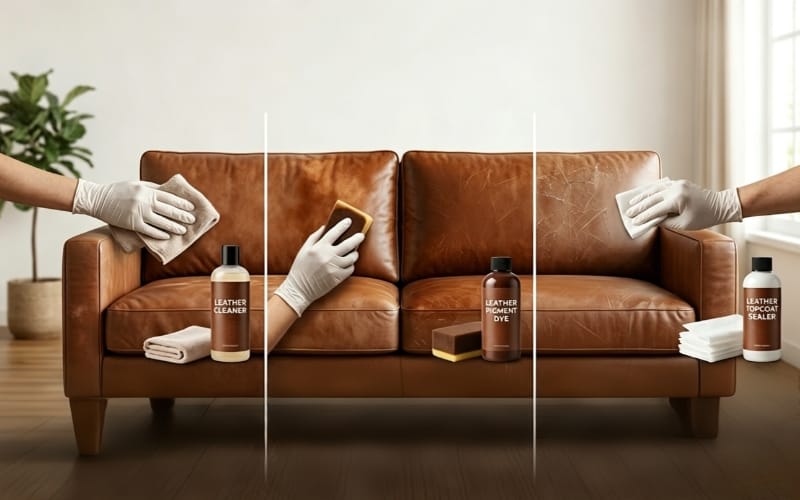
DIY restoration is highly effective for minor to moderate wear, potentially saving homeowners over $500 in professional fees.
However, scale and depth of damage dictate whether a professional is needed.
DIY-Friendly Situations
If the damage is limited to surface scuffs, fading, or minor finish peeling, home kits are excellent.
Most modern water-based leather colorants are safe and easy to apply with a sponge.
When Professional Repair Is Better
Structural cracks, large holes, or complex “mottled” aniline finishes should be left to pros.
Data indicates that professional restorations last 2-3 times longer because they use high-pressure spray equipment and industrial-grade crosslinkers.
Tools and Materials You’ll Need
Using the right chemistry is the difference between a repair that lasts years and one that peels in weeks.
Leather Cleaner: A pH-neutral formula to remove surface dirt.
Leather Degreaser/Prep: Essential for removing body oils trapped in the pores.
Sanding Pad (600-800 grit): To smooth out rough edges of the old finish.
Leather Binder: A liquid that strengthens the leather fibers before coloring.
Pigment Colorant: Water-based, matched to your sofa’s shade.
Sponge and Airbrush: For application.
Leather Top Coat: Available in Matte, Satin, or Gloss.
Leather Conditioner: To be applied 72 hours after the repair.
How to Restore Pigment and Finish Loss on a Leather Sofa at Home
Following a systematic 8-step process ensures a factory-grade finish. Missing even one step can result in the color rubbing off onto your clothes.
Step 1: Clean the Surface
Thoroughly clean the entire modular leather sofas unit, not just the damaged area. Use a dedicated leather cleaner and a soft brush to lift dirt from the grain.
Step 2: Remove Oils and Contaminants
Apply a leather degreaser or alcohol-based prep solvent. This is the most critical step.
Even a small amount of body oil will prevent the new pigment from bonding to the leather.
Step 3: Sand the Damaged Area
Gently sand the areas where the finish is peeling. You want a smooth transition between the damaged area and the healthy leather. Wipe away the dust with a damp cloth.
Step 4: Apply Leather Binder (If Needed)
If the leather feels “fuzzy” or fibrous, apply a leather binder. This soaks into the fibers and hardens them, creating a solid base for the pigment.
Step 5: Rebuild Lost Pigment
Apply the colorant in very thin layers using a sponge. Dab the color on rather than wiping it. Use a hair dryer on a cool setting to speed up the drying between coats.
Step 6: Blend Color with Surrounding Leather
As you apply the final coats, “feather” the edges. Start from the center of the damage and lightly dab outwards to blend the new color into the original finish.
Step 7: Apply Protective Finish Coat
Once the pigment is dry (usually 30-60 minutes), apply the Top Coat. This seals the pigment and provides the desired sheen. Apply at least two coats for high-use areas.
Step 8: Cure and Dry Properly
The leather will feel dry to the touch quickly, but it takes 24-48 hours to “cure” fully. Do not sit on the sofa or move the cushions during this period.
Common DIY Mistakes That Ruin Leather Repairs
Avoid the “shortcut” trap to ensure your sofa remains a centerpiece of your home.
Skipping Surface Preparation: 90% of peeling issues are caused by residual oils left on the leather.
Using the Wrong Color: Always test a small hidden area first. Leather color darkens as it dries.
Applying Thick Dye Layers: Thick layers don’t bond well and will eventually crack like dried mud.
Ignoring Top Coat Protection: Without a top coat, the pigment is vulnerable to moisture and friction.
Leather Balm vs Leather Dye vs Professional Refinishing
| Feature | Leather Balm | Leather Dye/Pigment | Professional Refinishing |
|---|---|---|---|
| Durability | Low (Weeks) | Medium-High (2-4 Years) | High (5-10 Years) |
| Ease of Use | Very Easy | Moderate | Professional Only |
| Color Change | Slight tint | Full Coverage | Full Coverage |
| Cost (USD) | $15 – $30 | $50 – $120 | $300 – $800 |
How Long Does Leather Sofa Color Restoration Last?
The longevity of a restoration is directly proportional to the quality of the products used and the amount of daily use.
DIY Balm Results: These are temporary fixes. Expect them to last 1-3 months. They are mostly wax-based and rub off eventually.
Leather Dye Results: A proper DIY pigment and finish restoration can last 2 to 5 years, depending on the traffic the sofa receives.
Professional Restoration Results: Professionals use cross-linkers that create a chemical bond. These repairs often last 5-10 years, matching the original factory finish lifespan.
How Much Does Leather Sofa Restoration Cost?
| Service Type | Estimated Cost (USD) | What’s Included |
|---|---|---|
| DIY Small Kit | $40 – $70 | Cleaner, 50ml Pigment, Finish, and applicators for minor scuffs. |
| DIY Large Kit | $100 – $150 | Full restoration set suitable for a 3-seater or sectional sofa. |
| Professional (Spot Repair) | $150 – $250 | Mobile technician service to repair 1-2 specific cushions or armrests. |
| Professional (Full Sofa) | $500 – $1,200 | Complete strip-down, re-pigmentation, and resealing of the entire unit. |
Best YouTube Tutorials for Leather Sofa Pigment Restoration
Visual learners can benefit greatly from these vetted resources:
Furniture Clinic Official: Best for understanding the chemistry of leather prep and pigment application.
Rub ‘n Restore: Excellent for seeing how to apply color to large areas with simple sponges.
The Leather Repair Company: High-level technical detail on using airbrushes for a perfect finish.
How to Prevent Pigment and Finish Loss in the Future
Prevention is 10 times cheaper than restoration. Implementing a simple care routine can extend the life of your leather by a decade.
Regular Cleaning Schedule
Wipe your sofa with a damp microfiber cloth weekly. This prevents dust and grit from acting like sandpaper on the finish.
Conditioning Frequency
Apply a high-quality leather conditioner every 6 months. This keeps the finish flexible and prevents it from drying out and flaking.
UV Protection Tips
Use window films or keep your leather furniture at least 2 feet away from direct heat sources and windows.
Managing High-Traffic Areas
Rotate your cushions regularly if your sofa design allows it. This ensures even wear across the entire Meet&Co collection.
Before and After Leather Sofa Restoration Examples
(Visual Description: An image showing a cracked, faded brown leather armrest on the left, and a smooth, vibrant, satin-finish armrest on the right after a 3-step restoration process.)
Conclusion
Restoring pigment and finish loss is a rewarding process that can make an old sofa look brand new.
The core steps involve thorough degreasing, patient application of thin color layers, and a final protective seal.
For a standard leather sofas set, a DIY approach is cost-effective and highly successful if you don’t rush the prep work.
However, for high-value antiques, professional help is recommended.
Long-term, consistent cleaning and UV protection are your best tools for preserving the beauty of your leather furniture.