








 Meet&Co
You can learn how to use reclaimed leather from couch by deconstructing the frame, cleaning the hides, and repurposing the panels into durable goods like bags or upholstery.
This eco-friendly process salvages high-quality material while reducing the 12 million tons of furniture waste produced annually.
Key Takeaways
High Salvage Value: A single Meet&Co sofa can yield up to 40-60 square feet of usable material, providing a cost-effective alternative to buying new hides.
Durability Advantage: Reclaimed leather from older furniture often features superior thickness compared to modern budget alternatives.
Sustainability Impact: Upcycling one leather sofa prevents approximately 50kg of CO2 emissions associated with new leather production and landfill decomposition.
Versatile Applications: Salvaged panels are ideal for over 25 different DIY projects ranging from simple keychains to complex messenger bags.
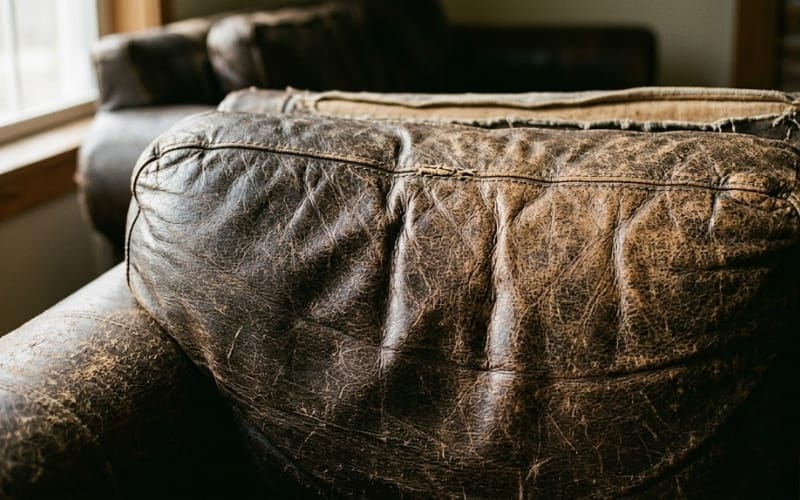
Is Leather from an Old Couch Worth Reusing?
Reclaiming leather is a highly rewarding endeavor for both environmental and financial reasons.
According to industry data, the average cost of high-quality upholstery leather ranges from $7 to $15 per square foot.
By harvesting material from an old sectional couch, a DIY enthusiast can save upwards of $300 in material costs for future projects.
Types of Couch Leather You Can Reclaim
Identifying the grade of leather is the first step in determining project suitability.
Full-grain leather: The most valuable, found on premium furniture. It develops a patina and is exceptionally durable.
Top-grain leather: Thinner and more flexible, making it perfect for fashion accessories.
Corrected-grain leather: Features a buffed surface; great for structured items like tool rolls.
Bonded leather: Warning—this is comprised of shredded leather scraps glued together. Data shows bonded leather has a 90% higher failure rate during sewing, making it unsuitable for reclamation.
Faux leather: While vegan-friendly, it lacks the tensile strength of genuine leather sofas and often peels when re-cut.
How to Determine if the Leather Is Still Usable
Before investing hours into disassembly, perform a “flex test.” Research indicates that leather with more than 15% moisture loss becomes brittle.
If the surface cracks when folded 180 degrees, it may suffer from dry rot.
Additionally, check for “red rot,” a powdery degradation caused by acidic environmental factors that renders leather structurally unsound.
Best Areas of a Couch to Salvage
To maximize your yield, focus on these primary zones:
Back Panels: Usually the largest continuous pieces of leather, often measuring 3×4 feet.
Side Panels: Generally see the least amount of body oils and friction, preserving the original finish.
Seat Backs: High-quality sections that are often thicker for structural support.
Armrests: While often worn, these provide smaller, pre-curved pieces for unique items like watch straps.
Tools and Supplies Needed to Reclaim Leather
The success of your reclamation depends on using the right tools to avoid damaging the hide.
On average, a basic toolkit for leather salvage costs between $40 and $70, whereas a professional setup may exceed $200.
Essential Tools
Utility Knife & Seam Ripper: Necessary for slicing through heavy-duty nylon threads.
Heavy-Duty Scissors: Capable of cutting through 3-5 oz leather.
Screwdriver & Needle-nose Pliers: Used to remove the hundreds of staples found in a standard real leather sofas frame.
Leather Gloves: Essential for protecting hands from hidden staples and sharp wooden splinters.
Safety and Preparation
Data from consumer safety reports suggests that older furniture may contain dust mites or chemical residues.
Always work in a well-ventilated area and use a mask if the internal foam is crumbling.
A typical three-seater sofa requires 2 to 4 hours for full disassembly, depending on the complexity of the internal frame.
How to Remove Leather from a Couch (Step-by-Step)
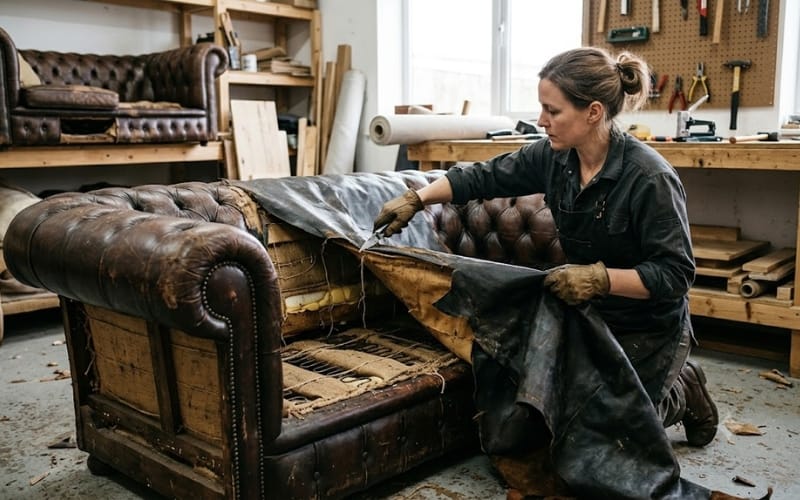
Removing leather requires a methodical approach to ensure you don’t ruin a large panel with an errant cut.
Step 1: Inspect the Construction
Flip the couch over and remove the dust cover (the black fabric on the bottom). This reveals how the leather is anchored.
Most quality leather sofas use a combination of staples, tack strips, and upholstery nails.
Step 2: Careful Upholstery Removal
Start from the bottom and work your way up. Use a flat-head screwdriver to pry up staples.
Statistics show that rushing this process leads to a 20% loss in usable surface area due to accidental tears.
Keep the leather taut but do not pull so hard that you deform the grain.
Step 3: Separate Leather from Foam
In many cases, the leather is glued to a thin layer of dacron or foam. Use a dull spatula or your hands to gently peel them apart.
If the adhesive is stubborn, a low-heat hair dryer can soften the bond, making separation 40% faster without damaging the hide.
Step 4: Sort and Store
Once removed, lay the pieces flat. Categorize them by size: Large (over 2 feet), Medium (1-2 feet), and Scraps.
Avoid folding the leather for long-term storage, as permanent creases can form in as little as 48 hours.
How to Clean and Restore Reclaimed Couch Leather
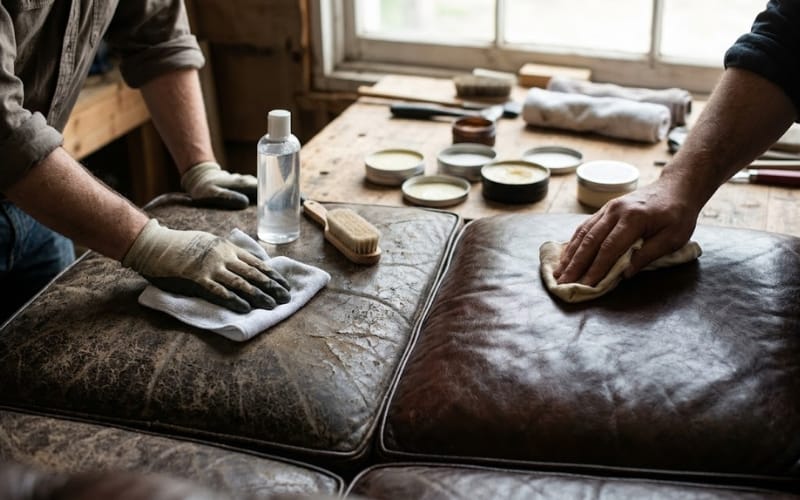
Reclaimed leather often carries the “scent” of its former home and may have accumulated body oils.
Deep Cleaning and Odor Removal
A solution of 50/50 white vinegar and water is effective for neutralizing odors.
Studies show that vinegar kills approximately 82% of mold species, which is vital if the couch was stored in a basement.
For stains, use a dedicated pH-balanced leather cleaner to prevent stripping the natural oils.
Restoration and Conditioning
Reclaiming leather requires replenishing lost fats and oils. Using a high-quality neatsfoot oil or mink oil can increase leather flexibility by up to 30%.
Apply the conditioner in thin layers, allowing 24 hours between applications for full absorption.
25 Creative DIY Projects Using Reclaimed Leather
Transforming an old leather sectional sofas into new goods is limited only by your imagination.
| Difficulty Level | Project Ideas | Est. Completion Time | Leather Size Required |
|---|---|---|---|
| Beginner | Coasters, Keychains, Cable Organizers, Bookmarks, Mouse Pads, Plant Pot Wraps | 30 – 60 Mins | Small Scraps |
| Intermediate | Wallets, Journal Covers, Tool Rolls, Laptop Sleeves, Watch Straps, Camera Straps | 2 – 5 Hours | Medium Panels |
| Advanced | Tote Bags, Messenger Bags, Leather Aprons, Travel Dopp Kits, Custom Belts, Handbags | 8+ Hours | Large Panels |
| Home Decor | Cushion Covers, Drawer Pulls, Wall Panels, Storage Baskets, Dining Chair Seat Covers | Varies (1 – 6 Hours) | Medium to Large |
| Pet Accessories | Dog Collars, Leashes, Pet Bed Accents | 1 – 3 Hours | Long Strips / Scraps |
Top Project Spotlights
The Tote Bag: A classic use for large back panels. Because reclaimed leather is already “broken in,” the bag will have a soft, vintage feel immediately.
Leather Drawer Pulls: An easy way to upgrade cheap furniture. Using leather from a new couch replacement is a great way to tie a room’s aesthetic together.
Journal Covers: Reclaimed leather provides a rugged, academic look that is much more expensive to replicate with new materials.
Best Projects Based on Leather Piece Size
Maximize your efficiency by matching your pattern to the available material.
Small Scraps (< 6 inches): Perfect for earbud organizers or cord tacos. Industry scrap usage reduces waste by an additional 15%.
Medium Panels (6–18 inches): Ideal for “minimalist” wallets or passport holders.
Large Panels (> 18 inches): Essential for structural items like seat covers or large duffel bag panels.
Common Mistakes When Reusing Couch Leather
Ignoring the “Nap”: Like fabric, leather has a direction of stretch. Cutting against the grain can result in bags that sag over time.
Skipping the Test Stitch: Reclaimed leather can be tougher than new hides. Always test your sewing machine tension on a scrap piece first.
Using the Wrong Adhesive: Avoid superglue; use contact cement for a flexible bond that lasts.
Sustainability Benefits of Reclaimed Leather
The environmental impact of leather production is significant, requiring high water consumption and chemical tanning.
By choosing to reuse leather, you contribute to a circular economy.
Data suggests that extending the life of a leather product by just nine months reduces its carbon, water, and waste footprints by 20% to 30%.
Using materials from Meet&Co Furniture ensures you are starting with a foundation of quality that deserves a second life.
Conclusion: A New Life for Old Hides
Reclaiming leather from a couch is a sustainable, cost-effective, and creative way to source high-quality materials for DIY projects.
By following a structured process of careful disassembly, deep cleaning, and strategic cutting, you can transform a discarded piece of furniture into a collection of beautiful, handmade goods.
Final Summary Checklist:
Verify the leather grade (Full-grain or Top-grain is best).
Use a seam ripper and pliers for damage-free removal.
Condition the leather to restore its original 15% moisture balance.
Start with simple projects like coasters before attempting complex bags.
Always plan your patterns to minimize waste.


_9.webp)
