





 Meet&Co
Acoustic Office Pods solve the modern school library noise crisis by delivering self-contained, sound-insulated sanctuaries directly onto the open floor plan.
Integrating these agile units allows educational facilities to maintain an open layout while giving students immediate access to private micro-environments. By implementing modular privacy spaces, school administrators can balance collaborative noise and independent focus without completing disruptive construction.
Key Takeaways
-
Dynamic Spatial Division: Pods allow campus libraries to host collaborative group work and quiet testing simultaneously within the same open room.
-
Plug-and-Play Efficiency: Unlike traditional drywalled study spaces, modular booths require no building permits and can be relocated across campus over a weekend.
-
Enhanced Inclusion: Sound-insulated booths provide essential, sensory-friendly sanctuaries that support neurodivergent student learning needs.
-
Future-Proof Infrastructure: Built-in technological routing ensures libraries remain fully equipped to handle evolving digital and hybrid academic demands.
Why School Libraries Need Acoustic Office Pods
The core purpose of the school library has undergone a dramatic transformation. Historically designed for silent, independent reading, modern school libraries have evolved into vibrant hybrid learning spaces where students gather to build group projects, debate research, and participate in peer-to-peer tutoring.
However, this collaborative shift introduces an ongoing challenge: noise pollution. The increase in group discussions naturally clashes with the needs of students attempting to read or study for exams. Furthermore, the rapid rise of remote education means students frequently need to attend live digital lectures or participate in video conferences right from the school floor. Speaking out loud in an open hall disrupts nearby peers, creating a constant battle against cognitive distraction.
According to comprehensive spatial ergonomics research, excessive environmental noise can lower overall student concentration metrics by more than 30%. When open spaces lack sound barriers, acoustic distractions diminish information retention and accelerate mental fatigue. By introducing targeted acoustic pods, schools can successfully separate noisy group hubs from specialized quiet study spaces.
What Are Acoustic Office Pods?
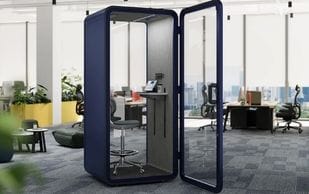
At their core, these units are freestanding, self-contained soundproof office pods engineered to isolate sound. Often referred to as office phone booths or privacy pods, these structures function as rooms within a room.
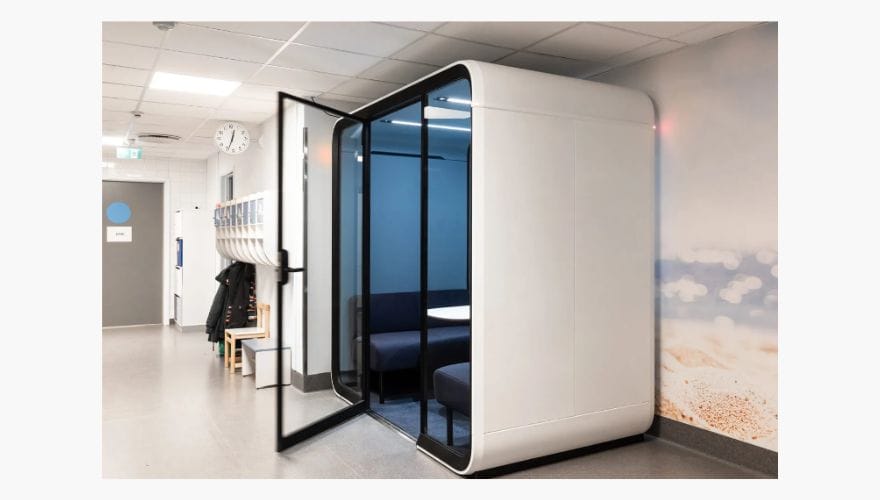
A modular acoustic study booth deployed in an educational hallway. Source: Framery
Instead of relying on permanent wood framing and drywall, these booths utilize a highly advanced modular design. They feature precision-engineered structural frames, multi-layered acoustic glass doors, and exterior body panels lined with dense, sound-dampening insulation.
Inside each pod, students enjoy a fully functional micro-workspace equipped with an automated ventilation system, adjustable LED lighting, ergonomic desk surfaces, and integrated power hubs for charging laptops and tablets. They offer a completely integrated, movable solution for ever-changing school layouts.
5 Practical Ways to Use Acoustic Pods in School Libraries
Implementing modular pods allows facilities managers to optimize their square footage for distinct student activities.
1. Creating Quiet Individual Study Zones
When mid-term exams arrive, demand for isolated, distraction-free study areas spikes. Placing single-passenger focus pods along the perimeter of the library gives students a quiet refuge to run intensive reading sessions without being interrupted by foot traffic or casual chatter.
2. Supporting Online Learning and Virtual Tutoring
As schools continue adopting hybrid learning models, students regularly need to log into live digital classrooms between their physical lectures. Utilizing dedicated acoustic study booths allows students to speak freely, answer verbal prompts from their teachers, and record audio presentations without disturbing the surrounding study hall.
3. Providing Private Spaces for Student Counseling
Modern educational philosophy places immense value on comprehensive student wellbeing. Because these pods provide excellent speech privacy, they serve as excellent, confidential meeting spaces for impromptu mental health check-ins, academic guidance counseling, or private career planning sessions with school advisors.
4. Building Small Group Collaboration Areas
Group projects are fundamental to collaborative learning. By deploying larger four-to-six-person learning pods, libraries can give project teams a designated space to brainstorm, map out ideas on whiteboards, and debate strategies at an energetic volume without projecting sound across the open library.
5. Helping Neurodivergent Students Focus
Open-plan layouts can easily cause sensory overload for neurodivergent students, including those with autism or ADHD. Soundproof booths function as excellent, low-stimulus environments that reduce visual and auditory distractions, allowing these students to regulate their focus and study comfortably.
Key Features to Look for in Acoustic Study Pods
Not all privacy booths are built to withstand the demands of a high-traffic school environment. When coordinating your next educational furniture upgrade, look closely for these technical specifications:
-
Sound Insulation and Speech Privacy: Verify the pod’s overall acoustic performance by checking its ISO 23351-1 rating. A high-quality pod must provide enough sound reduction to ensure that internal conversations are rendered completely unintelligible to anyone standing outside.
-
Ventilation and Airflow: Proper air circulation is vital for long-term comfort. Premium booths feature motion-activated twin centrifugal fans that completely refresh the internal air volume every 60 to 90 seconds, preventing heat buildup during long study sessions.
-
Mobility and Flexible Layouts: Campus spaces must remain highly adaptable. Select pods built on heavy-duty integrated casters or designed with specialized forklift bases, allowing your facility team to quickly move the units as enrollment numbers change.
-
Power and Technology Integration: Students rely heavily on digital devices. Ensure your selected booths include built-in AC power outlets, rapid USB-C charging ports, and structured grommets for running ethernet lines or mounting collaborative display monitors.
Top 3 Office Pods for Schools
Selecting the right brand ensures your investment withstands years of heavy daily student use.
1. Meet&Co Office Pods
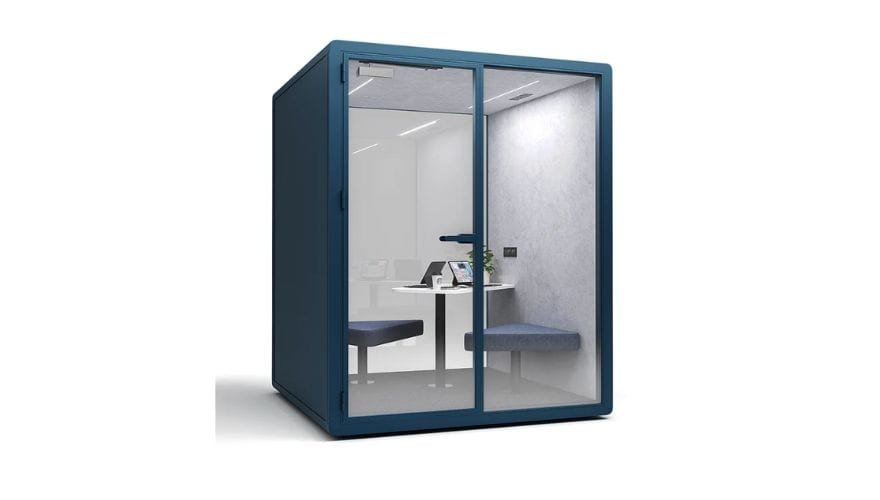
As a premier global commercial manufacturer, Meet&Co provides an exceptional line of high-performance architectural booths engineered specifically for fast-paced education and workplace layouts. Their pods utilize an advanced multi-layered shell structure that delivers superior noise reduction properties, making them ideal for high-traffic media centers.
Every structural pod manufactured by Meet&Co Office Furniture features eco-friendly, low-emissions interior felt lining and heavy-duty tempered safety glass, ensuring a perfectly safe, non-toxic environment for K-12 and higher education institutions alike.
2. Framery
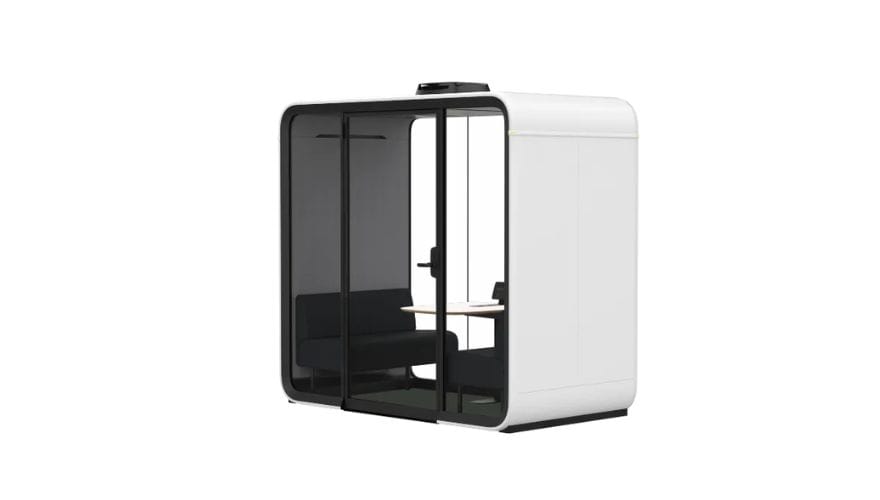
image source: https://framery.com/en/office-pods-and-booths/framery-four/
A premium, highly regarded industry standard for larger group collaboration. The Framery system offers an optimized layout for up to four students, featuring outstanding sound-dampening properties and highly customizable internal desk arrangements.
3. PoppinPod Series
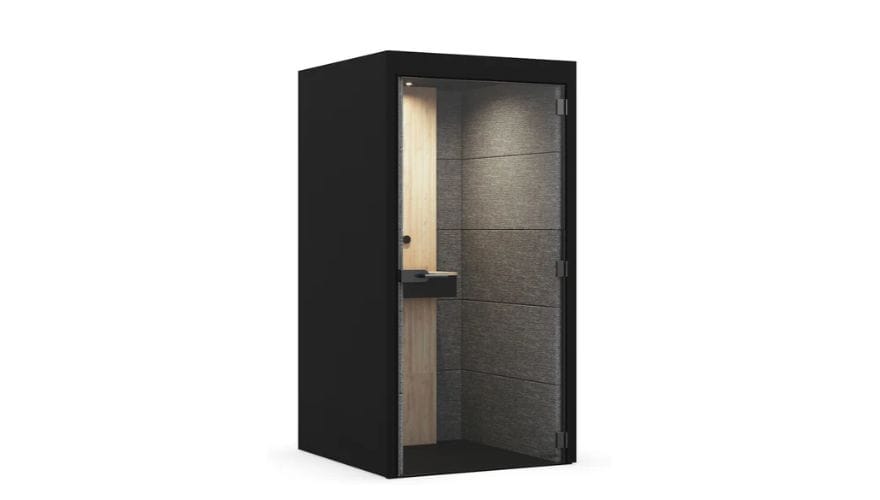
source: https://www.poppin.com/products/poppinpod-for-1-109922?utm_source=poppin.com&utm_medium=referral&utm_campaign=auto
A minimalist, budget-conscious choice for schools looking to add rapid focus zones. These pods feature clean visual profiles and straightforward plug-and-play power setups that work well in modern high school open lounges.
Are Acoustic Pods Better Than Traditional Study Rooms?
When expanding private study spaces, school planners generally choose between building permanent drywalled study rooms or ordering modular booths.
| Feature | Modular Acoustic Pods | Traditional Drywall Rooms |
| Construction Time | 1 – 2 Hours (Fast deployment) | 2 – 4 Weeks (Heavy construction mess) |
| Permit Requirements | None (Classified as furniture) | Extensive local building & fire permits |
| Layout Flexibility | 100% Mobile (Can change locations) | Permanent (Requires demolition to move) |
| Acoustic Certainty | Factory-tested STC/ISO ratings | Highly variable depending on contractor skill |
| Asset Lifecycle | Depreciates rapidly as furniture | Fixed permanently to the leasehold property |
Common Concerns About Acoustic Pods in Libraries
-
Are they fully soundproof? No commercial pod is 100% silent, as absolute silence causes claustrophobia. Instead, they are engineered for speech privacy—reducing sound by 25 to 32 decibels so internal voices blend safely into normal background noise.
-
Are they safe for students? Yes. Reputable educational lines feature full-height glass panels to maintain clear adult line-of-sight supervision, integrated smoke detector brackets, and magnetic emergency doors that open outward with a gentle push.
-
Do they require complex maintenance? Maintenance is minimal. Facilities teams simply need to wipe down the glass panels weekly, vacuum the interior acoustic carpet tiles, and check that the motion-activated fan inlets remain free of dust.
-
How much floor space is needed? Individual focus pods require a compact footprint of roughly 10 to 12 square feet, making them exceptionally easy to nest into underutilized corners, structural alcoves, or open perimeter corridors.
Final Thoughts
Successfully engineering modern flexible learning environments requires shifting away from fixed, static architecture. Acoustic booths offer a practical, future-ready path forward for campus libraries, protecting student wellbeing while supporting diverse modern teaching styles.
For school furniture planners and education procurement teams looking to optimize their campus layouts, investing in adaptable, commercial-grade architectural solutions ensures your library remains a highly productive hub for both independent focus and teamwork.