







 Meet&Co
You see particle board everywhere. Cheap shelves, flat‑pack furniture, cabinet backs, even some countertops. But what exactly is it? And more importantly – can it get wet?
If you have ever spilled water on a cheap shelf and watched it swell up like a balloon, you already know the answer is not simple. Some particle board falls apart with one drop of water. Other types handle moisture much better.
In this guide, we will explain what particle board is, how it is made, whether it can resist water, and how to protect it. You will also learn when to use particle board – and when to avoid it completely.
Let’s start from the beginning.
What is Particle Board? (Simple Definition)
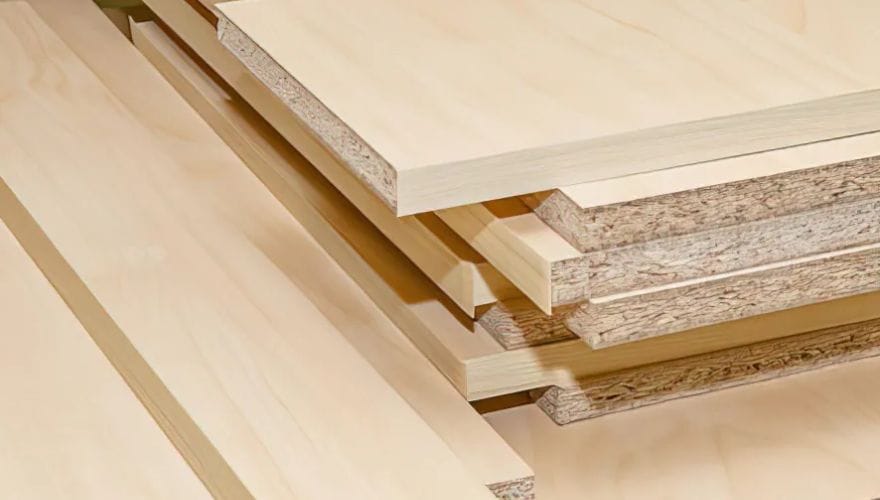
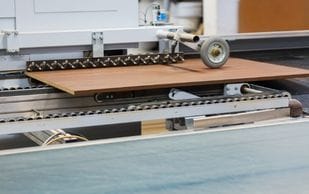
Particle board is an engineered wood product. Manufacturers take wood chips, sawdust, and wood shavings – the leftovers from sawmills – and mix them with a synthetic resin glue. Then they press everything into flat panels under high heat and pressure.
The result is a smooth, dense, and cheap sheet of material. It looks like wood but has no grain pattern. You can cut it, drill it, and paint it. But it is not solid wood.
Think of particle board as “wood dust glued together.” That simple fact explains both its strengths and its biggest weakness.
How is Particle Board Made?
You do not need to be an engineer. Here is the basic process in four steps:
-
Collect wood particles – Sawdust, chips, and shavings from lumber mills.
-
Mix with resin glue – The glue holds everything together.
-
Form a mat – The mixture is spread into a thick, flat layer.
-
Press with heat – A hot press squeezes the mat into a solid board.
After pressing, the board is trimmed, sanded, and cut into standard sizes. Most particle board is then laminated or covered with a thin layer of melamine, veneer, or paint.
Is Particle Board Water Resistant?
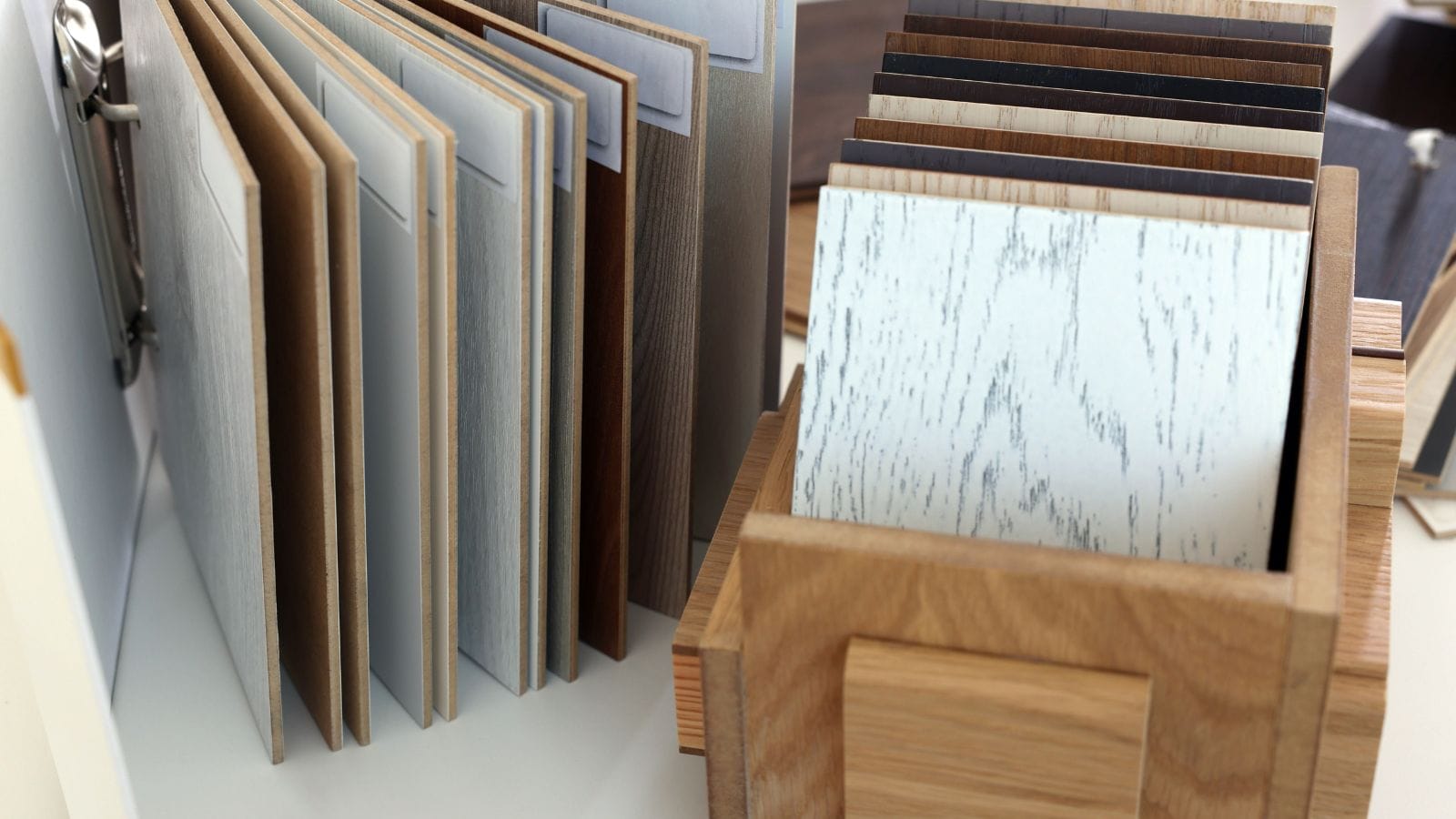
The short answer: No, standard particle board is not water-resistant. It absorbs moisture like a sponge.
The long answer: Some special types are moisture-resistant, but they are not waterproof.
Here is what happens when regular particle board gets wet:
-
Water seeps into the wood particles.
-
The resin glue breaks down or softens.
-
The board swells, often to twice its original thickness.
-
It becomes crumbly, weak, and often develops mold.
Even one good spill can ruin a cheap particle board shelf. That is why you should never use standard particle board in bathrooms, kitchens, or basements.
Moisture Resistant Particle Board (MR PB)
Some manufacturers make a better version called moisture resistant particle board (MR PB). They add a wax emulsion or a different type of resin (often melamine‑urea formaldehyde) that repels water better.
MR PB can handle occasional dampness or high humidity. It will not swell immediately. But it is still not waterproof. If you leave it standing in water, it will eventually fail.
| Type | Water resistance | Best for | Avoid |
|---|---|---|---|
| Standard particle board | None – swells quickly | Dry indoor furniture (desks, shelves, closet organizers) | Kitchens, bathrooms, basements, near windows |
| Moisture resistant (MR) | Low – resists humidity | Kitchen cabinets (if sealed), bathroom vanities (dry areas), laundry rooms | Direct water contact, wet floors, outdoor use |
| Laminated or melamine faced | Medium – surface repels water | Countertops, shelving, office furniture | Edges and cutouts (water can enter through cuts) |
Important: Even MR particle board is rated for “occasional moisture” – not standing water or regular wetting.
How Long Does Particle Board Last When Wet?
This depends on the type and how wet it gets.
-
A few drops of water wiped quickly – No damage.
-
Small spill left for 10 minutes – Surface may swell slightly. Once dry, it might leave a bump.
-
Soaked for 1 hour – Board will swell, crack, and lose strength. Often ruined.
-
Standing in water for 24 hours – Completely destroyed. Falls apart like wet cardboard.
Real‑world example: A glass of water spills on a standard particle board bookshelf. You wipe it after 30 seconds. The shelf is fine. The same spill on an unsealed edge? That edge swells permanently. You will see a raised bump that never goes away.
Common Uses of Particle Board (Good and Bad)
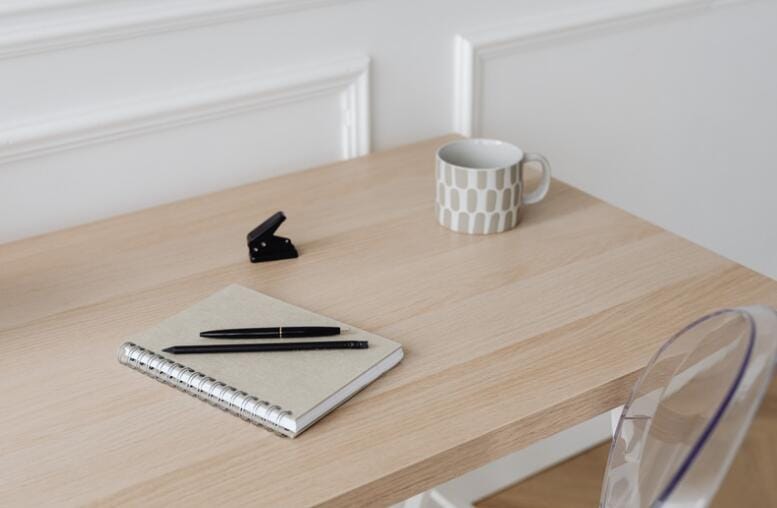
Particle board is not all bad. It is cheap, flat, and works fine in dry places. Here is where you see it every day.
Good uses (dry areas only)
-
Flat‑pack furniture – IKEA and other brands use particle board for desks, dressers, and bed frames.
-
Shelving in closets – As long as the closet stays dry.
-
Cabinet backs and drawer bottoms – Hidden parts that do not see water.
-
Underlayment for flooring – Covered by carpet or laminate.
-
Speaker boxes – Heavy and dense, good for sound.
Bad uses (risky or guaranteed failure)
-
Bathroom vanities – Unless sealed perfectly and never wet.
-
Kitchen countertops near sinks – One leak ruins the counter.
-
Outdoor furniture – Rain will destroy it in one season.
-
Basement storage – Basements are often humid. Mold loves particle board.
-
Flooring in wet areas – Never use particle board underlayment in a bathroom or laundry room.
Particle Board vs Plywood vs MDF (Quick Comparison)
People often confuse particle board with plywood and MDF. Here is a simple table.
| Feature | Particle Board | Plywood | MDF (Medium Density Fiberboard) |
|---|---|---|---|
| Made from | Wood chips + glue | Thin wood layers (plies) | Wood fibers + glue |
| Strength | Low | High | Medium |
| Water resistance | Very low (swells easily) | Medium to high (depends on glue type) | Low (swells, but less than particle board) |
| Weight | Medium | Light to medium | Heavy |
| Cost | Cheap | Expensive | Medium |
| Smoothness | Rough surface | Grain visible | Very smooth |
| Best for | Budget furniture, dry shelves | Construction, outdoor projects, cabinets | Painted furniture, moldings |
Bottom line: If you need water resistance, choose exterior‑grade plywood. If you need a smooth surface for painting, choose MDF. Only choose particle board if budget is tight and the area stays completely dry.
Also see: MDF vs. Particle Board: What’s the Difference and Which Is Right for You?
How to Protect Particle Board from Water (4 Practical Tips)
Sometimes you already have particle board furniture. Or you want to use it in a slightly damp area. Here is how to make it last longer.
1. Seal all edges
The edges are the weakest point. Water enters through cut edges easily. Use:
-
Waterproof wood glue – Thin it slightly and brush on edges.
-
White or wood glue – Not great, but better than nothing.
-
Silicone caulk – For edges near sinks (ugly but effective).
2. Apply a waterproof topcoat
Paint or varnish the entire surface. Use:
-
Oil‑based primer + latex paint – Two coats minimum.
-
Polyurethane (water‑based or oil‑based) – Brush on 2–3 thin coats.
-
Epoxy – For countertops, but expensive.
3. Use edge banding
Edge banding is a thin strip of plastic or veneer. You iron it onto the cut edges. It seals the edge and looks like real wood. Most flat‑pack furniture comes with edge banding already applied. If you cut the board, add new edge banding.
4. Keep it dry
This sounds obvious, but it matters most.
-
Wipe spills immediately.
-
Use coasters under drinks.
-
Do not place wet plants or wet towels on particle board.
-
Leave a gap between the board and a damp wall (for air circulation).
Warning: No amount of sealing makes particle board waterproof. If you submerge it or leave it in rain, it will fail.
When Should You Avoid Particle Board Completely?
Do not use particle board in these situations:
-
Any outdoor project – Sheds, garden furniture, playhouses.
-
Bathrooms without a fan – High humidity every day.
-
Kitchen areas near the sink or dishwasher – Leaks happen.
-
Basements with any moisture – Even “dry” basements get humid.
-
Children’s items that go outside – Sandboxes, outdoor toy boxes.
-
Flooring in laundry rooms or mudrooms – Wet shoes destroy it.
For those places, spend more on plywood, plastic lumber, or solid wood. It costs more now but saves you from replacing swollen, moldy boards later.
Frequently Asked Questions (FAQ)
1. Can particle board get wet and then dry out?
Yes, but it will not return to its original shape. Once particle board swells from water, the swelling is permanent. The glue loses its bond, and the wood particles stay pushed apart. Even after drying, the board remains weak, bumpy, and crumbly. You can still use it for non‑structural purposes, but do not trust it to hold heavy weight. Tip: If the swelling is small, sand the bump smooth and seal the area. But the strength is gone forever.
2. Is moisture resistant particle board safe for a bathroom vanity?
Yes, but only if the vanity is away from direct water. Moisture resistant (MR) particle board can handle the humidity of a bathroom with good ventilation. However, do not use it for the countertop near the sink. Use it for cabinet boxes and doors. Seal all edges with waterproof glue or edge banding. If water drips down the front, wipe it quickly. For the area directly under the sink (where pipes might leak), use plywood instead.
3. What is better than particle board for water resistance?
Three materials are much better:
-
Exterior grade plywood – Uses waterproof glue (phenol formaldehyde). It can get rained on without falling apart. Best choice for most wet areas.
-
Marine plywood – Even better than exterior plywood. No voids inside. Used for boat building. Expensive but nearly waterproof.
-
High density polyethylene (HDPE) – Plastic lumber. Never rots or swells. Great for outdoor furniture and wet areas. Looks like wood but costs more.
For indoor damp areas (not soaking wet), MDF with a good paint seal works better than particle board but still swells eventually. If budget allows, always choose plywood over particle board for any place that might get wet.
Final Verdict: Should You Use Particle Board?
Use particle board when:
-
You need cheap furniture or shelving.
-
The area stays completely dry (bedroom, home office, living room).
-
You do not mind replacing it in 5–10 years.
-
The piece will not be moved or taken apart often (particle board screws strip easily).
Avoid particle board when:
-
Any moisture is possible.
-
You want furniture that lasts 20+ years.
-
The item will be near a sink, toilet, or washing machine.
-
You need to screw into it repeatedly (it crumbles).
A simple rule to remember:
Particle board is like a paper towel. Keep it dry, and it works fine. Get it wet, and it falls apart.
If you already own particle board furniture, protect it with sealing and care. If you are buying new furniture for a kitchen or bathroom, spend a little more on plywood or solid wood. Your future self will thank you when there is no swollen, moldy mess to clean up.


_5.webp)
