






 Meet&Co
Leather furniture is a timeless choice for homes and offices, but if you are asking what are the different types of leather for furniture? The options can seem overwhelming.
From full-grain to faux leather, each type offers unique textures, durability, and maintenance requirements.
Understanding these differences ensures you choose the right leather type for your living room sofa, new office chair, or sectional.
In this guide, we explore all major leather types, their suitability for home vs office leather furniture, and provide essential leather furniture care tips.
Introduction to Leather Furniture
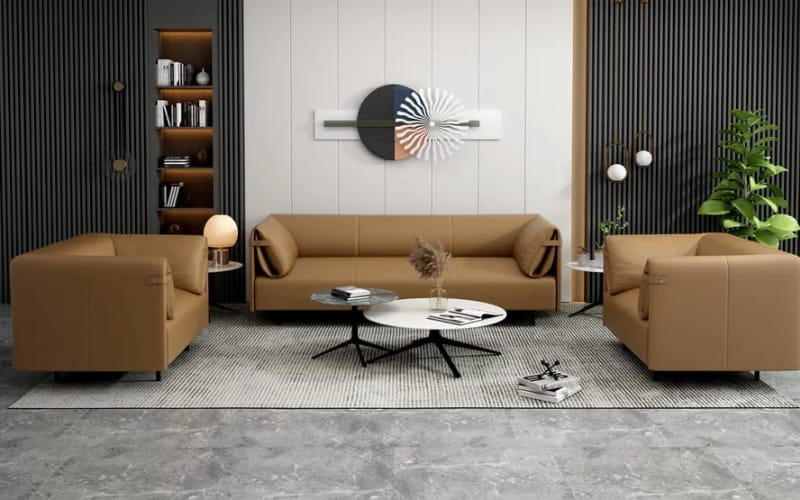
Choosing the right leather starts with understanding its key benefits. Leather offers durability, comfort, and a luxurious feel, aging gracefully with time.
While home leather furniture emphasizes comfort and family-friendly design, office leather furniture often prioritizes durability, easy maintenance, and a professional appearance.
Knowing what are the different types of leather for furniture helps buyers avoid costly mistakes and select pieces that match both aesthetic and practical needs.
Major Types of Leather for Furniture
Here’s a comparative overview of the most common leather types for sofas, chairs, and sectional furniture:
| Leather Type | Appearance & Feel | Durability | Maintenance | Best For (Home/Office) |
|---|---|---|---|---|
| Full-Grain | Natural, develops patina | Very High | Moderate | Luxury sofas, executive chairs |
| Top-Grain | Smooth, refined surface | High | Easy | Modern home sofas, office chairs |
| Corrected-Grain | Uniform, embossed | Medium | Easy | Commercial furniture, budget sofas |
| Bonded Leather | Looks like leather | Low | Moderate | Low-usage furniture, temporary setups |
| Faux Leather (PU/PVC) | Smooth or textured | Medium | Very Easy | Pet-friendly sofas, office chairs |
| Nubuck / Suede | Soft, velvety | Medium | Careful | Accent chairs, decorative furniture |
| Aniline / Semi-Aniline | Soft, natural finish | High | Requires care | Premium sofas, office seating |
This table helps you quickly compare leather types and understand which are best for home or office usage.
Full-Grain Leather
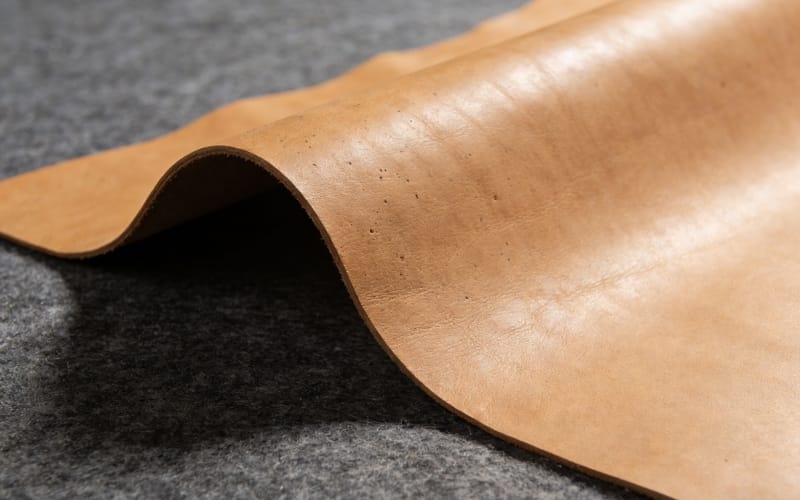
Full-grain leather retains its natural surface, offering unmatched durability and a rich patina over time.
Pros:
Luxurious look and feel
Very durable for high-traffic areas
Ages beautifully
Cons:
Premium price
Shows scratches more easily
Best Uses:
Home: living room sofas or sectional leather furniture
Office: executive chairs, boardroom furniture
Care Tips:
Dust frequently and condition with quality leather products
Avoid prolonged sunlight exposure
Top-Grain Leather
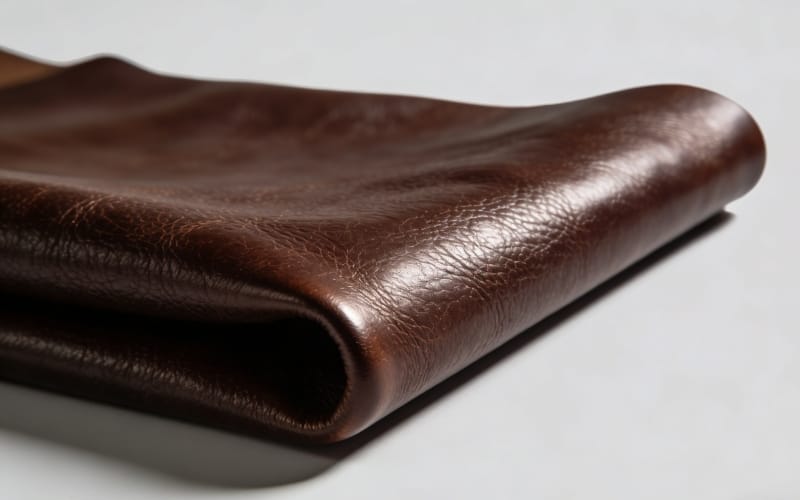
Top-grain leather is sanded and treated to remove minor imperfections, resulting in a smooth, uniform surface.
Pros:
Sleek appearance for modern interiors
Easier maintenance than full-grain
Durable for daily use
Cons:
Slightly less breathable
Does not develop patina like full-grain
Best Uses:
Professional office chairs and reception furniture
Corrected-Grain Leather
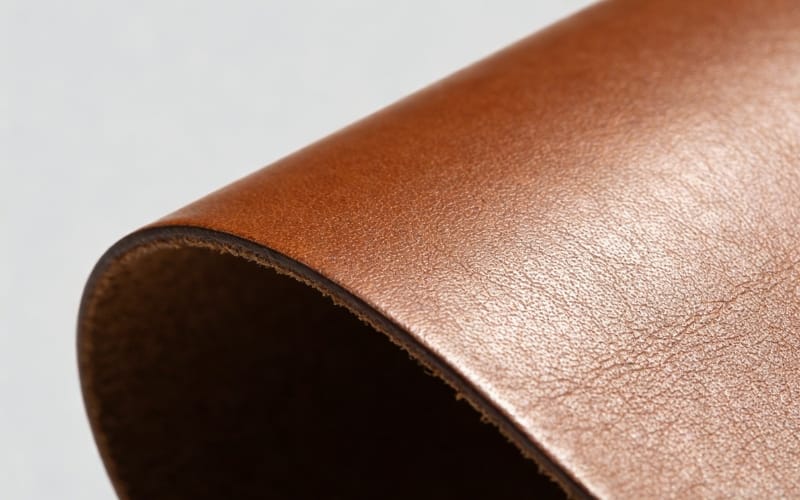
Corrected-grain leather is embossed to hide natural flaws. While budget-friendly, it lacks the natural texture of higher-grade leathers.
Pros:
Affordable
Uniform look
Cons:
Lower breathability
Less natural feel
Best Uses:
Commercial furniture
Budget-conscious home setups
Bonded Leather
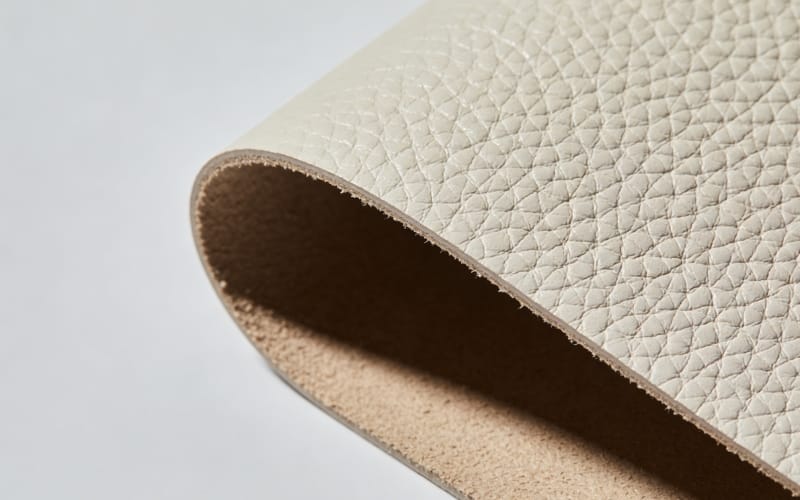
Bonded leather combines leather scraps with polyurethane, offering a leather-like appearance at low cost.
Pros:
Budget-friendly
Visually resembles real leather
Cons:
Shorter lifespan
Can peel or crack over time
Best Uses:
Low-traffic home furniture
Temporary office chairs
Faux Leather (PU / PVC)
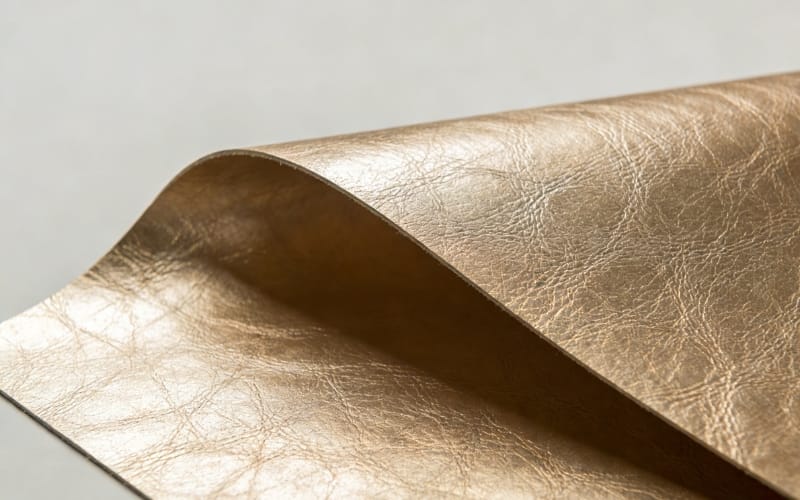
Faux leather is a synthetic alternative, often made from PU or PVC, and ideal for those seeking an animal-friendly option.
Pros:
Easy to clean
Water-resistant
Cruelty-free
Cons:
Less breathable
Can crack with heavy use
Best Uses:
Home sofas with children or pets
Office chairs in high-traffic areas
Specialty Leathers: Nubuck, Suede, Aniline, Semi-Aniline
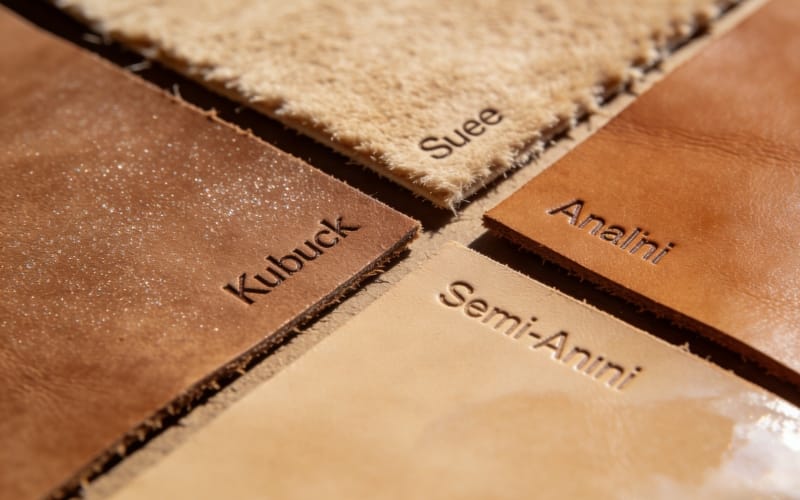
These offer unique textures and finishes:
Nubuck / Suede: Soft and velvety; aesthetically pleasing but requires careful maintenance.
Aniline / Semi-Aniline: Soft, natural finish with high breathability; excellent for premium home or office sofas.
Choosing Leather for Home vs Office
| Scenario | Recommended Leather Type | Notes |
|---|---|---|
| High-traffic office | Top-Grain, Aniline | Professional look, easy to clean |
| Luxury office chairs | Full-Grain | Long-lasting, premium feel |
| Home family sofa | Top-Grain, Faux Leather | Stain-resistant, pet-friendly |
| Decorative accent chairs | Nubuck, Suede | Aesthetic appeal, low-traffic areas |
Tips:
Home: prioritize comfort, family and pet-friendly durability
Office: focus on professional appearance, durability, and ease of cleaning
Common Mistakes When Choosing Leather Furniture
Confusing leather types (e.g., bonded vs full-grain)
Choosing based solely on price
Ignoring maintenance requirements
Overlooking room conditions (humidity, sunlight exposure)
Not matching leather to intended usage (home vs office)
Leather Furniture Care Tips
General Tips:
Dust and vacuum regularly
Use conditioners suitable for leather type
Avoid direct sunlight to prevent fading
For office chairs, wipe daily; for home sofas, clean spills immediately
Specialty Leather Care:
Suede and Nubuck require specialized brushes
Aniline leathers benefit from occasional conditioning
Where to Buy Quality Leather Furniture
Choose trusted brands like Meet&Co for authentic leather furniture.
The Mandis Leather Sectional Sofa offers both style and durability, suitable for home living rooms and professional offices.
When buying, verify the leather type, consider warranty options, and check customer reviews.
Buying Tips:
Check the leather type and certification
Consider online vs offline purchase for convenience and warranty options
Compare customer reviews for comfort and longevity
Conclusion
Understanding what are the different types of leather for furniture? is essential for making an informed choice.
From luxurious full-grain to budget-friendly faux leather, selecting the right type depends on your home or office needs, maintenance preferences, and style goals.
High-quality options like Mandis Leather Sectional Sofa from Meet&Co ensure lasting comfort, elegance, and value.
FAQ
The main types include full-grain, top-grain, corrected-grain, bonded leather, faux leather (PU/PVC), and specialty leathers like nubuck, suede, and aniline.
Each type has unique durability, appearance, and maintenance requirements suitable for either home or office furniture.
For home use, top-grain leather and faux leather are popular due to their balance of durability, stain resistance, and ease of maintenance.
Full-grain leather is ideal for luxury living rooms, while faux leather is great for families with pets or children.
Top-grain and aniline leathers are excellent for office settings, offering durability, a professional appearance, and easier maintenance.
Full-grain leather can also be used for executive chairs or high-end office furniture.
Dust and vacuum regularly, clean spills immediately, use appropriate leather conditioners, and avoid prolonged sunlight exposure.
Specialty leathers like suede or nubuck require special brushes and gentle cleaning.
Yes, faux leather (PU/PVC) is water-resistant, easy to clean, and cruelty-free.
It is suitable for high-traffic offices or homes with pets and children. However, it may crack faster than genuine leather over time.
Some leathers, like top-grain and full-grain, are versatile and suitable for both scenarios.
The key is to consider traffic levels, maintenance capacity, and aesthetic preferences.
For high-traffic offices, durability is more critical, while home furniture may prioritize comfort.

_17.webp)