





 Meet&Co
Visitors notice the little things — and the chair they sit on during a meeting is one of them. An uncomfortable or mismatched visitor chair leaves a quiet but real impression. One that‘s thoughtfully chosen says you pay attention to details and care about the people who walk into your meeting room.
But visitor chairs are different from the task chair you use at your desk. They serve a shorter purpose, and design matters. A visitor chair for a conference room needs to look good, offer decent support for a 30‑ or 60‑minute meeting, and match the style of your space.
This guide walks you through what to look for, the different types of conference visitor chairs, and three solid options — including a warm, design‑forward pick from Meet&Co.
What Makes a Good Conference Room Visitor Chair?
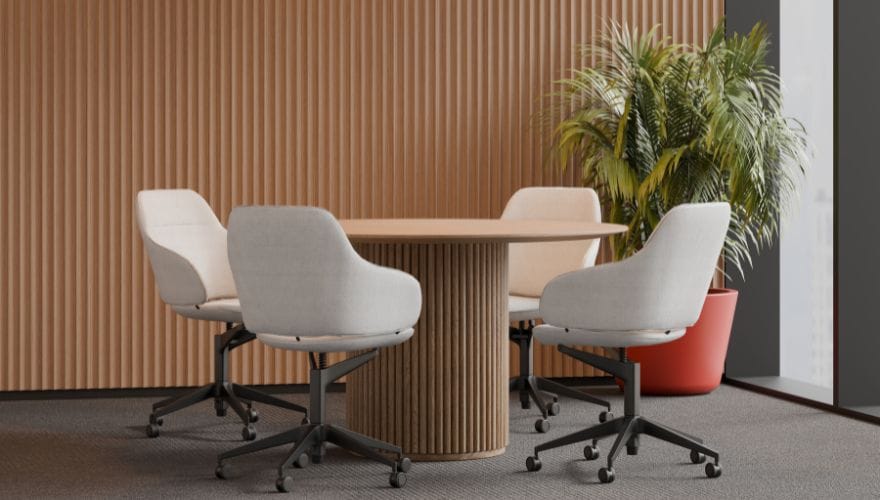
Unlike task chairs that need hours of ergonomic adjustment, visitor chairs serve shorter meetings. But short does not mean unimportant. A good visitor chair should still meet a few essential criteria.
1. The Right Dimensions
Getting the size right is the most practical step. Measure your conference table, the floor space, and how chairs fit around it. The industry standard for visitor chair seat height ranges from 16 to 21 inches — low enough for most people to rest their feet flat on the floor, which supports good posture and reduces leg fatigue during meetings. Seat depth should fall between 15 and 18 inches, providing proper thigh support without pressing into the back of the knees. A seat that is too deep leaves shorter visitors with a gap behind their knees, which can be uncomfortable.
For table clearance, allow at least 30 inches from the centre of one chair to the centre of the next, so everyone has room to move their arms and turn toward the speaker. For the overall room, leave about 36 inches between the back of the chair and the wall behind it — enough for people to walk behind seated guests without squeezing.
2. Comfort for the Typical Meeting Length
Most conference room meetings last between 30 minutes and two hours. Within that window, the chair does not need 20 different adjustment levers, but it does need a supportive backrest, a well‑padded seat, and armrests that let visitors relax their shoulders. Visitor chairs are not designed for the all‑day use that task chairs endure, so they typically have fewer adjustment options while still providing proper support for shorter durations.
Look for a backrest with gentle lower back support — not aggressive, just enough to encourage a natural seated posture. The padding should be thick enough that the seat does not feel like a hard board after 20 minutes, which is a common complaint about budget‑quality guest chairs.
3. Style That Matches Your Space
The visitor chair should look like it belongs in the room, not like it wandered in from a different building. If your conference table is wood with clean lines, a plastic or mesh chair with a metal frame might look starkly out of place. If your office has a modern, minimalist look, an upholstered executive chair might feel heavy and mismatched.
The most cohesive approach is to choose visitor chairs that complement the main task chairs around the table. But they do not need to match exactly — in fact, a slight contrast can add visual interest. Think complementary materials, similar colour tones, or a consistent design language without being identical.
4. Materials That Hold Up
Visitor chairs see a different kind of wear than task chairs. They are not sat in for eight hours straight, but they are used by many different people throughout the week. That means they need to be built to handle varied use — people leaning on armrests, scooting in and out from the table, occasionally shifting their weight.
Look for powder‑coated steel frames (which resist rust and scratches), high‑density polypropylene shells (strong, lightweight, and easy to clean), and upholstery with a reasonably high double rub rating (a measure of fabric durability; 30,000+ double rubs is considered very good for commercial use).
5. Armrests — Yes or No?
This is a genuine trade‑off. Armrests offer support for visitors who want to relax their shoulders during longer meetings. But they also add width and can make it harder for the chair to slide completely under the table. Armless chairs take up less space, slide in neatly, and often create a cleaner visual line along the table.
The middle ground: slim, low‑profile armrests. They provide the support visitors expect without protruding far beyond the seat width. For conference tables that are tightly packed, consider a mix — chairs with armrests at the ends of the table where space is less constrained, and armless chairs along the sides.
Visitor Chair vs. Main Chair: What’s the Difference?
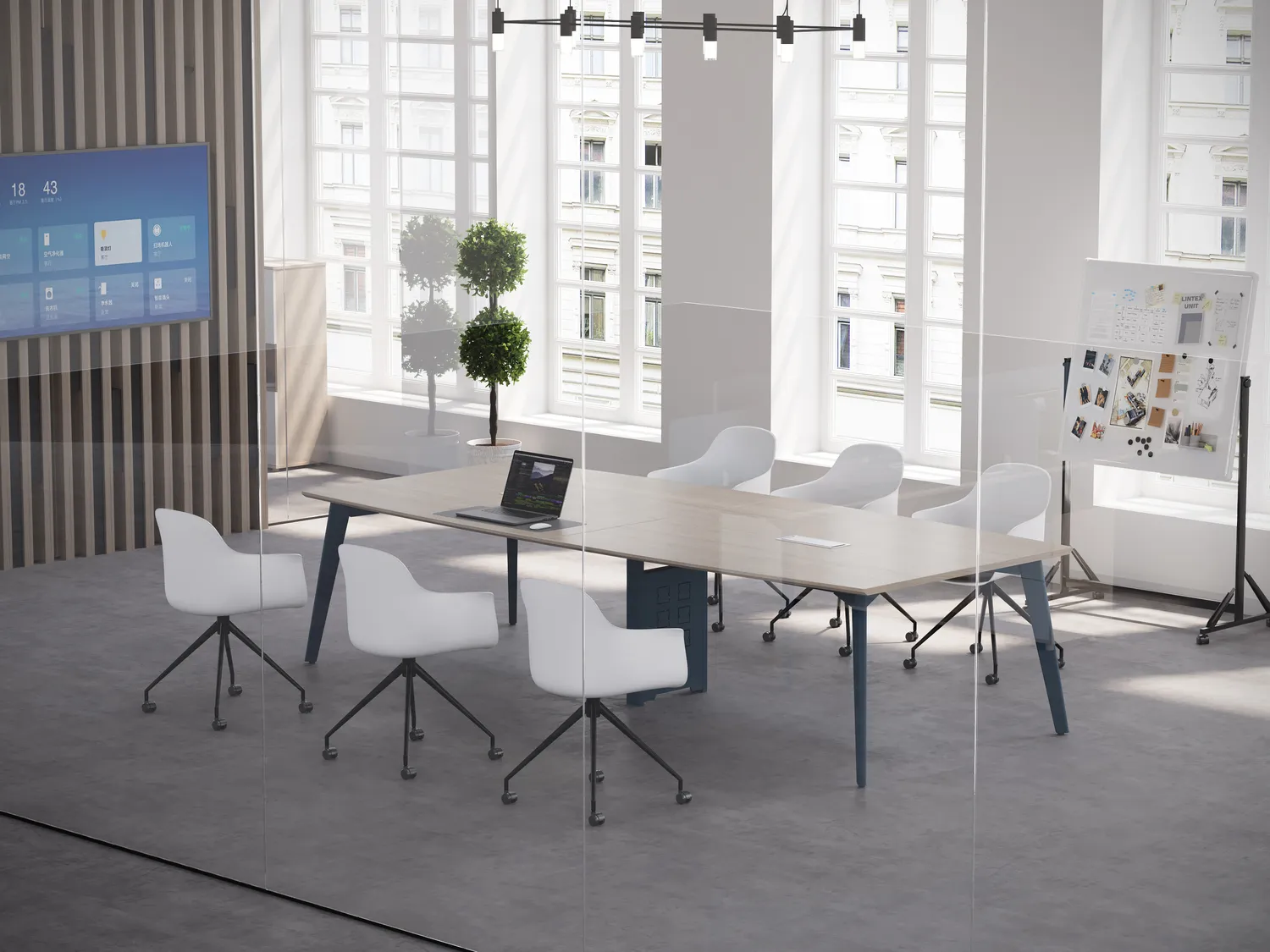
It is worth understanding the distinction because it affects purchase decisions.
| Feature | Visitor Chair | Main Conference Chair |
|---|---|---|
| Typical use | Short meetings (30–60 min) | Longer meetings (2+ hours) |
| Ergonomic features | Basic support, minimal adjustments | Adjustable height, lumbar support, tilt |
| Armrests | Often fixed or slim | Can be fixed or adjustable |
| Mobility | Usually stationary (no casters) | Often has casters for flexibility |
| Design priority | Appearance + durability | Comfort + adjustability |
Visitor chairs are designed for non‑intensive use and shorter stays, while the main chairs around a conference table are often task chairs with more ergonomic features.
Types of Visitor Chairs for Conference Rooms
Choosing the right type depends on your meeting room‘s style, how often you host guests, and how much space you have.
Executive Leather or PU Visitor Chairs
Best for: Formal boardrooms, executive offices, and client‑facing spaces where appearance is the priority. High‑back designs with padded armrests and plush cushioning convey a sense of authority and professionalism. They are typically stationary (no wheels) and sit on sturdy glides.
Trade‑off: They take up more visual space and may not work well in tight layouts.
Mesh‑Back Visitor Chairs
Best for: Tech offices, modern conference rooms, and spaces where temperature control is a consideration. Mesh backs allow air to circulate, keeping visitors cool during warmer months or in rooms without strong air conditioning.
Trade‑off: Mesh has a more casual, contemporary look that may feel out of place in a traditional boardroom.
Sled‑Base or Cantilever Chairs
Best for: Smaller meeting rooms where chairs need to slide completely under the table. The continuous metal frame that curves under the seat creates a clean, floating appearance and a slight ergonomic spring that improves comfort over a rigid four‑leg base.
Trade‑off: Less formal than executive seating; may not provide enough support for longer meetings.
Stackable Visitor Chairs
Best for: Training rooms or multi‑purpose conference spaces that occasionally need to be cleared for events. Stackable chairs store neatly in a closet or on a dolly, making them space‑efficient for rooms used for multiple activities.
Trade‑off: Often less comfortable and less stylish than fixed visitor chairs.
3 Visitor Chairs Worth Considering for Your Conference Room
Each of these chairs approaches the visitor seat question from a different angle — style, practicality, and modern comfort.
1. Meet&Co WRK Kite Plastic Chair with Wooden Legs
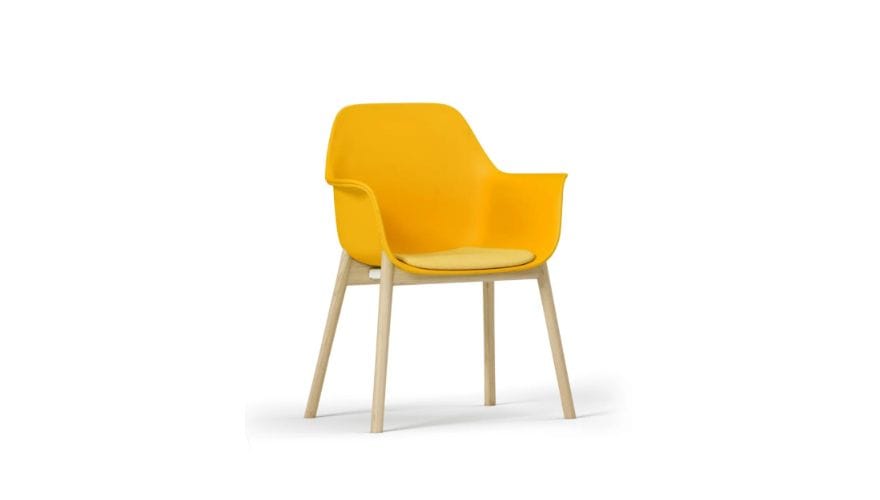
Some modern conference rooms feel cold. This chair is a gentle antidote to that.
The WRK Kite Chair blends modern design with everyday functionality. The seat is made from high‑quality, scratch‑resistant plastic with smooth, gentle curves that provide comfort and support. Where other plastic chairs lean hard into an industrial aesthetic, the Kite stays warm and inviting.
What sets it apart is the base. The combination of beech wood legs and a sleek plastic seat bridges modern and traditional design languages. In a conference room where the table is wood and the walls are warm neutrals, this chair feels intentional — not like a mismatched leftover. The chair comes in a variety of colours, allowing you to match it to your existing decor or add a subtle accent.
From a practical standpoint, the scratch‑resistant plastic makes it a low‑maintenance option for daily use, and the armless design keeps the footprint compact — helping the chair slide neatly under conference tables.
Best for: Conference rooms with a warm, balanced aesthetic — not too stark, not overly traditional. Also a great pick for offices that want a visitor chair that quietly signals thoughtful design.
Key strengths: Sturdy beech wood legs, scratch‑resistant plastic seat, armless compact design, variety of colour options, easy to clean and maintain.
2. IKEA LÅNGFJÄLL Conference Chair
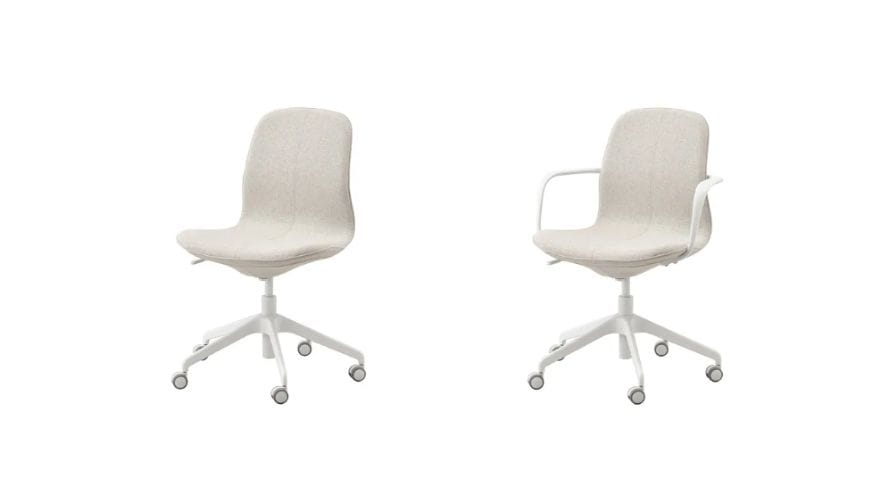
source: https://www.ikea.com.hk/en/collections/langfjall
IKEA‘s LÅNGFJÄLL is a practical, value‑focused choice that does a lot for its price. It is a swivel chair designed for conference rooms and meeting spaces, with a gentle curved lines accentuated by sewn details that give it a soft, tailored look.
What makes the LÅNGFJÄLL stand out for visitor use is the adjustable height — a feature not always included in basic visitor chairs. That adjustability allows the chair to accommodate different table heights and different visitor statures, which is especially useful if your conference room hosts a wide range of guests or doubles as a flexible meeting space.
The chair includes armrests that support your forearms and reduce strain on your back and shoulders — a nice touch for visitors who may shift positions during a longer meeting.The generously padded cold‑foam seat stays comfortable for the duration of most meetings.
On a practical note, the LÅNGFJÄLL comes with castors that make it easy to move around the room — helpful for reconfiguring seating arrangements.
Best for: Small to medium conference rooms with mixed use — meetings, team huddles, and occasional training sessions. Also a solid pick for offices furnishing multiple meeting rooms on a reasonable budget.
Key strengths: Adjustable seat height, padded armrests with good ergonomics, generous cold‑foam seat, swivel castors for easy movement, lumbar support.
3. LarkLeaves Mesh Desk Chair (No Wheels)
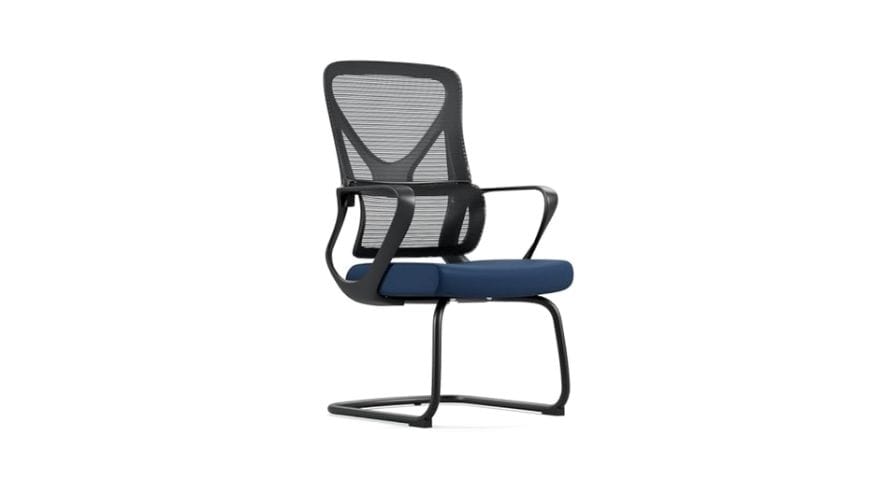
source: https://www.amazon.com/dp/B0CXSNGZ16
For conference rooms where space is at a premium, the LarkLeaves Mesh Desk Chair is a clever solution. It is designed without wheels, which means it stays exactly where you place it — no drifting during meetings and no castors rolling off the edge of the rug.
The mesh back keeps visitors comfortable in warmer weather or rooms without heavy air conditioning, which is a welcome detail. A well‑ventilated backrest prevents that sweaty, uncomfortable feeling that can make a short meeting feel longer than it is. The chair includes padded armrests that provide support without adding excess width, helping it slide under standard conference tables while still offering shoulder relief.
What makes this chair particularly versatile is its design. The blue colour option and clean lines work in various settings — conference rooms, training spaces, reception areas, and even home office guest seating. It is also suitable for carpeted floors, so you do not need to worry about the chair tipping or the base damaging the surface.
Best for: Conference rooms with space constraints, training environments, and offices that need a visitor chair that is light enough to be moved but sturdy enough to stay put during meetings.
Key strengths: Wheel‑free design (stays in place), breathable mesh back, compact footprint, padded armrests, suitable for carpeted floors, available in several colours.
| Chair | Best For | Key Feature | Armrests | Wheels/Casters | Style Vibe |
|---|---|---|---|---|---|
| Meet&Co WRK Kite | Warm, design‑focused conference rooms | Beech wood legs, scratch‑resistant plastic seat | No | No | Modern with natural warmth, armless |
| IKEA LÅNGFJÄLL | Multi‑purpose, value‑focused meeting rooms | Adjustable height and tilt, generous cold‑foam seat | Yes | Yes | Soft, tailored, contemporary |
| LarkLeaves Mesh Chair | Space‑tight, warm weather, training environments | Wheel‑free base (stays in place), breathable mesh back | Yes | No (glides) | Clean, functional, modern |
How Many Visitor Chairs Do You Actually Need?
The best seating arrangement is not about squeezing in as many chairs as possible. It is about giving each person enough elbow room to feel comfortable and turning toward the speaker without bumping elbows.
For a rectangular conference table, a good rule of thumb is one chair every 24 to 30 inches along the long sides. Leave the ends clear unless the table is very large — that gives guests space to enter and exit without climbing over seated participants. For a table that seats eight, four chairs on each side is much more functional than adding chairs at the ends.
For smaller, round or square tables, four chairs work well for a 48‑inch square or a 54‑inch round. Six chairs fit a 60‑inch round but space gets tighter. Beyond six, the table becomes crowded, and some guests end up reaching awkwardly for coffee or notes.
Our designer‘s tip: Do not assume every seat around the conference table will be used in every meeting. Start with a smaller number of chairs and add more only if you see that guests are consistently standing or waiting. Extra seats pushed against the wall look cluttered and unused.
Also see: Conference Table for 6 People: 2026 Best Buying Guide
Frequently Asked Questions (FAQ)
1. What is the best visitor chair for a small conference room?
The LarkLeaves Mesh Desk Chair is a strong option for tighter spaces. With a wheel‑free design and compact footprint, it stays where you put it and does not drift across the floor during meetings. The armless design also helps chairs slide completely under the table, which makes the room feel larger. For very small rooms, it is also worth considering sled‑base or cantilever chairs, which have a slimmer profile than full‑size office chairs.
2. Should visitor chairs have wheels?
It depends on how the room is used. Wheels make it easier to reconfigure seating for different meeting types — you can pull chairs closer to a whiteboard or rearrange for a group discussion. They also help guests slide chairs in and out without heavy lifting. However, chairs on wheels tend to drift over time, which can make the seating look messy. Stationary glides keep chairs exactly where you place them, which is often preferable for formal, traditional meeting rooms.
3. How do I clean and maintain conference room visitor chairs?
Clean guest chairs regularly — a weekly wipe‑down prevents buildup of dust, coffee splashes, and general office grime. For plastic and mesh chairs, a soft damp cloth with mild soap works perfectly. Avoid harsh chemicals that can damage the surface. For fabric or leather upholstery, vacuum crevices monthly and spot clean stains immediately.
Also check for wobbling or loose screws every few months. Visitor chairs are moved around less than task chairs, but they still benefit from a regular check of the frame and armrest connections. Good castors (if the chair has them) should roll without squeaking — a drop of silicone lubricant fixes most issues.
Final Thoughts
Selecting chairs for your conference room does not have to be complicated. Start with the number of guests you expect to host regularly, measure your table and space, and decide whether mobility or stationary stability matters more. Then let the style of your existing furniture guide your choice — the visitor chair should complement, not clash.
A well‑chosen visitor chair does not just hold a guest — it makes them feel welcomed. That is a small thing, but in business, the little things add up.

_2.webp)