





 Meet&Co
Walk into any corporate training room, and you’ll see them. Community center event space? They’re there too. School auditorium being repurposed for parent night? Stacked in corners, ready to deploy. Training chairs are the unsung heroes of flexible spaces—designed to be moved, stacked, and reconfigured at a moment’s notice.
But not all training chairs are created equal. A chair that works beautifully for a three-hour workshop may be uncomfortable for an all-day training session. One that stacks neatly may lack the ergonomic support adults need. And a chair that’s easy to move may sacrifice stability when occupied.
Why Stackable, Mobile Training Chairs Matter
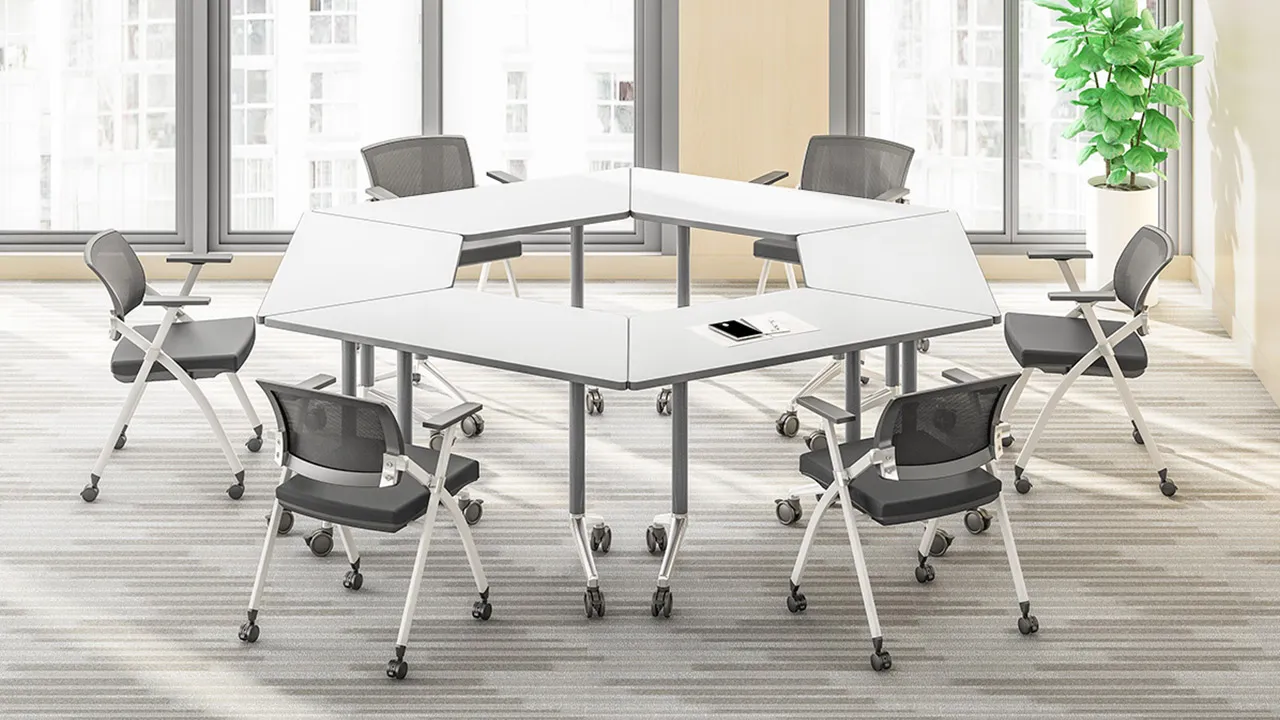
Meet&Co Mobile Foldable Training Table
The modern training room is a shape-shifter. One morning it hosts a 50-person lecture; that afternoon it’s divided into small breakout groups; in the evening, it’s cleared for a reception. Fixed seating simply can’t keep up.
| Requirement | Why Stackable, Mobile Chairs Excel |
| Rapid reconfiguration | Chairs can be moved, rearranged, or removed in minutes |
| Efficient storage | Stacking reduces storage footprint by 70–80% |
| Flexible capacity | Add chairs for large events; reduce for small groups |
| Multi-purpose spaces | Same room serves training, meetings, events, dining |
| Easy cleaning | Move chairs to access floors; stack for floor cleaning |
The right training chairs transform a single-purpose room into a versatile asset that can serve the entire organization.
Next, let’s look at how to buy the right training chairs.
Step 1: Understand Your Usage Patterns
Before evaluating chairs, consider how your space will be used. Different training environments have different demands.
| Usage Scenario | Key Priorities | Recommended Features |
| Corporate training (full-day) | Comfort, ergonomics, laptop use | Padded seat, contoured back, tablet arm |
| Short workshops (2–4 hours) | Moderate comfort, quick setup | Stackable, lightweight, optional tablet arm |
| Educational settings | Durability, easy cleaning, safety | Heavy-duty construction, rounded edges, stain-resistant |
| Multi-purpose event space | Rapid reconfiguration, storage efficiency | Lightweight, high stackability, nesting or ganging options |
| Hybrid training | Technology integration | Power/USB access, tablet arm for devices |
Questions to Ask
- How long do typical sessions last?
- Do participants need writing surfaces or laptops?
- How often does the room need to be reconfigured?
- Who will be moving the chairs? (Staff? Participants?)
- What floor surfaces will chairs roll on?
Also see: How to Pick the Best Conference Room Chairs: 2026 Guide
Step 2: Evaluate Comfort and Ergonomics
Training sessions can last hours. If chairs are uncomfortable, participants focus on their discomfort rather than the material.
Seat Design
| Feature | What to Look For | Why It Matters |
| Seat contour | Slight curve following natural shape | Distributes weight; reduces pressure points |
| Seat depth | 16–18 inches for average adults | Supports thighs without pressing behind knees |
| Seat height | 17–19 inches (standard) | Allows feet flat on floor for most adults |
| Padding | 2–3 inches high-density foam | Maintains support; resists compression |
Backrest Design
| Feature | What to Look For | Why It Matters |
| Height | Mid-back (18–22 inches) | Supports lumbar region without restricting shoulders |
| Lumbar contour | Gentle curve at lower back | Maintains natural spinal alignment |
| Flexibility | Some give when leaning back | Allows movement without losing support |
| Breathability | Mesh or perforated back | Prevents heat buildup during long sessions |
Tablet Arms (If Needed)
If training involves note-taking or laptop use, tablet arms become essential.
| Feature | What to Look For |
| Size | Large enough for notebook or laptop (12″ x 16″ minimum) |
| Stability | Arm locks securely; doesn’t wobble during writing |
| Position | Adjustable to accommodate different body sizes |
| Swivel | Arm swings away for easy entry/exit |
| Storage | Tablet arm folds or stacks with chair |
Step 3: Assess Stackability and Storage
The ability to stack is what distinguishes training chairs from standard seating. But not all stacking systems work equally well.
Stacking Features to Consider
| Feature | What to Look For | Why It Matters |
| Stack height | Chairs should stack 4–10 high safely | More stacks = smaller storage footprint |
| Stack stability | Chairs lock together; don’t tip when stacked | Safety; prevents accidents during storage |
| Stacking mechanism | Integrated bumpers or guides | Protects chairs from damage during stacking |
| Dolly compatibility | Works with rolling dollies | Easier movement of stacked chairs |
| Weight | 12–20 lbs per chair | Lighter chairs easier to move; heavier may be more durable |
Stacking Systems
| System | Description | Best For |
| Vertical stacking | Chairs stack directly on top of each other | Efficient storage; requires ceiling height |
| Nesting | Chairs slide into one another (like shopping carts) | Low-profile storage; easy for one person |
| Ganging | Chairs connect side-by-side for rows | Neat rows; prevents chairs from spreading |
Storage Space Calculation
- Stack of 10 chairs: Approximately 3–4 feet high, 2–3 feet wide, 2–3 feet deep
- Rolling dolly: Holds 8–12 chairs; allows one person to move entire stack

Meet&Co Flip Top Nesting Training Table and chairs
Step 4: Evaluate Mobility
Mobile chairs allow quick reconfiguration without heavy lifting or multiple staff members.
Casters and Wheels
| Wheel Type | Best For | Features |
| Hard nylon | Carpet | Rolls easily on low-pile carpet; may mark hard floors |
| Soft polyurethane | Hardwood, tile, laminate | Protects floors; quieter; may drag on carpet |
| Dual-wheel casters | Mixed surfaces | Distributes weight; more stable |
| Locking casters | Situations requiring stability | Prevents rolling during use |
What to Look For
- Casters on all legs: Full mobility for easy repositioning
- Casters on front legs only: Easier to lift and move; more stable when occupied
- Glides (no casters): Most stable; requires lifting to move
Mobility Considerations
| Factor | What to Consider |
| Floor surface | Match wheel type to flooring (hard vs. carpet) |
| User ability | Who moves chairs? Staff? Participants? |
| Frequency of moves | Frequent moves justify full casters; occasional moves may accept glides |
Step 5: Consider Durability and Construction
Training chairs face heavy use—stacking, moving, daily sitting, and occasional abuse. Durability matters.
Frame Materials
| Material | Durability | Weight | Cost | Best For |
| Steel | Very high | Heavy | $$-$$$ | High-traffic, daily use |
| Aluminum | High | Light | $$$ | Premium, frequent moving |
| Polypropylene (plastic) | Moderate–High | Light | $-$$ | Light to moderate use; budget-conscious |
Seat and Back Materials
| Material | Durability | Cleaning | Comfort | Best For |
| Polypropylene (plastic) | High | Very easy | Low | Short sessions; easy-clean needs |
| Fabric upholstery | Moderate | Moderate | High | Long sessions; corporate training |
| Vinyl / PU leather | High | Very easy | Moderate | High-traffic; easy-clean requirements |
Construction Quality Indicators
- Reinforced stress points: Where frame meets seat and back
- Welded vs. bolted joints: Welded is stronger
- Gauge of steel: Lower gauge = thicker steel = stronger (16-gauge is standard for commercial)
- Warranty: 5–10 years indicates confidence in durability
Step 6: Evaluate Additional Features
Ganging Capability
Ganging systems connect chairs side-by-side to maintain neat rows. This is valuable for lecture-style setups.
| Ganging Type | How It Works | Pros | Cons |
| Integrated clips | Built-in connectors on chair sides | Always available; easy to use | May protrude when not in use |
| Detachable clips | Separate clips that attach when needed | Clean look when not ganged | Can be lost; extra step |
Tablet Arm Types
| Type | Description | Best For |
| Fixed tablet arm | Arm permanently attached; swings out | Training with consistent writing needs |
| Folding tablet arm | Arm folds flat against chair for storage | Spaces that alternate between writing and non-writing use |
| Removable tablet arm | Arm attaches when needed; can be stored separately | Maximum flexibility |
Book Racks and Storage
| Feature | Use | Value |
| Under-seat book rack | Materials storage during sessions | Keeps floors clear; easy access |
| Back mesh pocket | Small items, handouts | Convenient; doesn’t add bulk |
Comparison: Training Chair Types at a Glance
| Type | Comfort | Mobility | Stackability | Tablet Arm | Best For |
| Basic stackable | Moderate | Glides only | High | Optional | Short sessions; budget-conscious |
| Caster-equipped | Moderate | High | High | Optional | Frequent reconfiguration |
| Tablet arm training | High | Moderate | Moderate | Integrated | Corporate training; note-taking |
| Nesting chairs | Moderate | High | High (nested) | Optional | Rapid setup; tight storage |
| Heavy-duty commercial | High | Moderate | Moderate–High | Optional | Daily use; high-traffic |
Recommended Training Chairs by Use Case
1. Best Overall Stackable Training Chair: Smith System Flavors Training Chair
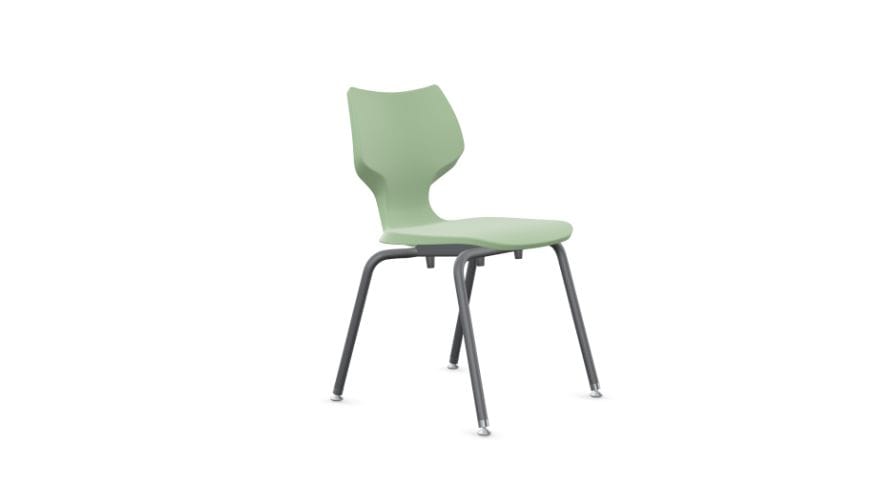
https://smithsystem.com/furniture/flavors-stack-chairs/
A popular choice in educational and corporate settings. Features contoured polypropylene seat and back, available different colors and seat heights. Optional casters for mobility.
- Pros: Durable, comfortable for long sessions, good stackability
- Cons: Heavier than basic plastic chairs; premium pricing
- Best for: Corporate training, higher education, daily use
2. Best Budget Stackable Chair: Meet&Co Training Chair
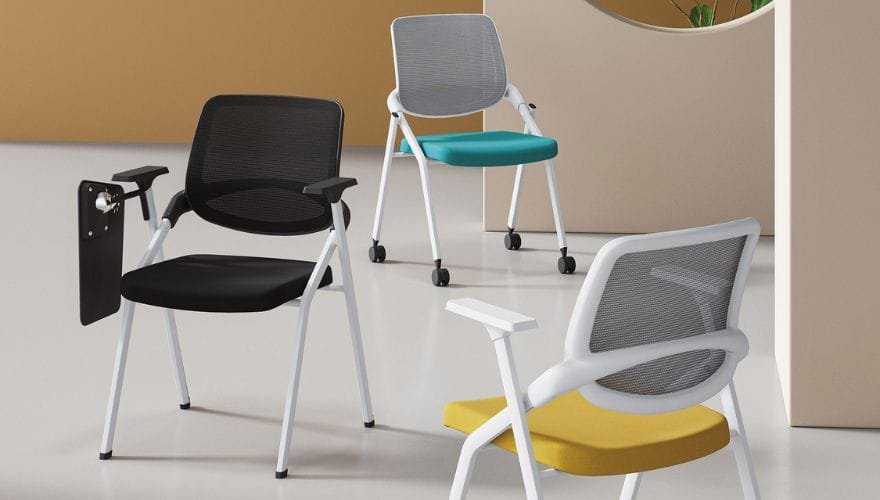
Affordable mesh training chairs that stack well and come in multiple colors. Suitable for occasional use, light-duty training, or event spaces.
- Pros: Very affordable, lightweight
- Cons: Less color options
- Best for: Community centers, occasional events, office and school usages, budget-conscious buyers
3. Best for Long Training Sessions: Steelcase Think Training Chair
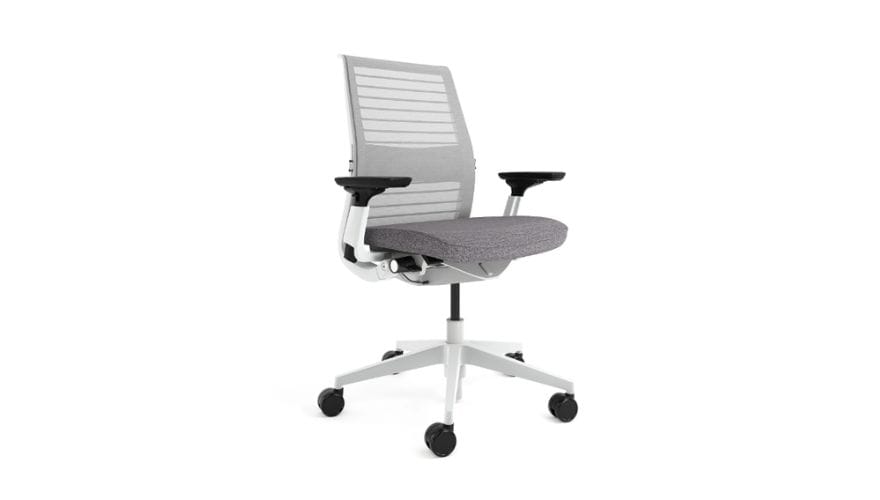
https://shop.steelcase.com/products/think?srsltid=AfmBOoqt0JDhOb_B4t-zUJ4BoPfFyUQT_2LEOS5P4HlsXeao3tm7OOHa&variant=33530081411207
Premium ergonomic training chair with breathable mesh back, contoured seat, and optional tablet arm. Stacks efficiently. Higher price point but designed for all-day comfort.
- Pros: Excellent ergonomics, breathable, durable
- Cons: Expensive; heavier than basic chairs
- Best for: Corporate training centers, universities, long-duration sessions
Training Chair Storage and Maintenance Tips
Storage Best Practices
- Use dollies: Rolling dollies allow one person to move stacked chairs safely
- Strap stacks: Prevent tipping during movement
- Store in designated areas: Avoid placing stacks in emergency exits or blocking pathways
- Protect from humidity: Excess moisture can damage upholstery and metal frames
Maintenance Schedule
| Task | Frequency | What to Do |
| Wipe down | Daily or after use | Clean spills; remove dust |
| Deep clean | Quarterly | Vacuum fabric; wipe plastic; check casters |
| Inspect hardware | Semi-annually | Tighten loose bolts; check casters for debris |
| Check stacking mechanism | Annually | Ensure locks work; inspect for damage |
Common Mistakes to Avoid When Buying Training Chairs
| Mistake | Why It’s Problematic | Better Approach |
| Buying without testing | Chairs may be uncomfortable for your specific users | Test with representative users before bulk purchase |
| Choosing style over comfort | Beautiful chairs that hurt won’t be used | Balance aesthetics with ergonomics |
| Ignoring floor surface | Casters for carpet will damage hardwood | Match wheel type to your flooring |
| Overlooking stack height | Chairs may not fit in your storage area | Measure storage ceiling height before buying |
| Forgetting about tablet arms | Participants have nowhere to write | Assess whether tablet arms are needed for your training style |
FAQ
1. How many training chairs can stack safely?
Most stackable chairs are designed to stack 4–8 high. Check manufacturer specifications—stacking beyond the recommended height creates tip hazards and can damage chairs.
2. Are caster-equipped chairs stable during use?
Quality training chairs with locking casters or appropriately weighted bases are stable. For high-stability needs (e.g., participants standing to write), choose chairs with glides or locking casters.
3. What’s the difference between stacking and nesting chairs?
Stacking chairs pile vertically; nesting chairs slide into one another horizontally. Nesting chairs often store in a smaller footprint and are easier for one person to move, but may not stack as high.
4. How do I clean fabric training chairs?
Vacuum regularly. For stains, use upholstery cleaner; test on hidden area first. Some fabric chairs have removable, washable covers—check manufacturer instructions.
5. What weight capacity should training chairs have?
Look for chairs rated for 250–300 lbs minimum for adult use. Commercial-grade chairs often support 300–400 lbs.
6. Do I need tablet arms for all chairs?
Consider a mix. If 50% of your training sessions involve writing or laptops, equip 50% of chairs with tablet arms. This allows flexibility while managing cost.
7. How do I choose between plastic and upholstered seats?
Plastic seats clean easily and are durable but less comfortable for long sessions. Upholstered seats are more comfortable but require more maintenance. For sessions under 2 hours, plastic may suffice. For all-day training, upholstered is worth the investment.
Conclusion
Stackable, mobile training chairs are essential tools for flexible spaces. The right chairs allow you to transform a room from lecture hall to breakout space to event venue in minutes—without heavy lifting or dedicated storage.
When choosing training chairs, prioritize:
- Comfort: Contoured seats, appropriate padding, lumbar support for sessions of any length
- Mobility: Casters matched to your floor type; lightweight enough for easy movement
- Stackability: Stable stacking system; compatible with dollies for storage
- Durability: Commercial-grade construction; reinforced stress points; solid warranty
- Features: Tablet arms, ganging clips, and book racks as needed for your training style
Test chairs with your actual users before committing to a large purchase. A chair that fits one population may not fit another. With thoughtful selection, your training chairs will serve your space flexibly and comfortably for years to come.


_17.webp)