






 Meet&Co
The way we work has changed dramatically over the past few years, and office furniture has evolved right along with it. In 2026, the best office workstations are no longer just desks and chairs—they are integrated ecosystems that support hybrid work, employee well-being, and sustainability.
Whether you’re furnishing a corporate headquarters, a startup office, or a flexible co-working space, choosing the right supplier is critical. The right partner will offer not just quality products but also design expertise, warranty support, and the ability to scale with your business.
In this guide, we profile six of the top office workstation suppliers for 2026, highlighting their strengths, product ranges, and what makes each one unique.
How to Choose an Office Workstation Supplier in 2026
Before diving into the suppliers, it helps to understand what separates a good supplier from a great one. Here are key factors to consider:
Product quality and durability: Look for suppliers with established quality control and warranty terms.
Ergonomics and research: The best workstation designs are backed by ergonomic research.
Sustainability credentials: Many organizations now require eco-friendly materials and manufacturing processes.
Customization options: Your office should reflect your brand; modular and customizable systems offer flexibility.
Showroom access: Being able to test products in person is invaluable.
After-sales support: Warranty coverage, spare parts availability, and local service matter.
Top Office Workstation Suppliers at a Glance
| Supplier | Headquarters | Showroom Locations | Key Product Range | Standout Feature |
|---|---|---|---|---|
| Steelcase | USA | Global (major cities worldwide) | Height-adjustable desks, seating, storage, modular walls | Data-driven ergonomic research |
| Herman Miller | USA | Global (flagship stores in NYC, London, Tokyo) | Aeron chair, height-adjustable desks, modular systems | Iconic design, MillerKnoll portfolio |
| Meet&Co | China, Singapore | Guangzhou, plus global distributors | Workstations, executive desks, office pods, chairs, sofas | Factory-direct pricing, extensive customization |
| Haworth | USA | Global (over 50 showrooms) | Modular systems, height-adjustable desks, seating | Collaborative workspace expertise |
| Sunon | China | Zhejiang, plus international showrooms | Smart desks, ergonomic chairs, training furniture | AIoT smart desk technology |
1. Steelcase (USA) – The Data-Driven Authority
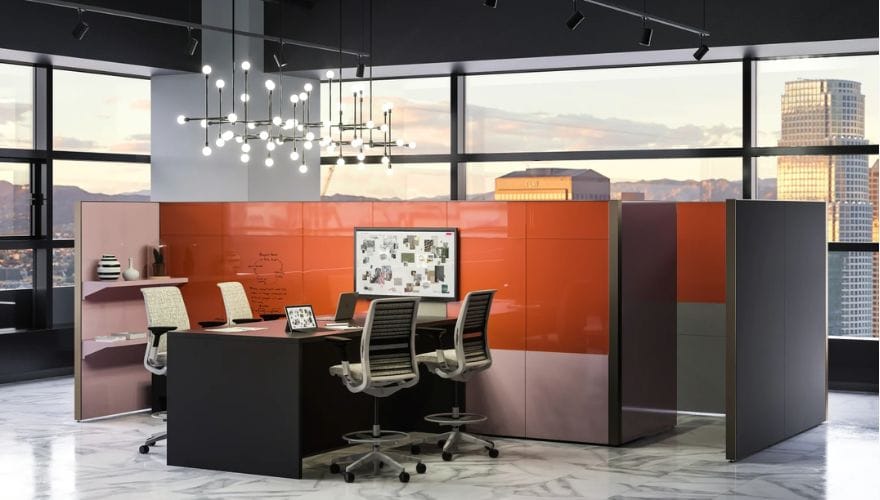
https://www.steelcase.com/products/workstations/answer-panel-systems/
Steelcase is widely recognized as one of the world’s largest and most influential office furniture manufacturers. With over a century of history, the company has built its reputation on rigorous research into how people work. Every product is informed by data from the Steelcase WorkSpace Futures research group, which studies workplace trends globally .
Showroom and Global Presence
Steelcase maintains showrooms in major cities worldwide, including New York, Chicago, London, Paris, Tokyo, and Singapore. Their showrooms allow clients to experience full workspace installations rather than isolated products.
Product Range
Steelcase offers a comprehensive ecosystem:
Height-adjustable desks: The Ology and Migration series are industry benchmarks.
Seating: The Gesture, Leap, and Series chairs are acclaimed for ergonomic support.
Modular walls and storage: The Flex Collection enables quick reconfiguration of spaces.
Accessories: Monitor arms, power solutions, and acoustic panels.
Pros and Cons
| Pros | Cons |
|---|---|
| Unmatched ergonomic research and design | Premium pricing |
| Extensive global showroom and service network | Long lead times for customized orders |
| Strong sustainability commitments | Some products may exceed budget for smaller businesses |
Best For Large multinational corporations, design-conscious enterprises, and organizations that prioritize research-backed ergonomics.
2. Herman Miller (USA) – The Design Icon
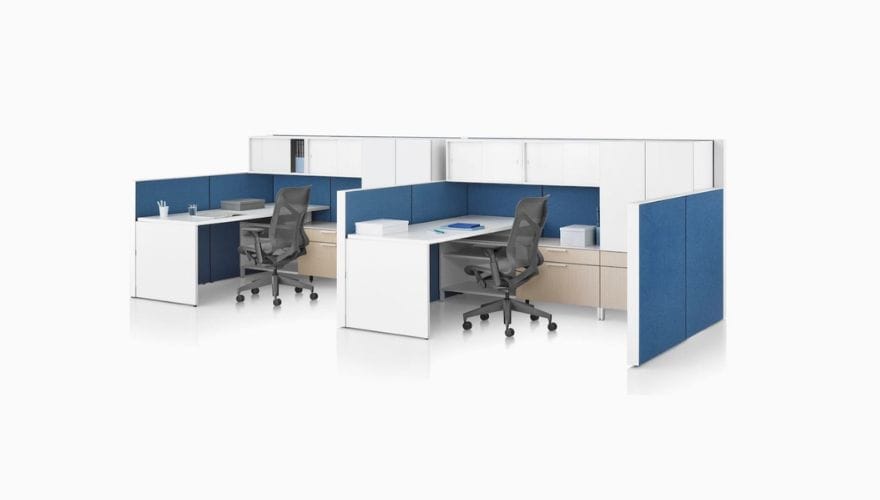
https://www.hermanmiller.com/products/workspaces/workstations/canvas-wall/
Herman Miller, now part of MillerKnoll, is synonymous with modern design. The company’s legacy includes iconic products like the Aeron chair, the Eames Lounge Chair, and the Noguchi table. Today, Herman Miller continues to define premium office furniture with a focus on aesthetics, ergonomics, and sustainability.
Showroom and Global Presence
Herman Miller operates flagship showrooms in major cities, including New York, London, Tokyo, and Shanghai. Through the MillerKnoll network, their products are available in over 100 countries.
Product Range
Seating: The Aeron, embody, and Sayl chairs remain industry standards.
Desks and workstations: The Renew and OE1 collections offer modular, height-adjustable solutions.
Storage and accessories: Designed to complement their seating and desk systems.
Pros and Cons
| Pros | Cons |
|---|---|
| Iconic, timeless design | High price point |
| Strong resale value | Less focus on budget-friendly options |
| GREENGUARD Gold certified products | Some products require extended lead times |
Best For Executive offices, premium co-working spaces, and companies seeking iconic design with long-term value.
3. Meet&Co – The Customization Specialist
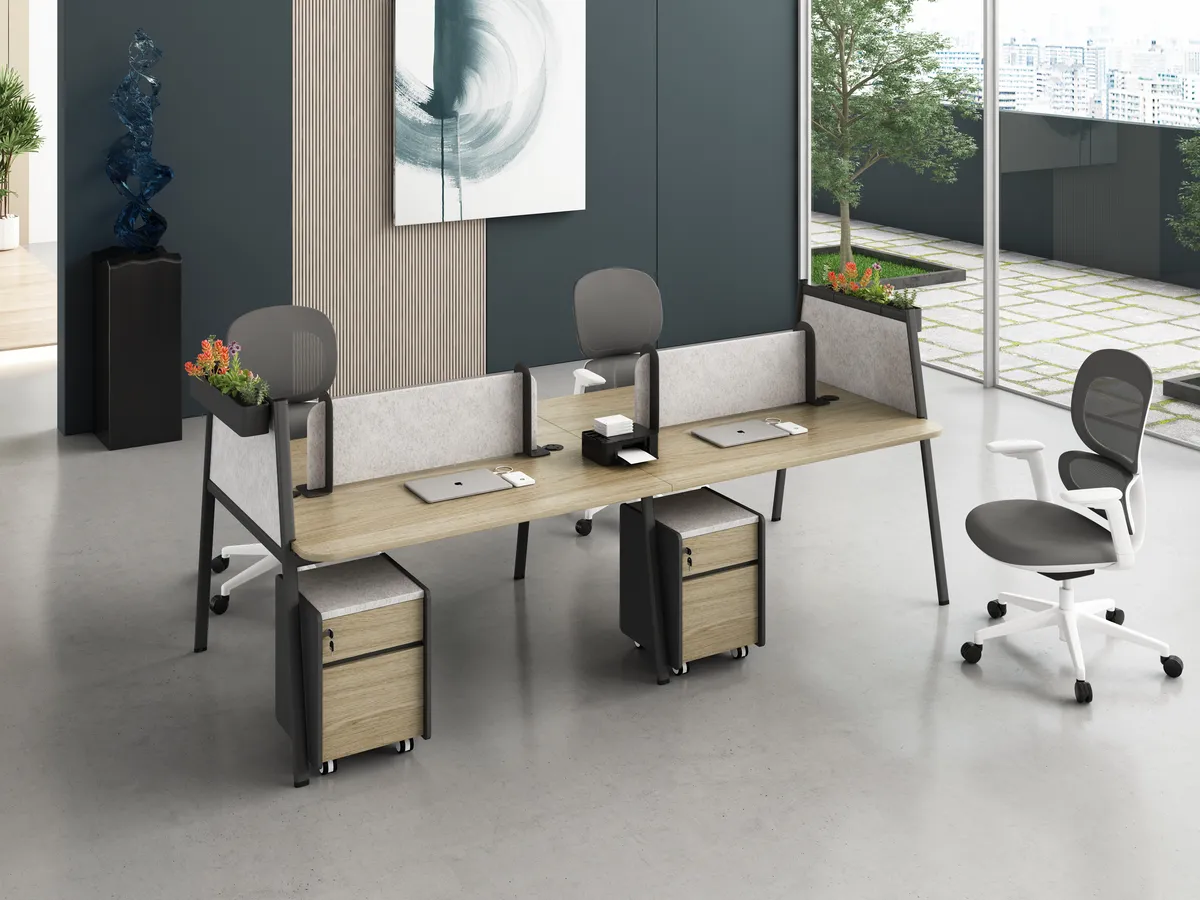
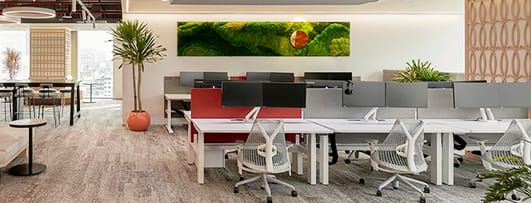
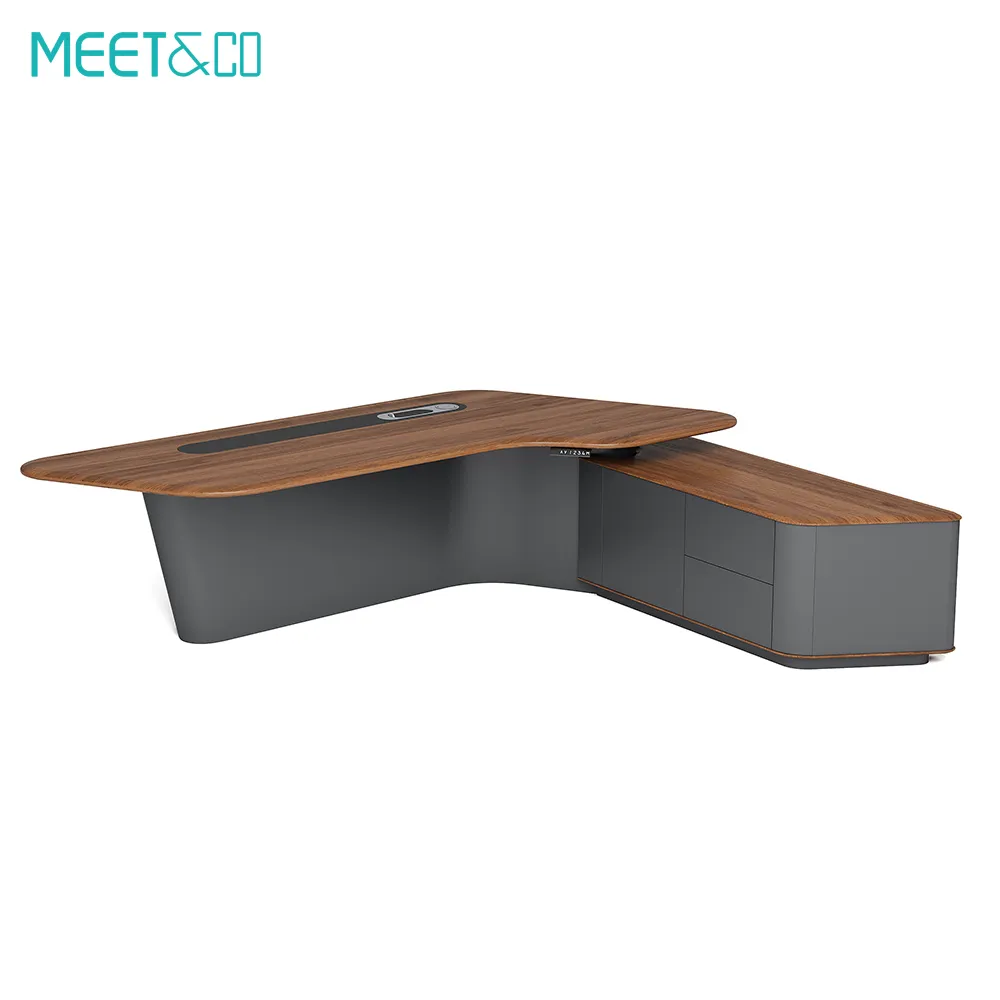
Meet&Co has emerged as a significant player in the global office furniture market, offering a broad range of workstations, executive desks, and specialized solutions like office pods. The company emphasizes factory-direct pricing, customization, and flexible configurations to suit businesses of all sizes.
Showroom and Global Presence
Meet&Co is headquartered in Guangzhou, China. Their showrooms in Guangzhou and Singapore showcase full workstation setups, office pods, and ergonomic seating.
Product Range
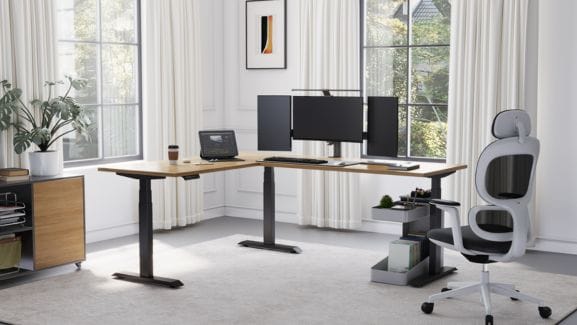
Workstations: Modular desk systems with T-shaped, L-shaped, and benching configurations.
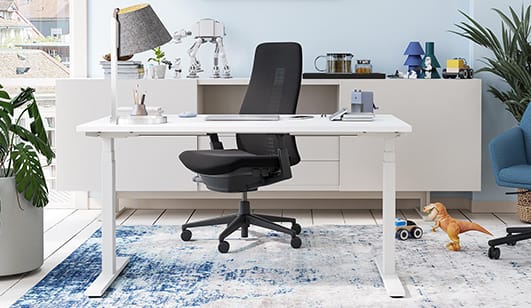
Executive desks: Wood veneer and high-pressure laminate options with integrated power.
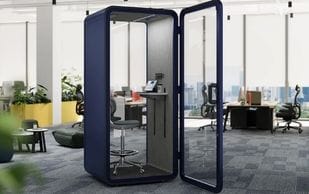
Office pods: Soundproof booths for focused work and private calls (Series D, Series C, etc.).
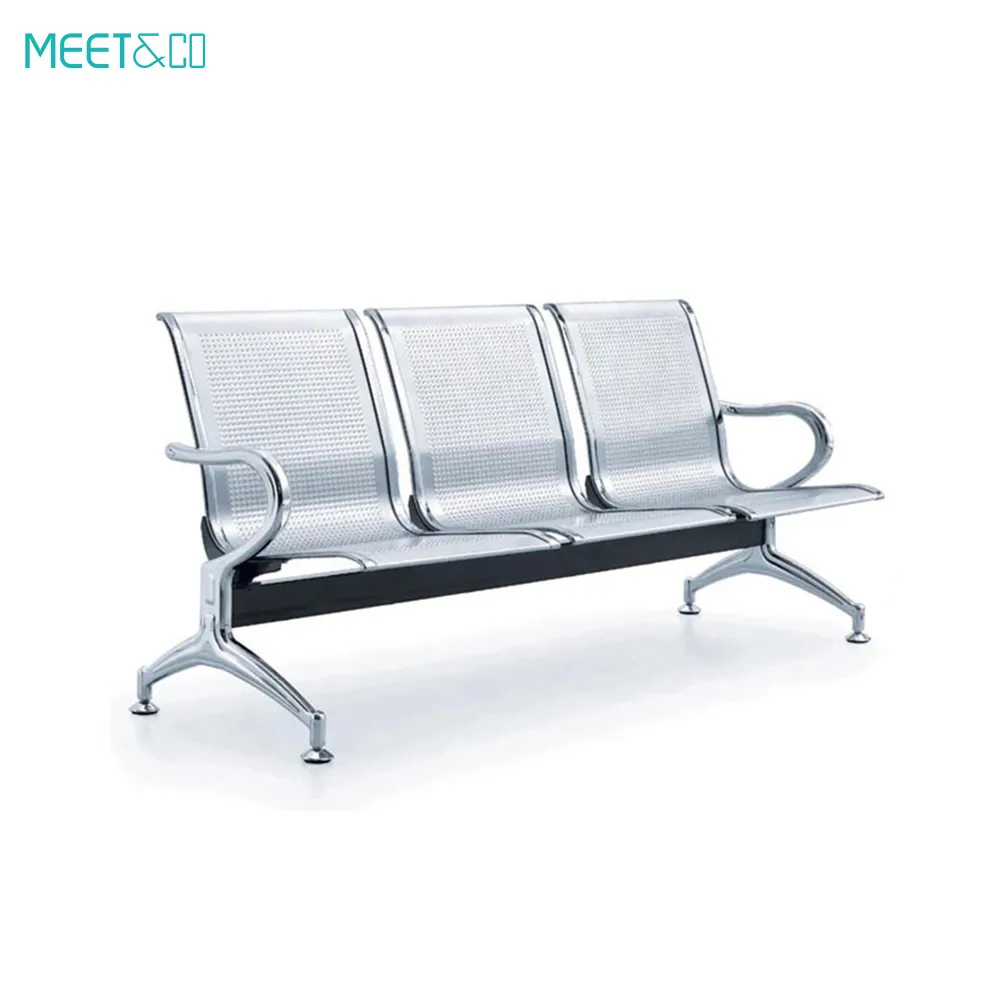
Seating: Ergonomic task chairs, mesh chairs, and visitor seating.
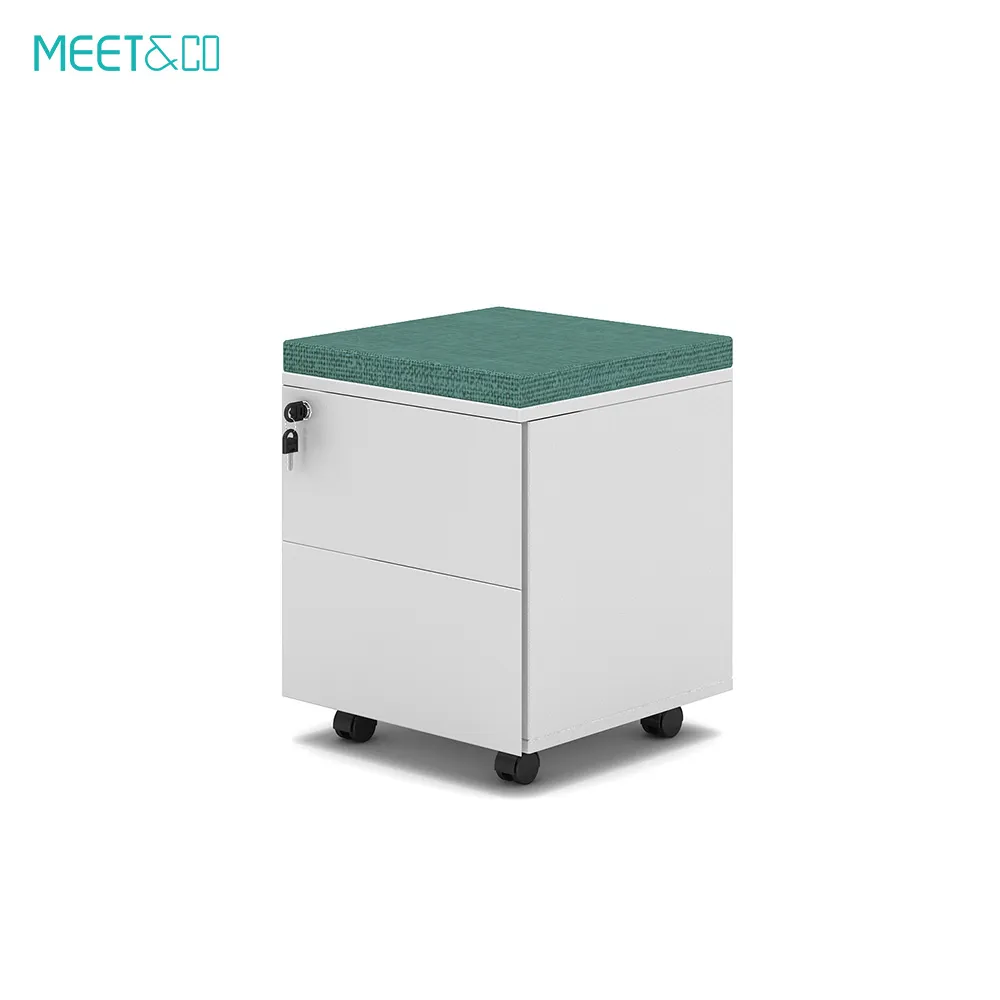
Storage: Filing cabinets, pedestals, and modular storage systems.
Pros and Cons
| Pros | Cons |
|---|---|
| Factory-direct pricing reduces costs | Limited physical showrooms outside China |
| Extensive customization options | May require longer shipping times |
| 3-year warranty | Brand recognition lower than legacy Western brands |
| Enterprise customers globally |
Best For Growing businesses, project-based office fit-outs, and companies seeking customizable workstations at competitive prices.
4. Haworth (USA) – The Collaborative Specialist
https://www.haworth.com/na/en/products/systems/workstations.html
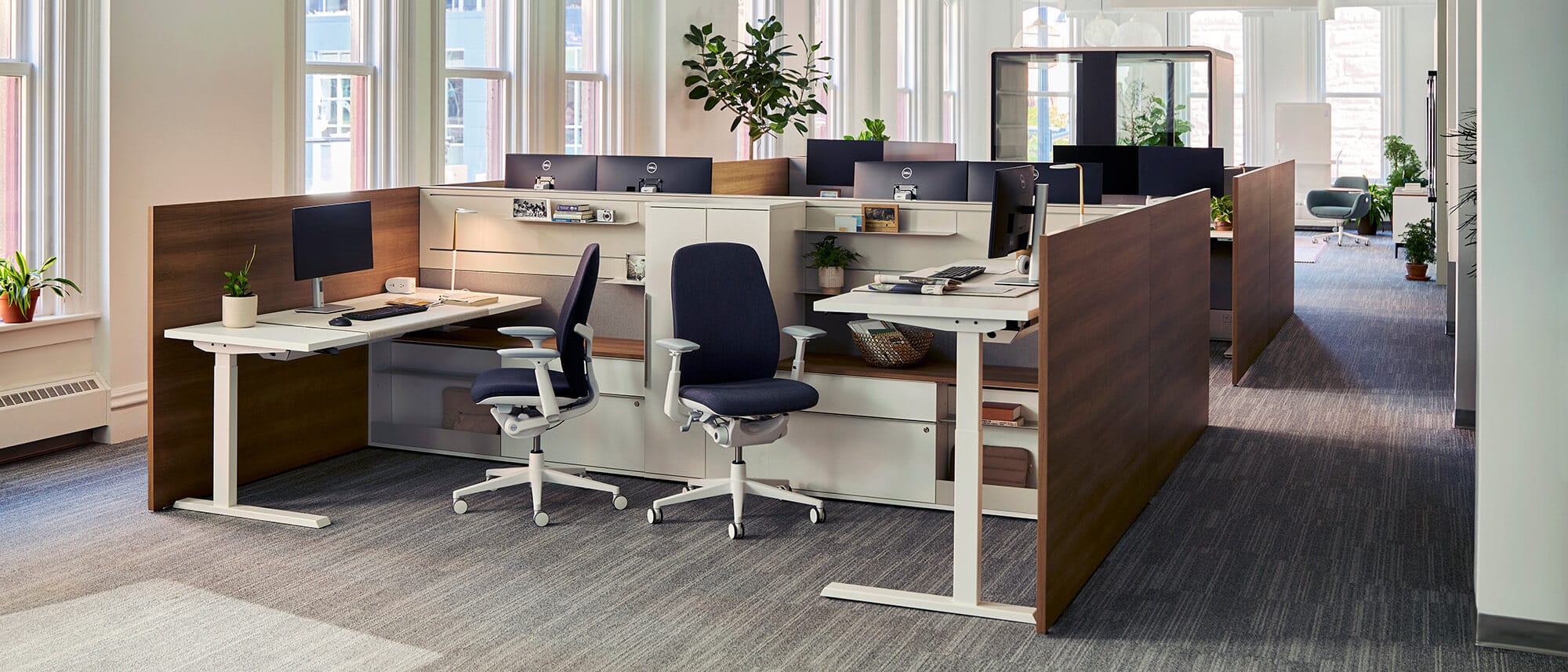
Haworth is a family-owned, privately held company that has built its reputation on creating flexible, collaborative workspaces. Unlike some competitors, Haworth emphasizes modular systems that adapt to changing team dynamics, making them a favorite for agile and activity-based workplaces .
Showroom and Global Presence
Haworth operates over 50 showrooms worldwide, with significant presence in North America, Europe, and Asia-Pacific. Their showrooms often feature fully realized collaborative environments rather than standalone products.
Product Range
Modular systems: The Haworth Collection and Fern series support rapid reconfiguration.
Height-adjustable desks: The Planes and Compose series integrate seamlessly with their modular walls.
Seating: The Fern and Zody chairs are highly regarded for ergonomic support.
Acoustic solutions: Panels and pods designed to manage noise in open plans.
Pros and Cons
| Pros | Cons |
|---|---|
| Exceptional modular and collaborative solutions | Less emphasis on individual executive furniture |
| Strong sustainability commitment | Some products require dealer consultation |
| Family-owned with long-term stability |
Best For Agile workplaces, tech companies, and organizations that frequently reconfigure their office layouts.
5. Sunon (China) – The Tech & Eco Pioneer
https://www.sunonglobal.com/
Sunon has positioned itself as a leader in smart office furniture, integrating AIoT (Artificial Intelligence of Things) technology into their products. The company’s focus on eco-friendly manufacturing—including water-based paint technology—has earned it recognition among environmentally conscious buyers.
Showroom and Global Presence
Sunon is headquartered in Zhejiang, China, with showrooms in major Chinese cities and a growing international distributor network. They have supplied furniture to major global companies including Alibaba and Google.
Product Range
Smart desks: The UP7 smart desk features AI-driven posture monitoring and usage analytics.
Ergonomic seating: Task chairs with adjustable lumbar support and mesh backs.
Training furniture: Folding tables, stackable chairs, and mobile whiteboards.
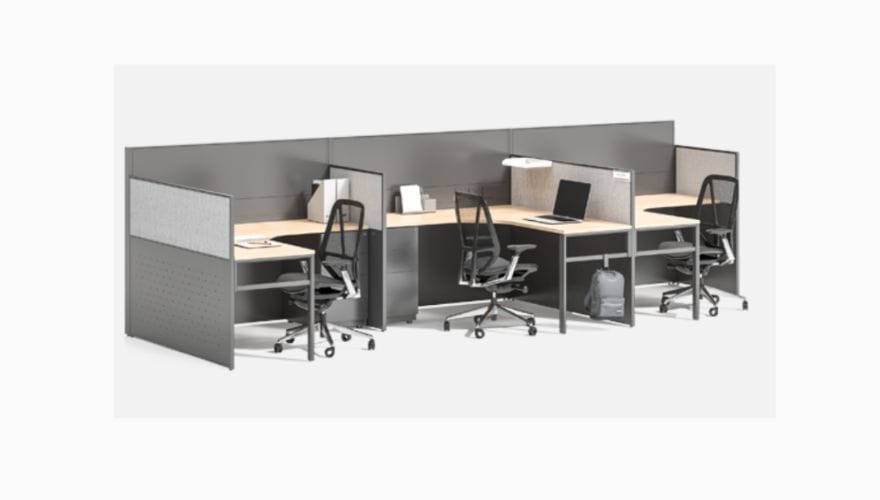
Modular workstations: Configurable systems for open offices.
Pros and Cons
| Pros | Cons |
|---|---|
| Advanced smart desk technology | Limited physical presence outside China |
| Eco-friendly manufacturing (water-based paint) | Smart features may add cost |
| Competitive pricing for tech-enabled products | |
| Clients include Alibaba and Google |
Best For Tech-forward companies, organizations prioritizing sustainability, and offices looking to integrate smart furniture.
Frequently Asked Questions
1. What should I consider when choosing an office workstation supplier in 2026?
Look for suppliers that offer ergonomic designs, sustainable materials, customization options, and strong after-sales support. It’s also wise to visit showrooms to test products and confirm warranty terms. A supplier’s ability to scale with your business—whether you’re furnishing a single office or a global portfolio—is equally important.
2. Which suppliers offer the best ergonomic workstations?
Steelcase and Herman Miller are widely recognized for research-driven ergonomics. Haworth and Sunon also offer ergonomic seating and height-adjustable desks. Meet&Co provides ergonomic chairs and adjustable workstations at more accessible price points.
3. Are there suppliers that specialize in modular or flexible workstations?
Yes. Haworth is particularly strong in modular systems that adapt to changing team needs. Steelcase’s Flex Collection and Meet&Co’s modular desk systems also support reconfigurable layouts. Meet&Co offers benching systems that accommodate growth and reconfiguration.
4. How important is sustainability when choosing a workstation supplier?
Sustainability is increasingly critical. Herman Miller and Haworth have strong environmental certifications (GREENGUARD Gold, etc.). Sunon uses water-based paint technology to reduce emissions, and Steelcase publishes detailed sustainability reports. Meet&Co uses eco-friendly materials and holds ISO certifications.
5. What is the typical warranty offered by these suppliers?
Steelcase: Limited lifetime warranty on many products
Herman Miller: 12-year warranty on seating and desks
Meet&Co: 5-year warranty on structure, 3 years on electrical components
Haworth: Limited lifetime warranty on most products
Sunon: Varies by product; typically 3–5 years
Conclusion
Choosing the right office workstation supplier in 2026 means balancing quality, design, flexibility, and budget. Steelcase and Herman Miller lead the premium segment with unmatched research and iconic design. Haworth excels in modular, collaborative environments. Meet&Co offers exceptional customization and factory-direct value. Sunon brings smart technology and eco-friendly manufacturing to the forefront.
The best furniture supplier for your organization will depend on your specific needs—whether that’s global scalability, design prestige, cost efficiency, or technological integration. Where possible, visit showrooms, test products, and consult with suppliers about your long-term space plans. A well-chosen workstation isn’t just furniture—it’s an investment in your team’s productivity and well-being.
Need help selecting the right workstations for your office? Contact our team for personalized recommendations and space planning support.
_1-1.webp)


