





 Meet&Co
The open office concept promised a revolution in workplace collaboration. Tear down the walls, remove the cubicles, and let ideas flow freely. And for many companies, it delivered—spontaneous conversations increased, teams felt more connected, and the energy of a bustling workspace became tangible.
But there’s a reason “quiet” has become the biggest office design trend of 2026. After years of hyper-open layouts, employees are raising a legitimate concern: they can’t focus. Noise distractions remain the number one barrier to productivity worldwide, and with office attendance rising across many regions, the strain on shared spaces is only growing.
The solution isn’t abandoning openness—it’s getting smarter about privacy. Strategic use of partitions, dividers, and acoustic solutions allows you to preserve collaboration while giving employees the focus they need. Here’s how to strike that balance.
The Open Office Reality: Pros and Cons

Before diving into partition types, it helps to understand what you’re balancing.
Why Open Works
- Enhanced collaboration: Proximity naturally leads to more conversations and idea exchange
- Improved communication: Teams rely less on email and messaging, speaking directly instead
- Better atmosphere: More light, more space, and a less hierarchical feel
- Cost savings: Outfitting one large area costs less than numerous private offices
The Hidden Costs
- Noise distractions: The most common complaint, with direct impact on analytical processing and task performance
- Reduced privacy: Employees may feel uncomfortable with sensitive conversations
- Not for everyone: Introverts and those in senior roles often struggle with constant visibility
The key takeaway? According to the Gensler Research Institute, 65% of employees prefer a work environment that offers both open and private spaces. They want collaboration when needed and quiet when required. Partitions make this possible.
7 Types of Privacy Partitions for Modern Offices
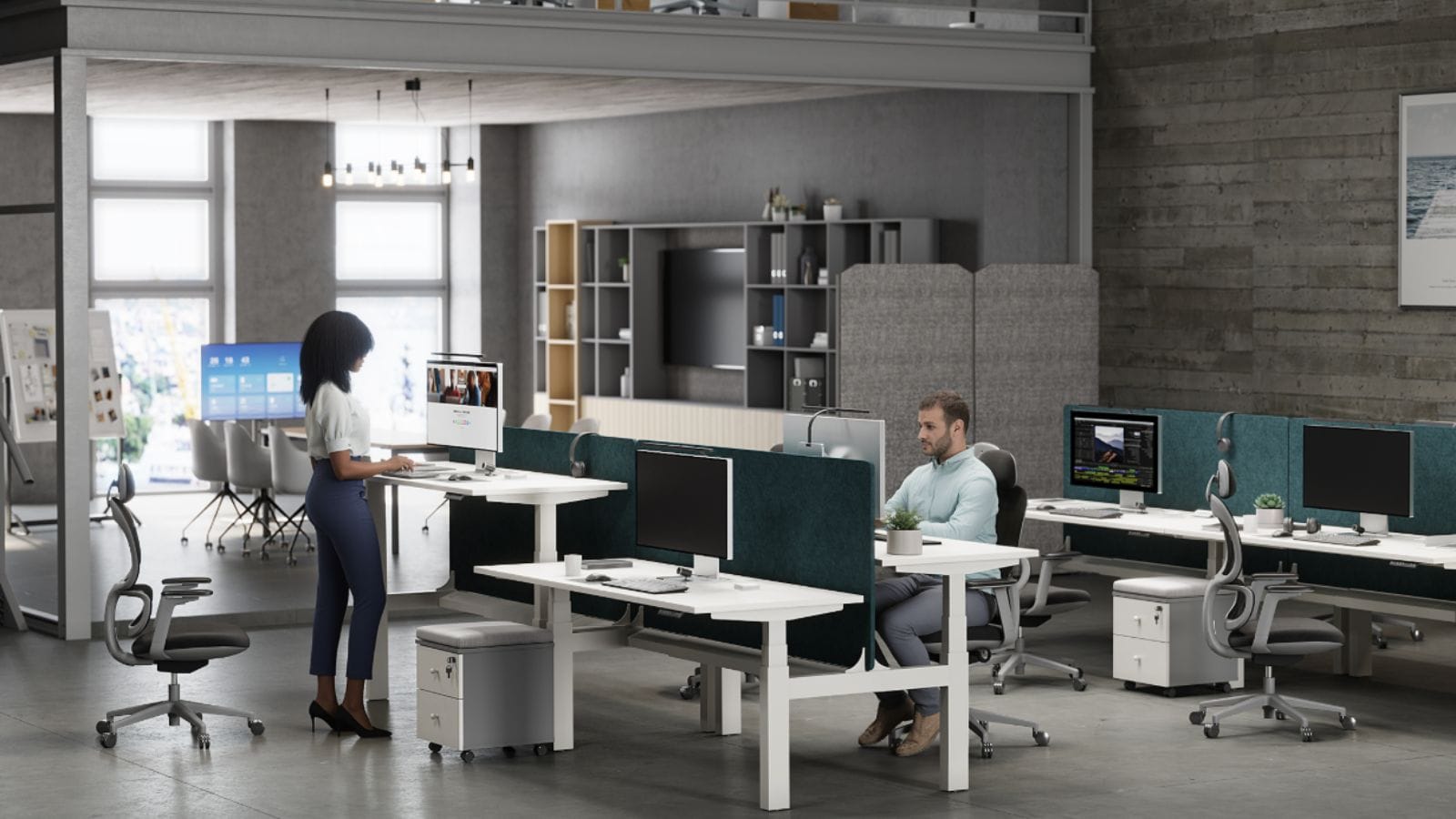
Not all partitions are created equal. The right choice depends on whether you need visual privacy, acoustic protection, flexibility, or a combination. Here are the most effective options:
1. Partitioned Desks with Built-In Dividers
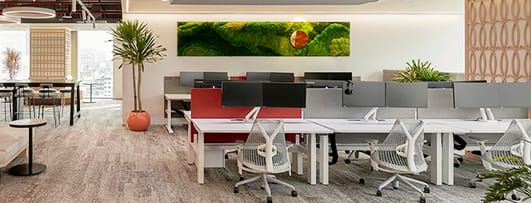
These are extended workstations equipped with vertical panels that separate individual workspaces while maintaining a cohesive desk layout.
Advantages:
- Provides personal space without complete isolation
- Reduces visual distractions significantly
- Promotes focus while keeping team visibility
- Often includes cable management and accessory mounts
Limitations:
- Limited soundproofing in high-noise environments
- Less flexible once installed
- May feel confining if panels are too high or opaque
Best for: Shared offices, call centers, co-working spaces, hybrid workstations
2. Glass Partitions and Dividers
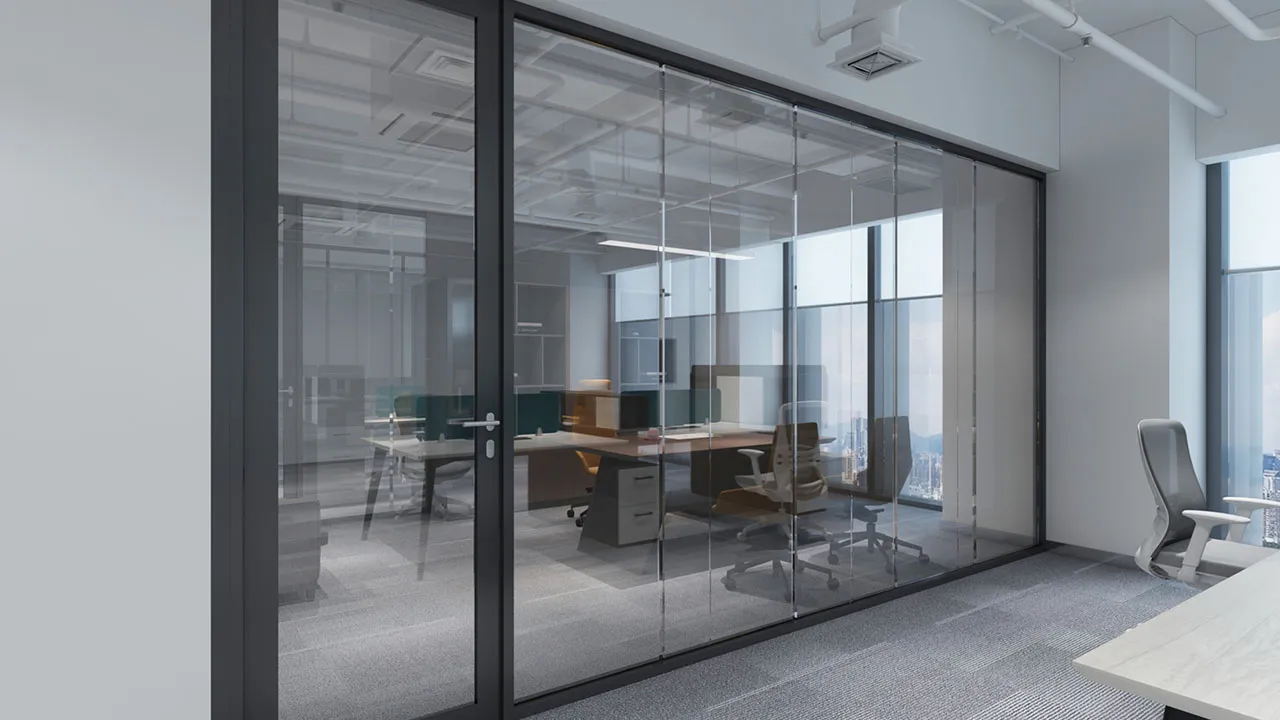
Transparent or frosted glass panels create defined areas while preserving natural light and visual continuity. Frosted options offer privacy without the “enclosed” feeling.
Advantages:
- Maintains open, airy feel and light flow
- Provides privacy with visibility (especially frosted options)
- Modern, professional aesthetic
- Can be sound-rated for meeting rooms
- Easy to clean and maintain
Limitations:
- Higher installation and material cost
- Requires professional assembly
- Clear glass offers minimal privacy
- Can be fragile if not tempered
Best for: Executive offices, conference rooms, phone booths, client-facing areas
3. Fabric and Acoustic Partitions
These partitions are covered in sound-absorbing materials like felt, foam-core panels, or fabric wraps designed specifically to reduce noise and improve speech privacy.
Advantages:
- Excellent noise absorption—can reduce ambient noise significantly
- Available in diverse colors and textures for branding
- Improves indoor acoustics and focus
- Can include storage pockets or accessory hooks
- Soft, non-reflective surface reduces glare
Limitations:
- Fabric may stain or wear over time
- May require professional cleaning
- Less structural rigidity than solid or glass options
Best for: Open-plan offices, call centers, creative studios, noisy environments
4. Modular Shelving Units
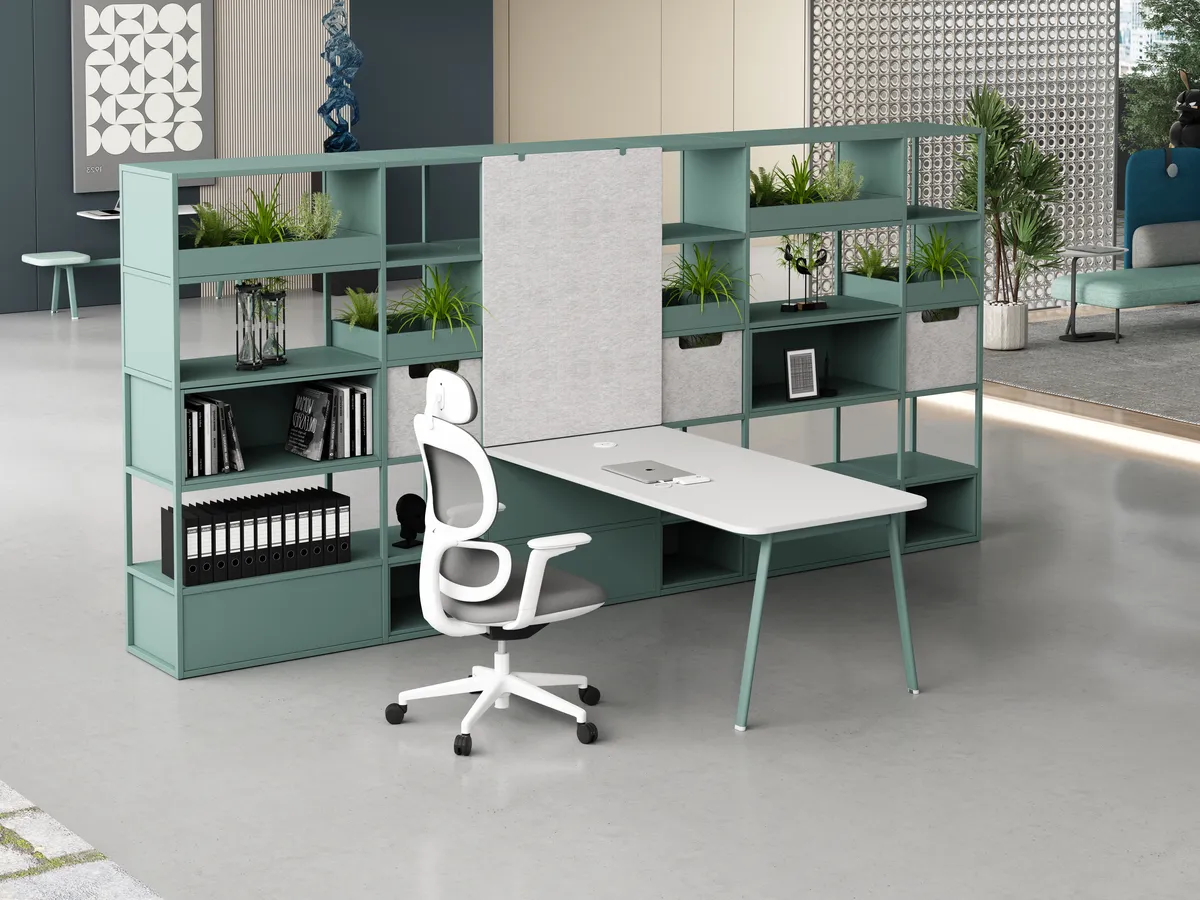
Open-back or double-sided bookshelves serve as both functional partitions and organizational tools, defining zones while offering display or storage capacity.
Advantages:
- Doubles as storage and space definition
- Allows light and airflow to pass through
- Customizable with plants, artwork, or decor
- Easy to reconfigure or relocate
Limitations:
- Minimal acoustic insulation
- May collect dust if not maintained
- Requires careful weight distribution for stability
Best for: Libraries, creative studios, reception areas, multi-functional zones
5. Folding and Mobile Screens
Portable partitions consisting of hinged panels that can be easily deployed or stored. Perfect for dynamic office layouts where needs change frequently.
Advantages:
- Highly portable and reconfigurable
- Quick setup and storage
- Cost-effective for temporary needs
- Decorative designs enhance aesthetics
Limitations:
- Limited durability over time
- Poor sound insulation
- May tip over if not secured
Best for: Flexible workspaces, co-working environments, training rooms, temporary setups
6. Plant and Biophilic Dividers
Living partitions that incorporate greenery into the workspace, using real plants in modular planters or vertical gardens to separate spaces naturally.
Advantages:
- Improves indoor air quality
- Reduces stress and boosts productivity
- Natural sound absorption
- Unique, vibrant aesthetic
Limitations:
- Requires regular watering and maintenance
- Needs access to natural or artificial light
- Potential for pests or mold if not cared for
Best for: Eco-conscious offices, wellness centers, creative agencies, calming environments
7. Solid and Wooden Partitions
Constructed from durable materials like MDF, plywood, or hardwood, these provide full physical and visual separation.
Advantages:
- Superior privacy and sound blocking
- Durable and long-lasting
- Can be branded with logos or artwork
- Supports mounting of monitors or whiteboards
- Warm, classic aesthetic
Limitations:
- Blocks natural light and visibility
- Less flexible for reconfiguration
- Higher material and installation costs
- Heavier than other materials
Best for: Legal firms, financial offices, HR departments, quiet zones
Comparison Table: Privacy Partitions at a Glance
| Partition Type | Privacy Level | Noise Reduction | Flexibility | Ideal Use Case |
| Partitioned Desks | Medium | Medium | Low | Shared workspaces, call centers |
| Glass Partitions | High (visual) | Medium-High | Medium | Meeting rooms, executive offices |
| Fabric/Acoustic | Medium | Excellent | Medium-High | Open offices, creative studios |
| Shelving Units | Low-Medium | Low | High | Zoning, storage integration |
| Folding Screens | Low-Medium | Low | Very High | Temporary needs, co-working |
| Plant Dividers | Medium | Moderate | Medium | Wellness areas, eco-offices |
| Solid/Wooden | High | High | Low | Private zones, quiet areas |
2026 Design Trends for Privacy and Quiet
1. The Rise of “Quiet” Zones
One of the most significant shifts for 2026 is the intentional design of quiet areas. After years of hyper-open layouts, organizations are acknowledging the need to mitigate sensory overwhelm. Teams are seeking spaces that support deep work without constant interruption.
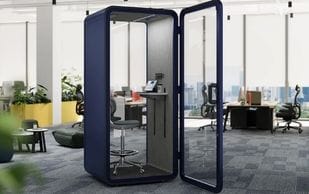
This means a notable resurgence in semi-private offices, phone booths, acoustic pods, and sound-absorbing materials that create pockets of calm throughout the office. These breakaway spaces focus on restorative experiences rather than group interaction.
2. Resimmercial Design
Office interiors are embracing a richer, more residential aesthetic. The “resimmercial” movement blends residential warmth with commercial durability. Designers are using warmer palettes (dark woods, earthy tones), tactile materials, and layered lighting to create zones that feel welcoming.
For partitions, this means moving away from sterile white panels toward fabric-wrapped dividers in warm tones, wooden slats, and plant integrations that make privacy feel inviting rather than confining.
3. Adaptable and Multi-Functional Spaces
With hybrid work patterns stabilizing, offices must adapt quickly. Sliding and folding walls deserve attention for 2026—they allow office areas to convert into open-plan event spaces or private meeting rooms as needed. Mobile acoustic screens and portable power points enable reconfiguration without construction.
_9.webp)
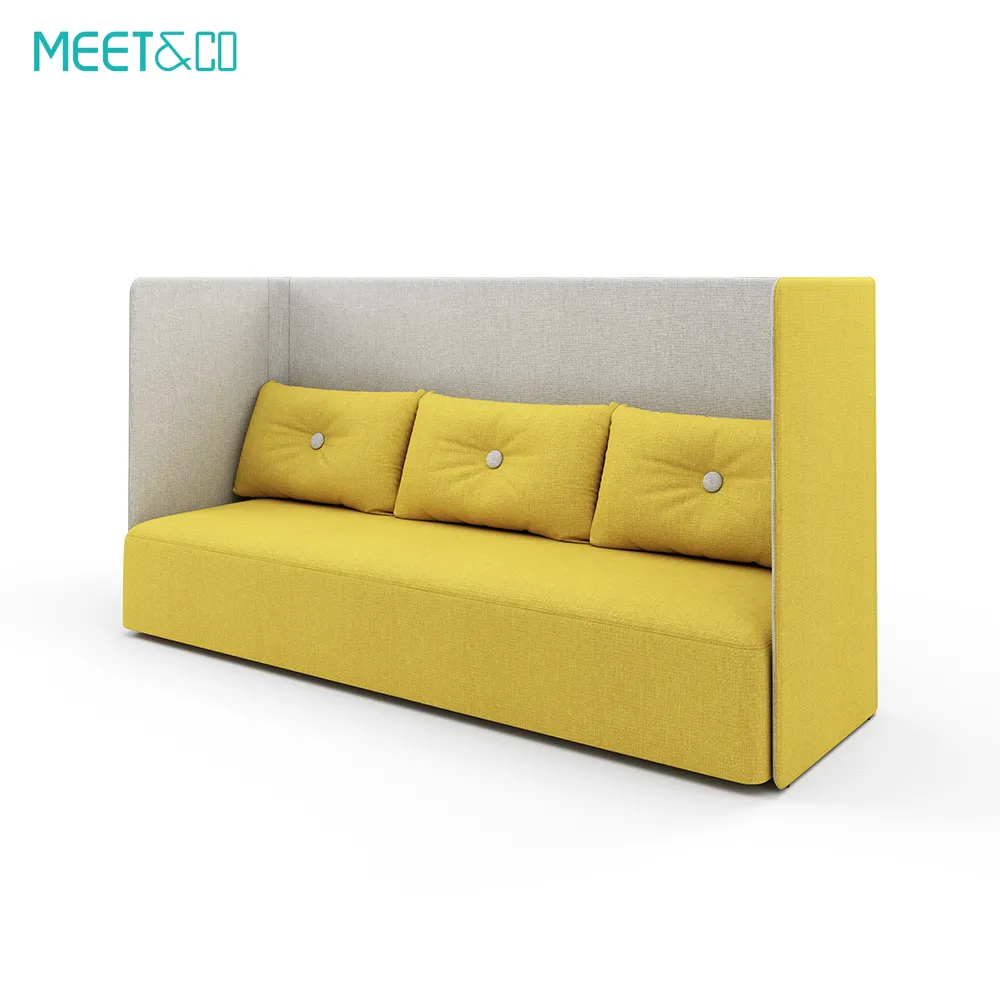
Meet&Co Office Pod Series D
Layout Strategies for Better Speech Privacy
Research shows that how you arrange partitions matters as much as which partitions you choose. A 2024 study compared different partition layouts and found that:
- Parallel and crossed-rod layouts offered the best speech privacy at lower partition heights
- Face-to-face layouts resulted in the least speech privacy—workers facing each other experienced more distraction
- As partition height increased, the differences between layouts diminished
Practical takeaways:
- Avoid positioning workers directly facing each other
- Use staggered or angled desk arrangements
- Combine partition height (at least 1.5m) with adequate distance between workstations
How to Implement Privacy Without Killing Collaboration
1. The Activity-Based Approach
Rather than choosing one layout for the entire office, create zones for different work modes:
- Collaboration zones: Open, low partitions, lounge seating, whiteboards
- Focus zones: Higher acoustic partitions, reduced foot traffic, quiet rules
- Social zones: Café-style seating, no partitions, intentional noise
- Refresh zones: Biophilic elements, soft seating, restorative calm
2. Acoustic Treatment Beyond Partitions
Partitions help, but they’re not the only solution. To truly reduce noise:
- Add thick rugs or carpeted floors to absorb sound from footsteps and chairs
- Use acoustic ceiling baffles or clouds
- Provide noise-canceling headphones as an option
- Establish etiquette guidelines: quiet voices, hold long conversations in meeting rooms
3. Involve Your Team
Before investing, ask employees what they actually need. Our wellbeing survey highlighted demand for private workspaces, distraction-free zones, and improved acoustics. One-size-fits-all rarely works—your legal team may need solid partitions while your creative team thrives with fabric dividers and plant walls.
4. Steps to Get Started
- Audit your space: Where are the noise hotspots? Who needs privacy most?
- Define work modes: Map which areas need focus, collaboration, or flexibility
- Choose partition types based on actual needs—don’t default to one solution
- Test before committing: Use mobile screens temporarily to gauge effectiveness
- Gather feedback: Employees will tell you what’s working and what’s not
Conclusion
The modern open office isn’t dying—it’s evolving. The most successful workplaces of 2026 and beyond will be those that offer variety: open areas for connection when needed, and protected spaces for focus when required.
Privacy partitions are the tool that makes this possible. Whether you choose glass for meeting rooms, acoustic fabric for focus zones, or plant dividers for wellness areas, the key is intentional design. Combine different partition types, consider acoustics and lighting, and always design with your people in mind.
Balance isn’t about compromise—it’s about giving everyone what they need to do their best work.
FAQ
How can I reduce noise in an open office without building walls?
Install sound-absorbing materials like acoustic panels, fabric partitions, thick rugs, and carpeted floors. Provide noise-canceling headphones and establish etiquette guidelines for conversations.
What partition height is best for speech privacy?
Research shows that higher partitions (1.5m+) significantly improve speech privacy, especially when combined with adequate distance between workstations. At lower heights, layout matters more—avoid face-to-face arrangements.
Do employees actually like open offices?
According to research, 65% of employees prefer a mix of open and private spaces. They want collaboration areas and quiet zones—not one or the other.
What’s the most affordable way to add privacy?
Folding screens and modular shelving units offer cost-effective, flexible solutions. Fabric-covered partitions provide good acoustic value without major construction.
Can partitions make an office feel smaller?
Poorly chosen partitions can. To avoid this, use glass or low-height dividers in some areas, and ensure pathways remain clear. Combine with good lighting and avoid over-partitioning.