







 Meet&Co
Office pods have become essential tools for modern workplaces. They offer quiet havens for focused work, private spaces for confidential calls, and flexible meeting areas without costly construction. But here’s the problem: many companies buy pods based on looks alone, only to discover months later that they’re too stuffy, too noisy, or simply unused.
The office pod market has exploded in recent years, with options ranging from budget-friendly phone booths to premium architectural statements. With that variety comes confusion. Teams end up with the wrong size, poor acoustics, or units that don’t meet building codes. The result? Wasted money and employees who still take calls at their desks.
This Meet&Co office pod guide covers the five most common office pod mistakes in 2026—and how to avoid them.
Mistake 1: Misunderstanding Acoustic Performance
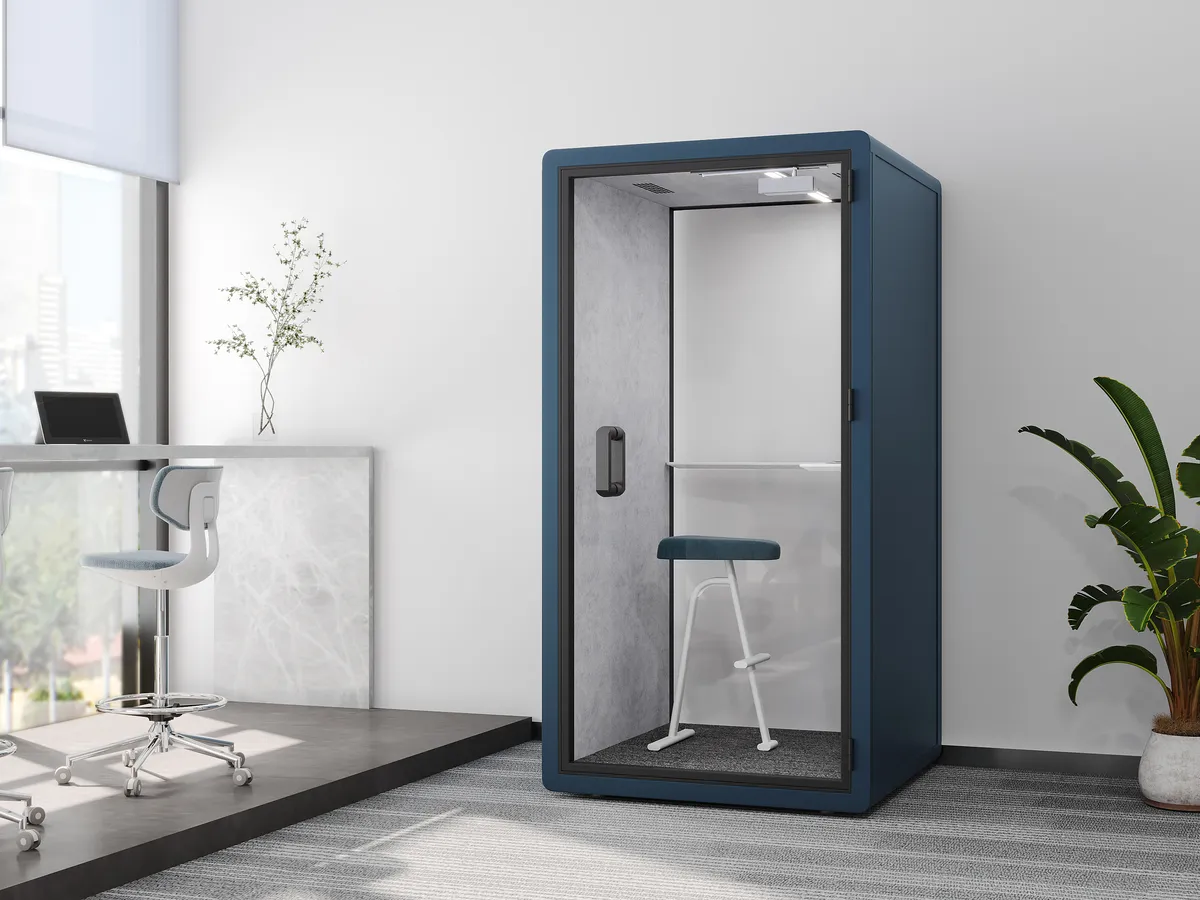
Meet&Co Office Pod Series A
The “Soundproof” Trap
This is the biggest myth in the office pod world. People assume a pod should create total silence. When they hear any sound at all, they label it a failure. That expectation sets teams up for disappointment.
Here’s the reality: most office pods are built for speech privacy and noise reduction, not for turning a busy office into a recording studio. The real goal is usually more specific:
- Reduce intelligible speech so conversations aren’t distracting
- Make calls less disruptive outside the pod
- Make focused work more realistic inside the pod
These outcomes differ from total silence and can be measured more effectively.
How to Compare Apples to Apples
The problem in the industry has been a lack of consistency in testing. Different manufacturers use different parameters (DS,A, DnT,w, Dp,w, Dw, Rw), making direct comparison nearly impossible.
The solution is to look for pods tested to ISO 23351-1, the international standard designed specifically for measuring speech level reduction in furniture-style enclosures. This standard produces a DS,A value that describes how much standard speech is reduced outside the enclosure.
| Acoustic Rating | What It Means | Suitable For |
| DS,A 25–30 | Moderate speech privacy | Quick calls, general use |
| DS,A 30–35 | Good speech privacy | Confidential conversations |
| DS,A 35+ | Excellent speech privacy | Highly sensitive discussions |
What to Ask Instead
When evaluating pods, skip vague marketing claims and ask direct questions :
- ✅ Is there ISO 23351-1 test data with a DS,A value?
- ✅ What is the pod designed to improve? Speech privacy, call spillover, or focused work?
- ✅ Treat words like “silent” or “fully soundproof” as red flags unless backed by clear test data
Mistake 2: Underestimating Ventilation Needs
1. The Stuffy Pod Problem
Stuffy pods are real. They’re also not inevitable. This mistake often comes from experiences with older models, poorly maintained units, or pods used in hot corners of an office with weak general ventilation. People step in, feel warm air, and assume all pods will be like that.
Comfort issues can ruin adoption. If a pod feels uncomfortable after fifteen minutes, people stop using it.
2. What Good Ventilation Looks Like
ASHRAE Standard 62.1 sets minimum ventilation rates for acceptable indoor air quality. Enclosed pods should achieve 10 litres per second per person, or 1 litre per second per m² floor area, whichever is greater.
A controlled-exposure study published in Environmental Health Perspectives found that indoor environmental conditions directly affect cognitive function. Good ventilation isn’t a luxury—it’s essential for performance.
3. Diagnostic Checks
If you’re troubleshooting an existing pod or evaluating a new one :
- Intake filter inspection: Locate vents near the floor line. Vacuum accumulated dust or carpet fibers from acoustic mesh.
- Fan operation check: Listen closely to the fan motor. Rattling often indicates worn bearings, reducing RPM and static pressure.
- Airflow test: Sit inside for 15 minutes. If you feel stuffy, ventilation is inadequate.
4. The Price of Getting It Wrong
Lower-cost pods often struggle with heat buildup and insufficient airflow for long sessions. When pods go unused because they’re uncomfortable, their effective cost skyrockets. A pod that sits empty still takes up space and capital.
Also see: Where to Buy Modern Office Pods: A 2026 Complete Buyer’s Guide
Mistake 3: Ignoring Hidden Costs
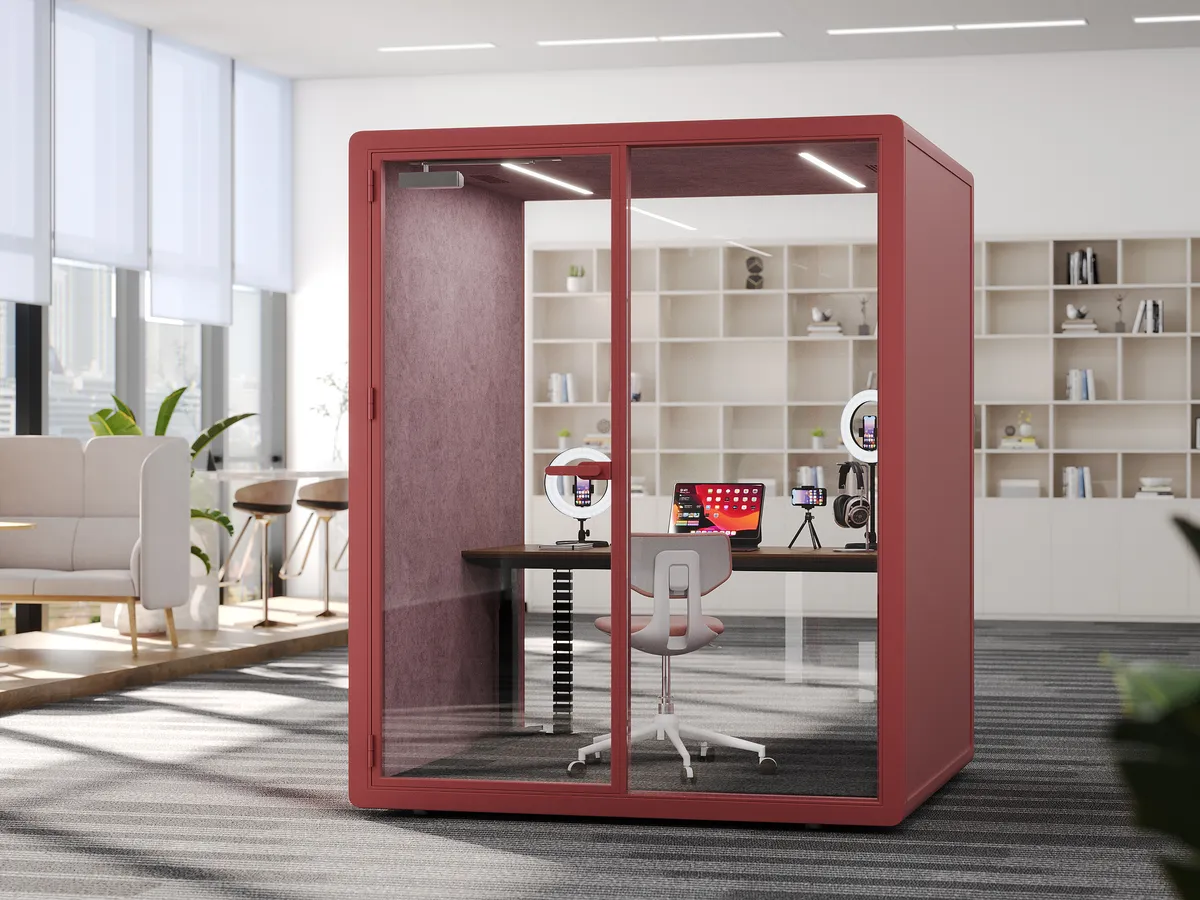
Meet&Co Office Pod Series A
1. The Sticker Price Trap
Office pods are often marketed as a faster, cheaper alternative to building private rooms. And in many cases, they are. But what most buyers don’t realize is that the listed price rarely reflects the true cost of owning and using a pod.
Many companies choose pods based on sticker price alone, only to discover unexpected costs months later.
2. Hidden Costs That Add Up
| Hidden Cost Category | What It Includes | Why It Matters |
| Installation | Assembly labor, downtime, coordination | Some pods require professional installation; disruption affects productivity |
| Ventilation upgrades | Enhanced fans, filters | Poor airflow makes pods unusable for long sessions |
| Acoustic fixes | Additional seals, panels | If marketing claims don’t match reality, you pay twice |
| Durability issues | Panel damage, seal wear, loose fittings | Lower-priced pods often use lighter materials that wear quickly |
| Refit vs replacement | Can it be refreshed or must it be discarded? | Flexible pods can be redeployed; rigid ones become landfill |
| Compliance fixes | Electrical upgrades, fire safety modifications | Fixing compliance issues later costs far more than doing it right first time |
3. The Opportunity Cost of Inflexibility
Office layouts change constantly. Teams grow, shrink, and relocate. Hidden costs emerge when pods can’t be moved easily or no longer fit the space. Flexibility isn’t just convenience—it’s a financial advantage.
Instead of asking “Which pod is cheaper?”, ask :
- How long will this realistically last?
- Can it be reused or refinished?
- What does it cost to adapt instead of replace?
Mistake 4: Neglecting Maintenance Requirements
1. The “Set and Forget” Fallacy
Office pods endure frequent use throughout the day. Employees open and close doors repeatedly, ventilation runs continuously, lighting remains active for long hours, and acoustic seals constantly compress. Even high-quality pods experience gradual wear.
When left unserviced, several issues appear :
- Fans become louder
- Airflow weakens
- Doors misalign
- Soundproofing declines
- Electrical components age
- Fixtures loosen
2. Recommended Servicing Frequency
Across the UK and beyond, most manufacturers recommend servicing every 6 to 12 months. This ensures acoustic performance stays consistent, ventilation systems remain healthy, and structural elements stay secure.
| Usage Level | Recommended Frequency | Typical Environments |
| High traffic | Every 6 months | Corporate offices, coworking spaces, customer-facing areas |
| Moderate use | Annually | Smaller offices, structured meeting schedules, distributed usage |
3. What Happens During a Service
A professional service includes :
- Full structural inspection
- Door and hinge realignment
- Acoustic seal checks
- Panel stability checks
- Ventilation cleaning and testing
- Fan noise and airflow evaluation
- Electrical checks and lighting tests
- Correction of loose fittings
- Replacement of worn parts
4. Signs Your Pod Needs Immediate Attention
| Symptom | Probable Cause | First Step |
| Feels stuffy inside | Blocked filter or fan issue | Inspect external mesh for dust |
| Can hear hallway noise | Acoustic flanking via degraded door seals | Check door alignment and seal contact |
| Door scraping floor | Floor unevenness causing frame torque | Use spirit level; adjust leveling feet |
| No power or lights | Tripped safety switch or loose plug | Verify wall power and internal breaker |
| Rattling fan | Loose screws or failing bearing | Tighten visible screws; replace if needed |
5. The Financial Case for Maintenance
Preventative servicing costs significantly less than reactive repairs. When servicing is delayed, small issues become more serious and more expensive. For example:
- Worn seals lower acoustic performance
- Misaligned doors stress the frame
- Dust buildup damages ventilation systems
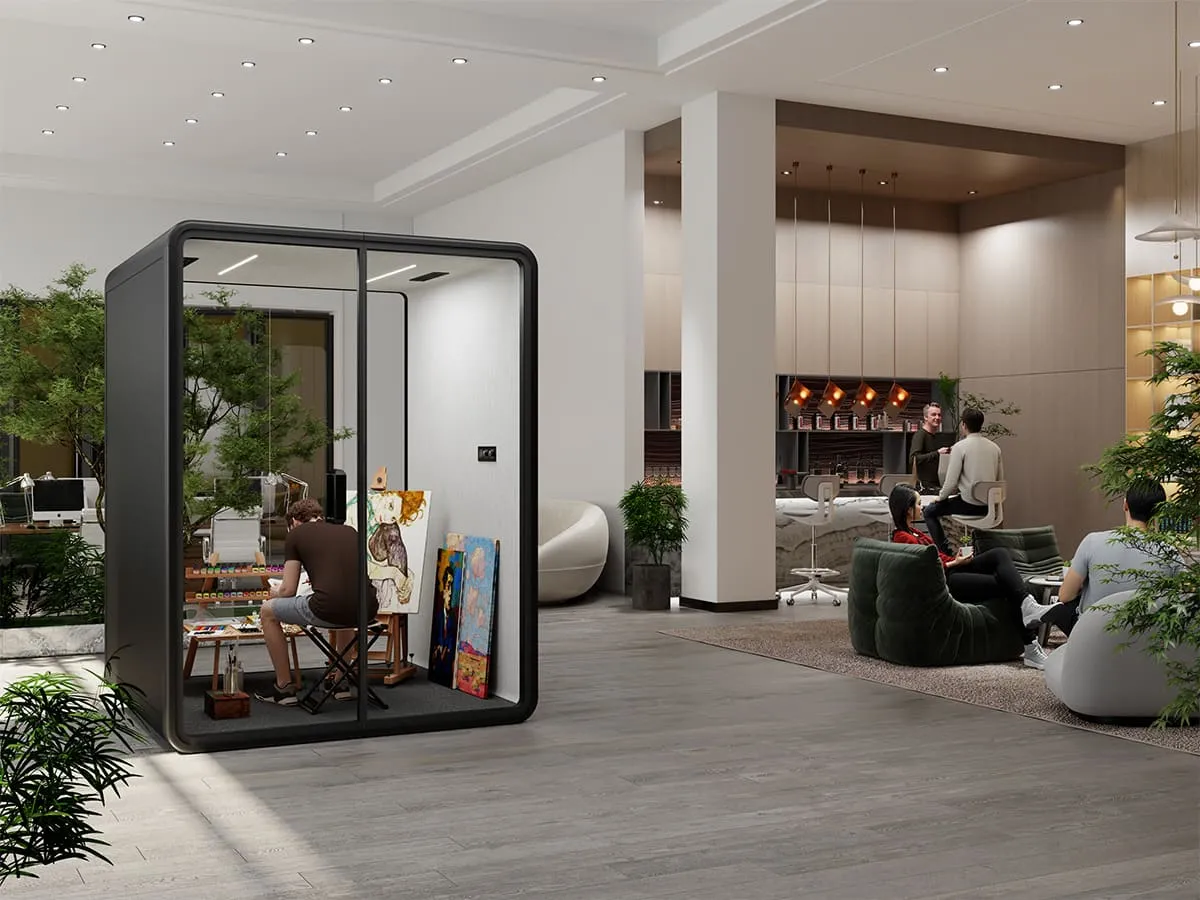
Meet&Co Office Pod Series D
Mistake 5: Overlooking Building Code Compliance
1. The Compliance Blind Spot
Here’s a mistake that can shut down your pod installation entirely: failing to consider building regulations. Pods aren’t just furniture—they’re prefabricated micro-architecture with their own structural, electrical, HVAC, and life safety considerations.
There is no specific reference to pods within building regulations, but their inclusion can impact compliance across multiple areas. Installing a fully enclosed pod into an office typically constitutes a Material Alteration under building regulations.
2. Key Compliance Areas
| Regulation Area | Considerations | Requirements |
| Part B – Fire Safety | Do pods form inner rooms? Do they obstruct fire exit signage? What category of fire alarm coverage exists? | Pods should not block escape routes; fire detection may need extension into pods |
| Part F – Ventilation | How is fresh air supplied? | 10 L/s/person or 1 L/s per m² floor area |
| Part M – Access | Is the pod accessible to all? | Level access, 300mm clear space adjacent to door pull side |
| Sprinkler Systems | How do pods affect ceiling sprinklers? | Maintain clearance; consider pods with integrated fire suppression |
| Electrical Safety | Is power supply adequate? | Dedicated 20-amp circuits for pod clusters |
3. Fire Safety Specifics
For sprinklered buildings, solid-roof pods can obstruct ceiling-mounted sprinkler systems. The wrong approach is leaving it to the contractor to “figure out” on-site, often resulting in costly, non-compliant solutions.
Best practice: Specify pods with integrated, UL-listed fire suppression units. This ensures compliance is handled by the manufacturer, simplifying design and eliminating complex on-site plumbing work.
4. Fire Alarm Considerations
If a pod enclosure interferes with fire alarm activation, it must be checked :
- Is the pod within 500mm of a smoke detector head?
- Is the ceiling perforated?
- Is the building’s fire alarm system designed for L1 coverage (all areas protected)?
When the fire alarm activates, sound levels within the pod should achieve a minimum of 60 dB.
5. Accessibility Requirements
A truly accessible pod must include :
- Zero-threshold entry: Smooth, level transition
- Sufficient maneuvering space: Minimum 60-inch (1525mm) turning circle for wheelchair
- Accessible controls: Light switches and outlets within reach ranges
- Door width: Minimum 32 inches (815mm) clear width
Where pods aren’t wheelchair accessible, other accessible rooms with the same function must be provided.
Quick Reference: Top 5 Mistakes at a Glance
| Mistake | Why It’s Problematic | How to Avoid It |
| Misunderstanding acoustics | Expecting total silence leads to disappointment | Look for ISO 23351-1 test data; understand speech privacy vs soundproofing |
| Underestimating ventilation | Stuffy pods go unused | Verify airflow specs; test before buying; clean filters regularly |
| Ignoring hidden costs | Sticker price doesn’t reflect true ownership cost | Evaluate durability, flexibility, and long-term value—not just upfront price |
| Neglecting maintenance | Small issues become expensive repairs | Schedule 6–12 month servicing; watch for warning signs |
| Overlooking compliance | Pods may violate building codes | Consult local regulations; check fire safety, accessibility, and electrical requirements |
FAQ
1. What’s the difference between soundproofing and speech privacy?
Soundproofing implies blocking all sound. Speech privacy means reducing intelligible conversation so it’s not distracting. Most office pods deliver the latter, not the former.
2. How often should I clean my pod’s ventilation system?
For typical office environments, clean filters every 3–4 months. In dustier settings or new office build-outs, check every 2 months for the first year.
3. Do I need a building permit for office pods?
In most cases, no—since pods are freestanding and not permanent structural changes. However, always check local regulations, as fully enclosed pods may constitute a Material Alteration.
4. How long does pod installation take?
Depending on the model, installation ranges from a couple of hours to a full day. Some brands offer tool-free assembly; others require professional installation.
5. Can I move a pod after installation?
Yes—if you choose a model designed for mobility. Some pods support heavy-duty wheels for moving on flat ground. Check specifications before assuming a pod can be relocated.
6. What should I do if my pod door scrapes the floor?
The base is likely unlevel. Use a spirit level, locate adjustable leveling feet, and adjust to square the frame. This usually stops door catching.
7. Are office pods worth the investment?
For open offices where privacy is needed, they often deliver significant returns through improved focus, productivity, and employee satisfaction. The key is choosing the right pod for your specific needs.
Conclusion
Office pods are powerful tools for creating productive, flexible workspaces—but only when chosen wisely. The five mistakes covered here account for most failed pod investments:
- Misunderstanding acoustic performance leads to unrealistic expectations
- Underestimating ventilation creates unusable, stuffy spaces
- Ignoring hidden costs blows budgets over time
- Neglecting maintenance turns minor issues into major repairs
- Overlooking compliance creates safety and legal risks
The solution isn’t complicated: ask the right questions, verify specifications, and think beyond the purchase price. Look for test data, not marketing claims. Check ventilation rates, not just photos. Plan for maintenance before problems appear. And always consult local regulations before installation.
When you get it right, a well-chosen office pod becomes one of your workplace’s most valuable assets—a quiet haven where focused work happens and private conversations stay private.


_15.webp)