







 Meet&Co
You’re leaning back in your chair during a long video call, and you feel it—that subtle strain at the base of your skull as your neck muscles work to hold your head up. You glance at the chair next to you and notice it has a headrest. Maybe you should have one too. Or maybe not.
Headrests are one of the most debated features in office chairs. Some users swear they’re essential for comfort and neck health. Others find them annoying, never making contact, or worse, pushing their head forward into poor posture. The truth is that both perspectives can be right—depending on the user, the chair, and how it’s used.
Here at Meet&Co, we offer this guide to cut through the confusion. You’ll learn when a headrest genuinely adds value, when it’s unnecessary, and how to choose one if you decide it’s right for you.
What a Headrest Actually Does
Before deciding if you need one, it helps to understand what a headrest is designed to do—and what it doesn’t do.
| Function | What It Does | What It Doesn’t Do |
| Supports neck during recline | Takes weight off cervical spine when leaning back | Support during upright work |
| Reduces static muscle load | Allows neck muscles to relax during breaks | Replace good lumbar support |
| Prevents forward head posture | Provides reference point for head position | Correct existing posture issues |
| Enhances comfort | Adds luxury feel during extended sitting | Solve poor chair fit |
The key insight: headrests are primarily for recline, not upright sitting. If you work mostly upright and rarely lean back, a headrest may never touch your head. If you recline frequently—for calls, thinking, or breaks—it becomes an essential support.
Who Benefits Most from a Headrest

1. Tall Users (Over 6’0″)
Tall users often have the most to gain from a headrest. Most office chairs have backrests designed for average-height users, leaving the neck and upper back unsupported. A headrest bridges this gap.
- Why it helps: Taller torsos mean your head sits above the backrest’s natural support zone
- What to look for: Height-adjustable headrest that can extend to meet your neck
2. Users Who Recline Frequently
If you spend significant time leaning back—on calls, reading documents, or thinking—your neck muscles work continuously to hold your head. A headrest eliminates this static load.
- Why it helps: Recline angles of 100–120 degrees create gravitational pull on the head
- What to look for: Headrest that stays in contact through full recline range
3. Those with Existing Neck Pain
For users with cervical spine issues, chronic tension, or forward head posture, a headrest can provide necessary support.
- Why it helps: Reduces load on strained neck muscles
- Important: Headrest must be positioned to support, not push head forward
4. Users Who Take Extended Breaks in Their Chair
If you lean back to rest during the workday, a headrest turns a chair into a true relaxation spot.
- Why it helps: Allows full body relaxation without neck strain
- What to look for: Comfortable padding, smooth recline mechanism
Also see: 10 Best Office Chairs for Tall People: Buyer Guide
Tall Users
| User Type | Why Headrest Helps | Key Feature Needed |
| Tall (over 6’0″) | Backrest too short; neck unsupported | Height-adjustable |
| Frequent recline | Neck muscles work continuously | Maintains contact through recline |
| Neck pain | Reduces static load on strained muscles | Proper positioning (no forward push) |
| Break taker | Allows full relaxation during rest | Comfortable padding |
Who May Not Need a Headrest
1. Users Who Sit Upright Most of the Day
If your work requires sustained upright posture—typing, detailed tasks, or active engagement—a headrest may never make contact.
- Why it’s unnecessary: Your head naturally floats above the backrest
- Alternative: Focus on lumbar support to maintain proper alignment
2. Shorter Users (Under 5’4″)
For shorter users, many chairs’ backrests already provide sufficient upper back and even neck support. A headrest may sit too high or push the head forward.
- Why it’s unnecessary: The chair’s backrest may already reach your shoulder blades
- Alternative: Choose a chair with appropriate sizing (e.g., Aeron Size A)
3. Users Who Prefer Active Posture
Some people naturally sit forward or move frequently. A headrest that doesn’t make contact becomes an unused feature.
- Why it’s unnecessary: You don’t recline enough for it to matter
- Alternative: Mobile seating or active chairs that encourage movement
4. Users with Poorly Designed Headrests
A bad headrest is worse than none. If a headrest pushes your head forward, it actively creates poor posture.
- Why it’s harmful: Forward head position strains the cervical spine
- Solution: Adjustable headrest with depth control, or remove it entirely
User Type Where Headrest Is Unnecessary
| User Type | Why Headrest Not Needed | Better Approach |
| Upright worker | Head never contacts headrest | Focus on lumbar support |
| Short (under 5’4″) | Chair backrest provides adequate support | Choose correctly sized chair |
| Active sitter | Moves frequently; headrest unused | Active seating options |
| Poor headrest | Pushes head forward | Remove or replace |
When a Headrest Can Do More Harm Than Good
A poorly designed or improperly adjusted headrest doesn’t just fail to help—it actively harms your posture.
1. Forward Head Position
If a headrest pushes your head forward even slightly, your cervical spine loses its natural curve. This creates a chain reaction: chin pokes out, upper back rounds, shoulders tighten.
- What to avoid: Headrests that force your head forward regardless of adjustment
- What to look for: Depth-adjustable headrest that can be positioned behind your head, not in front
2. Fixed Headrests That Don’t Adjust
A headrest that can’t be adjusted to your height, angle, or depth will likely hit the wrong spot—too high, too low, or too forward.
- What to avoid: One-size-fits-all, non-adjustable designs
- What to look for: Height, angle, and depth adjustment
3. Interference with Natural Movement
A headrest that constantly contacts your head during upright work can feel intrusive and restrict natural movement.
- What to avoid: Headrests that make contact when you’re not reclining
- What to look for: Headrest that stays out of the way until needed
4. Poorly Positioned Lumbar Support
Adding a headrest without fixing lumbar support can create a “C” curve in the spine—slouched lower back, neck cranked back. Support must work from the pelvis up.
- What to avoid: Headrest as a solution for overall poor posture
- What to prioritize: Lumbar support first, then headrest
Adjustable vs. Fixed Headrests: What to Look For
Not all headrests are created equal. If you decide you need one, prioritize adjustability.
| Adjustment | Why It Matters | What to Look For |
| Height | Positions support at your neck, not head | At least 3–4 inches of vertical range |
| Angle (tilt) | Matches natural head angle when reclining | Forward/back tilt; locks in position |
| Depth | Moves forward/back; prevents pushing head forward | 2–3 inches of depth adjustment |
| Pivot | Rotates to follow head movement | 180° range ideal |
The gold standard: headrests that adjust in all three planes—height, angle, and depth. This allows fine-tuning to your exact anatomy and preferred recline angle.
Top Headrest Options for Popular Chairs
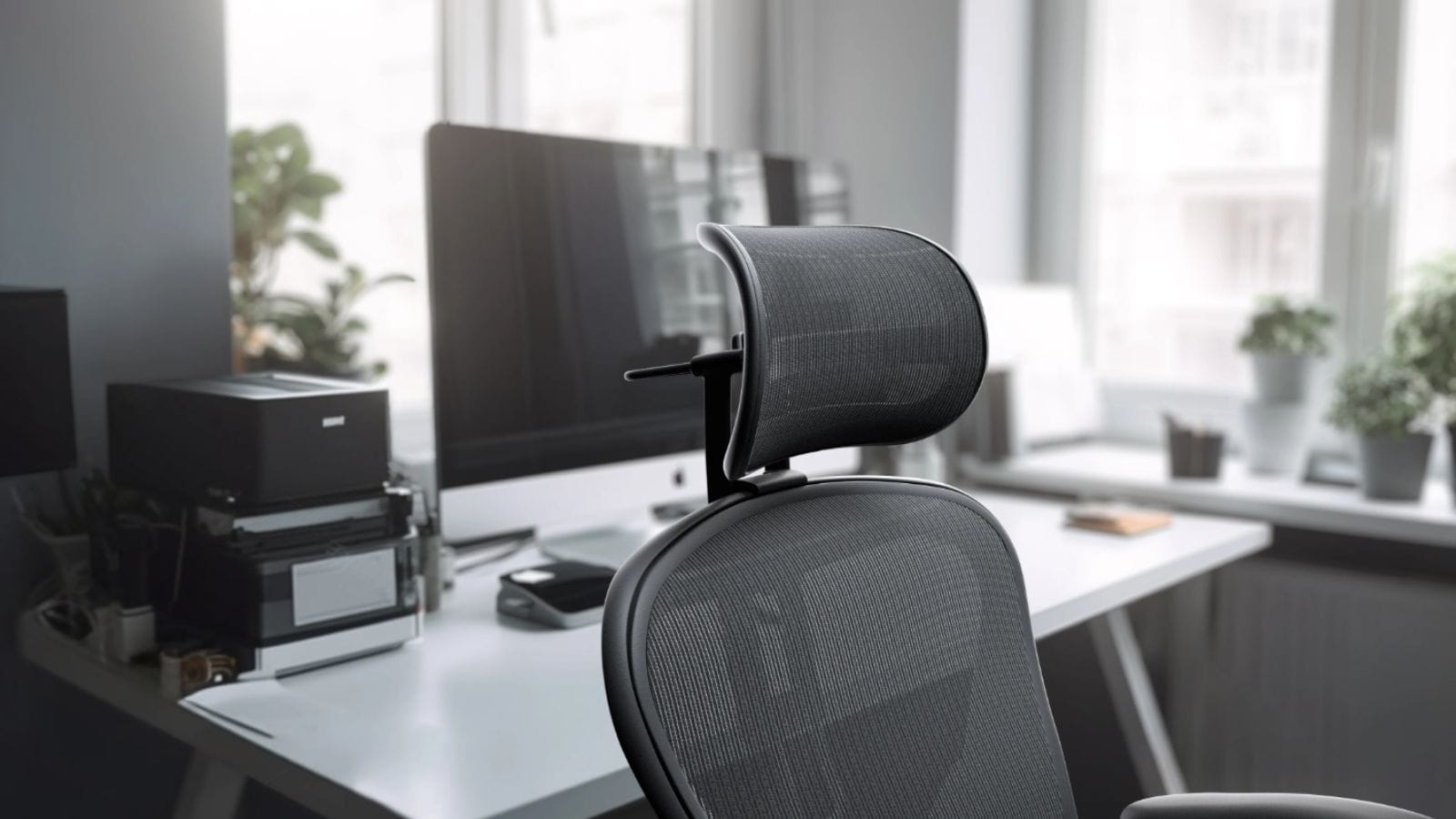
Source: Atlas
If you already own a chair without a headrest, aftermarket options exist for many models.
| Chair Model | Recommended Headrest | Key Features |
| Herman Miller Aeron | Atlas Headrest | Exact mesh match; height, angle, depth adjustment |
| Steelcase Leap | Engineered Now H3/H4 | Size-specific (H3 for under 5’11”, H4 for over) |
| Steelcase Gesture | Factory headrest | Integrated design; 180° range |
| Herman Miller Embody | Atlas Headrest | Designed to match; good adjustability |
| Generic chairs | Universal headrests | Clamp-on designs; varying quality |
Also see: Top Herman Miller Aeron Chair Headrests in 2026
How to Tell If You Need a Headrest
Ask yourself these questions:
1. Do You Recline Frequently?
- Yes: A headrest likely adds value
- No: You may not need one
2. Do You Feel Neck Strain During or After Work?
- Yes: A headrest may help if strain occurs when leaning back
- No: Focus on other ergonomic issues first
3. Does Your Current Chair’s Backrest Reach Your Shoulders?
- No (especially tall users): Headrest bridges the gap
- Yes: You may be fine without
4. Do You Have a Place to Rest Your Head When Leaning Back?
- No: Headrest fills this gap
- Yes: You’re already supported
5. Does Your Lumbar Support Already Work?
- No: Fix lumbar first; headrest won’t compensate
- Yes: Headrest is next logical step
Common Myths About Headrests
| Myth | Reality |
| “Everyone needs a headrest for good posture” | Headrests support recline, not upright posture. Lumbar support matters more for daily work. |
| “A headrest will fix my neck pain” | It may help if pain comes from reclining without support. But forward head posture requires broader ergonomic changes. |
| “Any headrest is better than none” | A poorly positioned headrest that pushes your head forward is actively harmful. |
| “Headrests are only for tall people” | Tall users benefit most, but short users who recline also benefit. |
How to Set Up Your Headrest Correctly
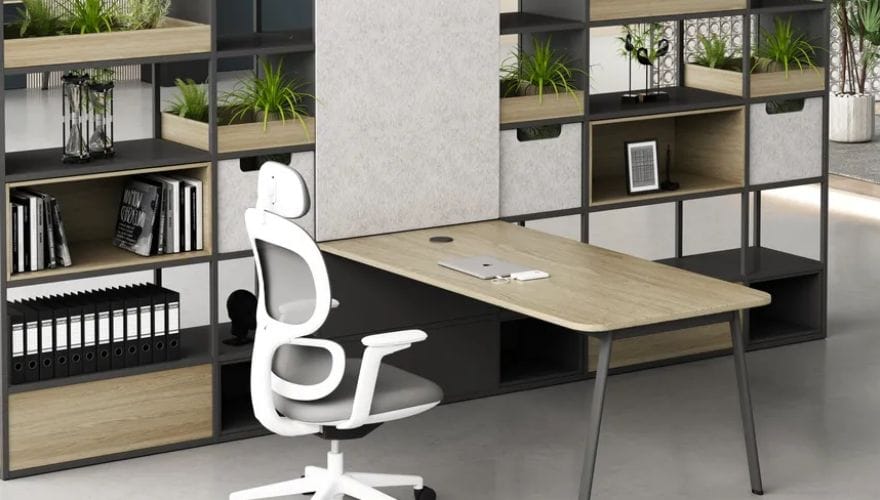
If you have a headrest, proper adjustment is everything.
| Step | How to Do It | Goal |
| 1. Set seat and lumbar first | Adjust chair height, seat depth, lumbar before touching headrest | Establish base posture |
| 2. Adjust height | Headrest should contact the base of your skull, not the back of your head | Support where neck meets skull |
| 3. Adjust depth | Position so headrest barely touches when upright; makes full contact when reclining | No forward push; support when needed |
| 4. Adjust angle | Tilt to match natural head angle | Even pressure across contact area |
| 5. Test through recline | Lean back; headrest should maintain contact | Consistent support |
The test: In upright position, you should be able to sit with your head slightly forward of the headrest. When you recline, the headrest should meet your head without you having to crank your neck back.
FAQ about Office Chair Headrests
1. Will a headrest improve my posture?
Not directly. A headrest supports your neck when reclining. Good posture starts with lumbar support, seat depth, and screen height. Fix those first; add headrest if you still need neck support when leaning back.
2. Can a headrest cause neck pain?
Yes—if it’s poorly positioned. A headrest that pushes your head forward creates strain. Depth adjustment is critical to prevent this.
3. Do I need a headrest if I use a standing desk?
If you stand most of the day, probably not. If you alternate sitting and standing and recline during seated periods, a headrest may still add value.
4. What’s the best headrest for a Herman Miller Aeron?
The Atlas Headrest is widely considered the best match. It uses the same Pellicle mesh as the Aeron and adjusts in height, angle, and depth.
5. Should I remove the headrest if my chair came with one and I don’t use it?
Yes. An unused headrest that never makes contact is harmless but unnecessary. If it pushes your head forward or gets in the way, definitely remove it.
6. Can I add a headrest to any office chair?
Many chairs have aftermarket options, but not all. Look for universal clamp-on designs, but verify compatibility with your chair model. Premium chairs (Aeron, Leap, Gesture) have dedicated aftermarket options.
Conclusion
Headrests are neither essential for everyone nor worthless for all. They serve a specific purpose: supporting your neck when you recline. If you lean back frequently—for calls, reading, thinking, or breaks—a quality, adjustable headrest can significantly improve comfort and reduce strain. If you work mostly upright and rarely recline, you may never need one.
Before adding a headrest, ensure your chair’s fundamentals are right: seat height, seat depth, and lumbar support. These affect your posture every minute of the workday. A headrest is the finishing touch for those who recline—not a fix for deeper ergonomic issues.
When in doubt, choose adjustability. A headrest with height, angle, and depth control can be tuned to your body. A fixed headrest is a gamble. And remember: if it pushes your head forward, it’s worse than none at all.