





 Meet&Co
Waiting rooms are changing. Gone are the days of rigid rows of identical chairs bolted to the floor. Today’s waiting areas need to accommodate families, solo visitors, people with mobility devices, and those who want a quiet corner away from others. They also need to adapt—sometimes for high-capacity flu season, sometimes for low-traffic summer afternoons.
Modular waiting room seating offers the solution: individual pieces that can be rearranged, added to, or subtracted from as needs change. But flexibility shouldn’t come at the cost of comfort. In 2026, the best modular systems combine plush, supportive cushions with smart connection systems that stay stable even in high-traffic use.
This guide covers the benefits of modular seating, layout strategies, and three top picks that deliver both flexibility and comfort.
Why Modular Seating Is the Future of Waiting Rooms
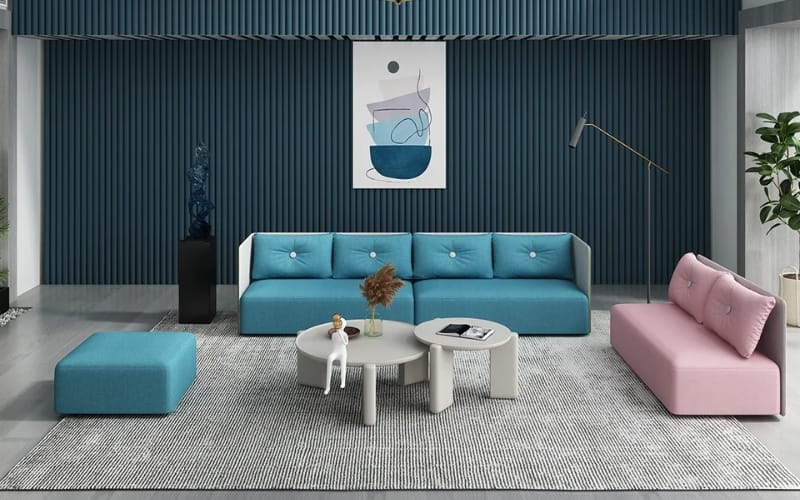
Traditional fixed seating has limitations:
Rigid layouts: Can’t be reconfigured for different crowd sizes or group types.
Difficult to clean: Gaps between fixed chairs trap dirt.
Uncomfortable: Often prioritizes durability over ergonomics.
Modular seating solves these problems:
Reconfigurable: Change from rows to clusters to pods in minutes.
Scalable: Add more seats during peak times; remove for open space.
Easy maintenance: Individual modules can be removed for cleaning or replacement.
Inclusive: Create spaces for wheelchairs, strollers, or families by leaving gaps.
The 2026 trend: Waiting rooms are becoming multi-purpose spaces. The same room that serves as a quiet medical waiting area in the morning might host a community education session in the afternoon. Modular seating makes this possible.
👉Also see: The Complete Guide to Choosing the Perfect Waiting Room Furniture
Key Features of Comfortable Modular Seating
Not all modular seating is created equal. Look for these features to ensure comfort isn’t sacrificed.
| Feature | Why It Matters |
|---|---|
| High-density foam cushions | Resists sagging; comfortable for long waits |
| Contoured seats and backs | Provides lumbar support and pressure distribution |
| Fabric that breathes | Prevents heat buildup; easy to clean |
| Stable connectors | Modules stay together when sat on; no shifting or gaps |
| Rounded corners | Safety for children and elderly |
| Optional armrests or tablet arms | Adds functionality without rigidity |
| Varied back heights | Low backs for open feel; high backs for privacy |
Top 3 Modular Waiting Room Seating Picks for 2026
Here are three excellent modular systems that balance flexibility, comfort, and durability.
| Product | Key Feature | Seating Capacity per Module | Best For |
|---|---|---|---|
| Meet&Co Enjoy Low Back 3-Seater Sofa | Wide color options; freestanding modules; low back for open sightlines | 3 seats (single and 2-seat modules also available) | Clinics, reception areas, modern lobbies |
| Meet&Co Verta Lounge Chair | Compact, stylish single seat; high-density foam; sturdy metal base; easy to reposition | 1 seat | Small clinics, dental offices, boutique lobbies, overflow seating |
| KI Zeker Modular Seating | Heavy-duty construction; tool-free reconfiguration; antimicrobial/bleach-cleanable options | 1–3 seats per module | Hospitals, public transit, government buildings, high-traffic public spaces |
1. Meet&Co Enjoy Low Back 3-Seater Sofa
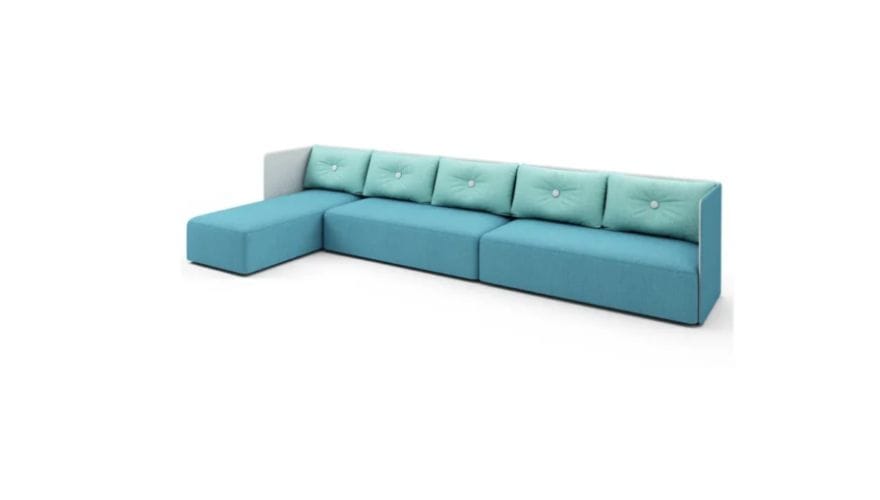
The Meet&Co Enjoy Low Back 3-Seater Sofa is designed for waiting areas that want a residential feel with commercial durability. Its low back profile maintains open sightlines across the room—important for reception staff to monitor visitors—while still providing ergonomic support through a gently contoured backrest.
Key Features:
Modular flexibility: Available as single, 2-seat, or 3-seat modules that can be arranged in rows, L-shapes, or facing clusters.
Wide color customization: Choose from dozens of fabric colors and finishes to match your brand or interior design.
Comfort-focused foam: High-resilience polyurethane foam with a medium-firm feel—supportive enough for long waits but not hard.
Durable construction: Kiln-dried hardwood frame with reinforced corner blocks; tested for commercial use.
Low back design: Encourages a more open, approachable feel; also allows staff to see over the seating.
Easy maintenance: Removable seat cushions and stain-resistant fabric options.
Why it’s great for flexibility: The Enjoy series modules are freestanding and can be mixed and matched. Need a 6-seat row? Connect two 3-seaters. Need a quiet corner? Place two singles facing each other with a small table. The low back keeps the space feeling open while still offering comfortable support.
Best for: Medical and dental clinics, corporate reception areas, hotel lobbies, and any space where both comfort and visibility matter.
Also see: The Best Lounge Chairs for High-Traffic Waiting Areas
2. Meet&Co Verta Lounge Chair
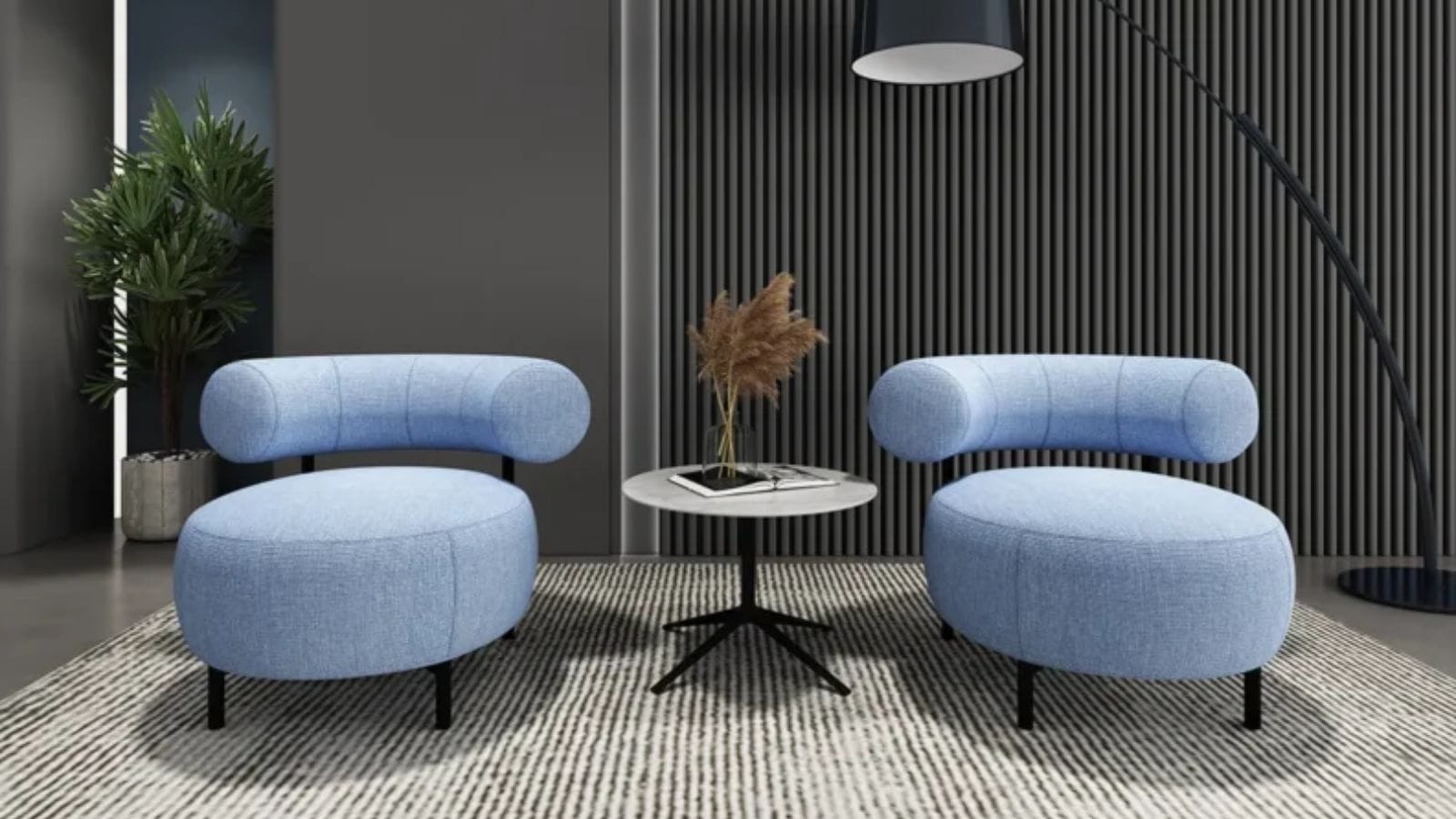
For waiting areas that need a compact, stylish, and highly durable single-seat option, the Meet&Co Verta Lounge Chair is an excellent complement to modular systems. While not modular itself, the Verta Lounge Chair works beautifully alongside modular seating to add variety, fill corners, or provide a dedicated quiet spot.
Key Features:
Single-seat design: Perfect for solo visitors who prefer not to sit next to strangers.
High-density foam cushioning: Comfortable for extended waits; resists sagging.
Sturdy metal base: Available with non-slip glides or casters for easy repositioning.
Ergonomic shape: Slightly curved backrest provides lumbar support without a high back.
Wide color selection: Choose from dozens of commercial-grade fabrics to match your Enjoy Sofa or other modular pieces.
Compact footprint: Fits into tight spaces where larger modular sections won’t.
Why it’s great for waiting areas: The Verta Lounge Chair offers a balance of comfort and space efficiency. Use it to create a quiet reading nook with a side table, as overflow seating near a reception desk, or as a flexible extra seat that can be moved anywhere.
Best for: Small clinics, dental offices, boutique hotel lobbies, and as supplementary seating alongside modular sofas.
3. KI Zeker Modular Seating
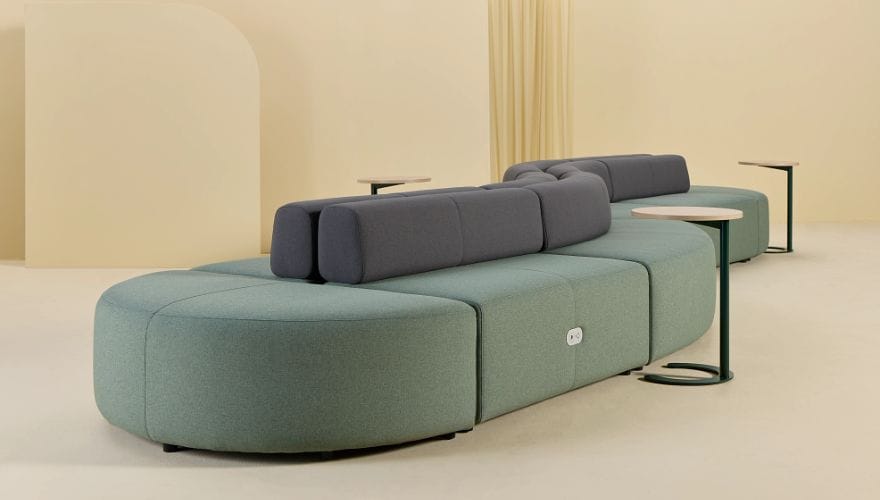
Image source: https://www.ki.com/products/name/zeker-modular-seating/
The KI Zeker Modular Seating system is engineered for environments that demand exceptional durability, hygiene, and ease of reconfiguration. Zeker is widely used in healthcare facilities, airports, and government buildings because it combines a sleek, contemporary aesthetic with the ruggedness required for high-traffic public spaces.
Key Features:
Heavy-duty construction: Reinforced steel frame and high-density polyurethane foam that resists compression and maintains shape over years of use.
Easy-clean surfaces: Available with antimicrobial fabric and bleach-cleanable upholstery – essential for medical waiting rooms.
Tool-free reconfiguration: Modules connect with a simple, secure latch system that can be adjusted by staff without special tools.
Multiple configurations: Choose from single, 2-seat, and 3-seat modules, plus corner pieces and integrated table options.
Varied back heights: Low, mid, and high back options allow you to create open social zones or private enclaves.
Color and material choices: Wide range of commercial-grade fabrics, vinyls, and even polyurethane (PU) for ultimate wipe-clean performance.
Bariatric-friendly: Select modules are reinforced to support up to 500 lbs.
Why it’s great for flexibility: Zeker’s tool-free connectors make it one of the easiest modular systems to reconfigure on the fly. Need to convert a row of six seats into two facing clusters for family groups? It takes minutes. The system also offers interchangeable seat and back cushions, so you can refresh colors or replace worn parts without buying whole new modules.
Best for: Hospital emergency department waiting rooms, VA clinics, airport gate seating, public transit stations, and government buildings where durability, cleanability, and adaptability are non-negotiable.
How to Arrange Modular Waiting Seating for Comfort and Flow
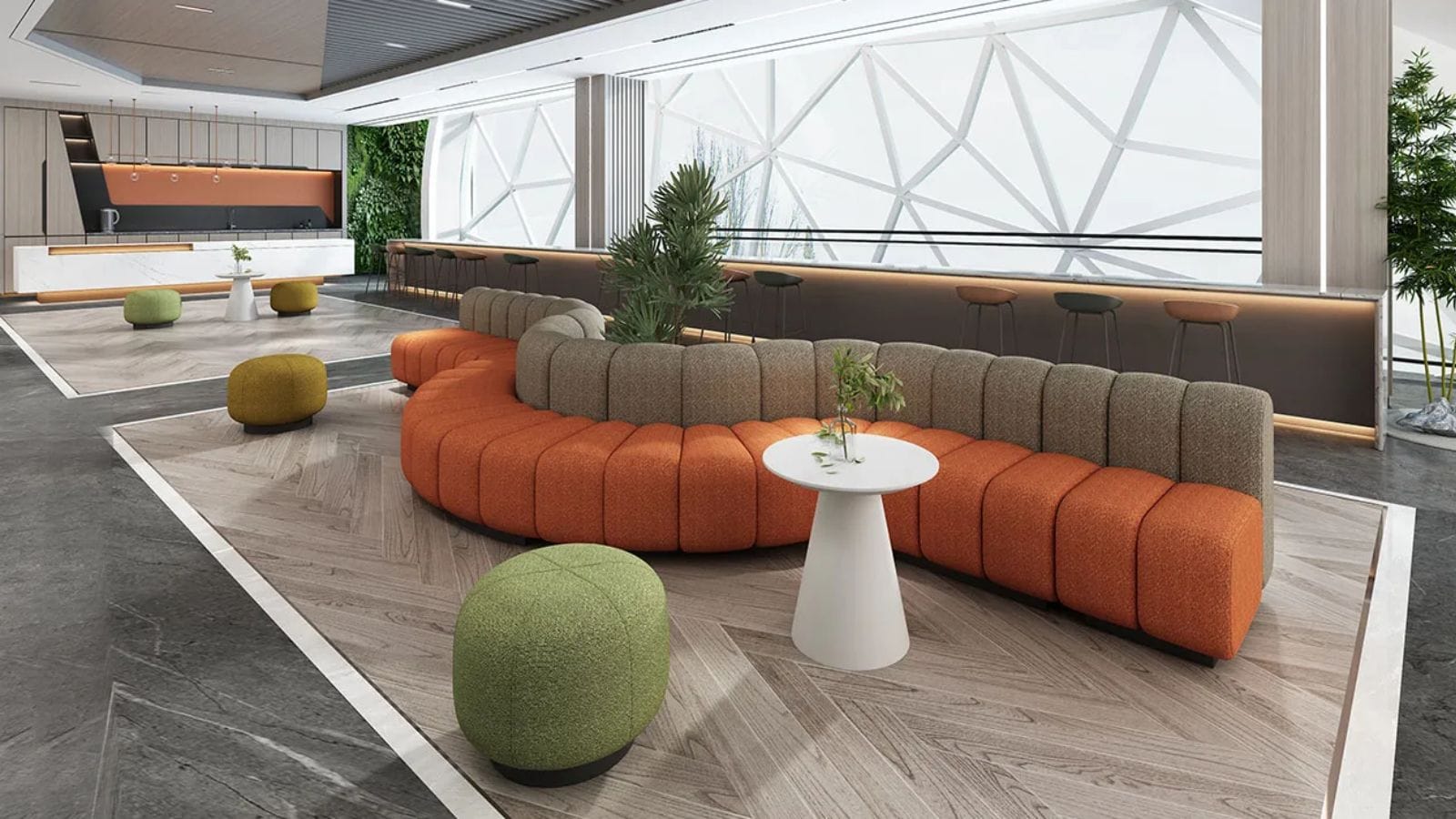
A flexible system is only as good as its layout. Here are proven arrangements for 2026 waiting rooms.
Zone 1: Individual Seating for Solo Visitors
Place single modules or 2-seater modules along walls, angled slightly away from main walkways. Add a small side table for phones or magazines. This gives solo visitors a sense of personal space.
Zone 2: Family or Group Clusters
Arrange 3-seater modules or pairs of 2-seater modules facing each other, with a central table. This allows families to sit together and talk quietly without disturbing others.
Zone 3: High-Capacity Open Area
For peak times, arrange modules in straight rows (like traditional seating) but leave gaps every 4–6 seats for wheelchairs and strollers. The modular system allows you to remove chairs entirely during low-traffic periods to create an open, less crowded feel.
Zone 4: Semi-Private Nooks
Use high-back modules (available from Steelcase Flex and KI Anywhere) to create small enclaves. Place two high-back chairs at a 90-degree angle with a small table between. This offers visual and acoustic privacy for sensitive conversations.
Maintaining Modular Seating in High-Traffic Areas
Rotate cushions: If cushions are removable, rotate them every 6 months to distribute wear evenly.
Clean connectors: Dust and debris can accumulate in connection points. Vacuum regularly and wipe with a damp cloth.
Inspect latches: Ensure connectors remain tight. Loose modules can shift, creating uncomfortable gaps.
Replace individual modules: One of the biggest advantages of modular seating: if one seat is damaged, replace only that module—not the entire row.
Frequently Asked Questions
1. Is modular waiting room seating more expensive than fixed seating?
Upfront, modular seating can be 20–40% more expensive than fixed rows of plastic chairs. However, modular systems offer lower total cost of ownership because individual modules can be replaced rather than entire rows. They also adapt to changing needs, avoiding the cost of buying new furniture when layouts change.
2. How do I prevent modular seating from shifting apart during use?
High-quality modular systems use locking connectors that require tools (or at least significant force) to separate. Look for systems with metal-to-metal latches or heavy-duty plastic clips. Avoid systems that rely only on gravity or friction.
3. Can I mix different back heights in the same modular system?
Yes. Most modular systems (including Steelcase Flex and KI Anywhere) offer low, mid, and high back options within the same connector system. This allows you to create zones: low backs near reception (for visibility), high backs in corners (for privacy).
4. What’s the best fabric for high-traffic waiting areas?
Look for Crypton, solution-dyed acrylic, or vinyl (if easy wipe-down is critical). These resist staining, can be cleaned with bleach-based products (important for healthcare), and withstand heavy abrasion. Avoid cotton, linen, or untreated polyester.
5. How many seats can I fit in a modular row without floor damage?
Most modular seating has glides or small feet that distribute weight. For very long rows (over 10 seats), consider using a continuous metal base plate (available from some manufacturers) to prevent floor indentation. On carpet, use larger glides or a protective mat.
Conclusion
Modular waiting room seating in 2026 offers the best of both worlds: the flexibility to reconfigure as needs change, without sacrificing the comfort that makes waiting bearable. Whether you choose the colorful, low-back Meet&Co Enjoy Sofa for a modern clinic, the power-integrated Steelcase Flex for a tech-forward lobby, or the heavy-duty KI Anywhere for a hospital setting, modular systems are a smart long-term investment.
When planning your layout, think in zones: individual seating, family clusters, high-capacity rows, and semi-private nooks. With modular seating, you’re not stuck with one layout forever. Change it next week, next month, or next year—your waiting room will always meet the moment.
Ready to upgrade your waiting area? Explore our modular seating collection, including the Meet&Co Enjoy series, and request a free space planning consultation.
_9.webp)