







 Meet&Co
Walk into any modern office, and you’ll see them: chairs with mesh backs, mesh seats, or both. Mesh has become the material of choice for ergonomic seating, prized for its breathability and flexibility. But not all mesh chairs are the same.
Some office chairs feature a mesh back with a foam or fabric seat. Others go full mesh—both backrest and seat pan are made of tensioned mesh. Which one offers better support? The answer depends on your body, your work habits, and how long you sit each day.
Our guide breaks down the differences, compares comfort and durability, and helps you choose the right mesh configuration for your needs.
What Is a Mesh Back Chair?
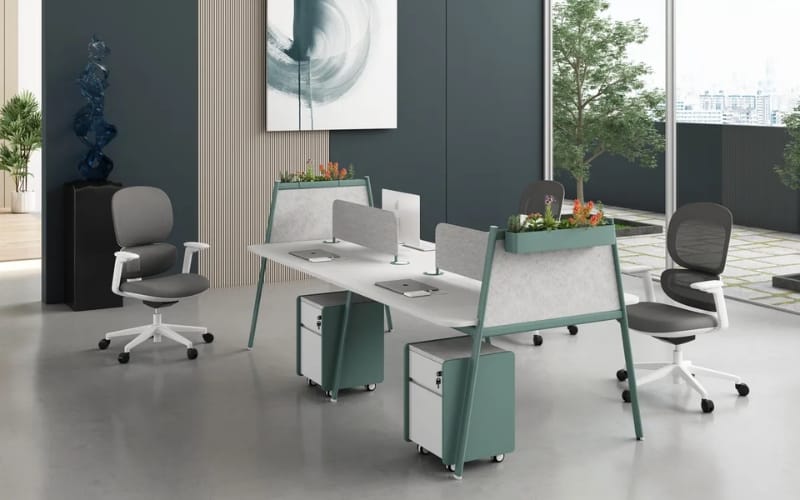
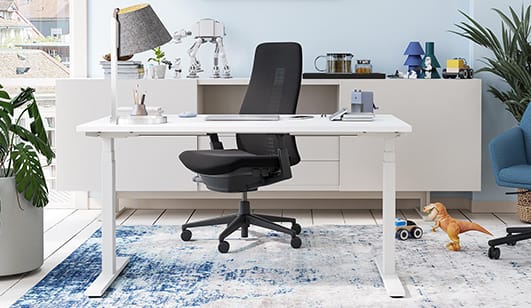
Linora Workstation Desk with Plant Shelf and Budding office chairs
A mesh back chair has a backrest made of breathable, tensioned mesh fabric stretched over a frame. The seat pan, however, is traditionally padded with foam and upholstered in fabric or leather.
Common features:
Breathable backrest (reduces sweat and heat buildup)
Padded foam seat (plush, traditional feel)
Often includes adjustable lumbar support built into the mesh or as a separate pad
Examples: Steelcase Series 1 (mesh back + fabric seat), Herman Miller Sayl (mesh back + foam seat), Haworth Zody (mesh back + foam seat)
What Is a Full Mesh Chair?
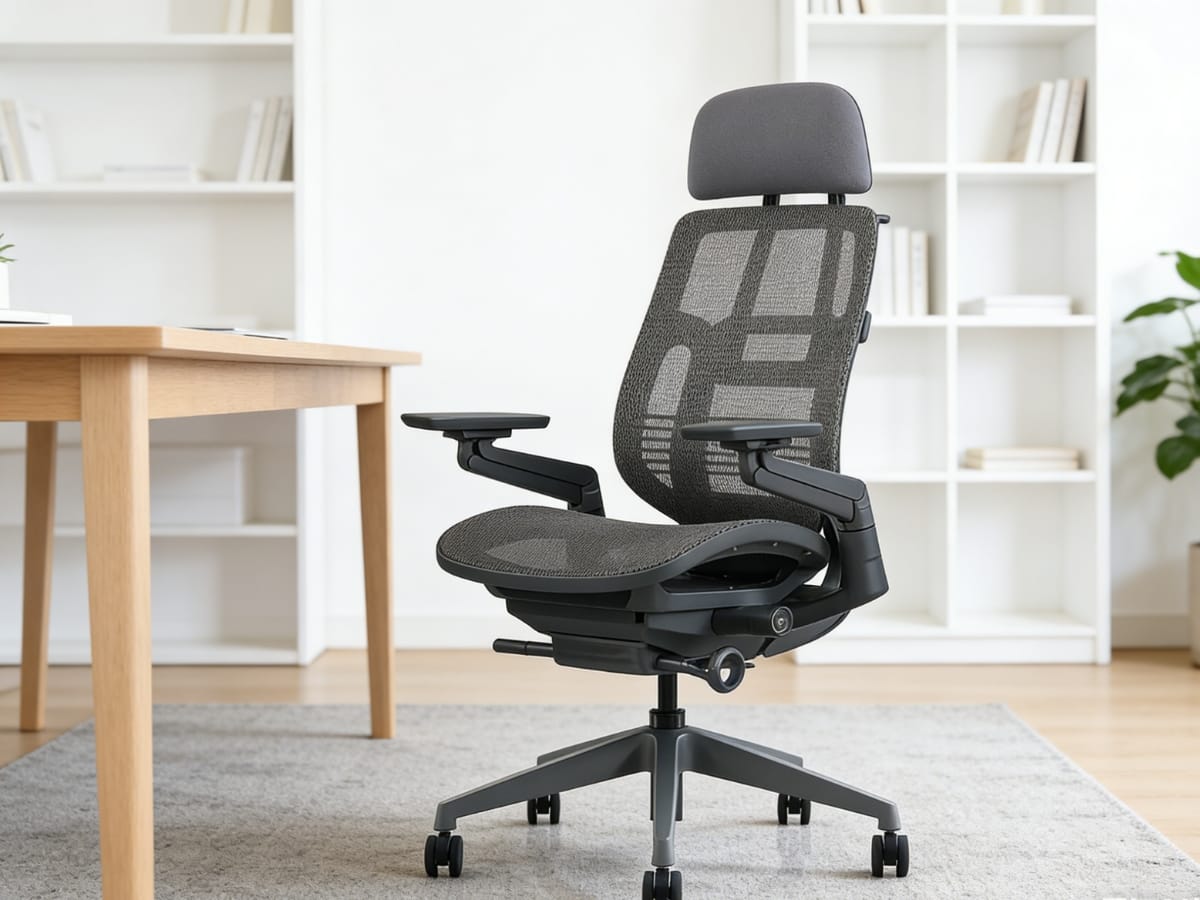
Meet&Co Wholesale Mesh Ergonomic Chair
A full mesh chair uses the same tensioned mesh material for both the backrest and the seat pan. There is no foam cushion—your weight rests directly on the mesh.
Common features:
Mesh back + mesh seat (no foam)
Highly breathable (air circulates through the seat)
Often requires a “waterfall” edge to reduce pressure behind the knees
Examples: Herman Miller Aeron (iconic full mesh), Steelcase Karman (full mesh), Autonomous ErgoChair Mesh
Mesh Back vs. Full Mesh: A Head-to-Head Comparison
| Factor | Mesh Back Chair | Full Mesh Chair |
|---|---|---|
| Breathability | Good (back stays cool) | Excellent (both back and seat stay cool) |
| Seat comfort | Soft, plush, familiar | Firm, may feel hard initially; conforms over time |
| Lumbar support | Excellent (often adjustable) | Good to excellent (depends on mesh tension) |
| Pressure distribution | Foam distributes weight evenly | Mesh conforms to body shape; can create pressure points on thighs |
| Durability | Foam compresses over time (3–7 years) | Mesh maintains tension for years (10+ years) |
| Cleaning | Fabric can stain; foam absorbs spills | Mesh is wipeable; spills pass through (can hit floor) |
| Weight capacity | Standard (250–350 lbs) | Often higher (300–400+ lbs) with reinforced mesh |
| Price range | $150–$800 | $300–$1,500+ |
| Best for | All-day comfort, users who prefer soft seats | Hot environments, long sessions, easy maintenance |
Breathability: Where Full Mesh Wins
If you work in a warm office, a non-air-conditioned space, or tend to run hot, breathability is a top priority.
Mesh back: Keeps your back cool. Your back won’t get sweaty, even after hours of sitting. However, your seat (on foam) can still trap heat and moisture.
Full mesh: Keeps both your back and your seat cool. Air circulates freely under your thighs and buttocks. This is a game-changer for anyone who experiences “swamp butt” or skin irritation from prolonged sitting.
Verdict: Full mesh wins for maximum breathability.
Seat Comfort: Where Mesh Back Usually Wins
The seat is where most people feel discomfort first. Here, traditional foam has an advantage.
Mesh back (foam seat): Foam conforms to your shape, providing a soft, forgiving surface. It feels familiar—like a car seat or living room chair. Quality high-density foam resists compression for years.
Full mesh (mesh seat): Mesh feels firmer, especially at first. It conforms to your body over time, but some users feel pressure along the underside of their thighs. A “waterfall” edge (curved front) helps, but it’s not for everyone. Very lightweight users may find the mesh too firm; heavier users may appreciate the lack of foam “bottoming out.”
Verdict: Mesh back (foam seat) is more universally comfortable, especially for users new to mesh.
Lumbar Support: It Depends
Lower back support is critical for ergonomic health. Both designs can deliver—but through different mechanisms.
Mesh back: Most mesh back chairs include a dedicated, adjustable lumbar pad. You can move it up/down and sometimes adjust depth. This gives precise, targeted support.
Full mesh: Some full mesh chairs (like the Aeron) have built-in lumbar support that is less adjustable. Others (like the Karman) rely on the natural tension of the mesh to create lumbar curve. For some users, this feels supportive; for others, it’s not enough.
Verdict: Mesh back chairs generally offer more adjustable, customizable lumbar support. Full mesh chairs rely on mesh tension, which may or may not align with your spine.
Durability and Maintenance
Mesh back (foam seat): Foam compresses over time. After 3–7 years of daily use, you may notice sagging or flattening. Fabric upholstery can stain and absorb spills. However, replacing the seat cushion is often possible.
Full mesh: Mesh is incredibly durable. High-quality mesh (like the Aeron’s Pellicle) maintains tension for 10–15+ years. Spills pass right through (though they may stain the floor). Mesh doesn’t absorb odors or sweat. Cleaning is a simple wipe-down.
Verdict: Full mesh wins for long-term durability and easy maintenance.
Which One Offers Better Support? The Answer
“Support” means different things to different people. Let’s break it down by type of support.
| Type of Support | Winner | Why |
|---|---|---|
| Lumbar support | Mesh back | Adjustable lumbar pads provide targeted lower back pressure |
| Seat support (pressure distribution) | Mesh back | Foam conforms to shape; no hard pressure points |
| Seat support (long-term firmness) | Full mesh | Mesh doesn’t sag; maintains consistent tension |
| Postural support (upright sitting) | Full mesh | Firm seat encourages active posture; less “sinking in” |
| Overall ergonomic support | Tie | Depends on individual body and preferences |
Final verdict: For most office workers who sit 6–8 hours daily, a mesh back with high-quality foam seat offers the best balance of comfort, lumbar adjustability, and breathability. However, if you work in a hot environment, prioritize easy cleaning, or want a chair that lasts over a decade, full mesh is the better choice.
Who Should Choose Mesh Back?
You prefer a soft, cushioned seat
You want adjustable lumbar support
You work in a climate-controlled office (heat isn’t an issue)
You’re on a tighter budget (mesh back chairs are generally less expensive)
You weigh under 200 lbs (foam is sufficient)
Top picks: Steelcase Series 1 (mesh back/fabric seat), Haworth Zody, HON Ignition 2.0
Who Should Choose Full Mesh?
You run hot or work in a warm environment
You want maximum breathability (including the seat)
You need easy-clean surfaces (healthcare, food service)
You want a chair that will last 10+ years without sagging
You weigh over 250 lbs (mesh seats don’t “bottom out”)
Top picks: Herman Miller Aeron, Steelcase Karman, Autonomous ErgoChair Mesh
Also see: Executive Chairs vs. Task Chairs for Conference Rooms: Which Is Better?
The Hybrid Option: Mesh Back with Mesh Seat (but Padded?)
Some newer chairs offer a hybrid: a mesh seat with a thin foam layer underneath. This gives some of the breathability of mesh with the initial softness of foam. Examples include the Steelcase Karman (full mesh but with a subtle foam layer) and some models from Sihoo.
If you’re torn between the two, look for a chair that offers mesh back + mesh seat + a thin comfort foam layer. It’s the best of both worlds.
Frequently Asked Questions
1. Is a full mesh chair better for your back?
Not necessarily. Full mesh chairs promote breathability and can encourage active sitting, but lumbar support varies. A mesh back chair with an adjustable lumbar pad often provides more targeted lower back support. The best chair for your back is one that you can adjust to fit your spine’s natural curve.
2. Do full mesh chairs cause thigh pain?
Some users experience pressure on the underside of their thighs, especially if the seat edge is not curved downward (waterfall edge). This can restrict circulation. If you have sensitive thighs or spend long hours seated, test a full mesh chair for at least 20 minutes before buying. A foam seat may be more comfortable for you.
Also see: Can a Kneeling Chair Help with Posture, or Is It Just a Trend?
3. How long do mesh chairs last compared to foam?
High-quality mesh (like the Aeron’s Pellicle) can last 10–15 years without losing tension. Foam seats typically begin to compress after 3–7 years of daily use, depending on foam density and user weight. If longevity is your priority, full mesh is the better investment.
4. Can you clean a mesh chair easily?
Yes. Mesh can be wiped with a damp cloth and mild soap. Spills often pass through the mesh (so clean the floor too). For deep cleaning, use a vacuum with a brush attachment. Foam seats require spot cleaning and can absorb spills, leading to stains and odors.
5. Which is better for heavy users (over 300 lbs)?
Full mesh chairs with reinforced frames and high-tension mesh are often rated for higher weight capacities (350–400+ lbs). Foam seats in mesh back chairs can bottom out quickly for heavier users. Look for chairs with BIFMA testing for large occupant seating. The Herman Miller Aeron Size C and Steelcase Karman are good options.
6. Are mesh back chairs cheaper than full mesh?
Generally, yes. Mesh back chairs start around $150–$300 for quality entry-level models. Full mesh chairs from premium brands (like the Aeron) start at $800 and go up to $1,500+. However, budget full mesh chairs (under $300) often use low-quality mesh that sags quickly—invest in a reputable brand.
Conclusion
Choosing between mesh back and full mesh comes down to your priorities.
Choose mesh back if you want a soft, cushioned seat, adjustable lumbar support, and a familiar feel. It’s the safer choice for most office workers.
Choose full mesh if you run hot, need easy cleaning, prioritize long-term durability, or want a chair that won’t sag over time.
For the ultimate setup, try a mesh back chair with a high-quality foam seat first. If you still feel too warm, upgrade to full mesh. And if you have the opportunity, test both types in person for at least 20 minutes each. Your body will tell you which one offers better support—for you.
_17.webp)


_1.webp)


