





 Meet&Co
As elementary students transition from playful early childhood into structured schooling, creating an optimized learning environment at home becomes a top priority for parents. Relying on the kitchen island or the dining table for assignments often leads to endless distractions and poor physical habits.
Investing in a dedicated kids desk and chair set is the single most effective way to establish a productive homework station. However, many parents fall into common purchasing pitfalls—such as buying a fixed-size table that their child outgrows in a single year, or choosing cheap materials that compromise safety. This comprehensive guide will help you navigate the essential ergonomic features, structural size charts, and safety certifications to select the ideal study table and chair for kids that grows alongside them.
Key Takeaways
Prioritize Longevity: Opt for height-adjustable desks that adapt to your child’s physical growth, saving money and avoiding replacement costs every 2 to 3 years.
Ergonomics Matter: Look for the 90-90-90 sitting rule alignment (elbows, hips, and knees) to protect spinal health and improve focus.
Strict Safety Standards: Never compromise on features like rounded corners, anti-pinch mechanisms on tiltable desktops, and certified non-toxic materials.
Match the Environment: Choose mobile, lightweight fixed sets for classroom setups, and fully customizable, feature-rich workstations for home study corners.
Why Every Child Needs a Dedicated Desk and Chair Set

Setting up a specialized bedroom study corner does more than just organize textbooks—it serves as the foundational pillar for a child’s long-term educational journey.
Better Focus and Learning Habits
A designated children’s desk and chair setup conditions a child’s mind for deep concentration. When they sit down at their personal kids learning desk, it sends a psychological signal that it is time to transition from play to mental focus. This specialized zone minimizes domestic distractions, creating a structured routine that is vital for successful homeschooling and focused online learning.
Improved Posture and Comfort
Unlike adult furniture, a specialized ergonomic desk for kids is tailored to smaller body proportions. It prevents children from dangling their feet or slumping over flat surfaces, which can lead to early physical fatigue. Providing an optimized layout ensures that their growing bones are held in a stress-free position during intense writing tasks.
Creating a Productive Homework Station
A complete kids homework desk setup keeps all essential learning tools—like pencils, rulers, tablet screens, and reference books—within arm’s reach. This organization cuts down on lost time spent looking for misplaced items, teaching elementary students excellent self-management skills right from the start.
Key Features to Look for in a Kids Desk and Chair Set
To secure a strong return on investment, your chosen growing kids furniture must feature commercial-grade engineering that balances physical health with daily functional utility.
1. Adjustable Height
Because children experience sudden growth spurts, a height adjustable desk for children is absolutely mandatory. A premium adjustable kids desk allows you to smoothly raise or lower both the desktop surface and the seat pan. This flexibility ensures that a desk bought for a 5 year old remains perfectly comfortable when they become an 8 year old.
2. Ergonomic Chair Support
A high-quality children’s study table package must include a deeply supportive seat. Look for features like a built-in footrest to steady their legs, along with reactive posture support structures that match the natural inward curve of the lower lumbar spine.
3. Storage Solutions
To maintain an organized workspace, look for built-in organization tools. A spacious storage drawer or an integrated bookshelf desk layout gives children a tidy place to store their notebooks, keeping the main work surface clean and clear.
4. Durable and Safe Materials
Kids furniture needs to withstand heavy daily use. The frame should feature thick, powder-coated industrial steel legs paired with scuff-resistant melamine desktop surfaces. Look for anti-slip legs to keep the unit completely stable on both polished hardwood floors and plush bedroom carpets.
5. Tiltable Desktop Design
A premium kids study desk often features a tiltable desktop mechanism (ranging from 0° to 40°). This allows the surface to tilt to the perfect angle for different tasks: flat for laptop use, slightly tilted for writing, and steeply angled for reading or drawing. This adjustment eliminates neck strain and prevents a hunched posture.
Desk and Chair Size Guide by Age and Height
Using improperly sized furniture can cause early eye strain and encourage poor sitting habits. Use this structural reference guide to keep your child’s workspace perfectly aligned with their physical growth.
Recommended Desk Height Chart
| Child’s Average Height | Target Age Group | Recommended Desk Height | Recommended Seat Height |
| 39″ to 47″ (100–120 cm) | Desk for 5 year old / 6 year old | 20″ to 22″ (50–55 cm) | 11″ to 13″ (28–32 cm) |
| 47″ to 55″ (120–140 cm) | Desk for 8 year old / Elementary | 23″ to 26″ (58–65 cm) | 14″ to 16″ (35–40 cm) |
| 55″ to 63″ (140–160 cm) | Mid-Elementary / Middle School | 27″ to 29″ (68–74 cm) | 16″ to 18″ (40–45 cm) |
The 90-90-90 Sitting Rule
To verify if your child’s study table and chair for kids is set up correctly, look for three vital 90-degree angles while they are seated:
The Elbows: Thighs should slide cleanly under the desk surface so the elbows rest naturally on top at a flat 90-degree angle.
The Hips: The lower spine should press firmly against the back support cushion, forming a comfortable 90-degree angle with the thighs.
The Knees: Both feet must rest completely flat on the floor or a built-in footrest, keeping the knee joints bent at a relaxed 90-degree angle.
3 Best Desk and Chair Sets for Kids
1. Best for Schools & Dynamic Classrooms: Meet&Co Plastic Student Desk and Chair Set

When outfitting busy learning environments or high-use home study areas, commercial-grade durability is essential. The Meet&Co Plastic Student Desk and Chair Set is built using high-strength, injection-molded polymers over a heavy-duty reinforced steel frame. This construction allows it to easily handle the daily wear and tear of a school environment.
Sourcing your educational furniture from a globally trusted workplace manufacturer like Meet&Co Office Furniture guarantees excellent durability and a smart, efficient design. This set features built-in book grooves, a streamlined storage cubby, and a lightweight profile, making it an excellent school desk for kids that easily fits into compact floor plans.
Pros: Exceptionally easy to wipe clean, highly impact-resistant, and a lightweight frame that allows for fast classroom reconfigurations.
Cons: Uses a fixed-height frame, making it best suited for specific age brackets rather than long-term home growth.
Best For: Modern elementary school classrooms, institutional tutoring centers, and dedicated home learning environments.
2. Best Ergonomic Grow-With-Me Choice: ApexDesk Little Soleil DX Series
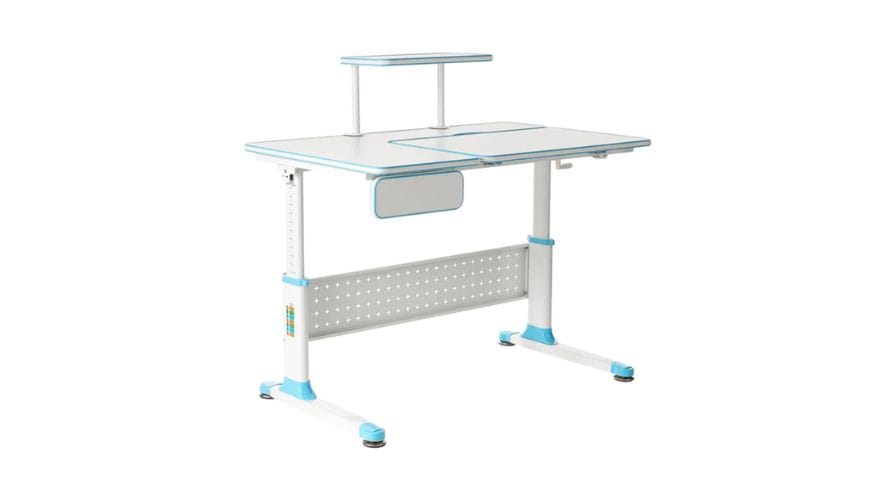
image source: https://www.apexdesk.com/products/little-soleil-dx-series-childrens-height-adjustable-study-desk-w-integrated-shelf-and-drawer-blue
The ApexDesk Little Soleil DX Series is engineered to serve as a complete, long-term growing kids furniture investment. It features a reliable gas-lift height adjustment system that lets parents smoothly raise or lower the desk surface to match growth spurts.
It comes equipped with an expanded storage drawer, a split tiltable desktop surface, and an advanced posture support chair that adjusts forward and back to protect a child’s lumbar spine.
Pros: Large work surface area, built-in bookshelf desk layout, and very smooth crank adjustments.
Cons: Features a larger footprint that requires dedicated space in a bedroom.
Best For: Long-term home study stations for elementary students transitioning through multiple grade levels.
3. Best for Small Space Layouts: Mecor Kids Desk and Chair Sets
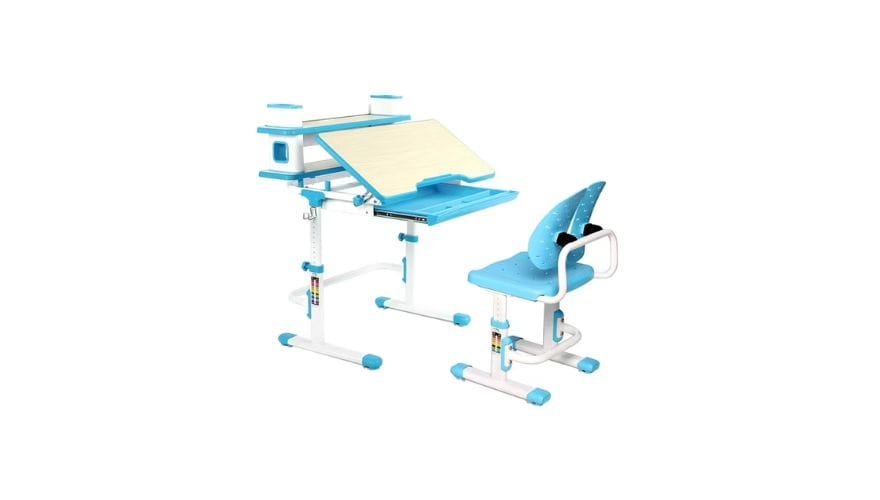
image source: https://www.walmart.com/ip/Mecor-Kids-Desk-Chair-Sets-Student-Study-Table-Chair-Ergonomic-Winged-Backrest-Height-Adjustable-Children-Writing-Table-w-Bookshelf-Pull-Drawer-Stora/419581641
If you are setting up a workspace in a small space desk environment, the Mecor Kids Desk and Chair Sets offers an excellent, space-saving design without sacrificing crucial ergonomic features.
This compact kids homework desk features a tiltable desktop surface, an integrated reading rack, and a handy pull-out storage drawer, making it a highly functional choice for compact bedroom corners.
Pros: Compact footprint, very affordable pricing, and comes with a built-in LED study lamp.
Cons: The storage drawer has a shallower depth, which limits the number of large textbooks it can hold.
Best For: Shared bedrooms, small apartments, and dedicated homeschooling nooks.
Adjustable vs Fixed Kids Desk: Which Is Better?
Choosing between a customizable height setup and a traditional fixed-frame model depends on your project’s timeline and long-term budget planning.
| Design Performance Feature | Height Adjustable Kids Desk | Traditional Fixed-Frame School Desk |
| Functional Product Lifespan | 8 to 10 Years (Adapts to continuous physical growth) | 2 to 3 Years (The child quickly outgrows the frame) |
| Ergonomic Posture Support | High (Ensures perfect alignment for elbows, hips, and knees) | Medium (Requires adding secondary footrests or cushions) |
| Long-Term Procurement Cost | Lower (One initial purchase covers their entire elementary school years) | Higher (Requires buying entirely new furniture sizes every few years) |
| Spatial Weight Profiles | Heavier frame due to internal lift mechanisms | Lightweight design that is easy to lift and rearrange |
Safety Features Parents Should Never Ignore
Children’s furniture requires strict manufacturing standards to prevent painful finger pinches or structural tipping accidents during daily use.
Rounded Corners: Sharp 90-degree wooden edges pose a safety risk in high-traffic bedrooms. Ensure the desk features smoothly rounded corners wrapped in soft, protective ABS plastic edging.
Anti-Pinch Mechanism: If a kids study desk features a tiltable desktop, ensure it includes built-in safety buffers. A 1-inch safety gap prevents the heavy surface from slamming down onto small fingers during adjustments.
Non-Toxic Materials: Look for certified low-emission furniture. Check for standard safety certifications, ensuring the finishes and plastics are entirely free of harmful chemical off-gassing.
Stable Anti-Tip Construction: Children often lean heavily on the front edge of a desk when standing up. Ensure the base features an extended, weighted L-shaped leg design to keep the table perfectly stable and prevent tipping.
How to Create the Perfect Kids Study Corner
To get the most out of your premium kids desk and chair set, follow these simple room setup steps to build an inviting, distraction-free study space:
Balanced Lighting: Position the kids learning desk near a natural window light source to reduce eye strain. Add a flicker-free LED desk lamp with an adjustable neck to provide focused light for evening reading.
Smart Storage Organization: Keep active textbooks on an eye-level bookshelf desk rack. Store extra art supplies in lower drawers to keep the main desk surface clear for schoolwork.
Ergonomic Screen Placement: For online learning, position the laptop or tablet screen exactly 20 inches away from their eyes, tilted slightly upward to keep their neck relaxed.
Reducing Distractions: Keep toys, gaming consoles, and noisy clutter out of their line of sight while they sit at their desk, helping them build strong concentration habits.
Final Verdict
When choosing the ideal kids desk and chair set, prioritize long-term physical health, flexible height adjustments, and certified safety features over cheap, temporary fixes. Investing in high-quality furniture from experienced manufacturing leaders like Meet&Co ensures your child’s study space remains comfortable, safe, and perfectly supportive throughout their school years.

_15.webp)