





 Meet&Co
Is standing better than sitting?
It’s a common question. You’ve probably heard the warning: “Sitting is the new smoking.” In response, standing desks have become incredibly popular. Standing seems like the better option.
But the answer isn’t that simple. Research shows that the biggest risk to your health isn’t sitting or standing – it’s staying still for too long in any one position.
This guide will break down the real benefits and drawbacks of both. More importantly, the Meet&Co team shows you the winning strategy: how to use movement and posture changes throughout your day to stay healthy, energized, and productive.
Let’s find the smart balance for your workday.
The Real Pros and Cons of Sitting vs. Standing

Sitting and standing each have their own effects on your body. The key is understanding both sides to make smart choices.
This table gives you a quick, clear comparison of what the research says.
| Aspect | The Problem with Prolonged Sitting | The Potential Benefit of Smart Standing | The Risk of Too Much/Improper Standing |
|---|---|---|---|
| Metabolic Health | Slows your metabolism, can harm blood sugar control. | Breaks up sitting time, which helps improve blood sugar levels after meals. | — |
| Energy & Calories | Burns minimal calories. | Burns slightly more calories than sitting—about 8-10 more per hour. | — |
| Muscles & Posture | Can lead to tight hips, weak back muscles, and stiffness. | Can temporarily relieve pressure on the lower spine and change muscle engagement. | Can cause leg fatigue, foot pain, and may increase risk for varicose veins. |
| Focus & Alertness | May lead to drops in energy and focus over long periods. | May boost alertness and engagement for certain tasks by promoting light movement. | Can become tiring, potentially hurting concentration on detailed work. |
| Long-Term Health Risks | Linked to a higher risk of heart disease, diabetes, and back pain when done for hours daily. | Reduces total sedentary time, lowering associated health risks. | Static standing for long periods is also a risk factor for circulatory issues. |
The Real Issue with Sitting
The problem isn’t sitting to rest or work for a while. The danger is in doing it non-stop for hours. This kind of prolonged, unbroken sitting slows your metabolism and circulation. Over time, it’s linked to higher risks for several health conditions. Your muscles also get stiff, which often leads to that familiar ache in your neck and lower back.
The Truth About Standing
Standing is better than sitting if it gets you moving and breaks up long sitting sessions. It engages more muscles, slightly boosts calorie burn, and can improve your posture by opening up your hip angle. For many, it also brings a feeling of being more alert and ready to work.
The “Too Much of a Good Thing” Warning
However, standing all day is not the healthy answer. Static standing – standing still in one place – puts continuous pressure on your legs and feet. It can lead to swelling, discomfort, and new kinds of aches.
A study published in the International Journal of Epidemiology shows that standing for extended periods daily fails to improve heart health and is linked to a higher risk of circulatory problems, including blood clots.
The goal is to use standing as a healthy alternative to sitting, not a replacement for movement.
The Winning Insight
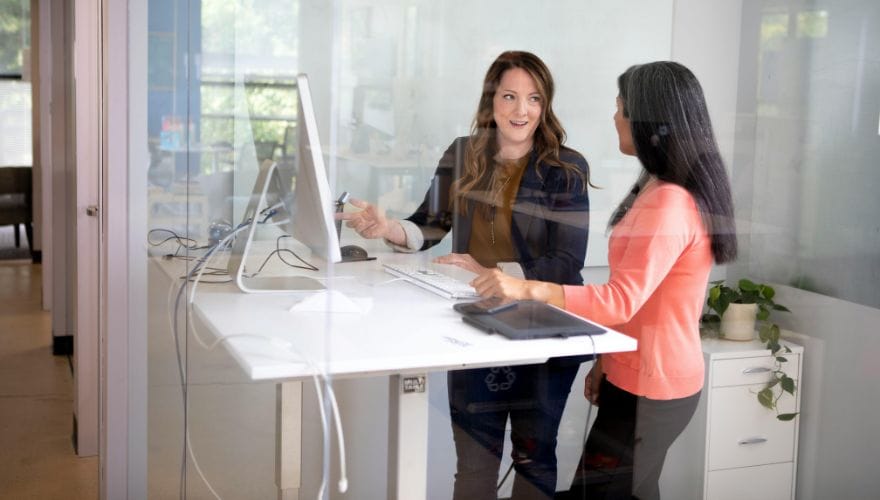
Notice what the best column in the table is? It’s not “sitting” or “standing.” It’s “Smart Standing,“ which really means using standing to break up sitting. The most powerful research finding is simple: frequently interrupting sitting with short bouts of light activity (even just walking for 3 minutes every 30 minutes) is far more beneficial for your blood sugar and energy levels than simply switching from a chair to a standing desk.
The bottom line? Neither sitting nor standing wins. The real winner is movement and change. Next, we’ll look at exactly how to build that into your day.
The Winning Strategy: Movement and Posture Change
So, if the goal isn’t to stand all day, what is it? The best strategy for your health and focus is simple: break up long periods of sitting with frequent, light movement.
Forget the idea of choosing “sitting“ or “standing“ as your all-day mode. Think of your workday in terms of postures: seated, standing, and, most importantly, moving.
Why Movement Trumps Just Standing
Research shows that the most significant benefits come from interrupting your sitting time with activity. A key study found that taking a 3-minute walk every 30 minutes was enough to significantly improve blood sugar levels after a meal, compared to both continuous sitting and just standing.
This is powerful because it targets the core problem, “uninterrupted stillness,“ more effectively than simply swapping one static pose for another. Other research also suggests that this kind of light, regular movement doesn’t interfere with complex mental tasks.
Your Practical Game Plan
You don’t need a perfect formula, but a simple guideline can help you start. A great target is to avoid staying in any single position (seated or standing) for more than 30 to 60 minutes at a time.
Here’s an easy pattern to try:
- Work seated for 30-45 minutes.
- Stand up and work for 15-20 minutes.
- Take a 2-5 minute “movement break”: walk to get water, do some gentle stretches, or walk around.
- Repeat the cycle.
This isn’t a rigid rule. The most important thing is to listen to your body and change your position before you feel stiff or achy. A sit-stand desk is a fantastic tool for this, but you can achieve the same goal without one.
The secret is out: the healthiest work habit isn’t sitting or standing. It’s changing your position and moving regularly.
How to Apply This at Your Desk: Practical Tips
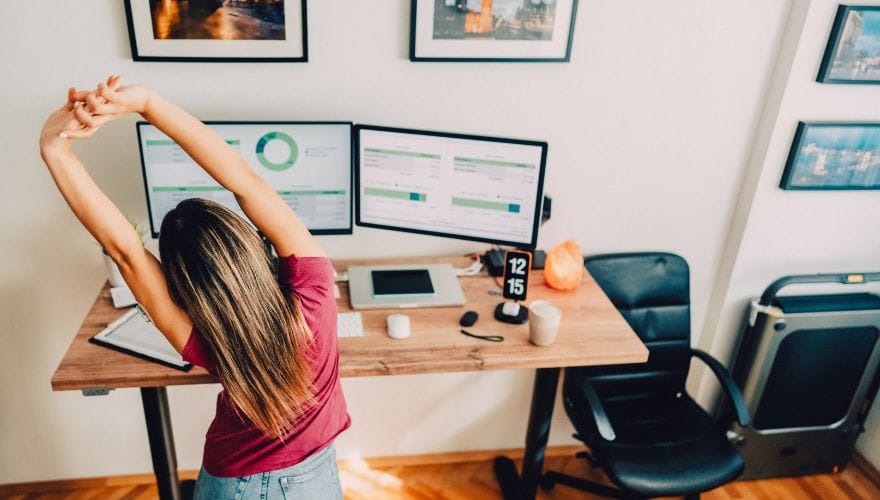
Knowing you should move more is one thing. Actually doing it during a busy workday is another. Here are simple, actionable ways to build movement into your routine.
1. Set Simple Reminders
Your brain is focused on work, not on your posture. Use technology to help.
- Set a silent timer or calendar alert to go off every 30 or 45 minutes.
- Use a fitness tracker or smartwatch that vibrates to remind you to stand.
- Try a free browser extension or phone app designed to prompt movement breaks.
When the reminder goes off, it’s your signal to change your state—even for just one minute.
2. Use “Micro-Activities“ at Your Desk
You don’t need to leave your desk for every break. Try these quick moves:
- Stand up and do 10 calf raises.
- Gently stretch your arms overhead and twist your torso side to side.
- March in place for 60 seconds.
- Do a few seated or standing shoulder rolls and neck stretches.
3. Set Up Your Workspace for Change
Whether sitting or standing, your setup matters for comfort and safety.
- For sitting: Your feet should be flat on the floor, knees at about 90 degrees. Your screen should be at arm’s length, with the top at or just below eye level.
- For standing: Wear supportive shoes. Consider an anti-fatigue mat to reduce pressure on your legs and feet. Your elbows should still be at a 90-degree angle when typing.
4. Get Creative Without a Standing Desk
No special equipment? No problem.
- Use a high counter, sturdy shelf, or tall dresser as a temporary standing station.
- Place your laptop on a stack of large books or a box to create height.
- The simplest method: just stand up during phone calls or while reading long documents.
5. Consider Tools, But Remember Their Purpose
A sit-stand desk is a great tool because it makes switching postures effortless. Just remember: it’s a tool for change, not for standing all day. Other items, like a footrest (when sitting) or a balance board (when standing), can also encourage healthy micro-movements.
3 Best Standing Desks for a Healthier Workspace in 2026
The Meet&Co team has picked three standing desks for different settings.
Key Specifications at a Glance:
| Feature | Meet&Co Sendi Standing Desk | UPLIFT L-Shaped | Liftdesk Height Adjustable 2-Person Workstation |
|---|---|---|---|
| Best For | Individual focus work, home offices | Maximizing corner space, multi-tasking | Flexible solo & collaborative work |
| Price Anchor | Mid-Range | Premium | Mid-Range~Premium |
| Typical Size | 1200 x 600mm | Configurations like 60×60″ | 1200 x 1250mm, 1400 x 1250mm, 1400 x 1450mm, 1600 x 1450mm, 1800 x 1450mm |
| Height Range | 630-1280cmm | 24.5″ to 50.1″ | 630-1280mm |
| Motor System | Dual-Motor | Triple-Motor | Dual-Motor (per unit) |
| Key Strength | Stability & smooth performance | Huge surface & customization | Modular design for teamwork |
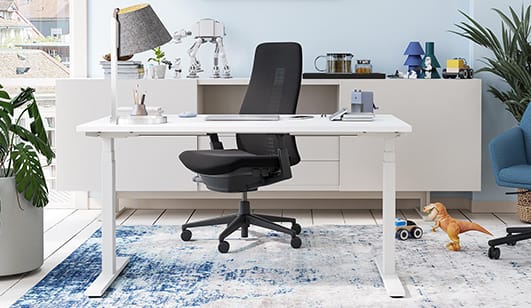
1. Meet&Co Sendi Standing Desk
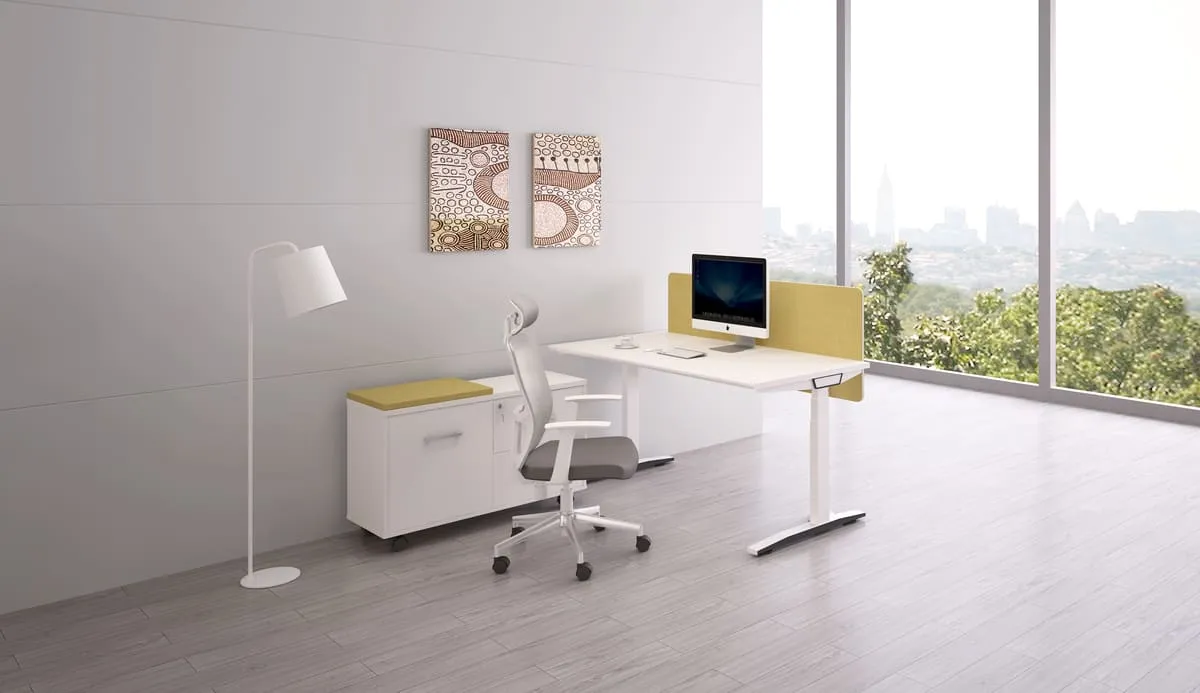
For a reliable, high-performance desk that does the basics exceptionally well, the Sendi standing desk is a top pick. Its dual-motor system is powerful and quiet, offering smooth lifts with a high weight capacity. We loved its excellent stability, thanks to a solid steel frame. The keypad is straightforward with four memory presets.
Our editor, Linda, said: “The Sendi is the workhorse. It doesn’t have flashy extras, but the dual motors are incredibly smooth and quiet. I especially love the four presets. My husband and I can save our preferred desk heights and adjust with a click of a button. It’s a no-nonsense, premium desk for getting work done.”
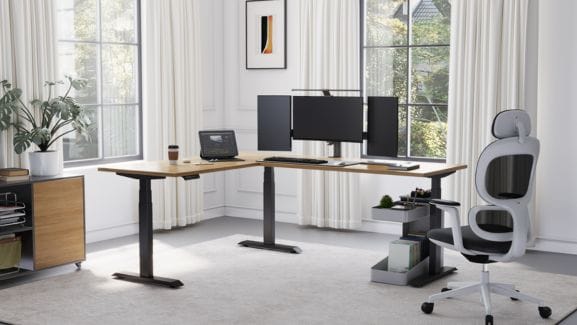
2. UPLIFT L-Shaped Standing Desk
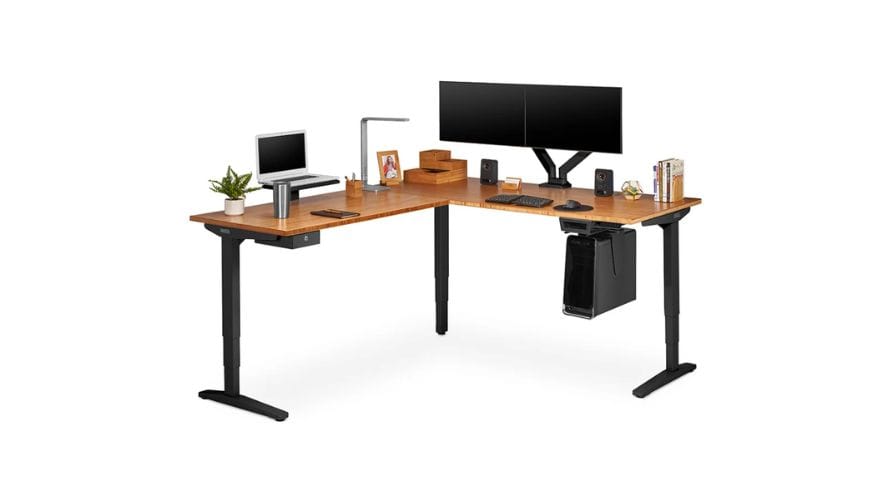
Image source: https://www.upliftdesk.com/uplift-v2-l-shaped-standing-desk/?4116=4764&4114=4753&18781=17832&4115=3821&4588=5175&4060=11390&14932=11667
If you need maximum surface area and love the command-center feel of a corner, the UPLIFT l-shaped desk is a leader. It provides a huge, continuous workspace for multiple monitors and projects. It uses a synchronized triple-motor system to lift both sides evenly and steadily. A major plus is UPLIFT’s vast customization for tops, frames, and accessories.
Our editor’s take: “This desk transforms a corner into a truly productive cockpit. The space is incredible for spreading out. While assembly takes two people, the result is worth it. It feels incredibly sturdy and professional, making long work sessions much more comfortable.”
3. Liftdesk Height Adjustable 2-Person Workstation
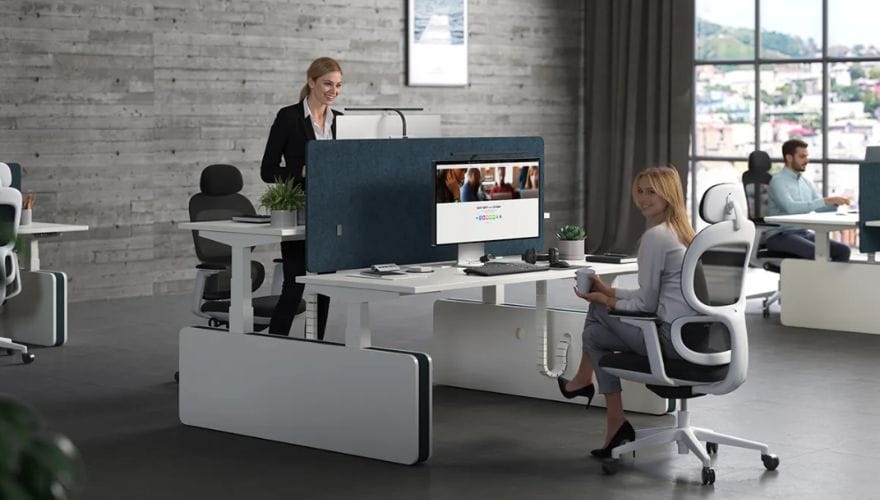
Image souce: https://www.liftdesk.com/product/sendi-e-height-adjustable-2-person-workstation/
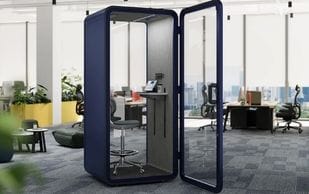
For a space that needs to easily switch between solo work and collaboration, the Liftdesk Height Adjustable 2-Person Office Workstation is a smart, modular solution. At its core, it’s a large, electric desk. The key feature is that two units can be securely joined together to form an instant, spacious face-to-face workstation, perfect for teaming up.
Our editor, Sarah, said, “This is the most flexible setup we’ve used. It creates a fantastic collaborative hub that still gives everyone personal space. The quality and clean look make it fit right in a modern office.”
Frequently Asked Questions (FAQs)
Q1: So, what’s the final answer? Is standing better than sitting?
For your health, neither constant sitting nor constant standing is ideal. The scientific consensus is clear: the greatest benefit comes from regularly changing your posture and breaking up long periods of sitting with movement. Think of standing as a healthy way to interrupt sitting, not replace it entirely.
Q2: What is a good sit-to-stand ratio to aim for?
There’s no perfect one-size-fits-all ratio. A common and effective starting point is a 1:1 or 2:1 ratio (e.g., 30 minutes sitting, then 30 minutes standing, or 45 minutes sitting, 15 minutes standing). The most important rule is to change your position every 30-60 minutes. Listen to your body—if you feel tired or achy, switch it up.
Q3: I don’t have a standing desk. How can I break up my sitting time?
You can be very effective without special equipment. The key is to create habits that make you get up:
- Set a timer to stand and stretch for 2-3 minutes every half hour.
- Take a short walk to get a drink of water.
- Stand or pace during phone calls.
- Use a high counter, bookshelf, or stable box as a temporary standing desk for your laptop.
Q4: Can standing help with back pain?
It can help, but it’s not a guaranteed fix. For some people, standing relieves pressure on the lower back that builds up from slouching in a chair. However, if you stand with poor posture or for too long, it might make other pains worse. The best approach for back pain is often a variety of moving and changing positions frequently to avoid strain on any one area.
Q5: Are there any risks to using a standing desk?
The main risk is standing statically for too long, which can lead to leg fatigue or swollen ankles. To avoid this, you can wear supportive shoes, consider an anti-fatigue mat. And most importantly, keep moving. And don’t forget to sit down for periods of time. A standing desk is a tool for change, not for standing still.
Wrapping Up: Is Standing Better than Sitting?
The debate isn’t really about sitting versus standing. Our bodies aren’t designed for long, static holds in any position.
The true answer to a healthier workday is simpler: movement and change.
You don’t need to stand all day to see benefits. The most powerful change you can make is to break up long periods of sitting with frequent, short breaks.
Whether you use a standing desk, a timer, or just the habit of standing during calls, the goal is the same: to move more and sit less, dynamically.