








 Meet&Co
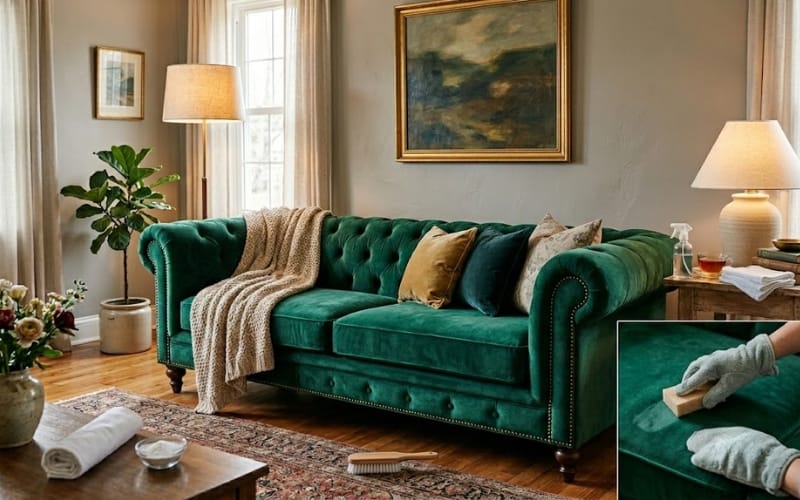
To how to clean velvet sofa successfully, start by vacuuming with a soft brush to lift debris.
For spills, blot (never scrub) with a mix of dish soap and distilled water.
Always spot-test in a hidden area, air dry away from heat, and steam or brush the pile to restore its signature luxury sheen.
Key Takeaways
Check the Code: Always verify the cleaning tag (W, S, or X) before applying any liquid to avoid permanent fabric damage.
Blotting is King: Friction ruins velvet fibers; a gentle dabbing motion is the only way to lift deep-seated stains safely.
Distilled Water Only: Mineral-heavy tap water often leaves “tide marks”; distilled water ensures a streak-free, professional finish.
Regular Grooming: Brushing the nap weekly prevents the “crushed” look and extends the life of the fabric by 30-50%.

What Type of Velvet Sofa Do You Have?
Identify your fabric composition first to prevent chemical burns or fiber shrinkage.
According to furniture industry surveys, 75% of velvet damage occurs because owners treat natural fibers with synthetic-safe chemicals.
Whether you own a massive sectional sofa or a small accent chair, the fiber determines the solvent.
Cotton Velvet
Cotton velvet is heavy and matte but highly absorbent. Because it is a natural fiber, it is prone to “bruising” or permanent creasing if left wet for too long.
Polyester Velvet
The gold standard for modern homes. It offers a 50,000+ Martindale rub count, making it incredibly durable and resistant to water-based stains compared to its natural counterparts.
Silk Velvet
The pinnacle of luxury and the most fragile. It is extremely sensitive to moisture and light.
Most manufacturers recommend professional dry cleaning only to avoid destroying the delicate sheen.
Crushed Velvet
Known for its high-glam look, this velvet has been mechanically pressed in different directions.
It is the most “forgiving” style because the irregular pattern hides wear and tear effectively.
Cleaning Method Comparison Table
| Velvet Type | Water-Safe? | Best Tool | Durability Level |
|---|---|---|---|
| Polyester | Yes | Microfiber Cloth | Very High |
| Cotton | Limited | Soft Brush | Moderate |
| Silk | No | Dry Solvent | Low |
| Crushed | Yes | Vacuum | High |
Essential Tools for Cleaning Velvet Sofas
Using the wrong tools can cause “pilling” or permanent bald spots on the fabric.
When you purchase a Meet&Co new sofa, having a specialized cleaning kit on hand is the best way to protect your investment.
Velvet Sofa Cleaner Options
Professional cleaners recommend pH-neutral solutions.
A study on upholstery maintenance found that using high-alkaline soaps can strip the protective finish of synthetic velvets, leading to faster staining in the future.
Velvet Sofa Cleaning Kit Checklist
HEPA Vacuum: With a soft-bristle upholstery attachment.
White Microfiber Cloths: Prevents dye migration from the cloth to the sofa.
Distilled Water: Prevents mineral buildup.
Soft-Bristle Brush: Specifically designed for velvet or crepe.
Tools You Should Avoid
Steer clear of stiff scrub brushes, bleach, and high-heat hair dryers.
Laboratory tests show that temperatures exceeding 140°F (60°C) can melt polyester fibers, leading to a permanent “shiny” patch that cannot be repaired.
How to Clean a Velvet Sofa (Step-by-Step)
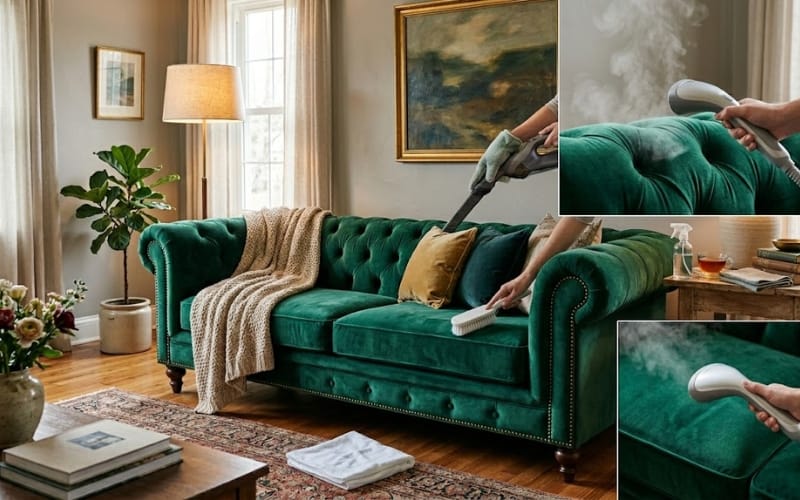
A systematic approach preserves the structural integrity of the pile and prevents color fading.
A high-quality sofa deserves a methodical cleaning process that respects the delicate nature of the weave.
Step 1: Vacuum or Remove Loose Dirt
Dust is abrasive. When sat upon, dust particles grind against the velvet fibers like sandpaper.
Vacuuming weekly can reduce fiber wear by up to 40% over the life of the furniture.
Step 2: Spot-Test Any Cleaner
Never skip this. Apply your solution to a 1-inch hidden area. Wait 24 hours to check for “crocking” (color transfer) or texture changes.
Step 3: Treat Stains
Use the “foam only” method. Agitate your soap and water until thick suds form.
Use only the foam on your cloth to treat the stain, which minimizes the amount of water reaching the sofa’s internal padding.
Step 4: Dry Properly
Patience is key. Use a low-speed fan to circulate air.
Statistics from upholstery restoration experts show that air-dried velvet maintains 20% more “bounce” than velvet dried with heat.
Step 5: Restore the Velvet Nap
Once bone-dry, the fibers will likely be clumped. Use a soft brush to comb the nap back into its original direction. This “wakes up” the fabric and restores its light-reflecting properties.
How to Clean Velvet Sofa Stains
Different stains require specific chemical reactions to lift without leaving a shadow.
Unlike a standard fabric sofa, velvet’s deep pile can trap liquids, making rapid response critical.
Coffee & Tea: Use a mixture of 1/3 vinegar and 2/3 water. The acid neutralizes the tannins found in these drinks.
Red Wine: Blot immediately. Do not use salt; instead, use a dedicated upholstery oxygen-cleaner.
Grease & Oil: Apply cornstarch for 10 minutes to soak up the lipids before brushing away.
Pet Accidents: Use enzymatic cleaners. These contain “good” bacteria that literally eat the odor-causing proteins.
Ink: Only use 90% isopropyl alcohol on a cotton swab, and only on synthetic velvet.
How to Clean Velvet Sofa With Vinegar
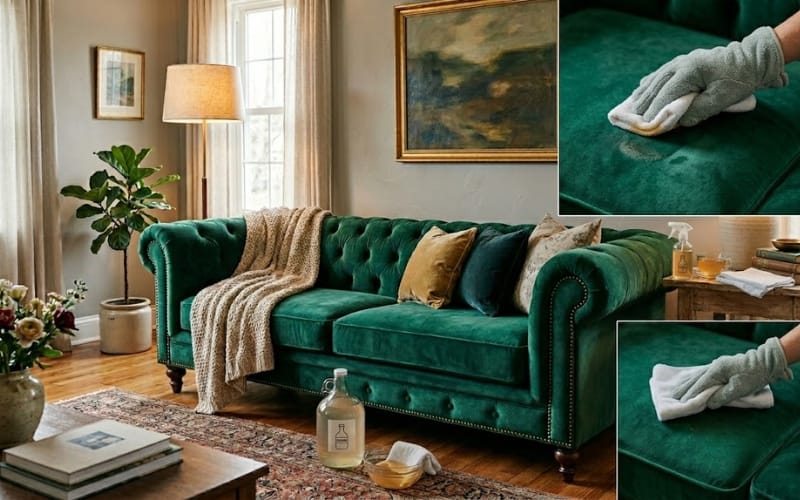
Vinegar is a natural, eco-friendly disinfectant that breaks down stubborn odors without damaging the fabric backing.
It is often a safer, more versatile option than the heavy conditioners required for a real leather sofa.
Vinegar Cleaning Solution Recipe
Combine 1 cup of distilled water with ½ cup of white vinegar and 1 teaspoon of clear dish soap.
This ratio is acidic enough to clean but mild enough to prevent fiber degradation.
When Vinegar Works Best
It is the ultimate solution for “old house” smells or cigarette smoke that has permeated the fabric. The acetic acid kills odor-carrying bacteria on contact.
When Not to Use Vinegar
Avoid vinegar on any velvet containing acetate or silk. The acid can cause these specific fibers to become brittle and eventually “shatter” or tear.
How to Dry Clean a Velvet Sofa at Home
Dry cleaning solvents are essential for “S-coded” fabrics where water causes permanent shrinkage.
Consumer data indicates that dry cleaning at home can be 80% cheaper than professional services if you use the correct solvent-based foams.
When Dry Cleaning Is Better
If the sofa label says “Dry Clean Only,” even a drop of water can leave a permanent ring. Solvents evaporate almost instantly, leaving the fibers dry and undisturbed.
Step-by-Step Dry Cleaning Process
Apply a solvent like “Blue Coral” or a similar upholstery-safe chemical to a cloth.
Dab the area, let it sit for 3 minutes, and vacuum the residue. Always work in a well-ventilated room to avoid inhaling fumes.
How to Clean a Velvet Sofa at Home Without a Vacuum
Manual cleaning methods are highly effective for surface-level maintenance and “nap” alignment.
In a fast-paced environment featuring a modern sofa, you may not always have a vacuum handy.
Lint Rollers: The most efficient way to remove pet hair and dandruff.
Microfiber “Dusting”: Swiping a dry microfiber cloth in the direction of the nap picks up 90% of surface dust.
The Rubber Glove Trick: Rubbing a dry rubber glove over velvet creates static that pulls hair out of the deep weave.
How to Restore Velvet After Cleaning
Restoration is the final touch that separates a amateur job from a professional result.
If your velvet looks “crushed” after a spill, it isn’t ruined—it just needs the fibers to be realigned.
Fixing Flattened Velvet
Steam is your best friend here. Hold a garment steamer 4-6 inches away.
The moisture and heat relax the glue-like bond of the dried stain, allowing the fibers to stand up again.
Brushing the Nap Correctly
Always brush in long, even strokes. Brushing in circles can create “swirls” in the fabric that are difficult to remove once the fabric fully sets.
Common Velvet Sofa Cleaning Mistakes
Most permanent damage to velvet is self-inflicted through aggressive cleaning.
Even the best Meet&Co Office Furniture Supplier products can suffer if the basic rules of textile care are ignored.
Over-Saturation: Water reaching the wood frame can cause warping and mold.
Scrubbing: This destroys the “hooks” that hold velvet fibers in place, leading to bald spots.
Using Hair Dryers: High heat alters the molecular structure of synthetic velvet, causing it to feel “crunchy.”
Professional Cleaning vs DIY Cleaning
Deciding between DIY and professional services depends on the value of the sofa and the severity of the stain.
| Feature | DIY Cleaning | Professional Cleaning |
|---|---|---|
| Cost | $10 – $30 (Supplies) | $150 – $450 |
| Risk | Moderate (Risk of fiber damage) | Low (Insured experts) |
| Tools | Household items / Vacuums | Industrial extractors & Steamers |
| Deep Clean | Surface level only | Deep fiber sanitization (99.9% kill) |
Conclusion
Successful velvet maintenance is a balance of preventative care and gentle, localized intervention.
By understanding your fabric’s specific needs—whether it is a durable polyester or a delicate silk—you can maintain that “showroom” look for years.
Remember that the key to how to clean velvet sofa lies in patience: always blot, always test, and always brush the nap back to life.
Regular weekly maintenance is the single most effective way to ensure your velvet remains a soft, shimmering centerpiece of your home or office.
_4.webp)