





 Meet&Co
Open-plan offices were designed to foster collaboration. But anyone who has tried to focus while a colleague chats on the phone nearby knows the downside: noise. Conversations, keyboard clicks, and office equipment create a constant hum that can slash productivity and increase stress.
The solution? Office partition walls are designed specifically for noise reduction. The right partitions can transform a noisy open space into a productive environment with distinct quiet zones, private meeting areas, and focused workspaces.
This guide will walk you through the best partition wall options for sound control in 2026—from high-performance glass systems to budget-friendly cubicle walls—and help you choose the right solution for your office.
What Makes an Office Partition Wall Effective for Noise Reduction?

Not all partitions are created equal when it comes to blocking sound. The effectiveness of a partition is measured by its Sound Transmission Class (STC) rating—a standardized measure of how well a building partition attenuates airborne sound.
Understanding STC Ratings
| STC Rating | Performance | What It Means for Your Office |
|---|---|---|
| 25-30 | Poor | Normal speech can be easily heard and understood through the partition |
| 30-35 | Fair | Loud speech can be heard but not understood; some privacy achieved |
| 35-40 | Good | Loud speech is audible but unintelligible; suitable for open offices |
| 40-45 | Very Good | Loud speech sounds like a murmur; good for private offices |
| 45-50 | Excellent | Very loud sounds are barely heard; ideal for conference rooms |
| 50+ | Superior | Near-soundproof; suitable for recording studios or executive offices |
Key takeaway: For a typical office environment where conversations need to be private and distractions minimized, aim for partitions with an STC rating of 35–45. Conference rooms and teleconference rooms may require STC 48–53 for optimal speech privacy.
How Partitions Block Sound
Effective soundproofing relies on three principles :
Mass: Heavier, denser materials block more sound (e.g., drywall, brick, thick glass).
Decoupling: Separating layers of material prevents vibrations from traveling through.
Absorption: Materials like acoustic foam or fiberglass soak up sound waves rather than reflecting them.
The best office partitions combine all three approaches.
Glass vs. Drywall: Which Offers Better Soundproofing?
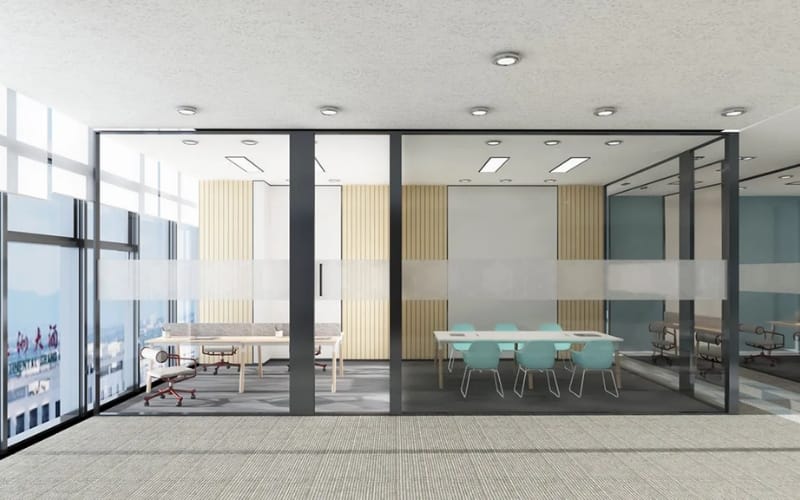
Meet&Co Glass Partition Walls
This is one of the most common debates when selecting office partitions. Each material has distinct strengths.
Drywall Partitions
Soundproofing capability: Excellent. Standard drywall with insulation achieves STC 40–45. With added mass-loaded vinyl or double layers, ratings can reach STC 50+.
Pros:
Superior sound blocking when properly constructed
Lower upfront cost than high-end glass systems
Can be painted or finished to match office decor
Easy to hang artwork, whiteboards, or storage
Cons:
Blocks natural light, making spaces feel closed-in
Permanent or difficult to reconfigure
Requires professional demolition for layout changes
Best for: Private offices, quiet zones, HR rooms, and any space where confidentiality is paramount.
Also see: Partitions for Coworking Spaces: How to Balance Privacy and Community
Glass Partitions
Soundproofing capability: Varies significantly by construction. Standard single-pane glass offers minimal sound reduction (STC 25–30). Double-glazed or acoustic glass systems achieve STC 36–50.
Pros:
Maintains natural light and visual openness
Creates a modern, transparent aesthetic
Modular glass systems can be demounted and reconfigured
Can incorporate blinds for visual privacy when needed
Cons:
Higher cost for acoustic-rated systems
Requires professional installation and seals
Less soundproof than drywall at equivalent price points
Best for: Conference rooms, executive offices that need both privacy and light, and spaces where flexibility is key.
The Verdict
| Your Priority | Recommended Material |
|---|---|
| Maximum soundproofing | Drywall with insulation |
| Natural light + moderate soundproofing | Acoustic double-glazed glass |
| Flexibility + reconfiguration | Demountable glass partition systems |
| Budget-friendly | Standard drywall or cubicle partitions |
What Are the Different Types of Soundproof Office Partitions?
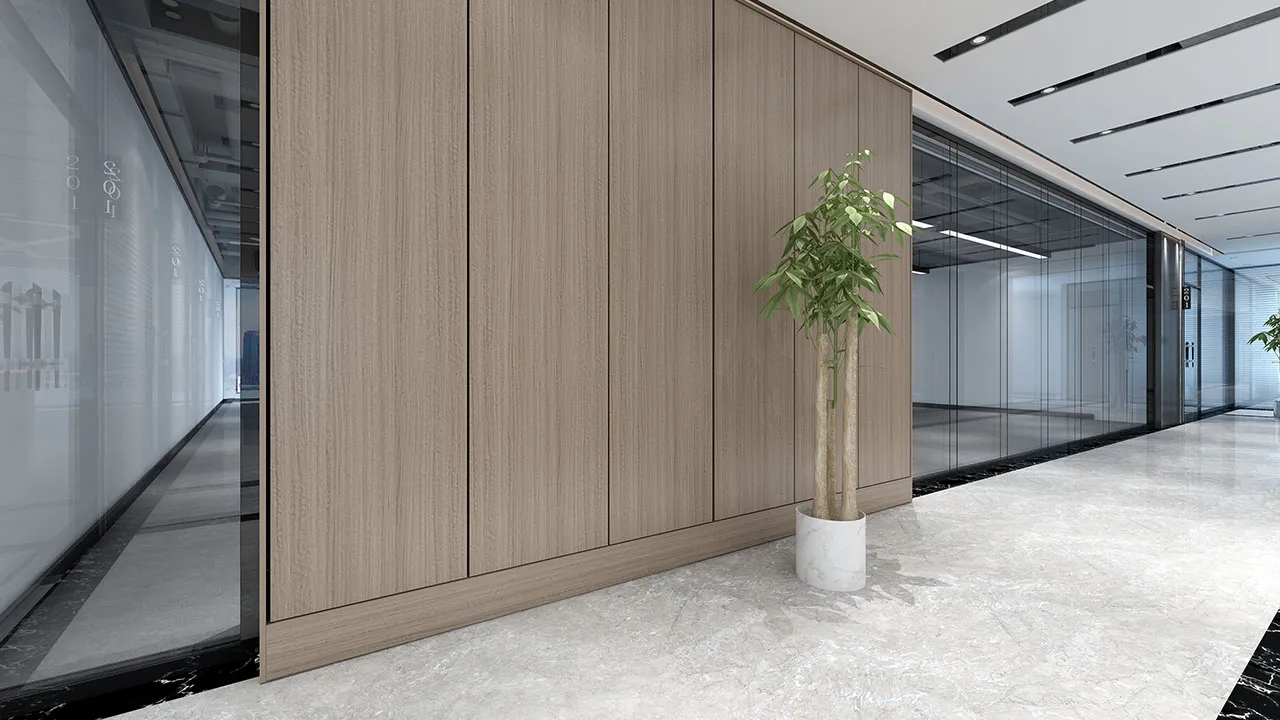
Beyond the glass vs. drywall debate, several specialized partition types offer unique advantages for noise reduction.
1. Acoustic Frameless Glass Partitions
How they work: These systems use double or triple layers of laminated glass with acoustic seals between panels and at the floor and ceiling tracks. The frameless design eliminates sound-leaking gaps found in traditional framed systems .
Performance: STC 32–36 for standard units; premium systems like NanaWall’s PrivaSEE achieve Unit STC 36 with specialized acoustic seals. High-end models like the HK85 system claim up to STC 50 using triple-layer glass with air gaps .
Best for: Executive offices, conference rooms, and spaces where both transparency and sound control are essential.
Notable example: The PrivaSEE system from NanaWall is a top-hung, frameless glass partition that requires no floor track, providing ADA-compliant seamless transitions while maintaining acoustic integrity .
2. Modular Glass Partition Systems (HK85 & Block)
How they work: These are prefabricated, demountable glass wall systems designed for easy installation and reconfiguration. The HK85 model uses triple-layer laminated glass with a 12 mm air gap, while the Block model uses double-glazed units with acoustic foam inserts.
Performance:
HK85: STC 50 (blocks conversations and office equipment noise effectively)
Block: STC 48 (excels at dampening low-frequency sounds like HVAC hum)
Best for: Tech offices, co-working spaces, and companies expecting to grow or reconfigure their layout frequently.
Real-world result: A tech startup in Singapore reported a 70% reduction in audible keyboard noise after installing HK85 partitions.
3. Cubicle and Fabric-Walled Partitions

How they work: These lightweight partitions use sound-absorbing materials like polyester fiberboard or fabric-wrapped acoustic panels. Rather than blocking sound entirely, they absorb mid-range frequencies (like conversation and keyboard noise) to reduce ambient noise levels.
Performance: STC 30–35. Not suitable for confidential conversations but effective for reducing general office chatter.
Pros:
Most budget-friendly option ($80–250 per linear meter)
Easy to install and reconfigure
Available in various colors and fabric finishes
Cons:
Lower sound reduction than glass or drywall
Fabric can absorb odors and may require cleaning
Foam cores degrade faster in humid environments
Best for: Open-plan desk areas, call centers, and spaces where reducing ambient noise—not creating private rooms—is the goal.
4. Acoustic Panels and Desk-Mounted Screens
How they work: These are freestanding or clamp-on panels made from recycled PET felt or foam. They reduce noise by absorbing sound waves that would otherwise bounce off hard surfaces .
Performance: Can reduce ambient noise by up to 85% in the immediate vicinity. They do not block sound from traveling over the top but effectively reduce reflections and reverberation.
Pros:
Highly portable and adjustable
Made from sustainable materials (100% recycled PET)
Easy to install with C-clamps or freestanding bases
Cons:
Only effective for desk-level noise reduction
Does not create private or enclosed spaces
Best for: Hot-desking areas, individual workstations, and spaces where full-height partitions are impractical.
Product example: The ofinto Acoustic partition reduces ambient noise by up to 85% and is made from 100% recycled PET with OEKO-TEX certification .
5. Operable and Movable Acoustic Walls
How they work: These are full-height partition systems on tracks that can be opened or closed to divide large spaces. They use double-glazed glass or solid panels with acoustic seals to achieve high sound reduction while remaining movable.
Performance: STC 40–50 depending on configuration.
Pros:
Maximum flexibility—open space for events, close for private meetings
Can be stacked or stored when not in use
Available in glass (maintains light) or solid (maximum privacy)
Cons:
Highest upfront cost
Requires ceiling structure to support track system
Professional installation required
Best for: Multi-purpose rooms, training centers, and offices that need to alternate between open collaboration and private meetings.
Real-world example: The Rural Fire Service Glendenning installed a Konnect double-glazed operable glass wall to provide speech privacy between two working divisions while maintaining visual connectivity.
6. Lightweight Brick and Composite Partitions
How they work: These permanent partitions use dense materials (brick, concrete block, or composite aluminum) to block sound through mass. Composite aluminum partitions use honeycomb cores and rubber gaskets to dampen vibrations.
Performance:
Lightweight brick: STC 40–45
Composite aluminum: STC 35–40
Pros:
Very durable (30+ year lifespan for brick)
Excellent sound blocking
Can be finished to match office design
Cons:
Permanent—cannot be reconfigured
Brick requires construction and creates mess
Blocks all light
Best for: Call centers, trading floors, and noise-sensitive areas that will never need reconfiguration.
How to Choose the Right Partition for Your Office?
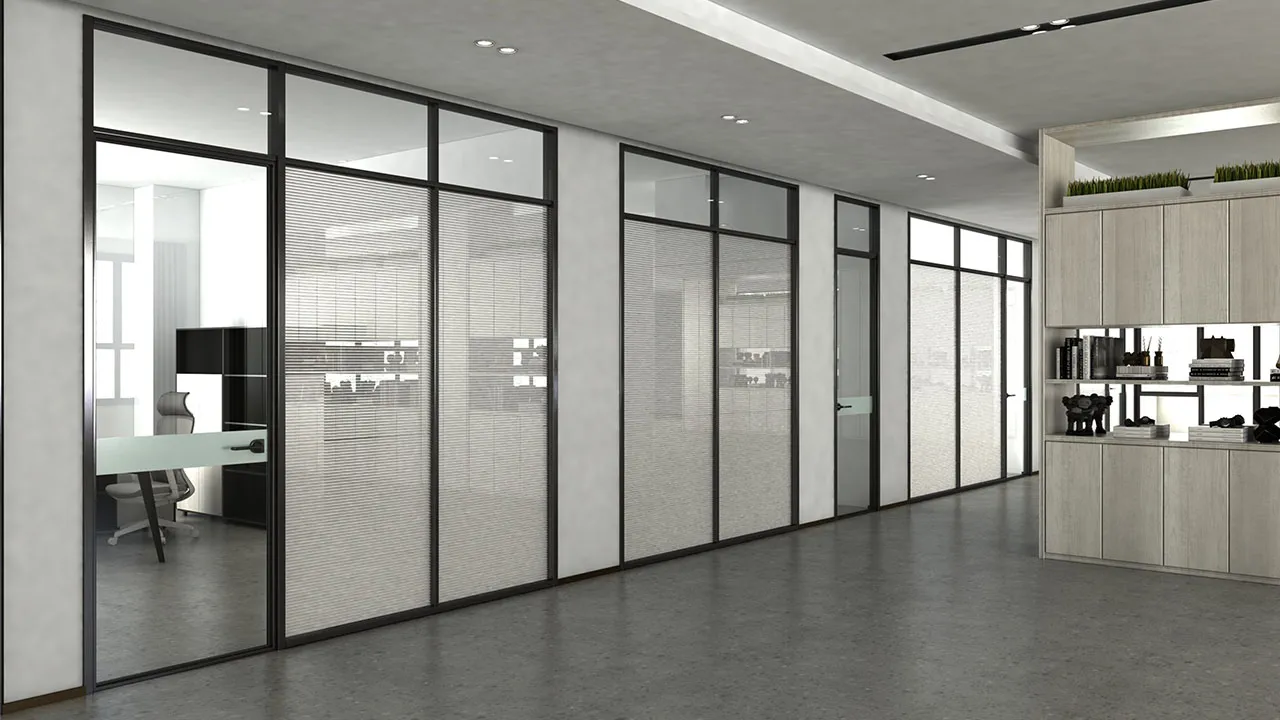
With so many options, use this decision framework.
Step 1: Define Your Noise Problem
Ambient office chatter and keyboard noise: Cubicle partitions or acoustic desk panels may suffice.
Private conversations and confidential meetings: Glass or drywall partitions with STC 40+ are necessary.
Loud equipment or HVAC noise: Look for partitions with low-frequency blocking (e.g., Block model with acoustic foam inserts) .
Step 2: Consider Your Layout Flexibility Needs
Permanent layout: Drywall or lightweight brick offers best soundproofing per dollar.
Frequent changes: Modular glass systems or cubicle partitions are demountable and reconfigurable.
Variable space needs: Operable walls provide maximum flexibility.
Step 3: Balance Light and Privacy
Need natural light: Acoustic glass partitions or glass office partitions with blinds.
Privacy is paramount: Drywall or solid partitions.
Compromise: Frosted or tinted glass provides visual privacy while transmitting light.
Step 4: Set Your Budget
| Partition Type | Typical Cost Range (USD per linear foot) |
|---|---|
| Cubicle/fabric partitions | $25–75 |
| Acoustic desk panels | $50–150 per panel |
| Standard drywall | $30–60 |
| Single-pane glass | $60–120 |
| Double-glazed acoustic glass | $100–200 |
| High-end glass (STC 50) | $150–300+ |
| Operable/movable walls | $200–500+ |
Step 5: Don’t Forget the Details
Even the best partition wall will underperform if details are overlooked :
Seal all gaps: Sound travels through the smallest openings. Use acoustic caulk at top and bottom tracks.
Install gasketed doors: Hollow-core doors or doors without sweeps negate wall performance.
Stagger seams: For drywall, stagger gypsum board seams to prevent sound leakage.
Frequently Asked Questions
1. What STC rating do I need for a private office?
According to the WELL Building Standard, enclosed offices should achieve a minimum NIC (Noise Isolation Class) of 35 when sound masking is present, or NIC 40 when no sound masking is used . This corresponds to an STC rating of approximately 35–40. For teleconference rooms and conference rooms, the requirement jumps to NIC 53 on walls adjoining other meeting spaces .
2. Can I combine different types of partitions for better noise reduction?
Yes. Many offices use a hybrid approach:
Drywall perimeter walls for maximum isolation from noisy adjacent spaces
Glass interior partitions to maintain light while providing moderate sound control
Acoustic panels or cubicle walls at desk level to reduce ambient noise within open areas
This layered approach often achieves the best balance of sound control, aesthetics, and budget.
3. How important are acoustic seals and gaskets?
Extremely important. Even a 1% gap in a partition can reduce its effective sound reduction by 10–15 dB. High-performance systems like PrivaSEE use patented seals at every junction—panel-to-panel, panel-to-floor, and panel-to-ceiling. For drywall, acoustic caulk at all penetrations and seams is essential .
4. Are there eco-friendly soundproof partition options?
Yes. Acoustic panels made from 100% recycled PET are widely available and effective. Brands like ofinto and Möbel-Eins offer products that reduce ambient noise by up to 85% while using sustainable, non-toxic materials. Some glass partition systems also use low-VOC seals and recyclable aluminum frames.
5. What’s the difference between sound blocking and sound absorption?
This is a critical distinction:
Sound blocking (STC rating): Prevents sound from traveling from one side of the partition to the other. Achieved through mass and decoupling. Necessary for private offices and conference rooms.
Sound absorption (NRC rating): Reduces echo and reverberation within a space. Achieved through porous materials like fabric or foam. Does not prevent sound from traveling to adjacent spaces, but makes a room quieter for its occupants.
For open offices, you need both: absorption to reduce ambient noise, and blocking to create private zones.
Conclusion
Choosing the best office partition walls for noise reduction requires balancing soundproofing performance, aesthetics, flexibility, and budget.
For maximum sound isolation with permanent layout: Drywall with insulation (STC 40–50)
For transparency and moderate sound control: Acoustic double-glazed glass (STC 36–48)
For flexibility and reconfiguration: Modular glass systems (HK85, Block) or demountable partitions
For budget-friendly ambient noise reduction: Cubicle partitions or acoustic desk panels
For variable space needs: Operable/movable acoustic walls
Remember that even the best partition will underperform if installation overlooks seals, gaskets, and proper detailing. Work with experienced installers and verify acoustic test reports before committing to a system.
Investing in soundproof office partitions is an investment in your team’s focus, productivity, and well-being. The right solution will pay for itself in reduced distractions and improved work quality.
Ready to quiet your office? Contact our team for expert guidance on selecting and installing the right soundproof partition walls for your workspace.