





 Meet&Co
The centerpiece of any high-level workspace is the desk.
It is not merely a surface for a laptop; it is a command center, a reflection of leadership, and a tool for productivity.
If you are looking to elevate your workspace, learning how to build an executive desk allows you to bypass the limitations of mass-produced furniture.
By crafting your own, you ensure that every inch of your executive office desks meets your specific workflow needs, from cable management to aesthetic grandeur.
Whether you are designing executive office desks for home use or a corporate suite, the goal remains the same: creating a piece that balances “power aesthetics” with modern functionality.
In this guide, we will walk through the professional process of constructing a desk for an office that rivals high-end designer brands like Meet&Co, focusing on durability, ergonomics, and the “executive” presence.
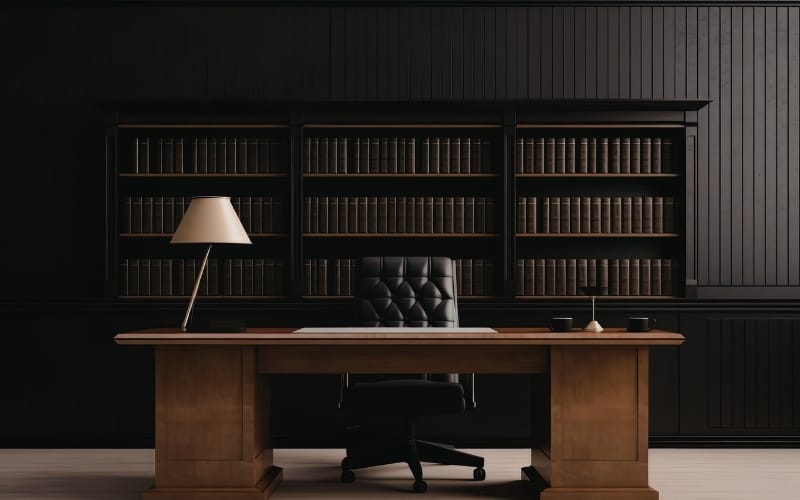
The Anatomy of Authority: What Makes a Desk “Executive”?
Before picking up a saw, one must understand the architectural language of executive office desks.
Unlike a simple writing table, an executive piece is defined by its “massing.”
The Double Pedestal: Traditional executive designs feature two columns of drawers. This provides a visual weight that anchors the room.
The Modesty Panel: This is non-negotiable for a desk for an office where the front faces visitors. It provides privacy and structural rigidity.
The Overhang: A professional desk usually has a 6-inch to 12-inch overhang on the visitor’s side, allowing someone to pull up a chair for a quick meeting.
Ergonomic Depth: While standard desks are 24 inches deep, ergonomic executive desks should be 30 to 36 inches deep to allow for large monitors while leaving space for physical documents.
Phase 1: Planning and Material Selection
To create unique executive desks, your choice of lumber is your most important decision.
Hardwood vs. Plywood
For the exterior surfaces, always choose solid hardwoods like Black Walnut, White Oak, or Cherry.
For the internal “carcass” (the parts you don’t see), use 3/4-inch furniture-grade plywood.
This prevents the desk from becoming prohibitively heavy while maintaining structural integrity.
Determining Dimensions
The standard height for executive office desks for home is 29.5 inches.
However, if you are taller or shorter than average, building custom allows you to adjust this.
A depth of 32 inches is often the “sweet spot” for modern workflows involving dual 27-inch monitors.
Phase 2: Building the Storage Pedestals
The pedestals are the foundation of your executive desk.
Box Construction: Build two identical rectangular boxes using plywood. Use pocket hole joinery or dado blades for maximum strength.
Drawer Slides: Choose heavy-duty, soft-close undermount slides. High-end executive office desks never have “clunky” drawer movements.
The Base: Create a “toe kick” recessed by 2 inches from the front and sides. This makes the desk look lighter and prevents your shoes from scuffing the wood.
Phase 3: Crafting the “Command Center” Desktop
The desktop is where you will spend 8-10 hours a day. It must be glass-smooth and rock-solid.
Panel Glue-up: If using solid wood, alternate the grain direction of each board to prevent warping (cupping) over time.
The “Faux-Thick” Edge: To give the desk a high-end, heavy look without the weight of a 2-inch thick slab, glue a 2-inch wide strip of wood around the underside perimeter. This creates the illusion of a massive, expensive slab of timber.
Cable Ports: Use a hole saw to create 2-inch openings at the rear corners. Don’t just leave them as raw wood; install brass or brushed aluminum grommets for a professional finish.
Phase 4: The Modesty Panel & Hidden Tech
This is where you can differentiate your work from basic DIY projects.
Integrated Power: Inside the modesty panel, build a small “wire gutter.” This allows you to hide power strips and transformers, ensuring that only one cord leaves the desk to reach the wall outlet.
Visual Flair: Consider a “floating” modesty panel that sits 2 inches off the floor and is held by metal standoffs for a more modern, unique executive desks aesthetic.
Phase 5: Professional Finishing Techniques
An executive office desks for home project lives or dies by its finish.
The Sanding Schedule: Start at 80 grit, move to 120, 150, and finish at 220. Wipe the wood with a tack cloth between every stage.
The Coating: For a professional office, a “Satin” finish is preferred over “High Gloss” to prevent glare from overhead lights. Hardwax oils like Rubio Monocoat provide a premium, natural feel that is easy to spot-repair.
Why Professional Alternatives Matter
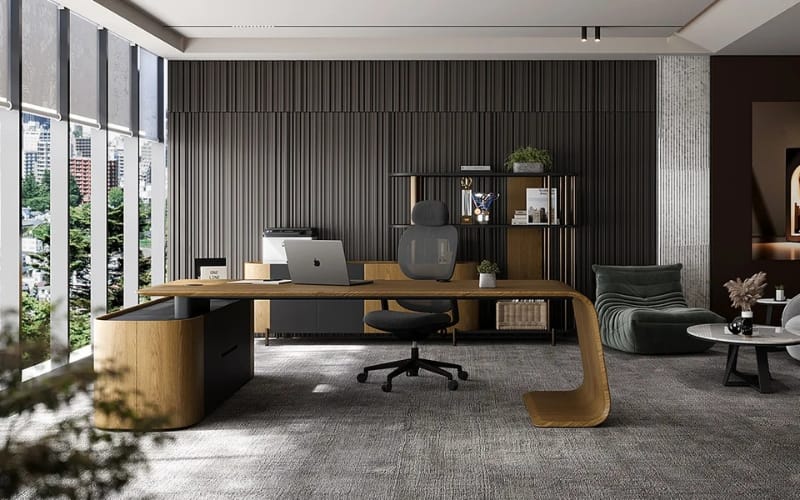
While DIYing a desk is a rewarding project, it requires weeks of labor, specialized space, and professional-grade machinery.
For those who need a high-performance workspace immediately without the sawdust, opting for a curated solution from Meet&Co can be a strategic move.
A professional manufacturer ensures that the executive desk has been tested for weight capacity, drawer cycle durability, and formaldehyde-free safety standards—details that are often hard to perfect in a home garage.
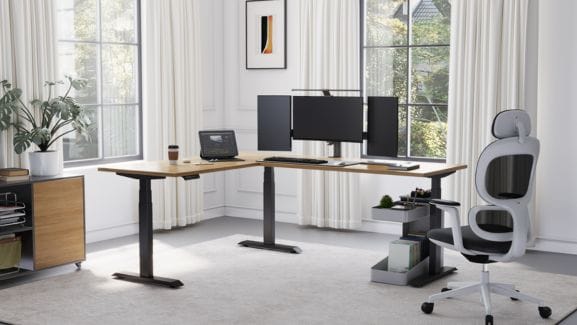
For those seeking that “Power User” look with modern engineering, products like the Lumodesk L-Shaped Executive Desk offer integrated height adjustability that is difficult for a DIYer to build from scratch.
Similarly, the Linora B L-Shaped Executive Desk provides a sophisticated mixed-material aesthetic (wood and metal) that commands attention in any corporate setting.
These ergonomic executive desks combine the craftsmanship of a custom build with the precision of industrial manufacturing.
Final Assembly: Bringing the Vision Together
When assembling your desk for an office, use “Z-clips” or figure-eight fasteners to attach the top to the pedestals.
Never glue the top down. Solid wood needs to “breathe” (expand and contract with humidity). If you glue it, the top will eventually crack.
Once assembled, ensure the desk is perfectly level.
An unlevel desk will cause pens to roll and drawers to drift open, undermining the professional feel of your executive office desks.
Conclusion: The Legacy of a Great Desk
Building a piece of furniture that defines your professional life is a monumental task.
By understanding how to build an executive desk, you gain a deeper appreciation for the furniture that supports your career.
Whether you choose the path of the craftsman or invest in a precision-engineered piece from Meet&Co Office Furniture, your desk remains the most important tool in your arsenal.
Prioritize quality, respect the materials, and ensure your workspace reflects the leader you are.