





 Meet&Co
Picture a classroom where students aren’t all sitting in neat rows facing the front. Instead, some cluster around low tables on floor cushions, collaborating on a group project. Others stand at tall desks, laptops open, working independently. A small group gathers at a whiteboard on wheels, sketching out ideas. The teacher moves freely among them, checking in, guiding, connecting.
This isn’t some futuristic dream—it’s happening in schools right now. And it’s transforming how students learn and engage.
The traditional classroom, with its rigid rows of identical desks bolted to the floor, was designed for an era when education meant passive listening. Students sat still, faced forward, and absorbed information delivered by the teacher at the front. But we now know that effective learning doesn’t work that way. Students need to move, collaborate, create, and sometimes work alone. They need spaces that adapt to different activities, not spaces that force every activity into the same rigid format.
Flexible school furniture makes this possible. And the research is clear: when students have choice and control over their learning environment, engagement soars.
What Is Flexible School Furniture?
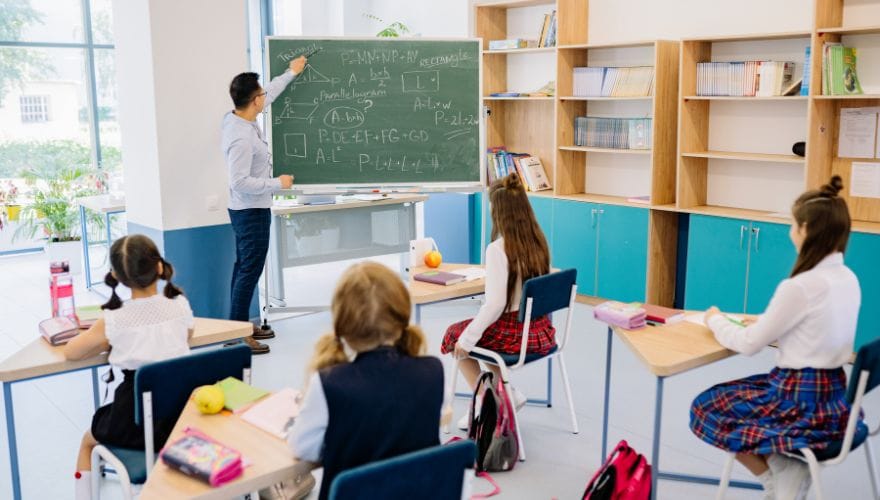
Flexible school furniture refers to pieces designed to be easily moved, reconfigured, and adapted for different learning activities. Unlike traditional fixed furniture, flexible pieces are lightweight, often on casters, and intentionally versatile.
Common types include:
- Mobile desks and tables with wheels
- Chairs that stack or nest for easy storage
- Soft seating like cushions, stools, and lounge chairs
- Standing-height desks and tables
- Whiteboards and screens on wheels
- Modular furniture that connects in different configurations
- Wobble stools and active seating that allow movement
The key isn’t any single piece—it’s the system. Flexible classrooms contain a variety of options that can be quickly rearranged to support different teaching styles and learning needs.
The Connection Between Furniture and Engagement
What Student Engagement Actually Means
Before exploring how furniture helps, let’s define engagement. Educational researchers typically break engagement into three types :
| Type | Description | Example |
| Behavioral engagement | Participating, following rules, staying on task | Students actively working, not distracted |
| Emotional engagement | Feeling connected, interested, valued | Students enjoying class, feeling they belong |
| Cognitive engagement | Investing mental effort, thinking deeply | Students grappling with ideas, persisting through challenges |
Flexible furniture supports all three—often simultaneously.
How Flexible Furniture Boosts Engagement
Let’s look at the specific mechanisms through better furniture design improves student engagement.
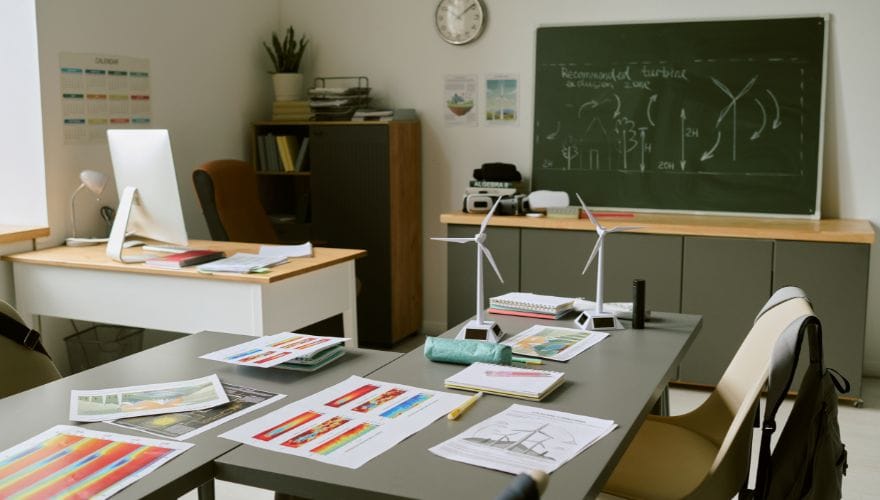
1. Student Choice and Autonomy
When students can choose where and how they sit, they feel a sense of ownership over their learning. This autonomy—the feeling of having some control—is a fundamental psychological need linked to intrinsic motivation.
A flexible classroom offers choices: stand or sit? Work alone at a desk or collaborate at a round table? Sit on a cushion or a wobble stool? These small decisions add up to students feeling respected and trusted.
Impact on engagement: Students who feel ownership of their space invest more effort, persist longer through challenges, and report enjoying class more.
2. Movement and Active Learning
Young bodies aren’t designed to sit still for hours. Research shows that movement actually enhances cognitive function—increasing blood flow to the brain, improving focus, and supporting memory formation.
Flexible furniture allows natural movement throughout the day. Wobble stools let students rock subtly while working. Standing desks provide posture changes. Mobile furniture lets students reposition themselves closer to instruction or collaboration as needed.
A study of standing desks in classrooms found that students using them showed 12% greater on-task engagement than those seated traditionally. Teachers reported that students were more focused, less restless, and better able to sustain attention.
Impact on engagement: Movement reduces fidgeting and restlessness, freeing cognitive resources for learning. Students stay on task longer and require fewer redirections.
3. Collaboration Made Easy
Traditional rows make collaboration difficult—students must turn awkwardly or move chairs, creating noise and disruption. Flexible furniture solves this by making reconfiguration instantaneous.
Tables on wheels can be pushed together for group work, then separated for individual tasks. Chairs can be repositioned quickly to face any direction. Mobile whiteboards allow groups to capture and share ideas anywhere in the room.
When collaboration is easy, it happens more often. And more collaboration means more opportunities for peer learning, discussion, and active engagement with content.
Impact on engagement: Students learn from each other, explain their thinking, and stay engaged through social interaction rather than passive listening.
4. Comfort and Belonging
Hard plastic chairs and cramped desks signal that school is about endurance, not learning. Comfortable, age-appropriate furniture sends a different message: this space is for you. You belong here.
Soft seating options—cushions, lounge chairs, floor seats—create cozy corners where students can read, reflect, or work quietly. These spaces feel less institutional and more human.
Research on classroom environment shows that students who feel physically comfortable report higher emotional engagement and stronger connection to school.
Impact on engagement: Comfort reduces distraction and signals that the school values students’ well-being. Students feel welcomed rather than tolerated.
5. Teacher Mobility and Connection
Flexible furniture doesn’t just help students—it helps teachers too. When desks aren’t fixed in rows, teachers can move freely throughout the classroom, reaching every student easily.
This mobility allows more frequent, natural interactions. Teachers can crouch beside a struggling student without disturbing others. They can check in with groups without standing at the front. They become facilitators rather than lecturers.
Research shows that teacher mobility correlates with increased student engagement—probably because students feel more connected and accountable when the teacher is physically present throughout the room.
Impact on engagement: Students receive more individualized attention and feel more connected to the teacher. Off-task behavior decreases when the teacher can circulate freely.
Flexible Furniture by Learning Activity
Different learning activities benefit from different configurations. Here’s how flexible furniture supports common classroom formats:
| Learning Activity | Ideal Configuration | Furniture Needed |
| Direct instruction | Students facing teacher, minimal distractions | Mobile desks arranged in rows or slightly curved |
| Group collaboration | Small clusters, shared workspace | Tables pushed together, mobile whiteboards |
| Independent work | Individual spaces, some separation | Desks spaced apart, soft seating options |
| Whole-class discussion | Circle or U-shape, everyone can see each other | Lightweight chairs easily moved |
| Stations/rotations | Multiple activity zones | Mobile furniture defining different areas |
| Presentations | Audience facing speakers, clear sight lines | Flexible seating quickly oriented |
| Brainstorming/planning | Open space with writable surfaces | Mobile whiteboards, tables for spreading materials |
The magic happens when a classroom can shift between these configurations in minutes—sometimes within a single class period.
Case Studies: Flexible Classrooms in Action
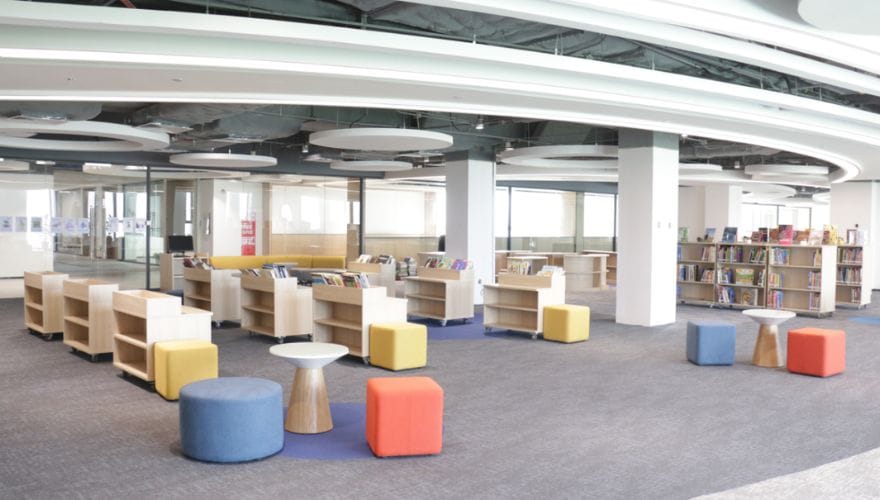
At an international school, teachers replaced traditional desks with a variety of seating options: wobble stools, floor cushions, standing desks, and traditional chairs at adjustable-height tables.
Students choose where to sit based on their learning needs. A student who needs to focus might choose a quiet corner with a lap desk. A fidgety student might select a wobble stool that allows subtle movement. Groups working together pull cushions into a circle.
Results: Teachers report fewer behavior issues, longer attention spans, and students who take more ownership of their learning. One teacher noted, “They’re not just sitting where I tell them—they’re thinking about where they learn best”.
Implementation Guide: Getting Started with Flexible Furniture
Start Small
You don’t need to replace everything at once. Many teachers start with one or two flexible elements—a few wobble stools, a mobile whiteboard, a small soft seating area—and expand based on what works.
Involve Students
Let students help design the space. Ask what they need, test configurations together, and adjust based on feedback. This involvement itself boosts engagement and ownership.
Establish Norms
Flexible classrooms need clear expectations. Teach students how to use furniture appropriately, how to reconfigure spaces, and how to choose seating that supports their learning.
Iterate Based on Observation
Watch how students use the space. What configurations support good work? Where do students struggle? Adjust accordingly. Flexible furniture allows continuous improvement.
Communicate with Families
Some parents may worry that flexible classrooms mean “less learning.” Share research and explain how flexibility supports engagement and achievement.
Common Concerns and Misconceptions
“Won’t students just fool around?”
Research suggests the opposite—students in flexible classrooms show improved behavior and on-task time. Clear expectations and gradual implementation help students learn to use the space responsibly.
“Isn’t this just a trend?”
Flexible classrooms are supported by decades of research on active learning, student motivation, and environmental psychology. They represent a fundamental shift in understanding how learning happens.
“Doesn’t this cost too much?”
Flexible furniture can be implemented gradually and affordably. Many teachers start with donated cushions, mobile whiteboards made from shower board, or grants for a few key pieces. The investment pays off in improved engagement and outcomes.
“What about students who need structure?”
Flexible classrooms still provide structure—just a different kind. Clear expectations, consistent routines, and teacher guidance help all students succeed, including those who thrive on predictability.
How to Know Flexible Furniture is Working
Look for these indicators of improved engagement:
Behavioral signs:
- Students stay on task longer
- Fewer redirections needed
- Smooth transitions between activities
- Students actively participating
Emotional signs:
- Students express enjoyment of class
- Students take pride in their workspace
- Students help each other
- Students feel comfortable approaching teacher
Cognitive signs:
- Students persist through challenging work
- Students explain their thinking
- Students ask deeper questions
- Students make connections between ideas
Academic signs:
- Improved work quality
- Better collaboration outcomes
- Increased completion rates
- Growth on assessments
Conclusion
The link between flexible furniture and student engagement isn’t theoretical—it’s practical, observable, and increasingly well-documented. When students can move, choose, collaborate, and feel comfortable, they engage more deeply with learning.
Flexible classrooms send a powerful message: this space is for you. Your needs matter. Your learning matters. And that message translates directly into students who show up, participate, and invest effort.
For schools considering this shift, the evidence is clear. Flexible furniture isn’t an expense—it’s an investment in student engagement. And in an era when keeping students connected to school matters more than ever, that investment pays dividends far beyond the classroom walls.
FAQ
Does flexible furniture work for all grade levels?
Yes, but implementation looks different. Elementary students need age-appropriate options and clear guidance. Secondary students benefit from more autonomy and choice. The principles apply across all ages.
How much does flexible classroom furniture cost?
Costs vary widely. Basic additions like wobble cushions or lap desks cost under $20 each. Mobile tables range from $300–$800. Comprehensive classroom redesigns run $3,000–$10,000 depending on scope.
Can I implement flexibility without buying new furniture?
Absolutely. Rearrange existing furniture creatively. Ask students to bring pillows from home. Build simple risers or platforms. Use cardboard boxes as temporary dividers. Creativity matters more than budget.
What about students with physical disabilities?
Flexible classrooms can actually support inclusion better than fixed arrangements. Ensure pathways remain accessible, provide appropriate seating options, and involve specialists in planning.
Do teachers need training for flexible classrooms?
Yes. Professional development helps teachers maximize the potential of flexible spaces—using different configurations for different activities, establishing routines, and managing active learning environments.
How quickly do students adapt to flexible seating?
Most students adapt within 1–2 weeks. Initial excitement settles into purposeful use as routines become established. Clear expectations and consistent practice speed adaptation.