





 Meet&Co
Ergonomic reception desk height guidelines are essential for designing modern workplaces that balance employee comfort, visitor experience, and brand presentation.
A poorly designed reception desk can lead to long-term musculoskeletal strain for staff, inefficient workflows, and even a negative first impression for visitors entering a business space.
In today’s office design landscape, reception areas are no longer just greeting points—they are functional hubs that combine communication, administration, and brand identity.
This makes understanding ergonomic reception desk height guidelines critical for architects, office planners, and facility managers who want to build efficient and human-centered environments.
A well-designed reception desk should support both seated and standing tasks, accommodate a wide range of user heights, comply with accessibility regulations such as ADA standards, and align with the visual identity of the organization.
Throughout this article, we will break down industry benchmarks, ergonomic principles, design mistakes, and practical solutions to help you choose the optimal reception desk height for any workspace.
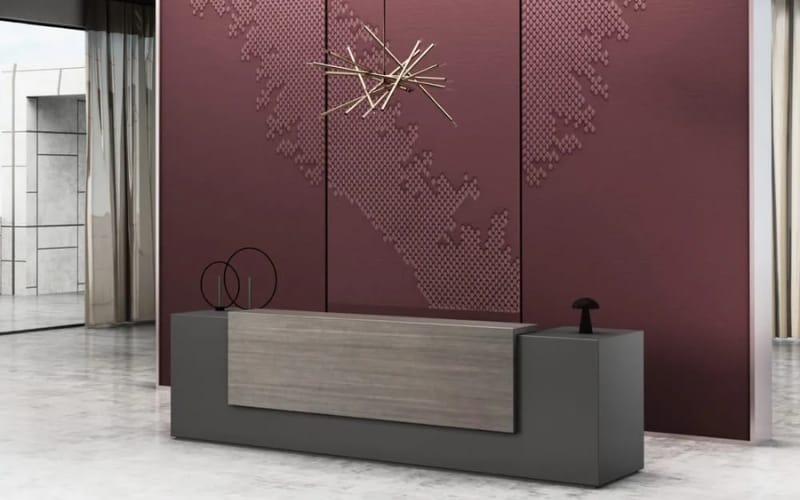
Why Reception Desk Height Matters in Ergonomic Design
Reception desk height is more than just a design preference—it directly impacts posture, workflow efficiency, and user experience.
Employee Health and Comfort
Reception staff often spend long hours interacting with visitors, typing, scanning documents, or answering phones.
If the desk height is not aligned with ergonomic standards, employees may experience:
- Shoulder tension from elevated arm positions
- Wrist strain from improper keyboard height
- Lower back discomfort from prolonged standing or poor seating posture
Over time, these issues can lead to chronic musculoskeletal disorders.
Visitor Experience and Brand Perception
The reception desk is often the first physical interaction a visitor has with a company.
A desk that is too high may feel intimidating or unwelcoming, while one that is too low may appear unprofessional.
Proper height ensures smooth communication and a balanced visual interaction.
Operational Efficiency
Ergonomically designed reception areas improve workflow efficiency by reducing unnecessary movement, improving communication flow, and allowing staff to multitask comfortably.
Standard Ergonomic Reception Desk Height (Industry Benchmarks)
Understanding standard measurements is the foundation of ergonomic reception desk height guidelines.
Seated Reception Desk Height
The standard seated desk height ranges between:
- 28–30 inches (71–76 cm)
This height is ideal for tasks such as data entry, document processing, and long-duration computer work. It supports a neutral elbow angle of approximately 90 degrees.
Standing Reception Desk Height
For standing interactions:
- 40–42 inches (101–107 cm)
This allows receptionists to comfortably greet visitors while maintaining upright posture without excessive bending or shoulder strain.
Transaction Counter Height
For signing documents, payments, or short interactions:
- 42–48 inches (107–122 cm)
This elevated section improves privacy and provides a clear separation between staff and visitors.
Ergonomic Principles Behind Reception Desk Design
To fully understand ergonomic reception desk height guidelines, it is important to look at the human factors behind them.
The 90-Degree Elbow Rule
When seated or standing, the forearms should rest parallel to the ground with elbows bent at approximately 90 degrees. This reduces strain on shoulders and wrists.
Neutral Wrist Alignment
Keyboards and writing surfaces should be positioned to avoid wrist extension or flexion. This helps prevent repetitive strain injuries.
Eye-Level Screen Positioning
Computer monitors should be at or slightly below eye level to prevent neck strain and forward head posture.
Standing-Sitting Balance
Modern reception areas often require both seated and standing tasks.
A hybrid design ensures flexibility and reduces fatigue during long shifts.
Industry-Specific Reception Desk Height Guidelines
Different industries require different reception desk configurations due to variations in workflow, privacy needs, and visitor interaction levels.
Corporate Office Reception Areas
Corporate environments typically prioritize aesthetics and professionalism.
A dual-height desk design is common, combining seated workstation areas with a higher visitor-facing counter.
Hotel Reception Desks
Hotels require a strong focus on hospitality and guest comfort.
Lower counters are often preferred to create a welcoming interaction experience, especially for long check-in processes.
Medical Clinic Reception Areas
Medical environments require a balance between privacy and efficiency.
Lower seated workstations are essential for administrative tasks, while higher counters support quick patient interactions.
Retail and Service Counters
Retail environments often prioritize speed and transaction efficiency.
Standing-height counters are more common, but ergonomic considerations are still essential for staff working long shifts.
ADA Compliance and Accessibility Requirements
In the United States, reception desk design must also consider accessibility standards.
Wheelchair Accessible Counter Height
ADA guidelines recommend:
- Approximately 34 inches (86 cm) for accessible counters
This ensures individuals using wheelchairs can comfortably interact with staff.
Clear Floor Space
Adequate space must be provided to allow easy maneuvering for mobility devices.
Dual-Level Design Requirement
Many modern reception desks integrate both standard and accessible height sections to ensure inclusivity.
Common Reception Desk Height Mistakes
Even experienced designers often make mistakes when applying ergonomic reception desk height guidelines.
Desk Too High for Staff
This leads to shoulder elevation, fatigue, and reduced productivity.
Ignoring Task Variation
Many designs fail to account for both seated administrative work and standing visitor interaction.
Poor Monitor Placement
Even if desk height is correct, incorrect monitor positioning can still cause neck strain.
Overprioritizing Aesthetics
Design-driven desks sometimes ignore ergonomic principles, leading to uncomfortable working conditions.
Ergonomic vs Aesthetic Trade-Off in Reception Design
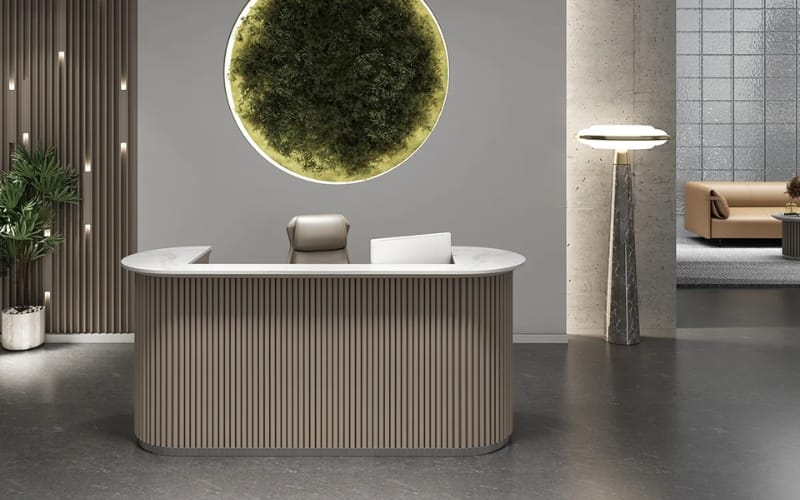
One of the biggest challenges in modern office design is balancing ergonomics with visual appeal.
Sleek, minimalist reception counters often sacrifice usability for style.
However, leading workplace design firms now emphasize “human-centered aesthetics,” where form and function are integrated rather than competing priorities.
Brands like Meet&Co demonstrate how modular reception systems can maintain both ergonomic integrity and modern design appeal.
For example, modular systems like those offered through Meet&Co allow businesses to customize reception layouts without compromising height standards.
Adjustable and Modular Reception Desk Solutions
Modern workplaces are increasingly shifting toward flexible reception configurations.
Height-Adjustable Reception Counters
These allow staff to switch between sitting and standing positions, improving long-term comfort.
Modular Systems
Modular desks can be reconfigured based on space constraints, visitor flow, or branding needs.
Retrofit Solutions
Existing reception areas can be upgraded with add-on panels, risers, or ergonomic accessories.
Popular product examples in this category include the BOAO A Reception Desk, designed for compact modern offices, and the Warnock Series B Reception Desk, known for its dual-height ergonomic structure and durability in high-traffic environments.
Ergonomic Reception Desk Height Calculation Method (Advanced)
While standard measurements work for most offices, advanced ergonomic design uses anthropometric data.
Step 1: Determine User Height Range
Typically based on 5th to 95th percentile population data.
Step 2: Calculate Elbow Height
Desk height should align with seated or standing elbow height minus 2–3 cm.
Step 3: Adjust for Task Type
- Typing-heavy work → lower height
- Interaction-heavy work → higher height
Step 4: Validate with Real-World Testing
Mock setups should be tested with actual users before final installation.
Buyer’s Guide: How to Choose the Right Reception Desk Height
When selecting a reception office desk, consider the following factors:
1. Workforce Demographics
Height diversity among staff is crucial in determining ideal desk configuration.
2. Task Complexity
Administrative-heavy roles require lower seated workspaces.
3. Space Constraints
Smaller reception areas may require compact or modular solutions.
4. Brand Identity
Luxury brands may prefer higher counters for visual impact, while healthcare prioritizes accessibility.
5. Budget Considerations
Custom ergonomic systems may cost more initially but reduce long-term health and turnover costs.
Real-World Design Insights from Office Projects
In modern office projects, reception areas are increasingly designed as multifunctional zones rather than simple greeting points.
Architects often combine:
- Digital check-in systems
- Visitor waiting lounges
- Security screening integration
This makes ergonomic reception desk height guidelines even more important, as the desk must support both human interaction and technological integration.
Future Trends in Reception Desk Ergonomics
The future of reception design is moving toward adaptability and smart integration.
Smart Adjustable Systems
Desks with motorized height control are becoming more common.
Hybrid Work Adaptation
Reception areas now support rotating staff and flexible workflows.
AI-Assisted Visitor Management
Reception area desks are integrating digital systems that reduce manual workload, allowing ergonomic design to focus more on comfort than administrative load.
Conclusion
Ergonomic reception desk height guidelines are essential for creating efficient, comfortable, and visually appealing reception environments.
From standard height ranges to ADA compliance and industry-specific requirements, every detail contributes to better workplace performance and user experience.
Whether designing a corporate office, hotel lobby, or medical clinic, applying these ergonomic principles ensures long-term health benefits for employees and a more welcoming environment for visitors.
Modern modular solutions and professional-grade furniture systems—such as those offered by Meet&Co Furniture—make it easier than ever to combine aesthetics with functionality.
Products like the BOAO Reception Office Desk and Warnock B Reception Office Desk further demonstrate how ergonomic principles can be successfully applied in real-world office environments.
By following these guidelines, businesses can create reception areas that are not only visually impressive but also scientifically optimized for human comfort and productivity.