






 Meet&Co
If you are looking to upgrade your home office setup, understanding how to compare electric vs manual standing desks is essential.
Standing desks have become increasingly popular due to their ergonomic benefits, which can improve posture, reduce back pain, and enhance productivity.
According to guidance from the American Chiropractic Association, alternating between sitting and standing during work can help reduce back strain and improve posture.
As an independent furniture reviewer with over five years of experience analyzing office furniture, I have tested dozens of standing desks in both home and professional environments.
This guide will walk you through the main differences, pros and cons, ergonomics, costs, and practical tips for choosing the desk that suits your workspace best.
For a reliable selection of high-quality office desks, you can also check Meet&Co.
Electric vs Manual Standing Desks – Key Differences
Adjustment Mechanism
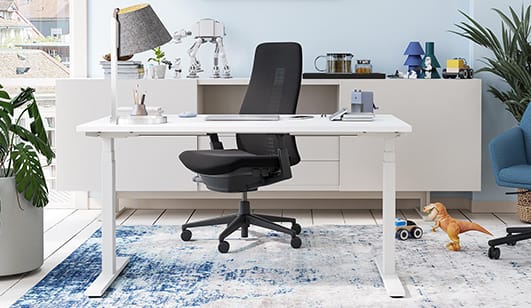
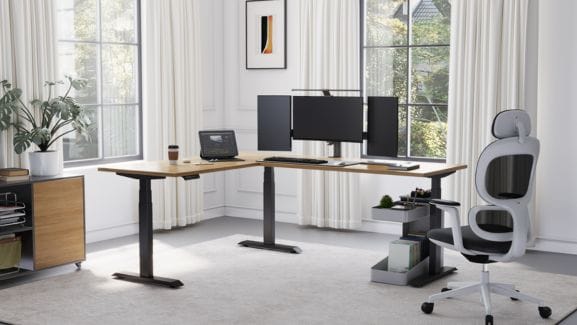
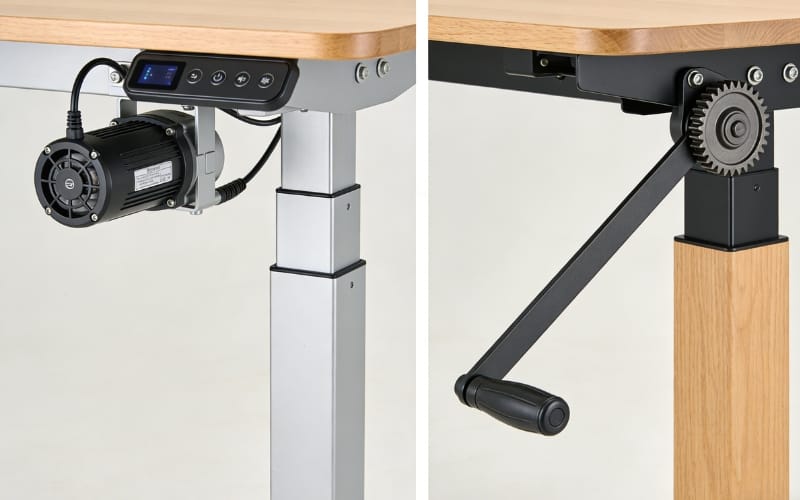
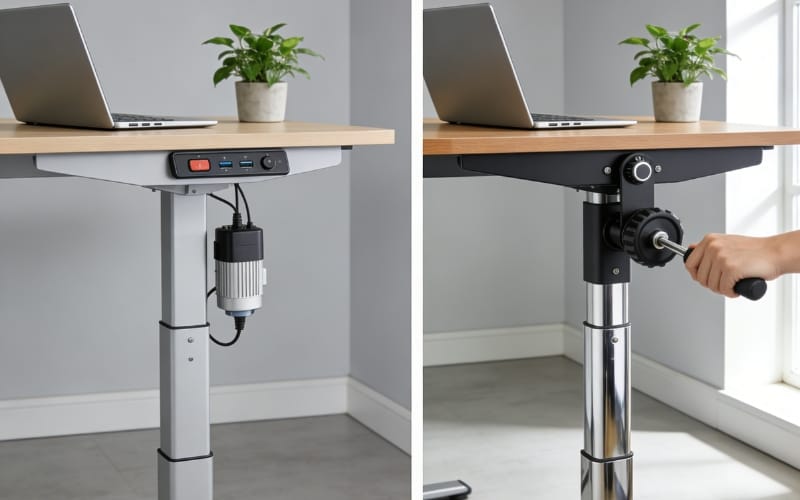
Electric adjustable standing desks use motorized systems to adjust height with a button press, offering smooth, precise, and effortless transitions.
Manual desks rely on a crank or counterbalance system, requiring physical effort to raise or lower the desk.
While manual desks are simpler, they may be less convenient for frequent adjustments.
Speed and Convenience
Electric desks adjust quickly, often in 10–15 seconds, making it easy to alternate between sitting and standing throughout the day.
Manual desks are slower, requiring more time and effort, which may disrupt workflow for some users.
Noise Levels
Electric desks produce a low humming sound, usually between 45–55 decibels.
Manual desks are nearly silent since they do not have motors.
Consider noise levels if you participate in video calls or need a quiet home office environment.
Durability and Maintenance
Manual desks have fewer moving parts, which often results in lower maintenance needs and longer lifespan.
Office height adjustable desks involve motors and electronics that occasionally require servicing, though most come with manufacturer warranties covering repairs.
Price Comparison
Manual desks are budget-friendly, often ranging from $150–$300.
Electric desks usually start around $350–$600, with premium models exceeding $1,000 depending on features, materials, and customization options.
Energy Consumption
Electric desks use minimal electricity, generally under 2 watts idle and 40–60 watts during height adjustments.
While not a major cost, eco-conscious users may consider this factor.
Pros and Cons
Electric Standing Desks
Pros:
Effortless and precise height adjustment
Programmable height presets for multiple users
Fast and smooth transitions
Cons:
Higher upfront cost
Reliant on electricity
Potential maintenance for motor or electronics
Manual Standing Desks
Pros:
Affordable and simple design
Very durable with low maintenance
Silent operation
Cons:
Slower and requires physical effort
Limited adjustment precision
Less convenient for frequent posture changes
Ergonomics and Health Benefits
Using a sit and stand up desk helps reduce spinal stress and improves circulation.
Electric desks allow fine-grained height adjustments, making it easier to achieve correct ergonomic posture, especially for short or tall users.
Manual desks, while adjustable, may not provide the same level of precision.
According to a study published in the Journal of Occupational Health, workers who alternate between sitting and standing experience reduced fatigue and improved focus over time.
Proper desk height ensures keyboard and monitor positions support neutral wrist, neck, and back alignment.
Installation and Setup
Electric desks typically require minimal assembly, with motors pre-installed, and setup takes around 45–60 minutes.
Manual desks are lighter, easier to assemble, and can often be moved without tools.
If you relocate your workspace frequently, manual desks may offer more flexibility.
Use Cases and Ideal Scenarios
Home Offices: Electric desks are ideal for users who alternate postures frequently. Manual desks work well for budget-conscious home setups.
Small Spaces: Manual desks often have a smaller footprint.
Frequent Standing Users: Electric desks minimize strain and effort during multiple daily height changes.
Special Needs Users: Electric desks benefit short, tall, or heavy users due to adjustable presets.
Cost vs Value Analysis
When evaluating electric vs manual standing desks, consider both initial investment and long-term value.
Electric desks may cost more upfront but provide convenience and ergonomic precision, potentially enhancing long-term productivity.
Manual desks are cost-effective, low-maintenance, and durable, though they may lack advanced features.
Additional accessories, such as monitor arms, keyboard trays, and cable management, can affect overall value.
Tips for Choosing the Right Desk
Evaluate your workspace size and weight requirements.
Determine priority features: speed, noise, height precision.
Assess ergonomics: ensure proper height range for posture.
Review warranties and after-sales service.
Consider user-specific needs: height, weight, frequency of adjustment.
Conclusion
Choosing between electric vs manual standing desks depends on your workspace, budget, and ergonomic requirements.
Electric desks excel in convenience, precision, and frequent use, while manual desks provide affordability, durability, and simplicity.
For home offices or limited spaces, manual desks may suffice.
For professionals seeking ergonomic precision, fast adjustment, and programmable presets, electric desks are worth the investment.
For trusted, high-quality desk options and guidance, explore Meet&Co Office Furniture to find the best desk for your home office.
FAQs
Not necessarily. Manual desks have fewer moving parts and can last many years without major repairs.
No. Energy use is minimal, occurring primarily during height adjustments.
Manual desks are generally smaller and more cost-effective, fitting compact spaces easily.
Yes. Alternating between sitting and standing can increase focus, reduce fatigue, and support overall health.

_1.webp)