





 Meet&Co
When weighing cubicles vs office partitions, businesses must choose between semi-enclosed individual workstations and flexible, room-dividing wall panels. Modern office layout design increasingly prioritizes employee experience and structural adaptability, forcing companies to carefully evaluate their floor plans.
This comprehensive 2026 guide by Meet&Co breaks down the core differences between office cubicles and architectural partition systems. By examining real-world privacy metrics, installation frameworks, and budget requirements, this guide will help you select the ideal layout for your team’s workflow.
Key Takeaways
-
Cubicles Anchor Individual Focus: Enclosed workstations provide superior privacy and dedicated integrated storage for heads-down tasks.
-
Partitions Maximize Adaptability: Wall systems allow facilities to quickly reshape an entire room layout without tearing down heavy hardware.
-
Acoustics Require Strategy: Incorporating specialized soundproof components is essential for controlling ambient chatter in open offices.
-
Hybrid Layouts Win: Mixing fixed personal desks with mobile dividers offers the ultimate balance for modern agile teams.
What Are Office Cubicles?
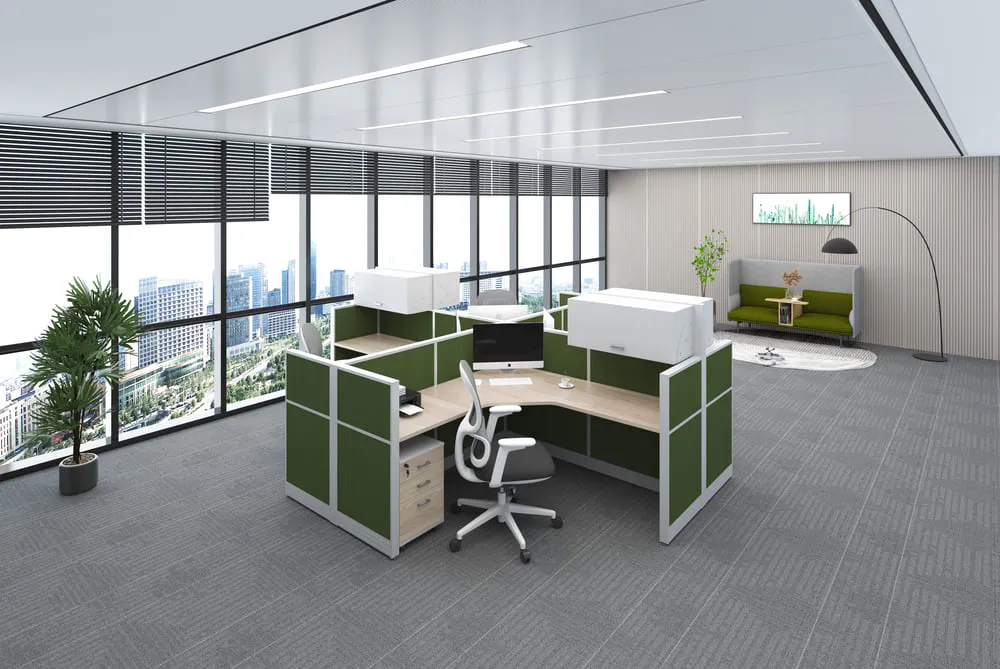
An office cubicle is a self-contained, partially enclosed workspace constructed from modular fabric or laminate panels. It is designed to house a single employee, consolidating a desk surface, shelving, and power routing into one localized footprint.
Key Features of Cubicles
-
Enclosed Workspace: Standard designs feature three or four high walls that block direct sightlines from passing colleagues.
-
Built-in Storage: Most models integrate a dedicated cubicle workstation layout complete with overhead bins, under-desk pedestals, and lockable file drawers.
-
Enhanced Privacy: The wrapped configuration protects confidential screens, making it a staple for data-sensitive environments.
-
Noise Control: Thicker upholstered walls assist with local sound absorption, acting as basic acoustic office partitions for everyday typing and calls.
Common Applications
You will typically find heavy rows of traditional office cubicles in environments that require continuous, independent phone interaction or intense data entry. They serve as the foundational backbone for commercial call centers, customer service teams, corporate accounting departments, and insurance processing hubs.
What Are Office Partitions?
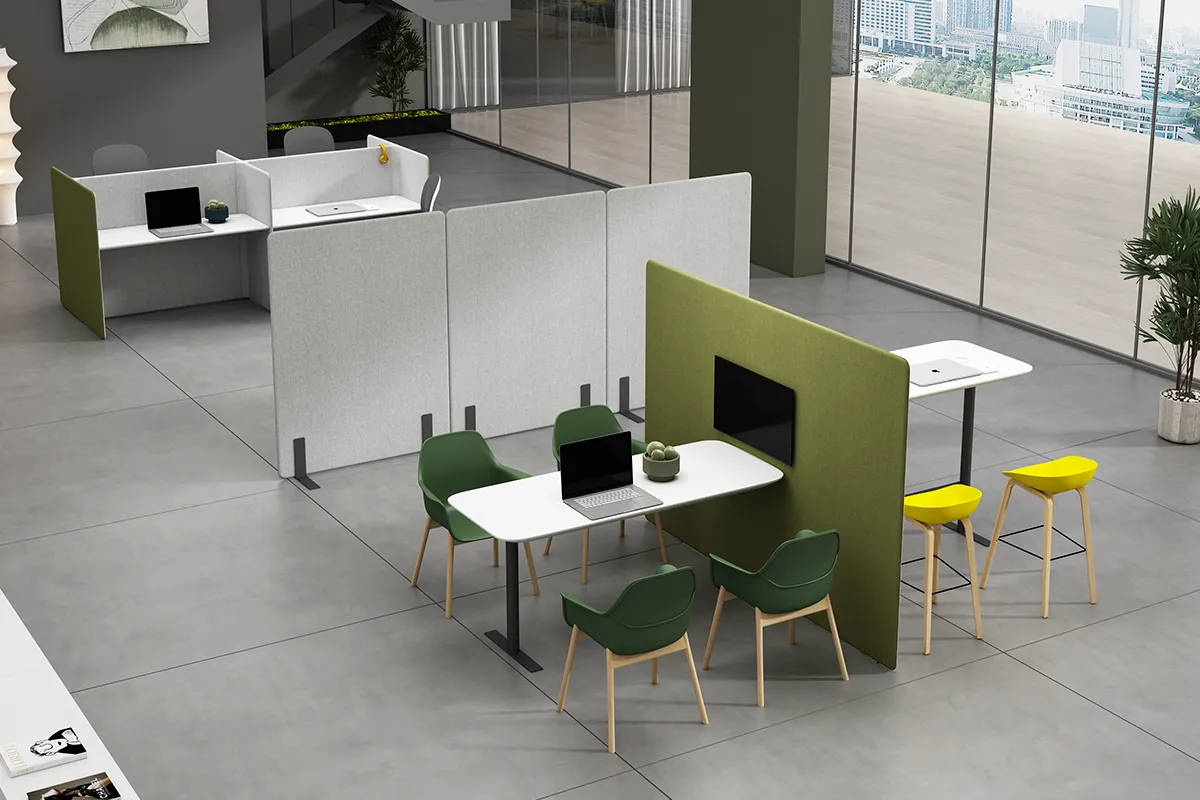
Office partitions are independent floor-to-ceiling or freestanding wall systems used to divide large open floors into distinct operational zones. Unlike a cubicle, a partition does not inherently include an attached desk or personal office furniture.
Types of Office Partitions
-
Glass Partitions: Sleek aluminum-framed glass panels that maintain natural light flow while creating a physical boundary for boardrooms.
-
Fabric Partitions: Lightweight, fabric-wrapped divider systems that absorb echoes and accept pins for tacking notes.
-
Modular Partitions: Interlocking rigid walls that allow facility managers to erect temporary private offices without drywall dust.
-
Mobile Partitions: Lightweight, wheeled office divider systems that employees can roll, unfold, and adjust in seconds.
Common Applications
Modern office partition systems are highly popular among tech startups, creative agencies, and open-plan offices utilizing a hybrid workplace model. They are perfect for shaping ad-hoc brainstorming nooks, setting up temporary reception areas, or shielding hot-desking zones from high-traffic hallways.
Cubicles vs. Office Partitions: Key Differences
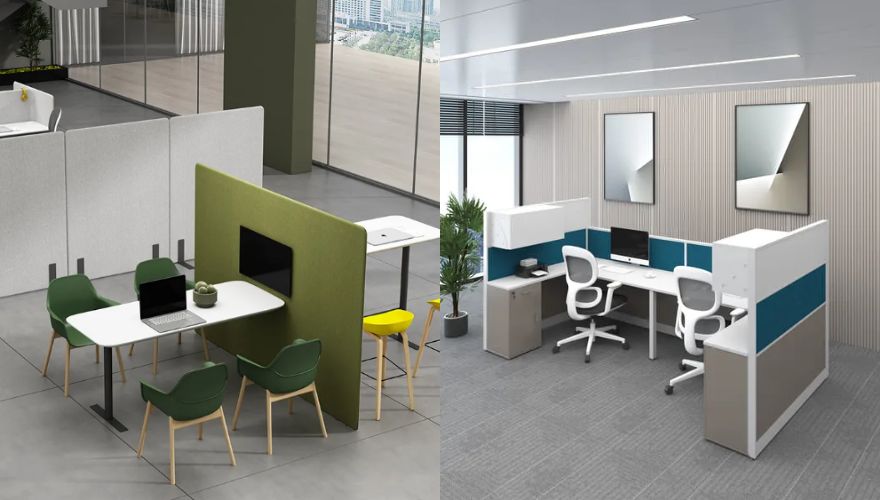
Cubicles vs. Office Partitions
Choosing between these two systems requires evaluating how your staff handles daily communications and focus time.
1. Privacy
Traditional cubicles offer far superior individual workplace privacy compared to open partitions. A cubicle shields a worker’s entire desk layout, whereas a partition wall simply blocks off a general zone, leaving individual desks exposed within that sector.
2. Noise Reduction
When it comes to true noise reduction in offices, high-wall cubicles excel at catching close-range speech reflections. However, if your team handles highly sensitive client consultation calls, installing heavy, floor-to-ceiling soundproof office dividers or glass partition walls yields better overall acoustic isolation across the room.
3. Collaboration
Partitions are engineered to foster a highly collaborative workspace. By using low, mobile panels to divide a floor, teams can easily look over their dividers to share ideas, making them much more effective for creative brainstorming than isolated cubicle rows.
4. Flexibility
If you want to quickly implement flexible workspace solutions, partitions win by a landslide. Reconfiguring a row of traditional cubicles requires unbolting integrated desks and rerouting internal electrical conduits, while mobile partition panels can be repositioned instantly.
5. Installation and Maintenance
Setting up modular cubicles requires substantial assembly time, specialized tools, and professional installation teams to handle the heavy integrated desks. Conversely, freestanding partition systems slide or snap together quickly, drastically reducing your initial setup window.
6. Aesthetics
Partitions align beautifully with modern office design trends, offering crisp glass finishes and vibrant colored fabrics that make spaces feel bright and airy. Cubicles, while highly functional, can sometimes feel visually repetitive if deployed across massive open floors without architectural variation.
7. Cost
The average office partition cost is generally lower per square foot because you are only purchasing a vertical divider wall. Cubicles carry a higher price tag because the system includes built-in heavy desktops, custom storage cabinetry, and complex internal electrical raceways.
Deep-Dive Comparison Matrix
| Structural Feature | Integrated Office Cubicles | Modular Office Partitions |
| Individual Privacy | High (Multi-angle enclosure) | Medium (Zonal screening only) |
| Noise Reduction | High (Close-proximity fabric) | Medium to High (Material dependent) |
| Collaboration | Lower (Isolated work pods) | Higher (Supports open movement) |
| System Flexibility | Medium (Requires complete tear-down) | High (Easily rolled or relocated) |
| Average Initial Cost | Higher (Includes built-in furniture) | Lower (Stand-alone wall panels) |
| Scalability | Medium (Requires matching components) | High (Universal modular locking) |
Best Cubicles and Office Partitions in 2026
Investing in high-quality systems from trusted industry manufacturers ensures your office remains durable and easily adaptable.
1. Meet&Co Aston60 Series B Office Cubicles

When outfitting a permanent, high-performance corporate hub, structural longevity and integrated power routing are vital. Sourcing your workplace architecture from commercial specialists like Meet&Co Furniture ensures your floor plan maximizes efficiency. The Aston60 Series B combines exceptionally sturdy, sound-dampening tile panels with spacious, built-in executive corner desks.
-
Pros: Built-in high-capacity electrical conduits, rich fabric colorways, and robust integrated filing drawers.
-
Cons: Requires a fixed footprint, making it less ideal for offices that rearrange furniture monthly.
2. HON Abound Cubicles
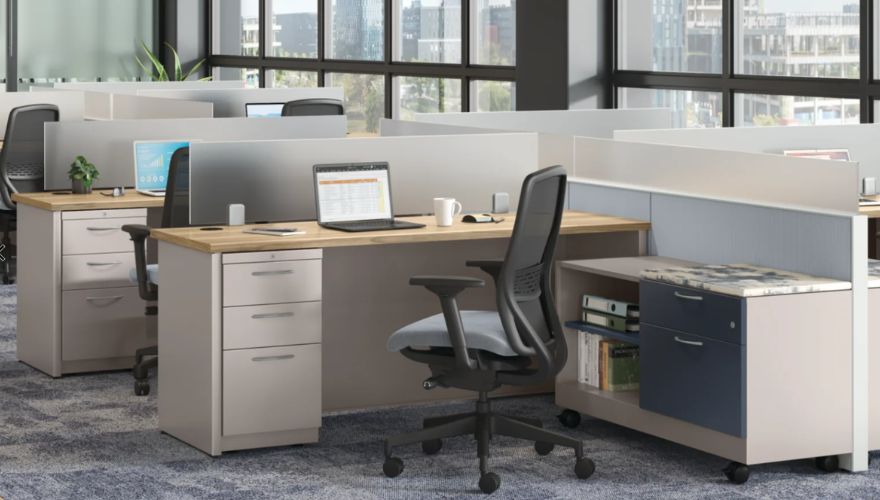
Image source: https://www.hon.com/cubicles/abound
The HON Abound system is a highly flexible, commercial-grade tiling setup designed for fast-growing businesses. It features interchangeable tiles that allow you to swap fabric, glass, and whiteboards onto the frame without altering the underlying support structure.
-
Pros: Exceptional modular customizability, crisp modern frame finishes, and a trusted lifetime warranty.
-
Cons: Premium tier pricing requires a larger upfront capital expenditure.
3. Meet&Co Glass Partition Walls
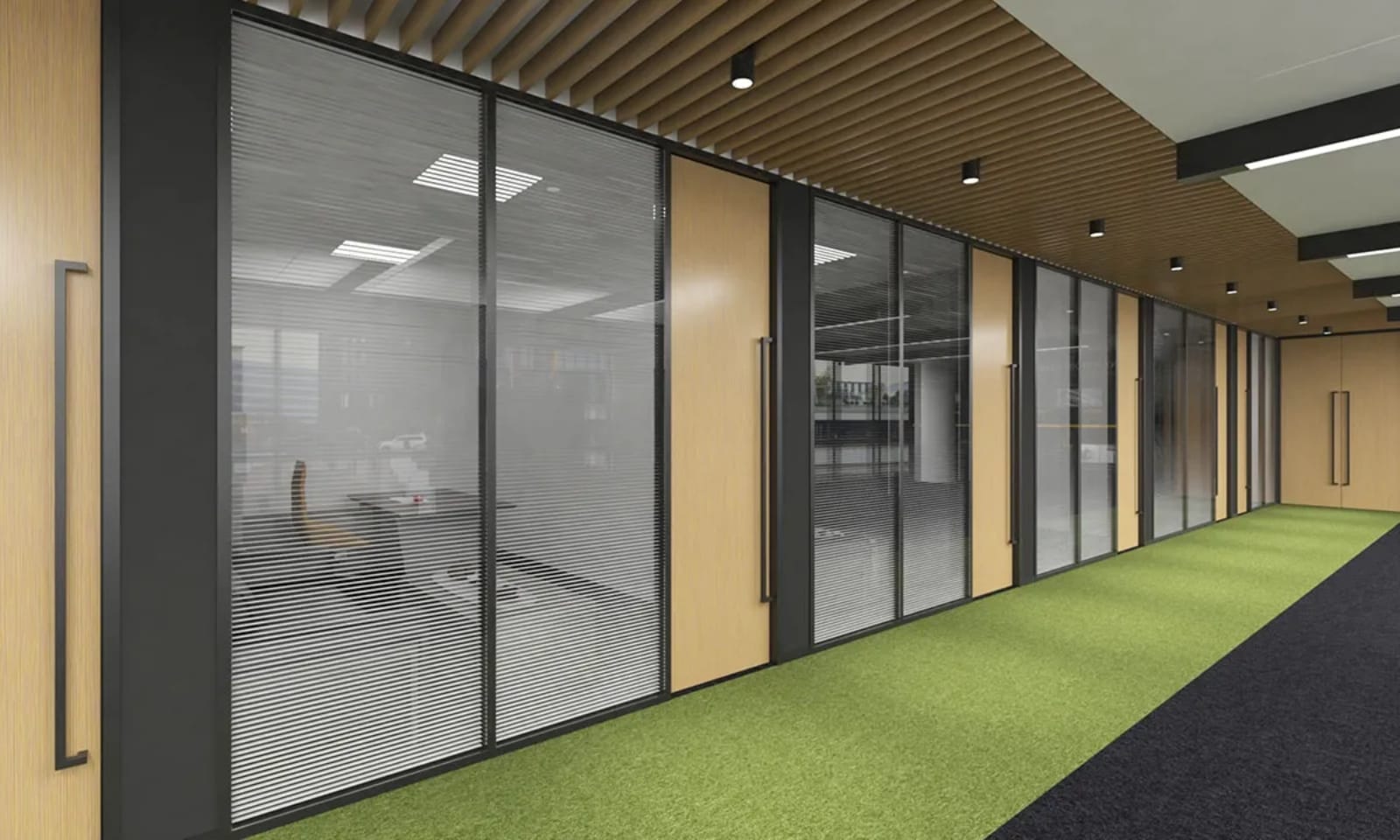
Maintaining a bright, sunlit atmosphere while controlling sound migration is a hallmark of premium office design. Utilizing Meet&Co Office Furniture glass partition systems allows executives to construct gorgeous private boardrooms and quiet focus spaces without building permanent drywall.
-
Pros: Maximum natural light penetration, elite architectural aesthetic, and exceptional acoustic dampening properties.
-
Cons: Transparent panels require adding custom frosted vinyl if absolute visual privacy is needed.
4. Versare Work Station Screen
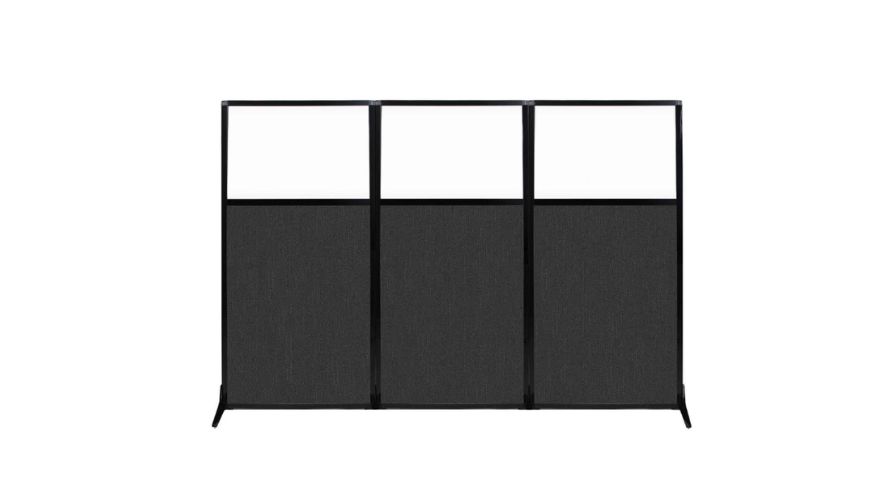
Images source: https://www.versare.com/work-station-screen/
For dynamic teams that need to reshape their collaborative spaces on the fly, this lightweight, folding accordion panel system is an exceptional solution. Built with durable acoustic fabric panels, it allows employees to roll and divide any room in seconds.
Pros: Incredibly lightweight frame, tool-free setup, and wheeled casters that lock securely into place.
Cons: Lacks integrated data outlets and cannot support heavy hanging storage shelves.
Which Option Is Better for Modern Hybrid Offices?
The traditional concept of assigning one fixed desk to every employee has shifted. In an era dominated by hot-desking, rotating schedules, and an agile office layout, flexibility is the ultimate asset.
This shift explains why an increasing number of companies are pivoting toward modular office partitions. Rather than locking an entire floor into rigid, immovable desk blocks, partitions allow facilities to expand or shrink team zones dynamically based on daily office attendance.
When hybrid teams arrive for in-person collaboration days, mobile panels roll away to create wide-open project zones. On days reserved for quiet, individual focus, those same panels fold back into place to provide instant privacy screens.
When Should You Choose Cubicles?
-
Your Workflow Demands High-Focus Work: Ideal for programmers, analysts, and legal editors who need long, uninterrupted focus blocks.
-
Handling Confidential Work: Crucial for HR departments, medical billing teams, and financial officers who manage private data that cannot be visible to passersby.
-
High-Density Customer Support Teams: Essential for high-volume phone centers where built-in fabric walls help dull the background chatter of neighboring agents.
When Should You Choose Office Partitions?
-
Fast-Growing, Scalable Companies: Perfect for rapid-growth startups that need to constantly adjust their floor plans to welcome new hires.
-
Highly Collaborative Project Teams: Ideal for marketing agencies, engineering squads, and design teams that thrive on spontaneous brainstorming sessions.
-
Implementing Flexible Office Layouts: Excellent for businesses converting to a hybrid structure, where space needs change from week to week.
Cubicles vs. Partitions: Quick Decision Guide
| Your Core Operational Priority | Recommended Workplace Solution |
| Maximum Individual Data Privacy | Office Cubicles |
| Spontaneous Team Collaboration | Office Partitions |
| Strict Initial Furniture Budget | Office Partitions |
| Acoustic Noise Control | Office Cubicles |
| Agile Hybrid Work Adaptability | Office Partitions |
| Long-Term Floor Scalability | Office Partitions |
Conclusion
Successfully executing your workspace planning comes down to balancing individual focus with team communication. Cubicles remain the gold standard for environments that prioritize data privacy, exceptional noise reduction, and dedicated personal workstations. Meanwhile, modular office partition systems offer the ultimate toolkit for businesses that value layout flexibility, modern design, and highly collaborative hybrid work environments. For most modern, fast-moving organizations, incorporating modular partitions provides the ideal balance to keep your staff comfortable, focused, and ready to scale for the future.