








 Meet&Co
A couch is not a trivial purchase. It’s one of the biggest pieces of furniture in your home, and it gets used every single day. You sit on it after work. Guests gather around it. Sometimes, it even becomes a nap spot. That’s why the wrong one can be frustrating and expensive.
Many people regret their choice of sofa within months. It may be perfect at the showroom, but uncomfortable at home. The size could be too much for the room. The cushions may begin to sag faster than expected. Others find out too late that the fabric stains easily or the seat depth does not fit their height. These are common mistakes from people trying to buy couches, and the majority of them are preventable.
The good news? You do not need guesswork to rely on. With the right information, you should be able to select a couch that suits your space, your lifestyle, and your budget. In this guide, you’ll find a down-to-earth checklist to help you shop smarter, as well as smartly chosen presidential recommendations to help you shop for the best couch.
The advice is grounded in trusted industry information as well as real-world buying considerations – meaning you won’t have to invest more than once, and you’ll have peace of mind with your investment for years to come.
Also Check: Top 5 Sofa Brands
Why People Regret Their Couch Purchase
Buying a couch is often an emotional process. You see one in a showroom or online, you fall in love with the color or shape, and picture it in your living room. The decision sounds exciting, but it is not always practical. Many buyers give importance to the appearance of a sofa instead of how it feels after an hour of sitting.
Social media is also a part of it. A couch may look amazing in styled photos, but those photos rarely show the long-term wear, sagging cushions, and fabric problems. According to insights shared by The New York Times Wirecutter and Homes & Gardens, comfort, quality of frame, and durability of fabric are what matter much more than trends.
Another common mistake is making the ‘expected’ use too low for a day. A couch isn’t just decor; it has to deal with family time, guests, and lounging every day. Without proper research, buyers often find out too late that style just isn’t enough.
Couch Buying Mistakes That Cost You Money

1. Not Measuring Your Space Correctly
One of the costliest mistakes is a guess at the size. A sofa may be perfect in a showroom, but overwhelming in your living room. Measure your space to check the width, depth, and height before shopping.
Don’t forget about doorways, hallways, elevators, and staircases. Many returns are made because the couch cannot get through the entrance. Think about layout flow too – will people be able to walk comfortably around the layout? Following a proper guide for the size of a couch saves money and unnecessary stress.
2. Ignoring Seat Depth & Height
The depth and height of the seat directly influence comfort. Deep seating is great for lounging in, but shorter people might have trouble sitting up straight. Standard seating is better for a formal setting or for an upright posture. Always try out whether your feet are touching the floor with comfort and your back is supported. An ergonomic fit is more significant than how it looks, especially if it is for daily use.
3. Choosing Style Over Comfort
It’s easy to be enticed by a beautiful silhouette or trendy design. However, a stylish couch that is stiff or awkward is not going to serve you long-term. Many aesthetically focused pieces compromise padding or support. Trends come and go quickly: discomfort remains. Choose a sofa you like sitting on – do not just choose one that photographs well.
4. Forgetting how to Choose Cushion Fill Type
Cushion filling also has an impact on comfort and maintenance. Foam provides a structure and low maintenance. Feather-filled cushions are luxurious but need fluffing often. Hybrid blends are great mixes of softness and support. Understanding the types of sofa cushioning makes it easy to stop your sofa from sagging or continually lopsided. Always ask what’s inside the cushions, and not only how they feel in the store.
5. Ignoring Frame Construction
The frame is the backbone of your couch. Kiln-dried hardwood frames are long-lasting and do not warp. Less expensive ones tend to use particleboard and easily loosened joints that tend to come loose over time. Reinforced joinery, such as corner blocks or dowels, helps increase durability. Checking sofa frame quality can be the difference between a two-year and a ten-year life span for a couch.
6. Purchasing Ultra-Soft with No Support
Extra-soft sofas may be inviting when first seen, but if they sink too much, they can lead to trouble. Without proper support on the inside, cushions can sag very quickly. Over time, this can create bad posture and back pain. A good couch should be comfortable and still retain its shape. Balance is key.
7. Neglecting Fabric Performance
Fabric is just as important as structure. Light colored linen may look elegant, but it stains readily in busy houses. Performance fabrics resist spills and wear, which makes them ideal for families and pet-friendly sofas. Always think of the use of the couch before the upholstery is chosen. It saves on replacement costs in the future.
8. Not Taking Modular Flexibility into Account
Life changes, homes, layouts, and family size. Fixed sofas are stiff in their flexibility. Modular designs can be rearranged or add seating. A lot of buyers regret that they don’t think ahead (especially when moving).
9. Choosing the Wrong Color
Color impacts maintenance. White or cream-colored fabrics get dirty rather quickly, especially in high-traffic areas. Darker colors or textured woven patterns help to conceal everyday wear. While light shades have an airy feeling, they require more maintenance for cleaning. Think about lifestyle before making a commitment to a color.
10. Skipping Warranty & Return Policy
A couch is an important purchase. Without a clear warranty or option to return the product, you may find yourself stuck with defects or discomfort. Always look at coverage on frame, cushions, and fabric. A good policy is a sign of the manufacturer’s confidence.
11. Underestimating Delivery Logistics
Large sofas require planning. Measure the point of entry and ensure delivery services. Some companies offer white-glove setup, while others leave assembly to you. Unexpected delivery issues can add additional costs and aggravation.
12. Not Comparing Cost Per Year
A cheap sofa might be a bargain, but changing it every two years costs a lot more than putting your money into something that will last. Comparing material, construction, and life expectancy, thinking in terms of long-term value – not just up-front price – will help you spend smartly.
Also Check: Where Should I Look for the Best Sectional Sofa?
What to Seek Instead (Buying Checklist)

Caterpillar Modular Sectional Sofa
1. Proper Measurements
Start with a proper measurement of your room, entryways, and layout. Check width, depth, and height, and leave enough room for walking paths. A well-measured couch looks purposeful in a room, rather than cramped or too large.
2. Supportive Cushion Core
Look for high-density foam or a foam blend core that provides both comfort and structure. The seat should be soft but also supportive when you sit upright. The purpose of good cushioning is that it should not sag out of its shape over time.
3. Durable Upholstery
Choose fabrics made to be real life. Performance materials, very tightly woven textiles, or the option of a stain-resistant material will help with the daily wear. If you have kids or pets, durability over delicate aesthetics should be your rule.
4. Modular Adaptability
Consider whether or not the couch adjusts to your space. A modular way by which sections can be expanded, rearranged, or reconfigured as your requirements vary
5. Warranty Transparency
Clear warranty terms demonstrate confidence in construction. Review what’s covered: frame, cushions, and fabric before committing.
Top 5 Best Couches You Can Buy in 2026
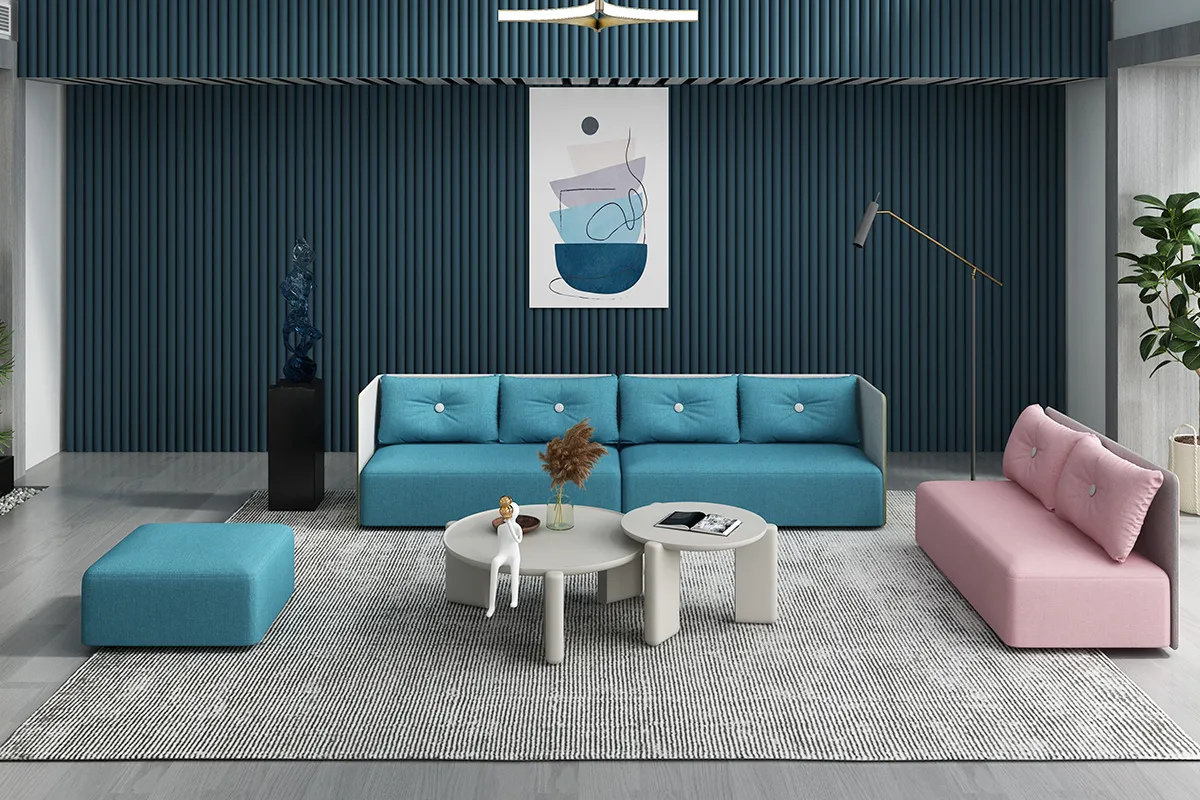
Meet&Co ENJOY Low-Back 2-Seater Sofa
Designed for a professional environment, the ENJOY Low-Back 2-Seater is more about structure and durability than about lounge-style softness. Its small footprint makes it usable in reception areas, executive offices, and collaborative areas where space is of the essence.
The supportive seat and clean silhouette aid in maintaining posture during the short meetings or waiting periods. This type of model is ideal for those buyers who place an emphasis on long-term resilience and low-maintenance usage in areas with higher traffic.
Pros & Cons
| Pros | Cons |
| Commercial-grade durability | Not ideal for deep lounging |
| Compact and space-efficient | Low back support |
| Structured seating support | Limited plush feel |
| Easy-to-maintain upholstery | Fewer residential color options |
| Professional aesthetic | Designed more for offices than homes |
7th Avenue Modular Sofa
The 7th Avenue Modular Sofa is known for the balance of deep comfort along with structural support. Its multi-layered foam cushions feel soft without excessive sag. The modular design permits sections to grow or reconfigure according to needs, and is therefore adaptable to evolving spaces. Performance fabrics help to resist daily wear and tear, making them appropriate for use with families and frequent use.
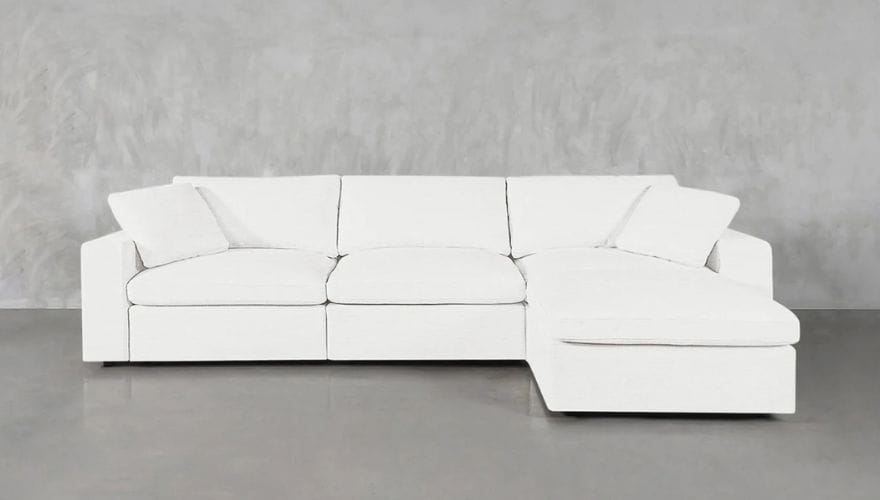
Image source: https://7thavenue.co/
Pros & Cons
| Pros | Cons |
| Deep, comfortable seating | Higher price tier |
| Modular expansion options | Large footprint |
| Stain-resistant fabric options | Assembly required |
| Balanced cushion support | May feel too deep for shorter users |
| Good long-term durability | Limited firm-seat option |
Albany Park Kova Sectional
The Kova Sectional is a relaxed, cloud-style sectional with oversized cushions and wide seating. It’s made for lounge, easy, and casual living rooms. While it’s plush in appearance, it’s also sized to fit in standard apartments in a more comfortable way than bulkier luxury models. Its modular format offers some flexibility without overpowering smaller spaces.
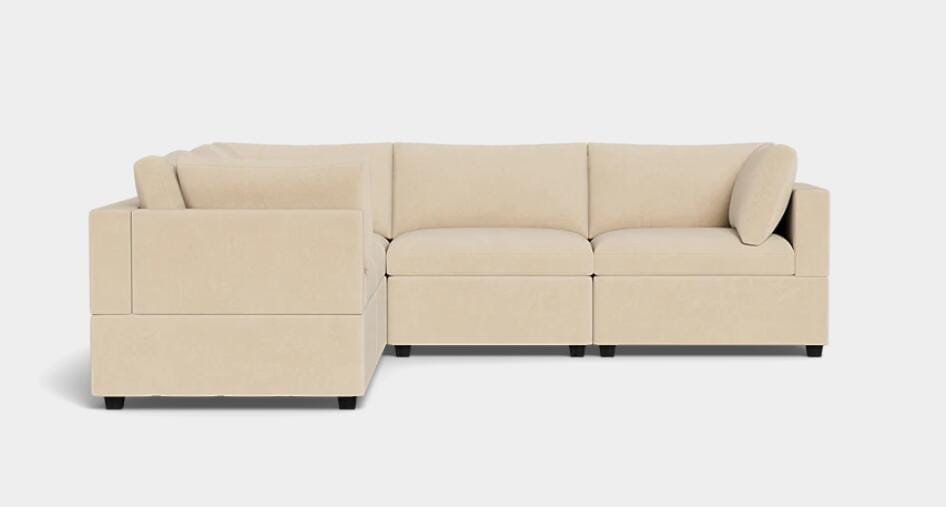
Source: https://www.albanypark.com/collections/kova/products/kova-corner-sectional?variant=42681627705395
Pros & Cons
| Pros | Cons |
| Oversized, cozy cushions | Requires fluffing |
| Casual modern design | Softer support |
| Apartment-friendly scale | May sag over time |
| Modular configuration | Not ideal for formal seating |
| Comfortable for lounging | Light fabrics need maintenance |
Crate & Barrel Lounge Deep Sofa
The Lounge Deep Sofa has a generous seating depth with a more structured profile. Combining comfort and refinement in look, a good combination for the living room for the whole family, and for polished interiors. The deep-seat version permits a relaxed sitting without any loss of support. Touts’ quality upholstery options, these fit buyers looking for durability with understated style.
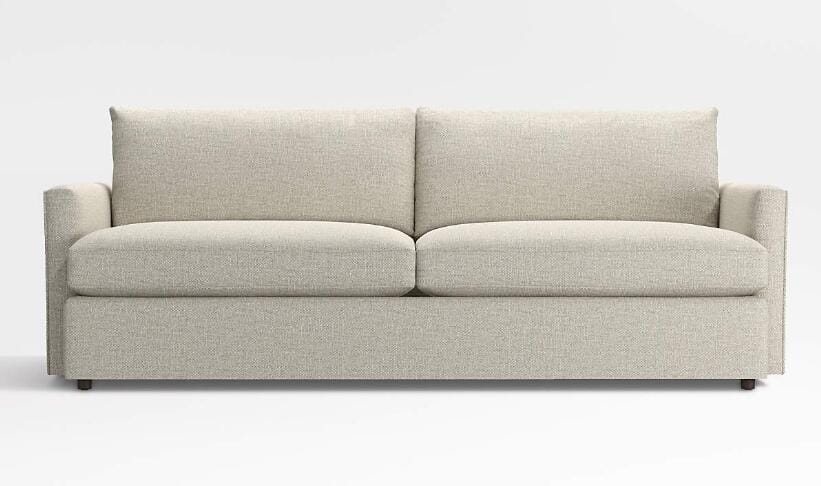
Image Source: https://www.crateandbarrel.com/
Pros & Cons
| Pros | Cons |
| Deep seating option | Higher cost |
| Structured comfort | Large for small rooms |
| Strong brand reputation | Heavy to move |
| Quality upholstery choices | Not fully modular |
| Better long-term support | Limited budget options |
Article Sven Sofa
The Sven Sofa is mid-century in shape with more support for the seating. It is great in smaller living rooms or apartments where space is essential. The constructed cushions retain their shape better than ultra-soft styles. Its clean lines make it versatile for use in both modern and classic interiors.
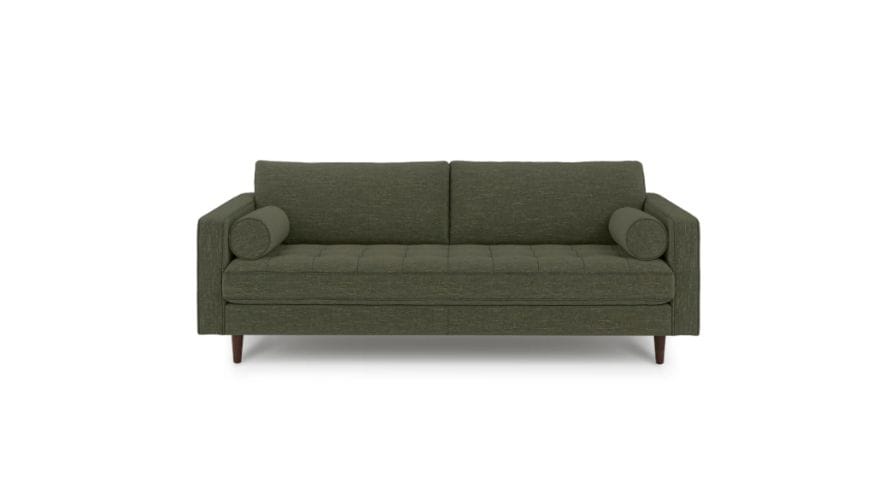
Image Source: https://www.article.com/
Pros & Cons
| Pros | Cons |
| Compact size | Not deep for lounging |
| Firm supportive seat | Limited modularity |
| Mid-century design appeal | Fewer oversized options |
| Holds shape well | May feel firm for some users |
| Suitable for small spaces | Minimal sink-in comfort |
FAQs
What is the worst couch-buying mistake?
The number one mistake that everybody makes is not measuring properly. Many buyers tend to fixate on style and forget about room dimensions, doorways, and the flow of the layout.
How long should a good sofa last?
A well-built sofa with a good frame and quality cushions should last 7-15 years, depending on how it’s used daily and the quality of maintenance.
Are modular sofas worth it?
Yes, especially if you are a mover or enjoy rearranging your space. Modular designs are flexible with long-term adaptability.
Which is the best cushion fill for everyday use?
High-density foam or foam-blend cushions allow consistent support with minimum maintenance.
How do I get the size just right for my couch?
Measure your room carefully and leave walking space. Balance seat depth with your height and comfort requirements.
Conclusion
Avoiding common mistakes when buying a couch can save you money and frustration. Take your time to measure properly, compare materials, and consider long-term durability. A wise choice will mean comfort for years, not just months. Before making a decision, take a look at your priorities and find out what options would actually work in your space and for your lifestyle.


_1-1.webp)


