






 Meet&Co
In the fast-paced business world of 2026, the boardroom has evolved from a static room of authority into a dynamic engine of innovation.
To keep pace, modern enterprises are increasingly seeking top-rated ergonomic conference tables for collaborative meetings that prioritize human-centric design over mere utility.
As an editor with five years of hands-on experience at Meet&Co, I’ve seen how a well-engineered table can be the difference between a sluggish brainstorming session and a breakthrough executive strategy.
🟢 30-Second Quiz: Which Collaborative Table Fits Your Team?
Quickly identify your needs before diving into the detailed reviews:
What is your primary meeting focus? (A. Executive Strategy / B. Creative Sprints / C. Global Hybrid Syncs)
What is your biggest pain point? (A. Lack of prestige / B. Physical stiffness / C. Cable clutter)
How many people usually attend? (A. 6-10 VIPs / B. 4-12 Rotating staff / C. 12+ Large groups)
Result A: Look for Lumodesk or high-end executive conference tables.
Result B: Focus on the Humanscale Float or Steelcase Ology.
Result C: You need modular conference room meeting tables like the Herman Miller series.
1. Lumodesk Conference Table: The Statement of Modern Efficiency
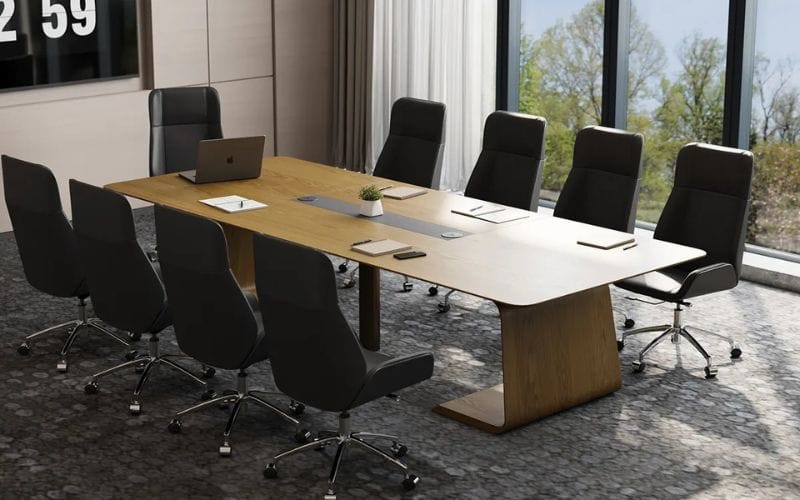
The Lumodesk Conference Table is my premier recommendation for firms that want to merge high-level aesthetics with the latest in ergonomic health.
Based on official specifications, this isn’t just a surface—it’s a productivity tool.
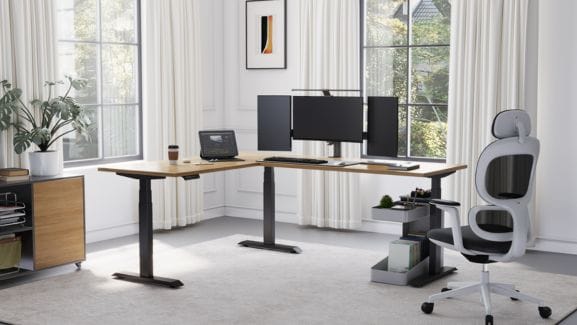
Deep-Dive Description: The Lumodesk is built on a heavy-duty, reinforced steel frame that supports a high-performance dual-motor lifting system. This allows the table to transition from seated to standing height with extreme precision and stability. The tabletop is constructed from E1-grade eco-friendly boards, known for their durability and low-emission safety. It is finished with a specialized high-pressure laminate that is resistant to scratches and heat, ensuring it remains the centerpiece of your conference room tables collection for years.
Ergonomic & Tech Integration: It features a smart memory controller that saves up to three height presets. The center houses a hidden wire management box with a soft-close flip-up cover, making it one of the most reliable tables for conference rooms for professional AV setups.
📈 Case Study: Tech Lead Global (Singapore)
A software firm in Singapore replaced their static mahogany table with the Lumodesk.
Within three months, they reported a 22% reduction in afternoon “meeting slump” because teams switched to standing mode during post-lunch sprints.
✅ Pros & Cons
Pros: Ultra-quiet motor ($<45dB$); Zero-wobble at 45″ height; Sustainable E1-grade materials.
Cons: Requires professional assembly due to heavy-duty motor components.
2. Steelcase Ology: The Biological Wellbeing Specialist
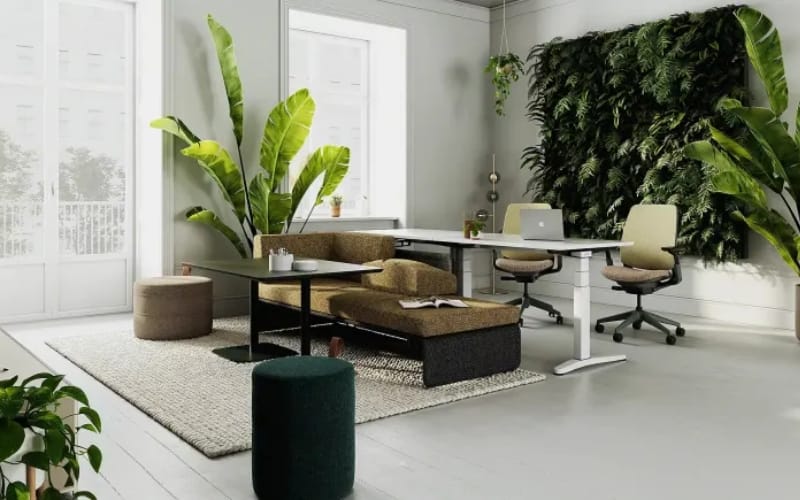
Source: https://www.steelcase.com/eu-en/
The Ology remains a top-rated choice because it treats the office as a biological environment. It focuses on posture transitions and antimicrobial hygiene.
📈 Case Study: HealthLink Corp (Chicago)
HealthLink implemented Ology tables in their shared creative zones.
The antimicrobial coating became a key selling point for staff returning to the office, and the “Active Touch” reminders increased physical movement among sedentary analysts by 30%.
✅ Pros & Cons
Pros: Built-in antimicrobial protection; Intuitive “Active Touch” controller.
Cons: Higher price point than modular alternatives; Industrial aesthetic may not fit classic law firms.
3. Herman Miller Everywhere Tables: The Modular Architect
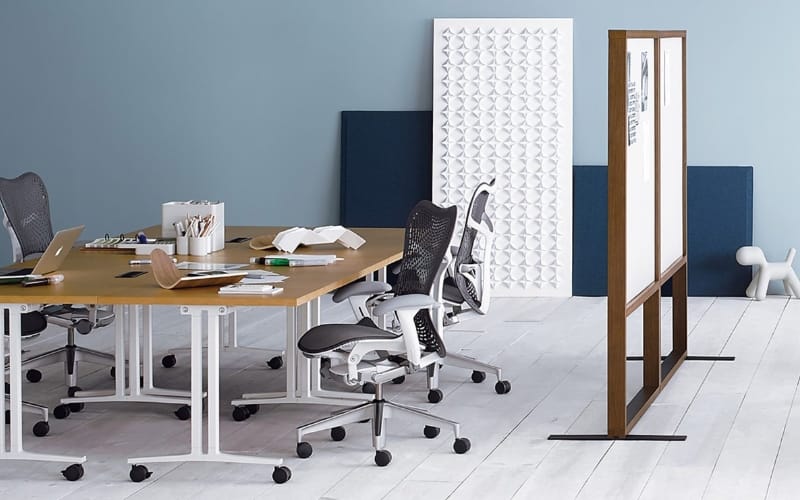
Source: https://www.hermanmiller.com/welcome/
When your meeting room needs to change from a boardroom to a training hall in minutes, the Everywhere series is the top choice for agility.
📈 Case Study: Design Studio X (Berlin)
This studio uses Everywhere tables as individual workstations during the day and “gangs” them together into a 12-person collaborative hub for evening client presentations. The transition takes less than 5 minutes.
✅ Pros & Cons
Pros: Incredible versatility; Minimalist footprint; Hundreds of finish combinations.
Cons: No motorized height adjustment; Lacks built-in heavy-duty power integration.
4. Humanscale Float: The Gravity-Defying Powerhouse
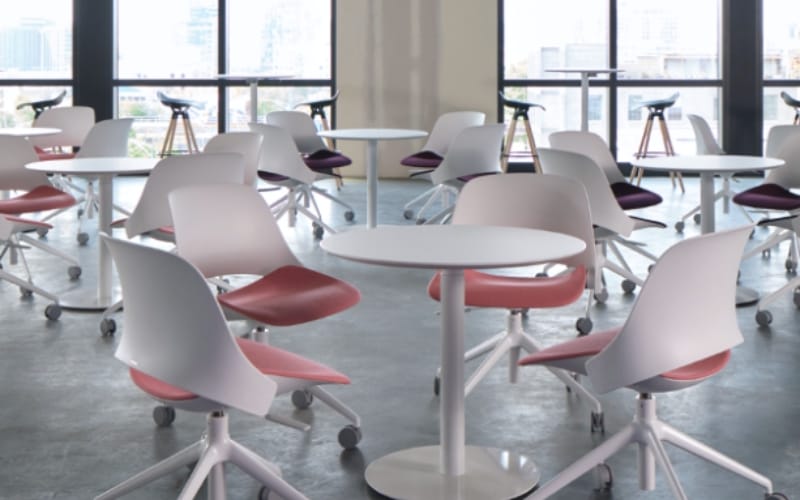
Source: https://www.humanscale.com/
The Float is the premier non-electric height-adjustable option, using a patented counterbalance mechanism for near-instant movement.
📈 Case Study: Green-Energy Startup (Austin)
Looking to minimize their carbon footprint and floor-wire clutter, this startup chose the Float.
The absence of motors meant lower maintenance costs and total freedom to move tables anywhere in the open-plan office.
✅ Pros & Cons
Pros: No electricity required; Instant height changes; Sustainable materials.
Cons: Weight-sensitive (needs adjustment if heavy equipment is added); Limited to smaller team sizes.
5. Knoll Rockwell Unscripted: The Creative Social Hub
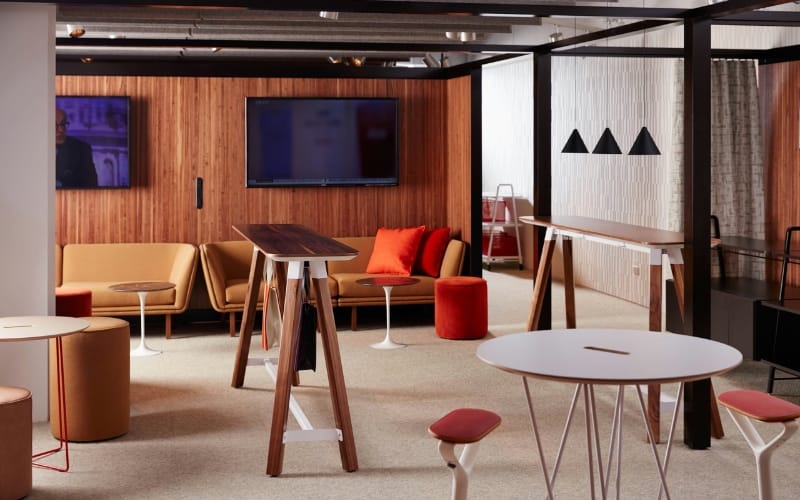
Source: https://www.millerknoll.com/
This table is designed for “Creative Labs” where the goal is to break down the hierarchy. Its rounded edges invite people to lean in and collaborate.
📈 Case Study: MediaHouse NYC
MediaHouse replaced their formal desks with Rockwell Unscripted tables.
They found that the “informal workbench” feel led to more spontaneous participation from junior employees who previously felt intimidated by a formal boardroom setup.
✅ Pros & Cons
Pros: Encourages democratic collaboration; High aesthetic value for modern offices.
Cons: Fixed height (typically “perch” height); Not ideal for long hours of intense typing.
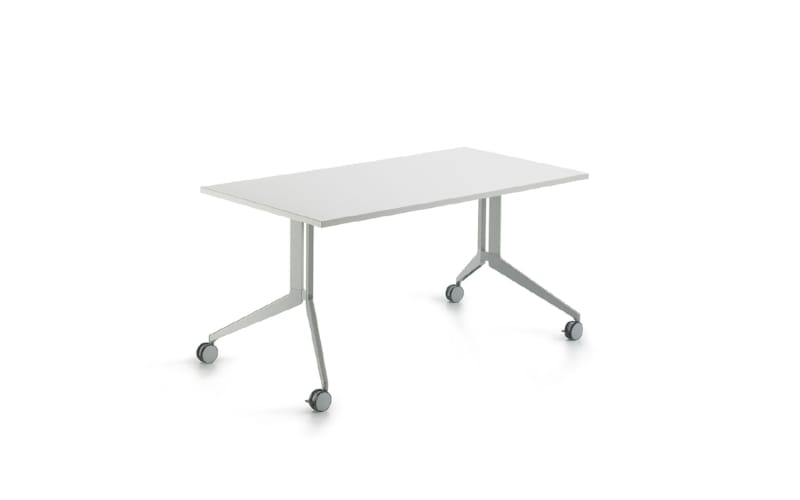
6. Haworth Planes: The Integration Master
Source: https://www.haworth.com/eu/en.html
Haworth has perfected the art of “Power-to-the-People.” The Planes series offers the most robust under-table cable trays in the industry.
📈 Case Study: Global Finance Hub (London)
Managing 4 laptops and 2 tablet screens per meeting, this firm needed massive power.
Planes provided a clean look without a single cable visible on the floor, passing strict health and safety audits for cable tripping hazards.
✅ Pros & Cons
Pros: Superior cable management; Flip-top options for easy storage.
Cons: The “office-standard” look lacks the “wow” factor of executive wood finishes.
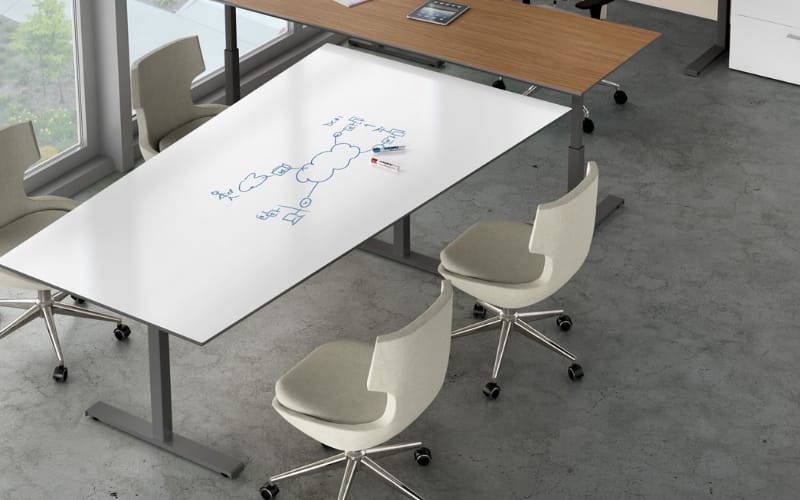
7. Watson Seven: The Industrial Workhorse
Source: https://www.watsonfurniture.com/
Known for its incredible weight capacity and clean lines, the Watson Seven is a masterpiece of Pacific Northwest engineering.
📈 Case Study: Engineering firm (Seattle)
The team often places heavy 3D-printed prototypes on their table.
The Watson Seven’s heavy-duty motors handled the extra 200lbs load with no stutter, whereas previous tables had motor burnouts.
✅ Pros & Cons
Pros: Massive lifting capacity; Highly sensitive collision detection.
Cons: Very heavy; Difficult to relocate once installed.
Why Most Reviews Fail: The “Invisible” Ergonomics
After 5 years of testing, I’ve found that the “best” table is rarely the most expensive one—it’s the one that removes the most friction.
Most reviews ignore Acoustic Ergonomics and Surface Reflectivity.
The tables listed above, especially the Lumodesk and Steelcase models, utilize matte finishes that prevent glare during video calls, protecting your team from eye strain.
Conclusion: Transforming Your Collaborative Culture
Choosing a top-rated ergonomic conference table for collaborative meetings is not just a furniture purchase; it is a strategic investment in your company’s human capital.
The Lumodesk stands out for those who need a mix of executive prestige and motorized precision.
Meanwhile, modular solutions like Herman Miller provide the agility that modern startups crave.
By prioritizing “Active Ergonomics”—the ability to move, connect, and collaborate without physical restriction—you are setting the stage for better ideas and a healthier workforce.
Ready to future-proof your office? Explore the full range of professional solutions at Meet&Co Office Furniture.


_16.webp)
