







 Meet&Co
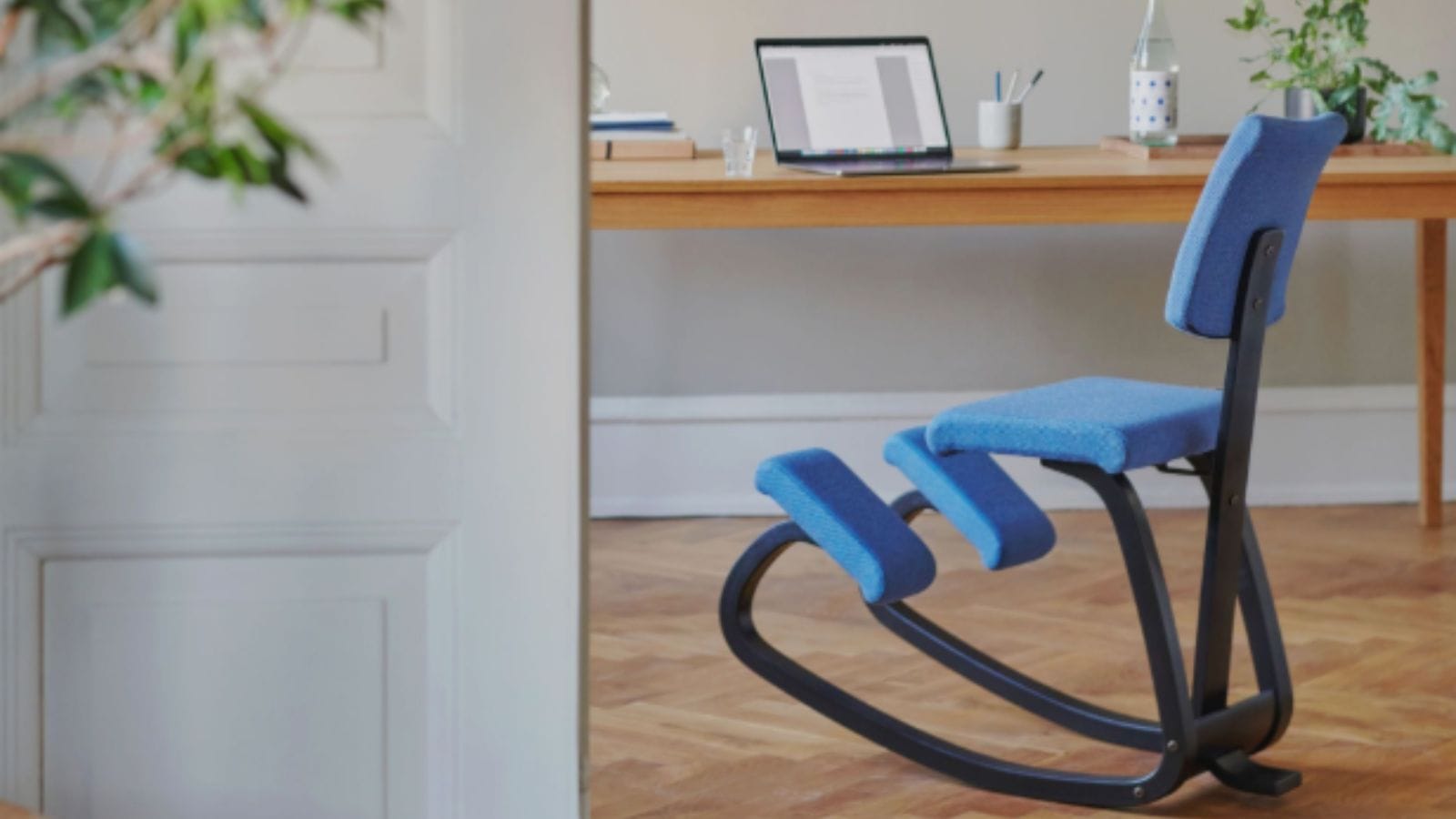
You’ve seen them in design-forward offices and ergonomic roundups: the kneeling chair. With its sloping seat pad and angled knee rests, it looks nothing like a traditional office chair. Proponents claim it eliminates back pain, forces perfect posture, and transforms how you sit. Skeptics call it a gimmick that ends up collecting dust after a week.
So which is it? Is the kneeling chair a genuine ergonomic solution, or just another passing trend?
The answer lies somewhere in the middle. When used correctly—and for the right people—kneeling chairs can offer real postural benefits. But they’re not a magic fix, and they’re certainly not for everyone. This guide breaks down how they work, their pros and cons, and three solid options to consider.
What Is a Kneeling Chair?
Source: https://www.varierfurniture.com/en
A kneeling chair (sometimes called a posture chair or balanced seating chair) is a type of seat that doesn’t have a traditional backrest. Instead, it features:
A forward-sloping seat pad that tilts your pelvis forward
Knee pads (or shin rests) that support your lower legs
No back support—your spine supports itself
The design originated in the 1970s with the Norwegian designer Hans Christian Mengshoel, who created the Balans chair. The idea was to mimic the posture of kneeling, which naturally aligns the spine and opens the hip angle.
When you sit in a kneeling chair, your body weight is distributed between your sit bones (on the seat pad) and your shins/knees (on the knee pads). This position is said to reduce pressure on the lower back and encourage an upright, engaged posture.
How Is It Supposed to Help Posture?
In a standard office chair, most people eventually slouch—rounding the lower back, sliding the hips forward, and craning the neck toward the screen. This position puts pressure on the lumbar spine and strains the muscles of the upper back.
A kneeling chair aims to:
Open the hip angle from the typical 90° to about 110–120°, which reduces tension on the psoas and lower back muscles
Tilt the pelvis forward into a neutral or slightly anterior position, which encourages the natural S-curve of the spine
Engage the core muscles because there’s no backrest to lean on
Align the head over the shoulders rather than jutting forward
The result, in theory, is an active sitting posture that reduces lower back strain and promotes spinal alignment.
Here’s an honest look:
| Claim | Reality |
|---|---|
| “Opens hip angle” | ✅ True—kneeling position naturally rotates pelvis forward, supporting spine curve |
| “Reduces back pain” | ⚠️ For some people—studies show mixed results; works best for specific lower back issues |
| “Strengthens core” | ❌ False—you’re still seated; core engagement is minimal |
| “Good for sciatica” | ⚠️ Maybe—can reduce pressure on sciatic nerve for some users, but not all |
The Pros: Where Kneeling Chairs Shine
| Pro | Why It Matters |
|---|---|
| Reduces lower back pressure | By distributing weight across sit bones and shins, it can relieve pressure on the lumbar spine |
| Encourages active sitting | No backrest means your core and back muscles stay engaged, preventing the passive slouch common in standard chairs |
| Opens the hip angle | Beneficial for people who sit for long periods and experience tight hip flexors |
| Compact footprint | Kneeling chairs often take up less floor space than traditional ergonomic chairs |
| Can be a useful rotation tool | Alternating between a kneeling chair and a standard chair throughout the day adds postural variety |
Who Might Benefit
People with chronic lower back pain who find standard chairs uncomfortable
Those who naturally slouch and want a chair that makes slouching difficult
Creative professionals who lean forward frequently (designers, drafters)
Anyone looking to add variety to their sitting routine
The Cons: Where Kneeling Chairs Fall Short
| Con | Why It’s a Concern |
|---|---|
| No back support | People with existing upper back or neck issues may find the lack of support tiring |
| Pressure on knees and shins | Can be uncomfortable or painful for people with knee issues, arthritis, or sensitive shins |
| Not suitable for all-day use | Most users find they need to switch back to a standard chair after a few hours |
| Learning curve | It takes time to adjust to the posture; some people never get comfortable |
| Limited adjustability | Many models lack the fine-tuning (armrests, headrest, lumbar) of premium ergonomic chairs |
| Can feel unstable | The tilted position can feel precarious at first, especially on carpet or uneven floors |
Who Should Avoid
People with knee injuries, patellofemoral syndrome, or recent knee surgery
Those with lower leg circulation issues
Anyone who needs armrests for shoulder support
Users who prefer a reclined, relaxed sitting posture
Scientific Evidence: What the Research Says
Studies on kneeling chairs are limited but generally positive—with caveats.
A 1989 study published in Spine found that kneeling chairs reduced spinal shrinkage (a marker of disc compression) compared to standard chairs. More recent research suggests that kneeling chairs can improve lumbar lordosis (the natural inward curve of the lower back) and reduce electromyographic (EMG) activity in the back muscles, indicating less muscular strain.
However, researchers also note that:
No single chair is perfect for everyone. Postural benefits depend on individual anatomy and how the chair is set up.
Kneeling chairs are best used intermittently, not as a sole seating solution.
Long-term studies comparing kneeling chairs to high-end ergonomic chairs are lacking.
The consensus: kneeling chairs can be a useful tool for postural variety and lower back relief, but they’re not a replacement for a well-adjusted ergonomic chair for most users.
3 Best Kneeling Chairs to Consider
If you’re ready to try a kneeling chair, here are three solid options across different price points.
1. Varier Variable Balans (formerly Variable Balans)
https://www.varierfurniture.com/en/thatsit/12501094311111
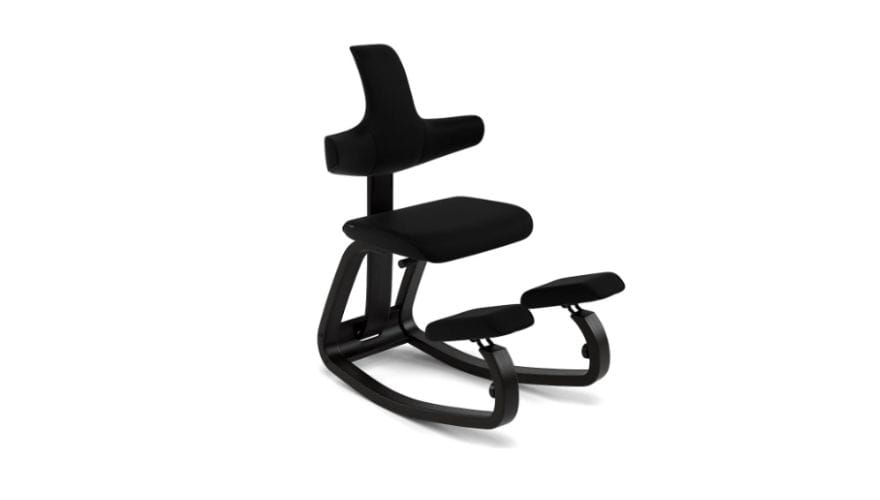
The original. The Varier Balans is the direct descendant of the 1970s Norwegian design. It’s made from high-quality bentwood plywood and features a comfortable padded seat and knee rest.
Pros: Iconic design; excellent build quality; wood frame is durable and aesthetically pleasing
Cons: Expensive; minimal adjustability
Best for: Design-conscious users who want the original kneeling chair experience
Price: $500–$600
2. Sleekform Austin Kneeling Chair
https://sleekform.com/products/the-austin-ergonomic-kneeling-chair?variant=44163134718165
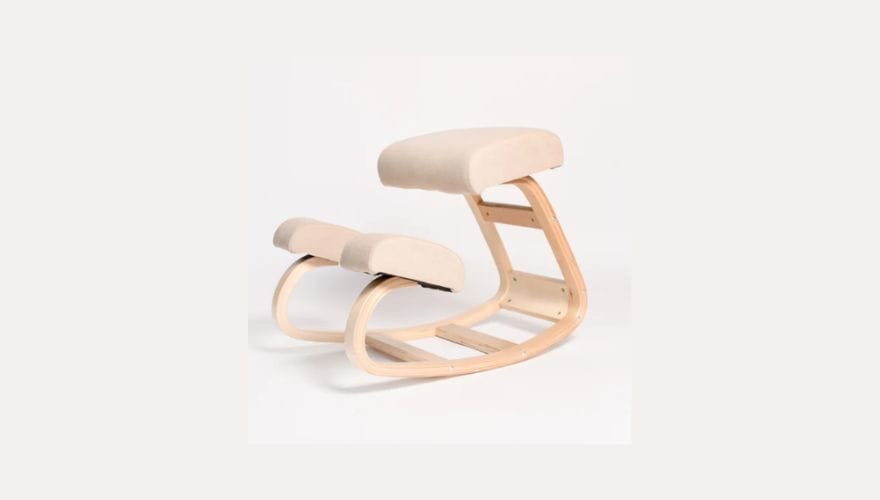
A modern take with more adjustability. The Sleekform Austin features a rocking base, adjustable seat height, and removable knee pads that can be positioned for different leg lengths.
Pros: Adjustable seat height (22–28 inches); rocking motion adds dynamic movement; padded knee rests; 250 lb capacity
Cons: Assembly required; some users find knee pads too firm initially
Best for: Users who want adjustability and the ability to set the chair to their specific body dimensions
Price: $150–$200
3. DRAGONN Ergonomic Kneeling Chair
https://www.amazon.com/DRAGONN-Ergonomic-Kneeling-Adjustable-Office/dp/B073ZN7B52?th=1
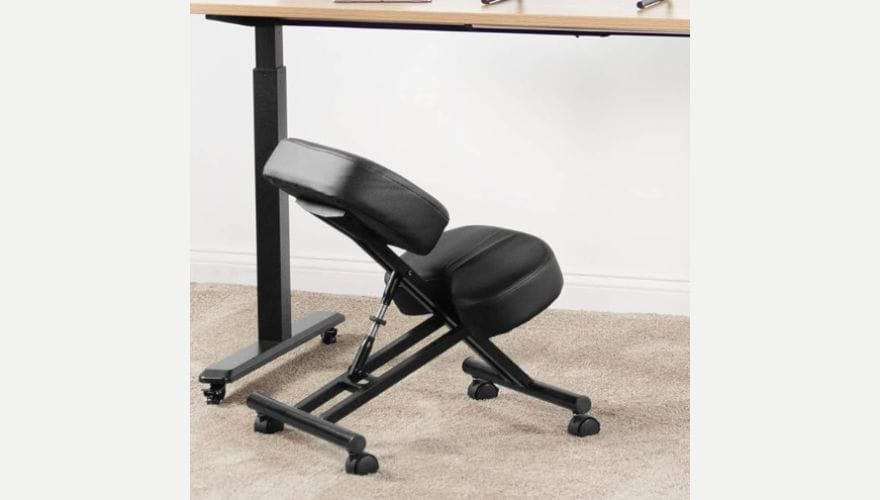
A budget-friendly option with surprising features. The DRAGONN chair includes a curved seat for better weight distribution, adjustable seat height, and a lightweight steel frame.
Pros: Affordable; height-adjustable; easy to move; 300 lb capacity
Cons: Less padding than premium models; frame can feel less stable on thick carpet
Best for: First-time users who want to try kneeling seating without a large investment
Price: $80–$120
How to Use a Kneeling Chair Correctly
If you decide to try a kneeling chair, follow these guidelines to avoid discomfort.
1. Start Slowly
Use it for 20–30 minutes at a time for the first week. Gradually increase duration as your body adjusts. Most people never use a kneeling chair for a full 8-hour day—it’s best rotated with a standard chair.
2. Adjust for Your Body
Seat height: Set so your thighs slope downward slightly, with your weight on your sit bones, not your shins.
Knee pads: Position so your shins rest comfortably without pressing into the kneecap. Your knees should be at a 110–120° angle.
3. Maintain Your Desk Setup
Your monitor should remain at eye level, keyboard at elbow height. The kneeling chair doesn’t change your workstation ergonomics—it changes how you sit in relation to it.
4. Alternate with Other Seating
The healthiest sitting approach is postural variety. Use a kneeling chair for 1–2 hours, then switch to a standard ergonomic chair, then stand with a sit-stand desk. No single chair is ideal for all-day use.
Frequently Asked Questions
1. Is a kneeling chair better for your back than a regular office chair?
For some people, yes. The forward-tilted position can reduce lower back pressure and encourage an upright spine. However, it’s not “better” in all cases—it’s different. Many ergonomists recommend alternating between kneeling and standard seating rather than choosing one exclusively.
2. Will a kneeling chair hurt my knees?
It shouldn’t if the chair is adjusted correctly. Your weight should be on your sit bones, not your knees. The knee pads are there for stability, not to bear your full weight. If you experience knee pain, reduce the time you spend in the chair or try a model with thicker, more adjustable knee pads.
3. Can I use a kneeling chair if I have bad knees?
It depends on the condition. People with osteoarthritis of the knee, patellofemoral pain, or recent knee replacement should generally avoid kneeling chairs. If you have mild knee sensitivity, start with very short sessions and consult your healthcare provider.
4. Do kneeling chairs help with sciatica?
Some people with sciatica find relief because the open hip angle reduces tension on the sciatic nerve. Others find the position aggravates symptoms. If you have sciatica, test a kneeling chair briefly before purchasing, and ideally with guidance from a physical therapist.
5. How long should I sit in a kneeling chair per day?
Start with 20–30 minutes and work up to 1–2 hours total per day. Even after acclimating, most users find kneeling chairs are best used in rotation—not for the entire workday. Aim for 20–30 minutes at a time, several times throughout the day.
6. Can kneeling chairs help with forward head posture?
Indirectly, yes. By promoting a more upright spine and engaging the core, a kneeling chair can help you maintain better head alignment. However, forward head posture also requires monitor height adjustment and awareness of neck position—no chair alone will fix it.
Conclusion: Trend or Tool?
The kneeling chair is not a gimmick, but it’s also not a magic solution. It’s a specialized tool that works well for certain people and certain situations.
It’s worth trying if:
You experience lower back discomfort in standard chairs
You want to add postural variety to your workday
You’re willing to use it in rotation, not as your sole chair
You don’t have knee issues that would make it uncomfortable
It’s probably not for you if:
You have chronic knee pain or knee injuries
You prefer to lean back or recline while working
You need armrests or head support
You’re looking for a single, all-day seating solution
If you’re curious, start with an adjustable, budget-friendly model like the Sleekform Austin or DRAGONN. Use it sparingly at first, and listen to your body. For many, a kneeling chair becomes a valuable part of a healthy sitting routine—not a replacement for everything else, but a welcome alternative that breaks the monotony of traditional seating.



_2-1.webp)
_3-1.webp)


