





 Meet&Co
Significant, open spaces can feel overwhelming without clear boundaries. Whether it’s a spacious office or an open-plan home, partition walls offer a stylish and straightforward way to break the area into practical sections without committing to permanent construction.
These walls do not support a building as the main walls do, but separate one space from another. These may be constructed of glass, brick, wood, metal, or other materials.
When establishing a new office, establishing a personal study room at home, or partitioning a restaurant into eating areas, knowing the various types of partition walls will guide you in making the correct decision.
This guide will discuss more than 12 types of partition walls, their advantages, and how to select the most appropriate one.
What Are Partition Walls?
Partition walls are interior walls constructed to subdivide larger spaces into smaller, practical ones. Consider them portable room walls that cannot support the weight of the structure overhead.
They establish solitude in the crowded offices; isolate bedrooms in homes; design rooms in restaurants; and sort out classrooms in schools. The most advantageous aspect is that many types of partition walls can be shifted, removed, or altered without damaging your building’s structure.
There are two main categories:
- Load-bearing partition walls (also called internal walls) support the building’s weight and connect from the foundation to the roof
- Non-load-bearing partition walls only divide space and don’t carry structural weight
Most modern types of partition walls are non-load-bearing, making them easier and cheaper to install.
Types of Partition Walls
Let’s explore the different types of partition walls you can use in your home, office, or business.
1. Glass Partition Walls

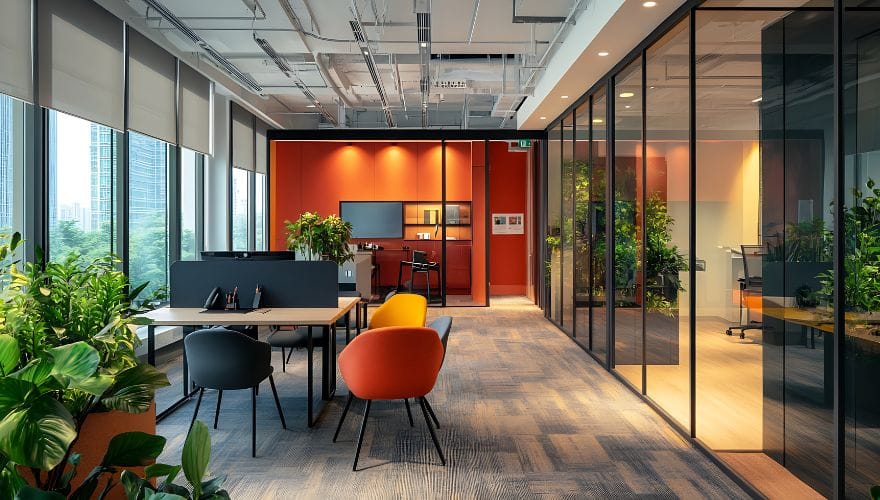
The most common type of wall in modern offices and homes is glass partition walls. Transparent or semi-transparent walls are able to transmit natural light, but at the same time, separate an area into specific sections.
There are two main types of glass partitions:
- Glass Sheet Partitions: They involve the use of big glass sheets held together by wooden or metal frames. These are panels that subdivide the space and free the movement of light. They are perfect in offices that require visual privacy but an attractive and open appearance.
- Hollow Glass Block Partitions: These partitions, made with lightweight glass blocks in different shapes and sizes, are used. The dimensions most frequently used are approximately 14 14cm, 19 19 cm,m each approximately 10cm thick. Either blocks will be clear or will have decorative patterns.
Benefits of Glass Partition Walls:
- Allow natural light to pass through
- Easy to clean and maintain
- Pest-proof and moisture-proof
- Modern and professional appearance when using quality glass
- Can be customized to fit any space
Meet&Co Glass Partition Walls
At Meet&Co Furniture, we create budget-friendly glass walls that save space while allowing natural light to brighten your workspace. These partitions are ideal for homes, offices, restaurants, hotels, schools, and retail spaces.
They help define areas, provide visual privacy, and manage foot traffic effectively. You can choose between custom glass partitions or fixed glass options to suit your layout and design needs. Used on their own or combined with other Meet&Co products, they create a clean, modern, and functional environment.
Key Features:
- Highly customizable panel configurations
- Premium aluminum alloy frame with sturdy glass
- Safe and durable construction
- Transparent design maximizes natural light
- Suitable for any setting from offices to schools
- 1-3 year warranty included
2. Brick Partition Walls
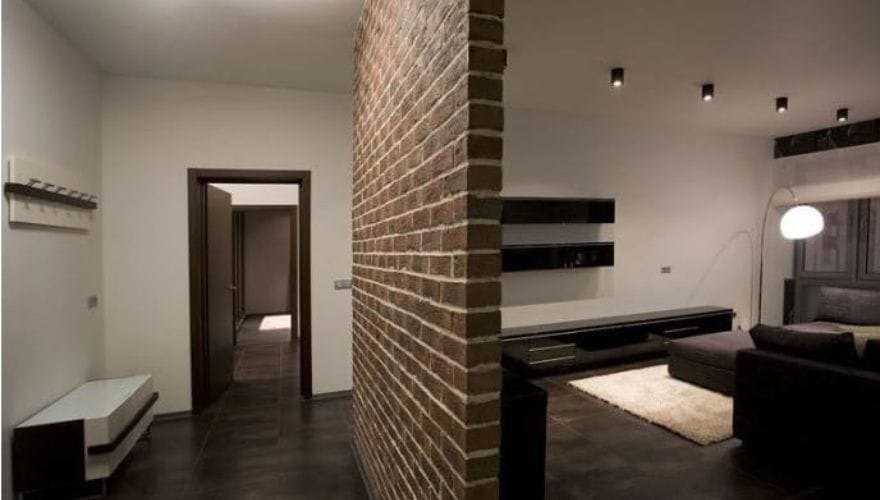
Image Credit:https://cloudfrontgharpediabucket.gharpedia.com/uploads/2019/05/Plain-Brick-Partition-Wall-02-0306040003.jpg
Brick partition walls are a traditional, strong, and affordable option. They’ve been used for many years because bricks are easy to find and can last a long time.
Types of Brick Partition Walls:
- Plain Brick: Most economical type using stretcher-bonded bricks with cement mortar, creating ~10cm thick walls. Plastered both sides, it’s fireproof and sturdy but limited to 2m height per day.
- Reinforced Brick: Stronger variant with steel reinforcements (wire mesh or 6mm iron bars) added every 3-4 rows, requiring no expensive formwork.
- Hollow Clay Brick: Uses special hollow terracotta bricks—lightweight yet strong. Benefits include excellent fire resistance, sound insulation, and durability while being cost-effective.
- Brick Nogging: Combines bricks with wooden frame (posts at 60-150cm spacing). However, timber may rot and mortar adhesion to wood can be problematic.
3. Concrete Partition Walls
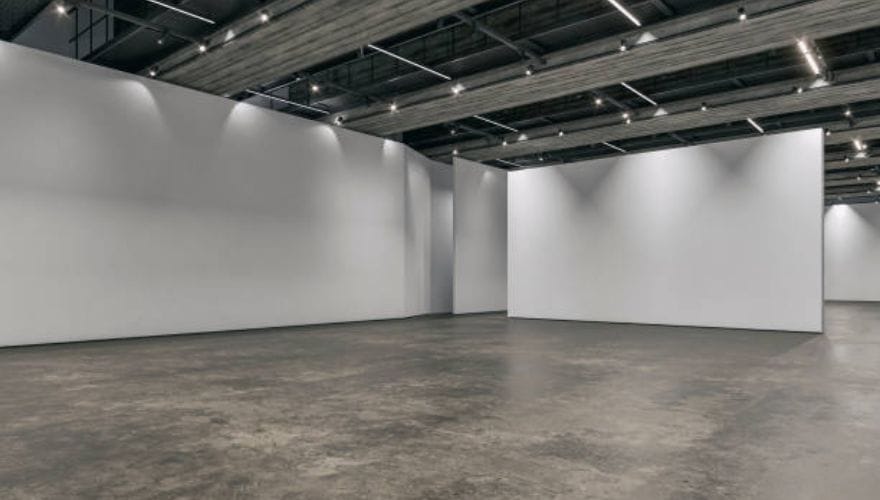
Image Credit: https://media.istockphoto.com/id/1648608068/photo/side-view-of-an-empty-white-large-gallery-showroom-interior-with-white-partition-empty-walls.jpg?s=612×612&w=0&k=20&c=6nD0O5G05FjB8zOlO43bNjXLb6QI3E9zOlYukP4VxzE=
Concrete partition walls consist of concrete slabs (plain or reinforced) supported by vertical members. These can be cast in place or prefabricated.
Concrete Partition Walls:
- Cast-in-Situ: Poured on-site at 80-100mm thickness with steel reinforcement (bars/mesh) embedded centrally. Typically uses M15 concrete (1:2:4 mix). Provides excellent horizontal and vertical stability but requires expensive formwork.
- Precast Slabs: Factory-manufactured slabs (25-40mm thick) transported to the site and fixed to precast posts. Joints filled with cement mortar. Thinner than cast-in-situ, this method offers faster installation and cleaner construction compared to on-site casting, though it relies on precise factory production and careful transportation.
Benefits of Concrete Partitions:
- Very strong and durable
- Fire-resistant
- Can last for decades
- Good sound insulation
- Stable structure
4. Wooden Partition Walls
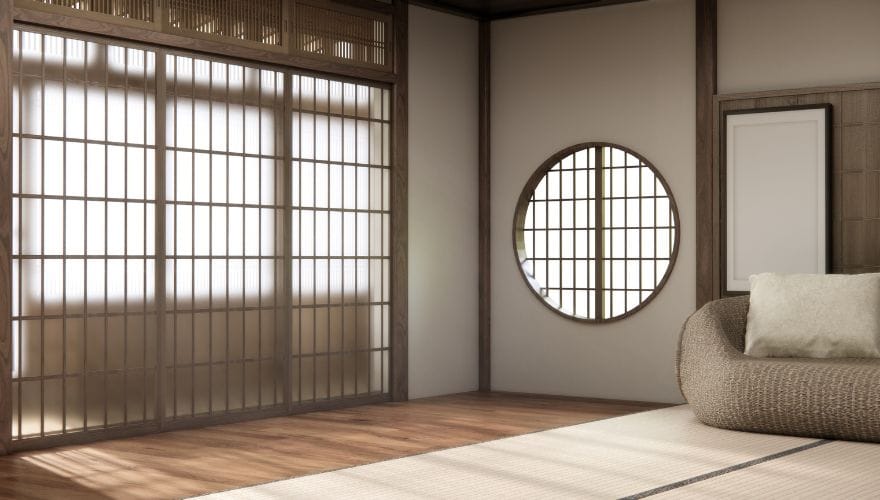
Wooden partition walls are appropriate to introduce natural beauty and warmth to any space. They are not heavy and are easy to construct, and can be made in a variety of styles.
These partitions are made of a wooden frame and are adorned with boards, plywood, or panels. The frame has vertical posts and horizontal members to support the material used to cover.
Benefits:
- Easy and quick to install
- Lightweight
- Natural and attractive appearance
- Can be painted or stained in any color
- Affordable
Drawbacks:
- Not fire-proof
- Not soundproof
- Not moisture-proof
- Can be affected by insects and rot
- Not suitable for damp areas
Wooden partitions work best in dry areas and where fire safety isn’t a major concern. Regular maintenance helps them last longer.
5. Metal Stud Partition Walls
Metal stud walls are the most popular type of partition wall for modern offices. They consist of metal frames (usually aluminum or steel) covered with plasterboard on both sides.
Types of Metal Frames:
- C studs – shaped like the letter C
- I studs – shaped like the letter I
- Acoustic studs – specially designed for better sound blocking
Frame thickness varies from 50mm to 146mm, depending on your needs. Taller ceilings usually need thicker frames (146mm).
Types of Plasterboard:
- Standard plasterboard – for basic partitions
- Fire-resistant board – for extra fire protection
- Moisture-resistant board – for bathrooms and wet areas
- Sound-blocking board – for better noise control
- Duraline board – extra tough for schools and hospitals
Insulation Options:
- 25mm isowool – standard insulation
- 50mm isowool – better insulation (most popular)
- Rockwool batt – best for soundproofing
Benefits:
- Very flexible design options
- Quick to install
- Easy to move or reconfigure
- Fire-resistant when using proper materials
- Good sound insulation with the right setup
- Lightweight
- Takes up less space than brick walls
6. Plaster Slab Partition Walls
Plaster slab partitions use boards made from plaster of Paris (burnt gypsum) mixed with fibrous materials like sawdust or wood shavings. This mixture makes the walls lighter.
Each slab is typically 1-2 meters long, 30 cm high, and 50-100 mm thick. They’re made in iron or timber molds and have special grooves that lock together, creating strong joints.
Benefits:
- Lightweight
- Don’t need plastering (can be left smooth)
- Quick to install
- Good surface for painting or wallpaper
- Fire-resistant
- Economical
7. Gypsum Board Partition Walls
Gypsum partitions are similar to plaster slabs but are more modern. These walls are known for their smooth finish and excellent fire-resistant properties.
They’re commonly used in commercial spaces because they provide good soundproofing and are easy to install. The smooth surface is perfect for painting or wallpapering.
Benefits:
- Smooth, ready-to-paint surface
- Fire-resistant
- Good soundproofing
- Easy to install
- Lightweight
- Available in various sizes
8. Metal Lath Partition Walls
These partitions use metal mesh (lath) supported by steel or timber frames. Plaster is applied to both sides of the metal mesh, creating a thin but strong wall.
Benefits:
- Very thin profile
- Strong and durable
- Fire-resistant
- Rigid structure
- Can be curved or shaped
The metal framework provides excellent support, and the plastered surface can be painted or decorated as desired.
9. Strawboard Partition Walls
Strawboard partitions are made from compressed straw covered with thick paper or hardboard. These are particularly useful as movable partitions.
Benefits:
- Lightweight
- Easy to move
- Heat-proof
- Sound-proof
- Quick to install
- Economical
These work well in temporary spaces or areas where you might want to change the layout frequently.
10. Aluminum Partition Walls
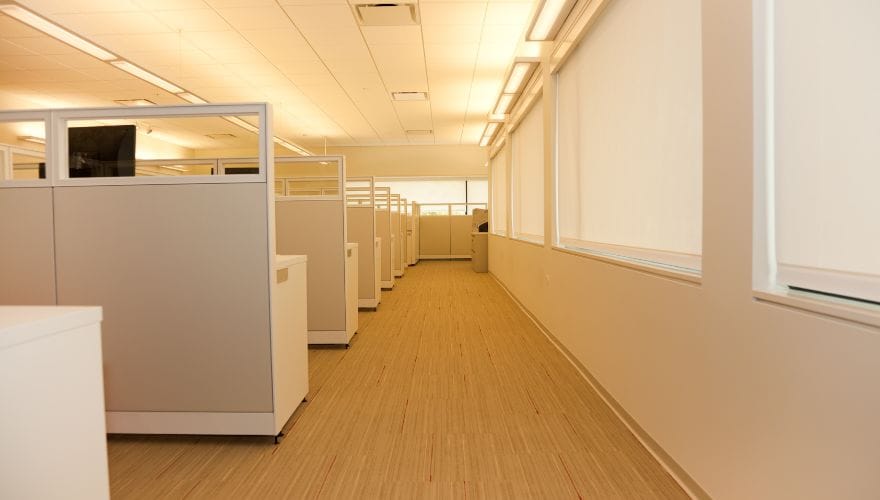
Aluminum partitions offer a sleek, modern look perfect for contemporary offices and homes. These walls use aluminum frames and can be combined with glass, solid panels, or other materials.
Benefits:
- Lightweight but strong
- Corrosion-resistant
- Durable
- Modern appearance
- Easy to customize
- Low maintenance
- Can be recycled
Aluminum partitions are especially popular in corporate offices, hotels, and modern homes.
11. Movable/Operable Partition Walls
Operable partition walls are one of the most flexible options available. These walls can slide, fold, or roll to open or close spaces as needed.
Types include:
- Sliding panels
- Folding screens
- Accordion-style dividers
- Mobile partitions on wheels
Benefits:
- Maximum flexibility
- Easy to reconfigure spaces
- No permanent installation needed
- Can create one large space or multiple small ones
- Available in many materials (wood, metal, glass, fabric)
- Sustainable and reusable
Uses:
- Conference rooms that need different sizes
- Classrooms that combine for assemblies
- Restaurants with private dining areas
- Hotels with flexible event spaces
- Offices with changing team sizes
12. Acoustic Partition Walls
Acoustic partitions are specially designed to reduce noise and create quiet spaces. They’re essential in busy offices, schools, hospitals, and anywhere concentration is important.
These walls use special materials and construction methods to absorb and block sound. Common materials include:
- High-density acoustic panels
- Double-glazed glass
- Sound-absorbing fabric
- Dense insulation materials
Benefits:
- Excellent noise reduction
- Creates private, quiet spaces
- Improves concentration
- Reduces stress from noise
- Available in attractive designs
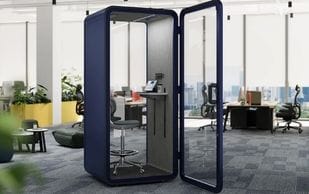
Acoustic partitions are perfect for creating private offices, meeting rooms, phone booths, and focus areas in open offices.
How to Choose the Right Partition Wall
Selecting the right partition wall depends on several factors:
- Purpose: Need privacy? Choose solid walls or frosted glass. Want openness? Choose clear glass. Need quiet? Choose acoustic partitions.
- Budget: Most affordable options include metal stud, PVC, and plasterboard. Mid-range choices are wooden, aluminum, and standard glass. Higher cost options include custom glass and acoustic panels.
- Durability: Brick and concrete are permanent. Metal studs and wooden are semi-permanent. Operable partitions and screens are temporary.
- Sound Control: Double-glazed glass and acoustic panels offer high blocking. A metal stud with insulation provides moderate control. Single glass and thin partitions offer low control.
- Fire Safety: Fire-resistant options include brick, concrete, gypsum, and metal with fire-rated boards. Always check local fire codes.
- Installation Time: Operable partitions are quickest. Metal stud and glass panels are moderate. Brick and concrete are the slowest.
- Maintenance: Glass, aluminum, and PVC need low maintenance. Metal stud and plasterboard need moderate care. Wood needs higher maintenance.
- Style: Glass and aluminum suit modern spaces. Brick and wood suit traditional designs.
Frequently Asked Questions
Q1. Do partition walls soundproof?
Yes, but it will depend on the type. Good soundproofing can be offered by acoustic partitions, double-glazed glass walls, and well-insulated metal-stud walls. Glass that is used in a single pane and walls that are very thin block away less sound.
Q2. Are partition walls balanced?
That depends on the type. Wall, brick,k, and concrete are technically permanent. The glass panels, metal walls with metal studs, and operable partitions, in particular, can be relocated or dismantled comparatively easily.
Q3. What is the cost of partition walls?
The prices are highly differentiated based on material, size, and complexity. Simple plasterboard partitions are typically priced between 50-1 and 0 dollars each square meter. One-off glass systems are as much as 300 to $500 or higher per square meter. Obtain the prices of various suppliers to get the best price on your project.
Q4. Which is the optimal partition of an open office?
Glass partitions are a good idea since they retain the flow of light and also allow the visual connection without compromising the separation. To prevent noise, use acoustic glazes made of double polycrystallized glass, or mix glass and solid boards.
Q5. Would I be able to install the partition walls on my own?
Screen or simple wooden partitions can be a DIY project, assuming that your construction skills are basic. But at least more sophisticated systems, such as glass partitions or insulated metal-stud walls, must be built by professionals to keep them safe and of high quality.
Q6. Are glass partitions safe?
Yes, with the correct materials. They should always use tempered or laminated glass, which is less likely to give way. Such glasses are far stronger than the common glasses,s and in case of an accident, they break into small pieces which are less harmful.
Conclusion
Different types of partition walls offer endless possibilities for creating functional, beautiful spaces in homes, offices, and commercial buildings. Whether you choose transparent glass partitions that maximize light, solid brick walls for durability, or flexible operable systems that adapt to changing needs, there’s a solution for every situation.
The key is understanding your specific requirements: budget, purpose, durability, aesthetics, and future flexibility. For high-quality office partitions and glass partition walls, visit Meet&Co Furniture to explore customizable solutions backed by professional support and quality guarantees.
Remember, the right partition wall doesn’t just divide space—it transforms how people work, live, and interact in that space. Choose wisely, and you’ll create an environment that supports productivity, comfort, and well-being for years to come.
Ready to transform your space? Contact Meet&Co today for a free consultation and quote on our glass partition walls and office partition systems. Let us help you create the perfect balance of openness, privacy, and functionality in your home or workplace.