





 Meet&Co
So you‘ve got a standing desk. Or you‘re thinking about getting one. Either way, you already know the basic idea: sit less, move more, feel better.
But here‘s something people don‘t always realise. Standing all day isn‘t the answer either. Your legs get tired. Your feet start to ache. Your lower back can actually hurt more if you stand without proper rest.
A standing desk isn‘t a replacement for a chair. It’s a complement.
The trick is finding the right kind of seating for your new setup. A standard office chair usually won‘t cut it – its seat maxes out around 16–21 inches, which is perfect for a normal desk but far too low for a standing desk. You‘ll end up peering over the desk like a child at the grown‑up table.
This guide walks you through what kind of chair actually works with a standing desk, then suggests five products – three chairs and two desks – to help you put together a sit‑stand setup that fits your workstyle.
Why Your Standing Desk Needs a Different Kind of Chair
There’s a simple reason. A standard office desk is about 28–30 inches high. A standing desk in standing mode is usually set much higher – around your standing elbow height, which for most people is around 40–44 inches off the floor.
A normal office chair simply can’t reach that height. And if you lower the desk just to use your chair, you’re not really using the standing desk anymore.
That’s where drafting chairs (also called sit‑stand stools or perching chairs) come in. They look a lot like regular office chairs, but with a few important differences:
-
Extended height range. Drafting chairs can go much taller than standard task chairs, often reaching 28–32 inches or even higher. That means you can sit at your standing desk comfortably – without lowering it.
-
Foot ring. Because your feet might not reach the floor at these heights, drafting chairs usually include an adjustable foot ring or footrest. This supports your legs, improves circulation, and prevents that awkward “legs dangling” feeling.
-
Smaller footprint. Many are designed to be slimmer than full‑size executive chairs, which helps them tuck under a standing desk when not in use.
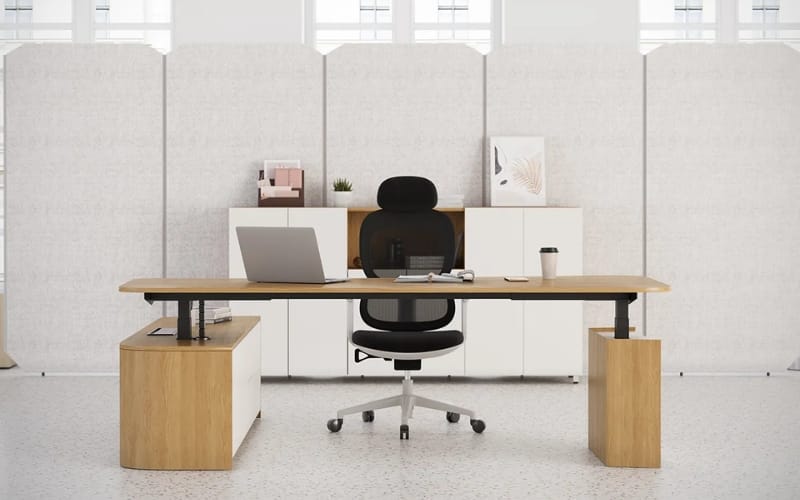
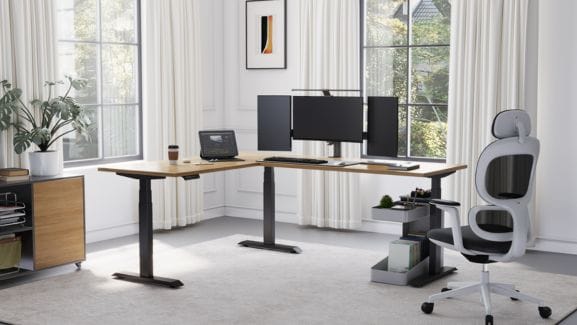
Sendi E Executive Standing Desk
Types of Chairs for Standing Desk Users
Not everyone needs the same kind of seating. Here‘s a quick breakdown of your options.
1. Drafting Chair (Full Chair)
Best for: People who want a proper sitting experience at their standing desk.
What it is: A taller version of a standard ergonomic chair, complete with backrest, armrests, and lumbar support. Most include a foot ring for comfortable leg positioning.
2. Perching Stool (Saddle‑Style)
Best for: Active sitters who want to maintain an open hip angle.
What it is: A higher stool with a saddle‑shaped seat that tilts your pelvis forward. It encourages a posture between sitting and standing – ideal for shorter perching sessions throughout the day.
3. Standing Desk Stool / Wobble Stool
Best for: People who want to keep moving even while seated.
What it is: A compact stool on a rounded base that allows gentle rocking or wobbling. It engages your core and promotes micro‑movements, which can reduce stiffness during long work sessions.
| Seat Type | What It Is | Best For | Chair Recline Options |
|---|---|---|---|
| Drafting Chair | Tall ergonomic chair | Proper sitting, back support | Adjustable recline |
| Perching Stool | Saddle‑shaped, open hips | Active leaning, short periods | Minimal recline |
| Standing Stool | Compact, wobble base | Constant micro‑movement | Usually no recline |
No one can tell you exactly which is right – a lot depends on how long you sit, how much you move, and what your back needs. But many standing desk users eventually end up with two options: a drafting chair for longer seated sessions, and a stool for quick perching breaks.
💡 Our designer’s tip: If you‘re new to standing desks, start with the ”sit‑stand‑lean” approach: alternate between sitting in a drafting chair, standing at full height, and perching in a forward‑leaning posture. This three‑position rhythm keeps your body moving and engaged all day without over‑fatiguing any single set of muscles.
Also see: What’s the Best Standing Desk Chair? Our Top 8 Picks for 2026 (Reviewed)
3 Chairs for Your Standing Desk
Here are three chairs that work well with standing desks – from a classic drafting chair to a minimalist perching stool.
1. Meet&Co Style Ergonomic Office Chair

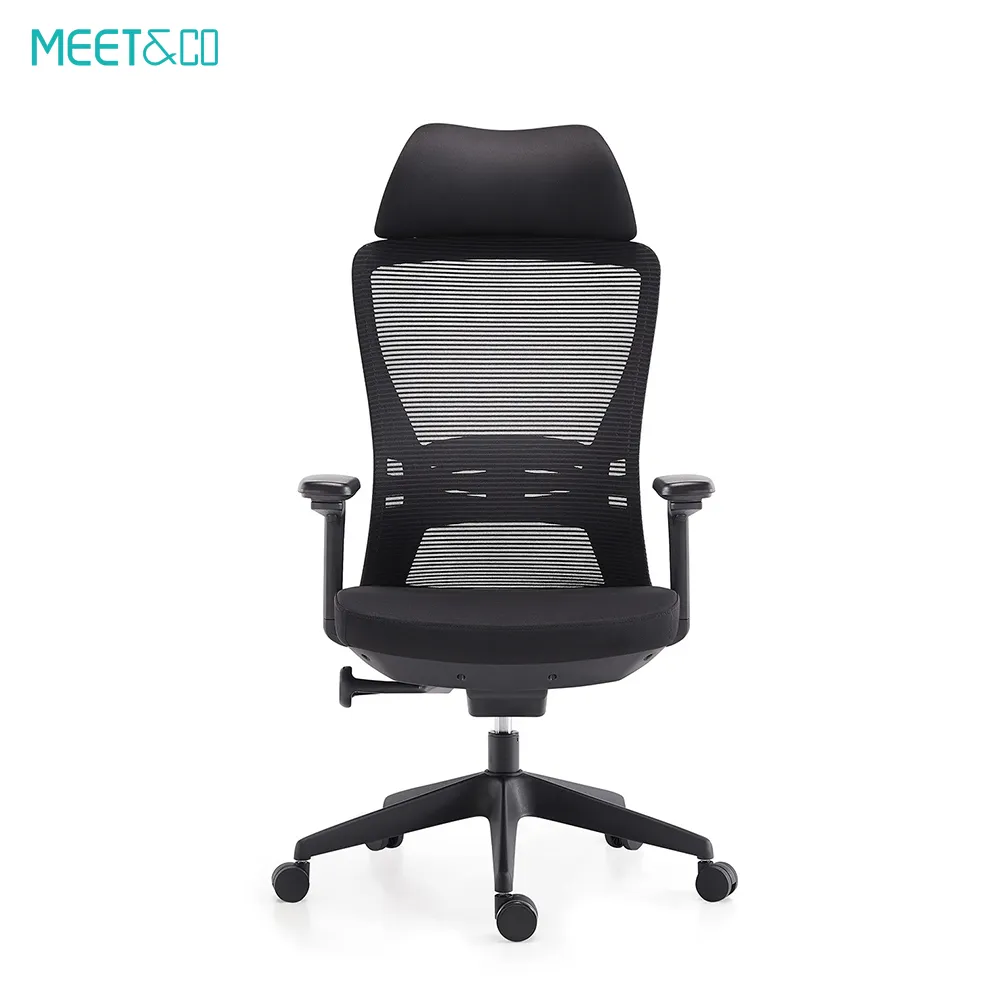
Wait – this looks like a regular office chair. And it is. But here’s the trick: the Style chair works beautifully at a lowered standing desk. Not everyone stands all day. Many standing desk users lower their desk to seated height for a few hours, then raise it again. For that rhythm, you need a comfortable, supportive chair – not a drafting stool.
The Style chair is built for those longer seated periods. Its gently sloping waterfall seat edge relieves pressure behind your knees – a small detail that keeps your legs comfortable even after hours of sitting. The breathable airflow fabric means you won‘t overheat, even on warmer days. And the adjustable armrests, headrest, and recline let you find a position that works for you, whether you’re typing away or leaning back to think.
The chair comes in multiple colours (Black, Blue, Dark Grey, Grey, Pink, Red) and fabric finishes, so you can match your workspace.
Best for: People who alternate between standing and sitting throughout the day, and who want a proper ergonomic chair for the sitting phase of their work.
2. HON Volt Drafting Chair
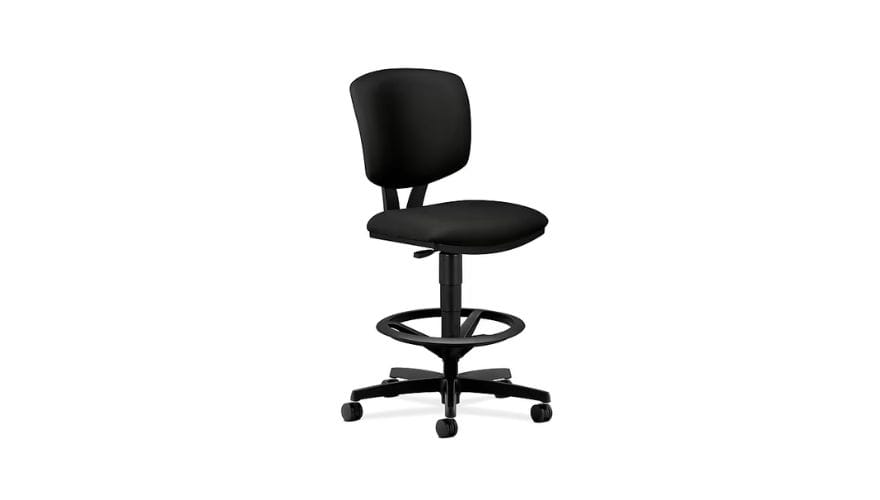
Soource: https://www.hon.com/chairs/volt
If you already know you want a drafting chair, this is a reliable choice. The HON Volt is designed specifically for sit‑to‑stand applications.
What stands out about the Volt is its generous seat and back cushions – they‘re contoured for comfort without being overly plush. The chair includes a foot ring, which many drafting chairs leave off the spec sheet, and the extended-height pneumatic adjustment lets you move seamlessly between sitting and perching. It’s also armless, which makes sliding it under your desk when you‘re standing a little easier.
A word of caution: the Volt is a drafting stool rather than a full task chair. That means it’s perfect for perching and short sitting sessions, but it‘s not designed for all‑day seated work. Pair it with a secondary chair if you spend long hours in a seated position.
Best for: Active desk users who want a sturdy sit‑stand stool for short to medium sitting sessions.
3. Bluetooth Single‑Lever Adjustable Drafting Chair
This chair is made for people who want a clean, simple transition between sitting and standing, with all the core features of a drafting chair dialled in. The stand‑out feature is the single‑lever height adjustment: a simple pneumatic lever right under the seat lets you raise or lower the chair with one hand, making it effortless to switch between sitting at your standing desk and perching or standing.
The chair includes a height‑adjustable foot ring, padded back and seat for moderate support, and a 360° swivel base that keeps you mobile at taller heights. It also uses breathable mesh on the back, which is helpful if your workspace tends to run warm.
What this chair doesn’t have is extensive ergonomic adjustability – it’s built for straightforward sit‑stand use, not hours of fine‑tuning. For that, you‘d want a dedicated task chair like the Meet&Co Style above.
Best for: Standing desk users who want a reliable drafting chair with one of the simplest adjustment systems available.
Chairs at a Glance
| Chair | Type | Best for | Key Feature |
|---|---|---|---|
| Meet&Co Style | Task chair | Lowered‑desk seated sessions | Waterfall seat, breathable fabric, full ergonomic adjustments |
| HON Volt | Drafting stool | Sit‑stand perching, shorter sits | Contoured cushions, extended height range, foot ring |
| Bluetooth Single‑Lever Drafting Chair | Drafting chair | Frequent height changes, active transition | One‑hand height lever, mesh back, adjustable foot ring |
2 Standing Desks Worth Considering
Of course, you can‘t have a standing desk setup without the desk itself. Here are two solid electric standing desks that bring reliable adjustment and thoughtful features.
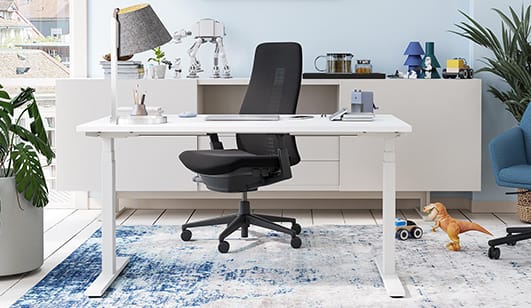
1. Meet&Co Sendi E Height Adjustable Standing Desk
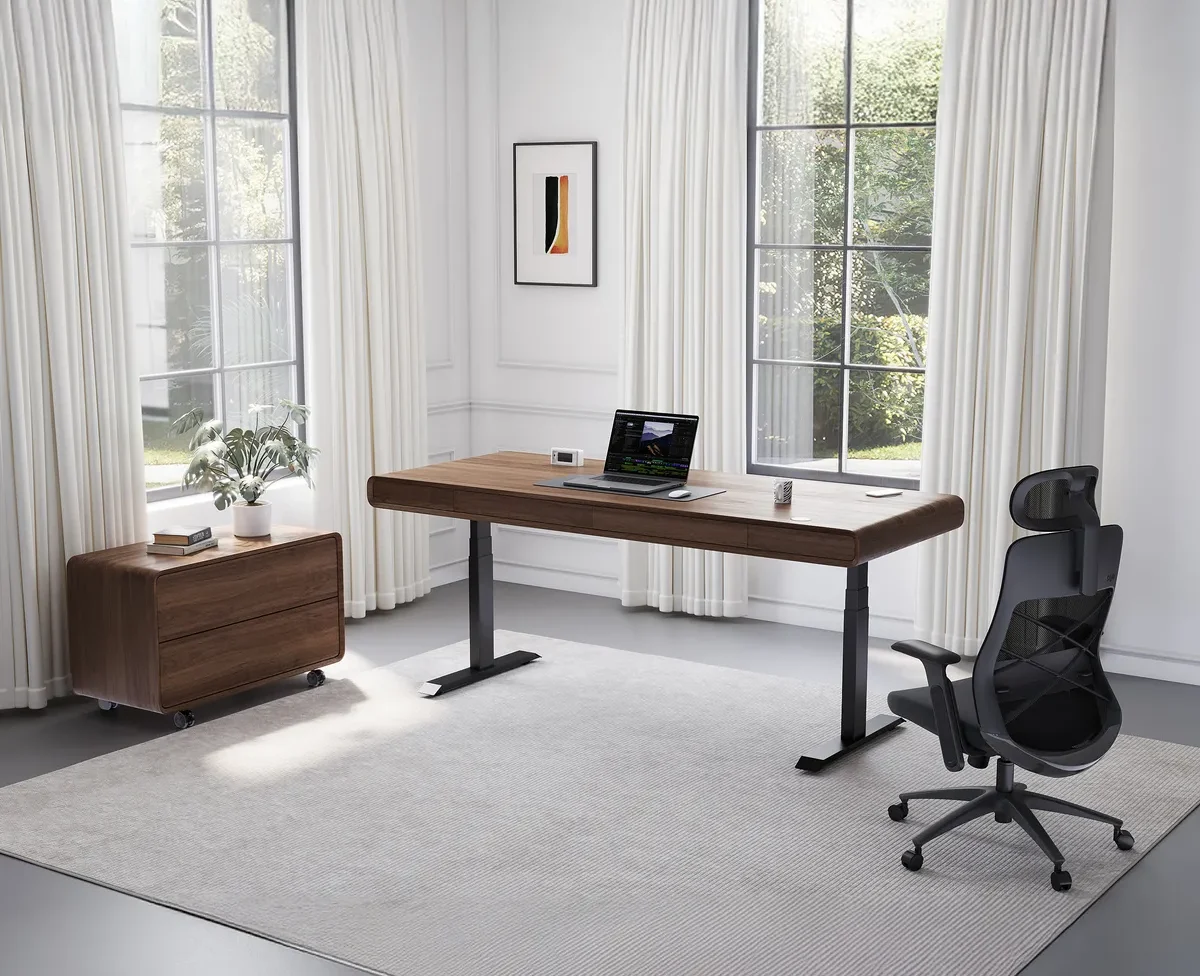
The Sendi E is a dependable electric standing desk built for people who actually use the adjustment feature – not just set it once and forget it.
The quiet dual‑motor system glides up and down smoothly, with minimal noise, so you won‘t disturb yourself or anyone nearby when you change heights. The anti‑collision technology automatically reverses direction if the desk hits an obstacle, which is a useful safety feature for desks with drawers or monitors. Four programmable memory presets let you save your preferred sitting and standing heights, so you can switch postures with a single touch.
One detail that sets the Sendi E apart is the built‑in drawer that slides neatly under the desktop. It’s perfect for keeping pens, cables, or notebooks close at hand – small organisation touches matter when you‘re rearranging your setup throughout the day.
Best for: Home offices, executive workspaces, and anyone who wants a desk that’s as functional as it is clean‑looking.
2. Uplift V2 Standing Desk
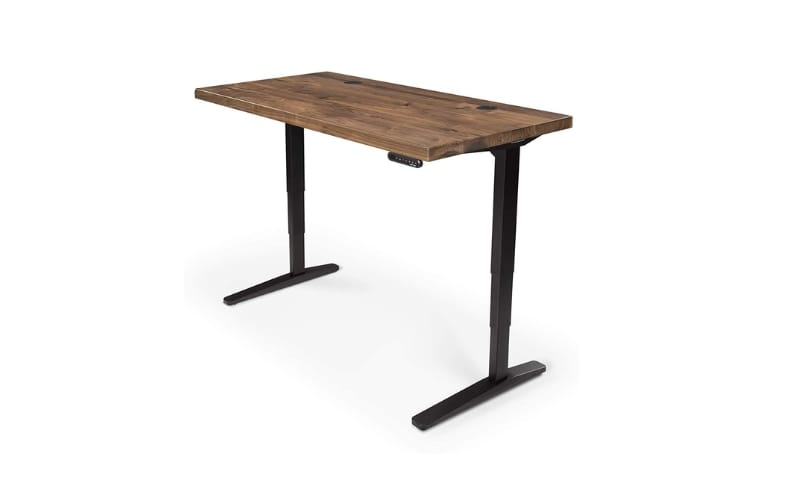
Uplift V2 Commercial Standing Desk
If you‘ve spent any time researching standing desks, you‘ve probably come across Uplift. It‘s one of the most widely recommended brands – and for good reason.
The V2 offers a huge amount of customisation: dozens of laminate, wood, and bamboo desktop finishes, plus a wide range of frame colours (silver, black, white). The dual‑motor system provides quiet, stable height adjustment across a generous range, and many users report excellent stability even at standing height – no wobbling while typing.
Where the Uplift V2 really shines is optional features. You can add a wide range of extras: cable management trays, grommet‑mounted power outlets, under‑desk CPU holders, monitor arms, balance boards for active standing, and more. It’s a desk you can build out over time as your needs evolve.
The trade‑off is price. Uplift sits in the premium tier – you’re paying for the quality engineering, the heavy‑duty frame, and the 15‑year warranty. If budget is less of a concern, it‘s an excellent long‑term investment.
Best for: Buyers who want maximum customisation, premium build quality, and a wide range of accessories.
Also see: Uplift V2 Standing Desk Review: Features, Pros, Cons & Best Alternatives
Desks at a Glance
| Desk | Motor | Memory Presets | Extra Features | Best For |
|---|---|---|---|---|
| Meet&Co Sendi E | Dual‑motor, quiet | 4 presets | Built‑in drawer, anti‑collision | Home offices, value‑conscious buyers |
| Uplift V2 | Dual‑motor, stable | 4 presets | Extensive customisation, accessories | Premium builds, long‑term investment |
Frequently Asked Questions (FAQ)
1. Do I really need a special chair for a standing desk?
If you plan to sit at your desk even sometimes – yes. A standard office chair is too short for a desk set at standing height. Your knees will push against the underside, or you‘ll find yourself hunching from a weird angle. A drafting chair bridges that height gap properly, with a foot ring to keep your legs comfortable.
2. What‘s the difference between a drafting chair and a regular office chair?
The main difference is height range. Standard office chairs max out around 16–21 inches – fine for normal desks. Drafting chairs go higher, often up to 30 inches or more, and include a foot ring because your feet might not reach the floor. Some drafting chairs come with backrests and armrests; others are minimalist stools.
3. Can I use a standing desk without any chair at all?
Yes, some people do. But standing for hours without a break leads to its own problems – foot and leg fatigue, lower back tightness, and restricted movement after a long day. The healthiest approach is a balanced one: alternate between sitting, standing, and perching throughout your workday. That‘s where having the right chair (or stool) comes in.
4. Which should I buy first – the desk or the chair?
The desk. You can always adjust your sitting height by using a temporary kitchen stool or an existing dining chair while you shop for a proper drafting chair. But you can’t really make a desk taller or shorter without the desk itself. Get the desk first, set it up, then measure for the chair.
_20.webp)