





 Meet&Co
If you work at a desk, you’ve probably felt it. That nagging ache in your shoulders at the end of the day. A stiff lower back. Maybe your wrists feel sore after typing.
The cause of this discomfort sometimes is surprisingly simple: your desk is the wrong height.
So, what is the standard desk height? The short answer is between 28 and 30 inches (71 to 76 cm). This is the size you’ll find on most ready-to-assemble desks.
But here’s the important truth: the “standard” desk height isn’t right for everyone. If you are shorter or taller than average, a standard desk can actually cause pain and poor posture over time.
Getting your desk height right is a core part of creating an ergonomic workspace. It helps you sit with better posture, reduces strain, and can even boost your productivity.
This guide will help you find your personal perfect desk height. The Meet&Co team will cover the simple rules for sitting and standing, and give you practical solutions if your current desk doesn’t fit.
What is the Standard Desk Height?

The standard height for most office and computer desks is 28 to 30 inches (71 to 76 centimeters). If you had to pick one number, 29 inches is the most common.
You might wonder where this number comes from. It was designed decades ago to fit the “average” person. The idea was that someone between 5’8″ and 5’10” tall could sit at it comfortably. Their elbows would be at a 90-degree angle, and their feet would be flat on the floor.
But people come in all shapes and sizes. This is why “standard” is really just a starting point. It’s a useful guide for manufacturers, but it may not be the right guide for your body.
To give you a quick overview, here is a simple table of common desk types and their typical heights.
| Desk Type | Typical Height Range |
| Office/Computer Desk | 28 – 30 inches (71 – 76 cm) |
| Executive Desk | 29 – 30 inches (73 – 76 cm) |
| Writing Desk | 28 – 30 inches (71 – 76 cm) |
| Fixed-Height Standing Desk | Around 44 inches (112 cm) |
| Adjustable Standing Desk | 22 – 48 inches (56 – 122 cm) |
As you can see, the standard sitting desk height is quite consistent. The real flexibility comes with adjustable desks, which we will discuss later.
Why “Standard” Doesn’t Mean “Ideal“ for You?
The problem is simple. The “average“ person that the standard desk was designed for doesn’t really exist. We all have different body proportions.
Let’s look at the numbers. The average American woman is about 5 feet 3.5 inches tall. The average American man is about 5 feet, 8.9 inches tall.
The standard 29-inch desk, however, was ideally suited for someone around 5’8″ to 5’10”.
This means a large number of people are using a desk that wasn’t built for their height.
Using a desk that isn’t the right height for you forces your body into an awkward position. This can lead to real physical strain over time.
Here’s what happens when your desk doesn’t fit:
If your desk is too high:
Your shoulders have to hike up to let your arms reach the keyboard = tension in your shoulders and neck.
Your wrists may also bend back at an awkward angle, and you may feel pain and conditions like carpal tunnel syndrome.
If your desk is too low:
You have to slump forward and hunch your back to get comfortable.
Sitting like this puts a lot of pressure on your lower back and spine. You might also find yourself slouching more, which reduces lung capacity and can make you feel tired.
How to tell if your desk is too high?

Your body often gives you clear signals. Here are the key signs your desk might be too high for you:
- Your shoulders are raised. While typing, feel your shoulders. Are they relaxed and down, or are they hunched up toward your ears? Raised shoulders are a classic sign.
- Your wrists bend upward. If you have to angle your wrists up to reach the keyboard, your desk is too high.
- You can’t rest your feet flat. To compensate for a high desk, you might raise your chair. But then your feet dangle or you’re on your tiptoes. Sitting like this cuts off circulation and creates instability.
- You feel tension in your traps. That tight, sore feeling at the top of your shoulders and into your neck? It’s a direct result of your shoulders being elevated for long periods.
A simple test to check your desk height:
- Step 1: Sit in your desk chair with your feet flat on the floor. Let your arms relax at your sides.
- Step 2: Then, bend your elbows at a 90-degree angle, like an “L “shape.
- Step 3: Your keyboard should be at the same height as your fingertips. If you have to lift your forearms up to type, your desk is too high.
The goal of an ergonomic setup is to support your body in a natural, neutral posture.
A one-size-fits-all desk height often works against this goal. The good news is that finding your perfect fit is easier than you think.
How to Find Your Perfect Ergonomic Desk Height?
Now for the most important part: finding the desk height that is perfect for you. Here are the simple, actionable steps.
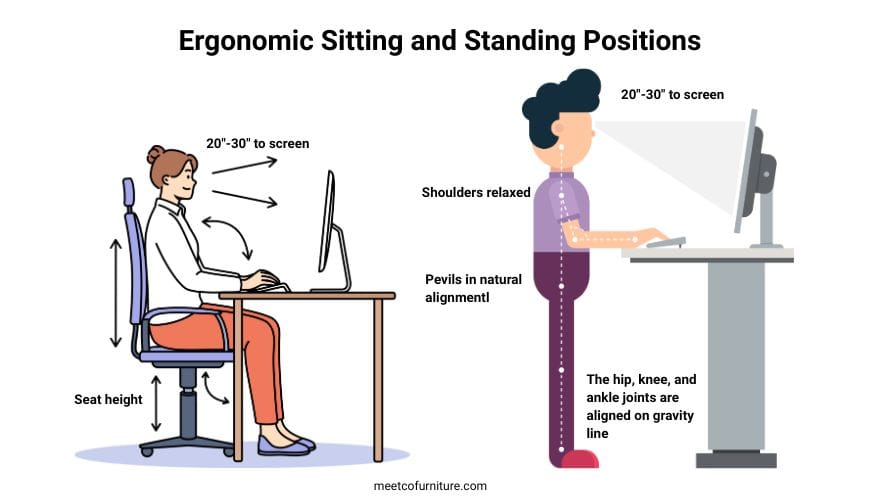
The Gold Standard: The 90-Degree Rule
The 90-degree Rule is a simple office ergonomics tip for setting up your office chair. It means when you’re sitting, try to have your hips, knees, and ankles all bent at a right angle, like an “L“ shape (aka at roughly 90 degrees).
Here is how you set up your perfect sitting position:
- Start with your chair. Sit so your feet are flat on the floor. Your knees should be at a rough 90-degree angle.
- Relax your arms. Let your arms hang loosely at your sides.
- Bend your elbows. Raise your forearms so they are parallel to the floor, like the letter “L”. Your elbows should be at a 90-degree angle.
- Check the height. The height of your keyboard should be level with your fingertips. This is your ideal desk height.
👉 Quick tip from one of the Meet&Co designers, May:
“Getting an ergonomic chair that you can adjust properly is half the battle. A good chair supports your spine and gives you a solid foundation to build from, which can significantly reduce back pain.”
A quick tip about your monitor: Don’t forget your screen!
Your monitor should be about an arm’s length away from you. The top of the screen should be at or just below your eye level. This stops you from bending your neck up or down.
Your Personalized Desk Height Chart
Sometimes you need a number to start with. Maybe you’re shopping for a new desk or setting up your workstation for the first time.
Our desk height chart gives you a great recommendation based on your height. Remember, this is a guide. Your exact ideal height can vary based on your arm and leg length.
| Your Height | Recommended Sitting Desk Height |
| 5′ 0″ – 5′ 3″ | 22 – 24 inches (56 – 61 cm) |
| 5′ 4″ – 5′ 7″ | 24 – 27 inches (61 – 69 cm) |
| 5′ 8″ – 5′ 11″ | 27 – 29 inches (69 – 74 cm) |
| 6′ 0″ – 6′ 3″ | 29 – 31 inches (74 – 79 cm) |
| 6′ 4″ and above | 31+ inches (79+ cm) |
Finding Your Perfect Standing Desk Height
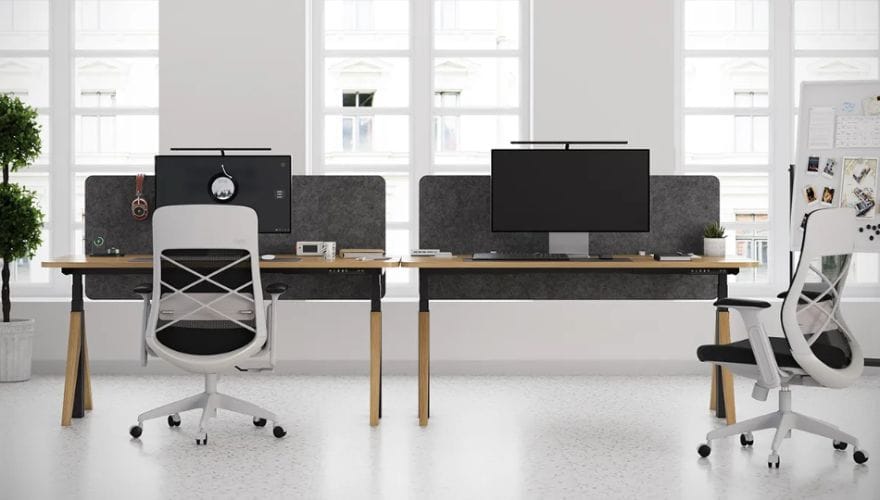
If you use a standing desk, the rules are similar, but you start from the ground up. The goal is to have your elbows at that same 90-degree angle with your wrists straight.
A good rule of thumb is to set the standing desk height to the level of your elbows. Stand up straight and let your arms relax. Measure from the floor to your elbow. That’s your starting point.
Here is a helpful chart for standing desk height:
| Your Height | Recommended Standing Desk Height |
| 5′ 0″ – 5′ 3″ | 35 – 37 inches (89 – 94 cm) |
| 5′ 4″ – 5′ 7″ | 37 – 40 inches (94 – 102 cm) |
| 5′ 8″ – 5′ 11″ | 40 – 43 inches (102 – 109 cm) |
| 6′ 0″ – 6′ 3″ | 43 – 45 inches (109 – 114 cm) |
| 6′ 4″ and above | 45+ inches (114+ cm) |
Remember to move. Even with a perfect standing desk height, you shouldn’t stand all day.
What is the 20-8-2 Rule when using a standing desk, by the way?
It is a simple, easy-to-remember guide for your workday:
- Sit for 20 minutes at your desk.
- Stand for 8 minutes.
- Take a 2-minute break to move around and stretch.
The 20-8-2 Rule helps you avoid the risks of sitting all day, but also prevents the fatigue that can come from standing too long.
You can set reminders to build a habit. Most importantly, listen to your body and adjust it based on your needs.
What If Your Current Desk is the Wrong Height? Solutions for a Non-Standard Desk
The ultimate solution: An adjustable desk.
If you’re serious about ergonomics, an adjustable standing desk is an excellent investment. It lets you find the perfect height for your body, whether you’re sitting or standing.
Look for a desk with a motor that moves smoothly. It’s also helpful to have memory settings, so you can save your perfect sitting and standing heights.
Not ready for a new desk? Here are simple and cheap ways to adjust your setup.
- If Your Desk is Too High:
- Raise your chair.
- Add a footrest.
- Use a keyboard tray.
- If Your Desk is Too Low:
- Use desk risers: Desk risers are sturdy plastic or wooden blocks that you place under each desk leg. They instantly add a few inches of height.
- Check the Legs: Some desk legs can be unscrewed and replaced with longer ones.
With these tips, almost any desk can be made to work for you.
Top Picks to Help You Create an Ergonomic Office Setup
The Meet&Co team has picked the following products to help you achieve office ergonomics.
1. Ergonomic Office Chairs
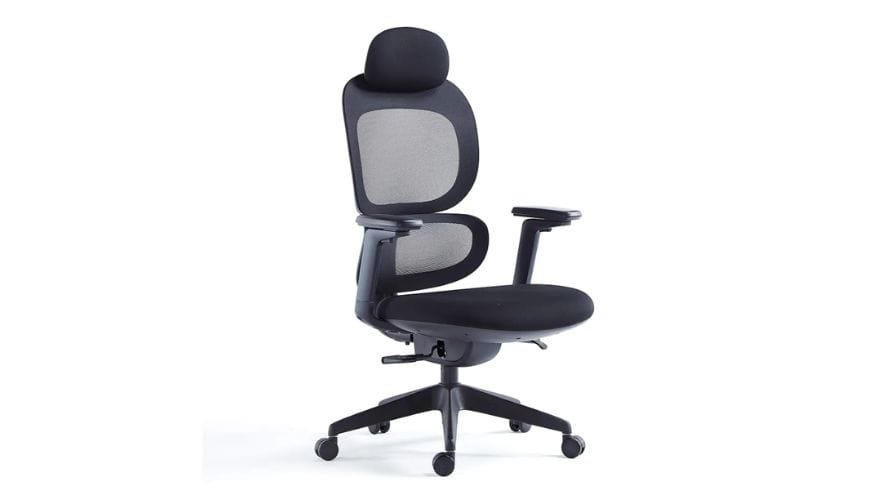
The Aeron Chair by Herman Miller is the classic. Its mesh design keeps you cool and provides great back support for long workdays.
If you’re on a budget, the Meet&Co Budding Chair is a more affordable pick. It offers solid lumbar support and breathable mesh, making it an excellent value for the price.
2. Standing Desks
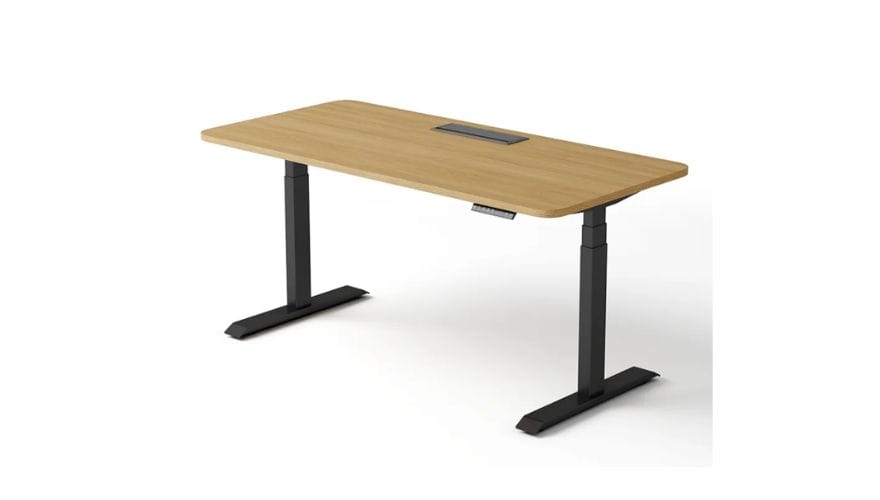
Image source: liftdesk.com
UPLIFT Desk is the top brand for an adjustable standing desk. It’s known for being very stable and reliable. The UPLIFT V3 Standing Desk is the bestseller.
You might also look at the Meet&Co Standing Desk and Liftdesk Adjustable Standing Desk. They offer quality standing desks in different designs and price points.
👉 Dive deeper:
- Where to Buy the Best Budget Standing Desk?
- What’s the Best Standing Desk in Singapore (2026 Buying Guide)
- Best Standing Desks For Elementary Students: Healthy Learning At Every Age
3. Footrest
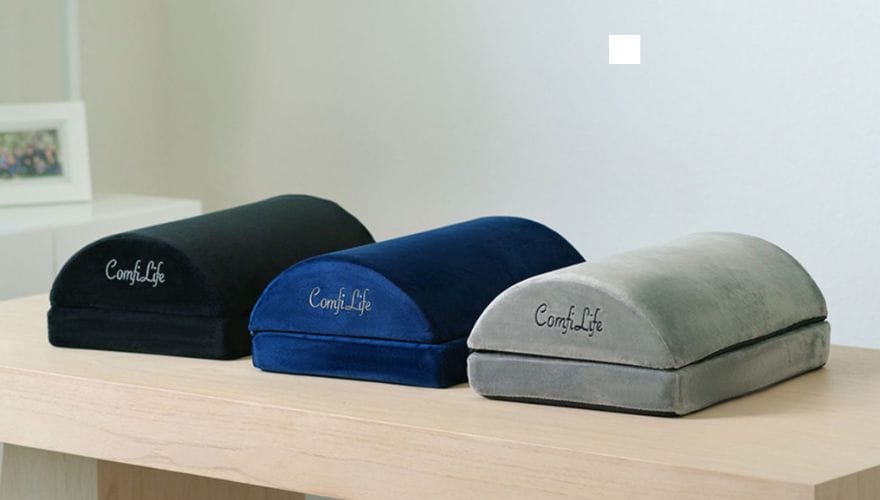
ComfiLife Gel-Filled Foot Rest is a simple and popular footrest. The gel filling is comfortable, and it helps reduce strain on your lower back by keeping your feet supported.
4. Keyboard Tray
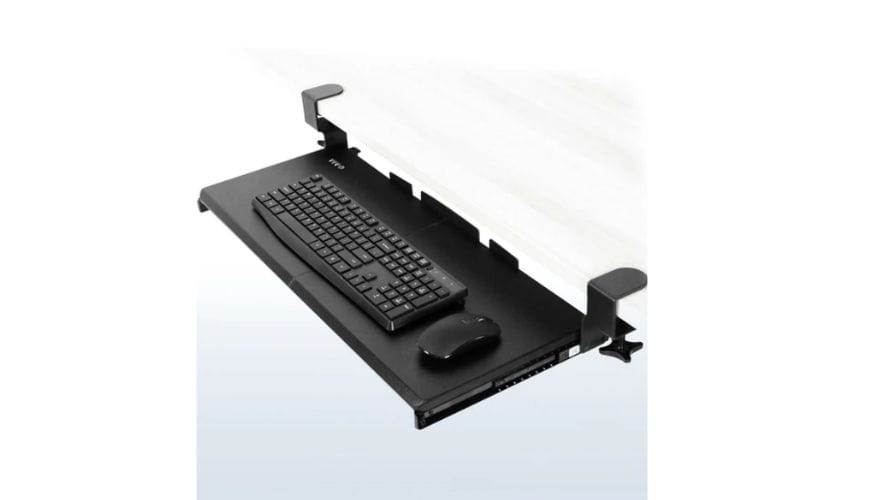
Image source: VIVO
VIVO Aluminum Keyboard Tray is the easy way to get your keyboard to the right height. It’s sturdy and adjusts easily to help keep your wrists straight.
5. Desk Converter
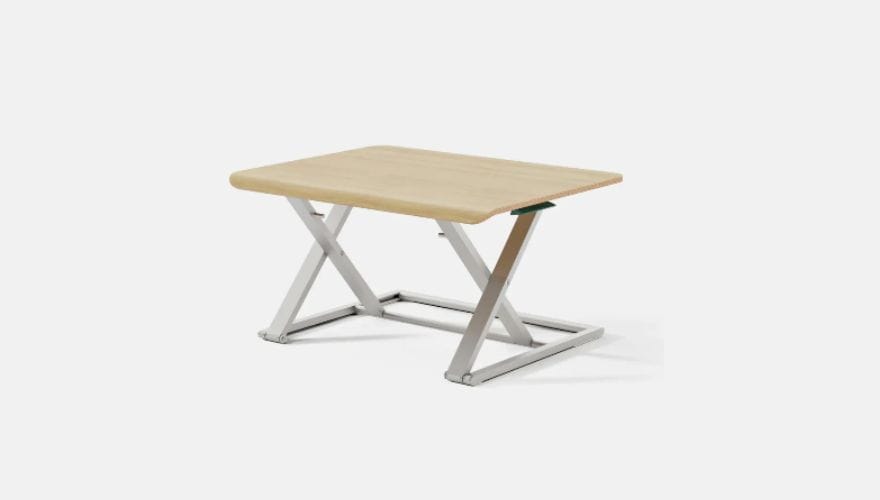
Image source: Branch
The Branch Desk Riser is a simple solution if you can’t replace your whole desk. Just place it on top of your existing desk to instantly create a standing workstation. Also, it’s minimalist and easy to use.
Common Desk Height Mistakes to Avoid
Setting up your desk correctly is just as important as finding the right height. We listed a few common mistakes and how you can easily avoid them.
Mistake 1: Assuming “Standard“ Fits You
We’ve covered this, but it’s the biggest mistake. Always listen to your body over a standard number.
Mistake 2: Ignoring Your Chair
Your desk and chair are a team. If you adjust one, you often need to adjust the other.
Setting your chair height correctly is the first step to finding the right desk height.
👉 Dive deeper: How to find the ideal office chair height?
Mistake 3: Forgetting to Move
We think a perfect posture all day = still bad. Taking short breaks is essential. You can try the 20-8-2 Rule or create your own routine.
Mistake 4: Setting Your Monitor Incorrectly
A monitor placed too low or too far away will make you hunch your neck and shoulders.
Place the screen about an arm’s length away, with the top of your monitor at or just below your eye level.
Avoiding these simple mistakes will make your workspace much more comfortable and supportive for your body.
Conclusion
The goal of finding the right desk height is to create a workspace where you feel supported and comfortable, without strain or pain.
Remember, the “standard“ desk is just a starting point. Your perfect height is the one that lets your elbows and knees rest at a comfortable 90-degree angle.
If your current desk doesn’t fit, simple solutions like a footrest, keyboard tray, or desk risers can make a big difference. And if you’re able to choose, an adjustable desk gives you the freedom to move and find the perfect position throughout your day.
Start by checking your setup today. A few small changes can lead to a much happier and healthier work life.