






 Meet&Co
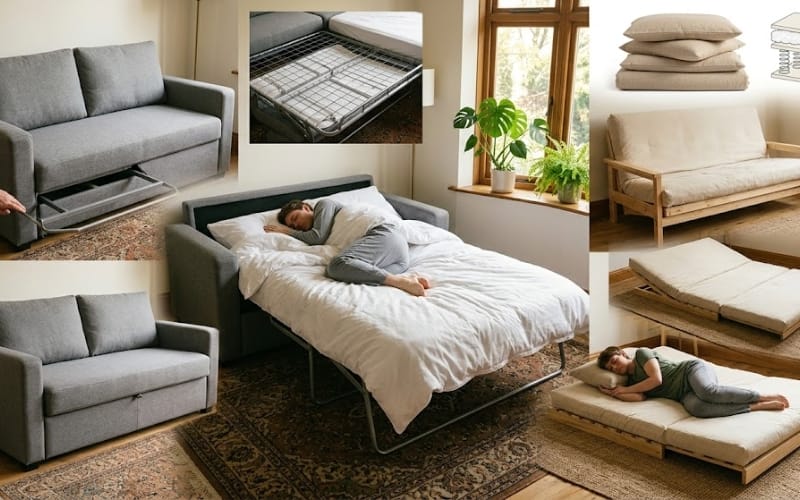
The primary difference between a sleeper sofa and a futon lies in their construction: a sleeper sofa contains a hidden mattress within its frame, while a futon is a metal or wooden frame that uses its own seating cushions as the sleeping surface.
For most homeowners, the debate of sleeper sofa vs futon comes down to balancing long-term sleeping comfort with budget and available floor space.
Whether you are furnishing a high-end guest suite or a compact studio apartment, choosing the right multifunctional furniture is essential for maximizing utility without sacrificing style.
If you are looking for premium furniture solutions that blend ergonomics with aesthetics, Meet&Co provides an extensive catalog designed to elevate any interior environment.
Defining the Contenders: What is a Sleeper Sofa and a Futon?
To make an informed decision, we must first look at the engineering behind these two popular furniture pieces.
What is a Sleeper Sofa?
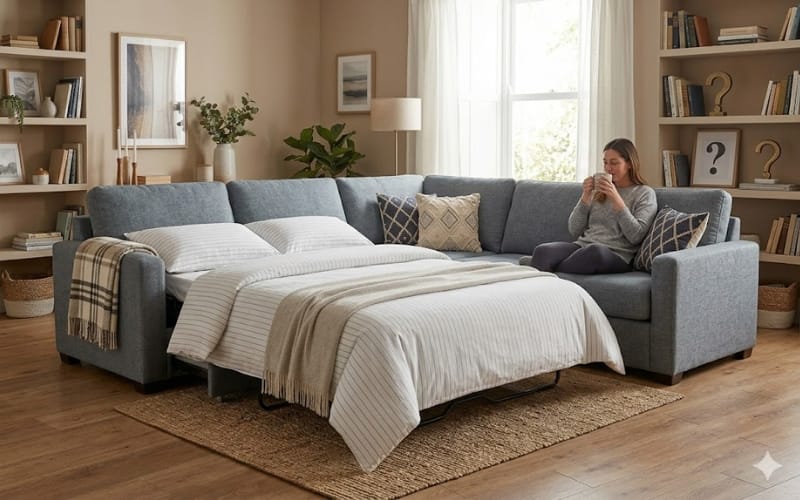
A sleeper sofa, often referred to as a “pull-out sofa,” looks exactly like a standard three-seater or two-seater couch.
Hidden beneath the seat cushions is a folded metal or wooden frame and a dedicated mattress.
When needed, the cushions are removed, and the mechanism is pulled out to reveal a bed, typically in Twin, Full, or Queen sizes.
In modern interior design, a high-quality fabric sofa with a built-in sleeper mechanism is often the preferred choice for living rooms because it maintains the formal appearance of a traditional couch while offering a hidden utility.
The complexity of the internal mechanism makes these pieces heavier and more substantial than their counterparts.
What is a Futon?
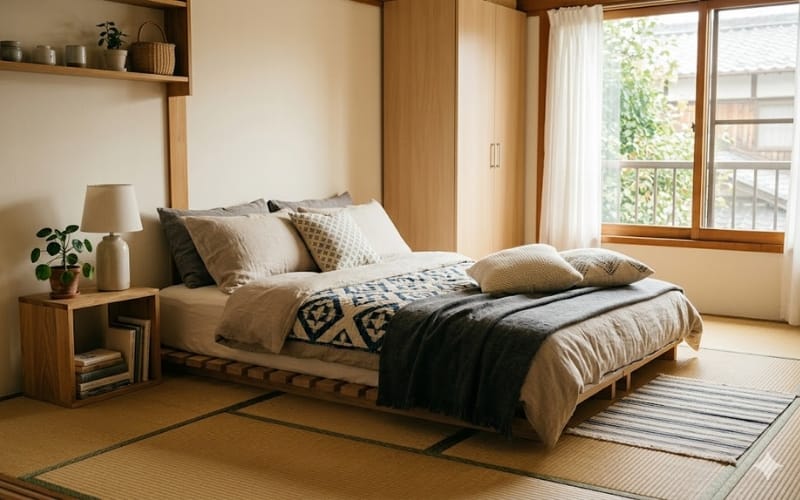
The term “futon” originated from traditional Japanese bedding, which consisted of a flexible mattress laid directly on the floor.
In the Western context, a futon is a convertible piece of furniture where the frame itself folds flat to create a sleeping surface.
The “mattress” is actually the same cushion you sit on during the day.
Futons are categorized by their frames (typically metal or solid wood) and their folding style—usually “bi-fold” (the back drops down to meet the seat) or “tri-fold” (the frame extends forward in three sections).
Comfort Comparison: Sleeping and Sitting Experience
When choosing between a sleeper sofa vs futon, comfort is usually the deciding factor, but it is important to distinguish between “sitting comfort” and “sleeping comfort.”
Sleep Experience: Mattress Quality
Sleeper sofas generally win in the sleep category because they use actual mattresses. These mattresses are typically 4 to 6 inches thick.
While thinner than a standard bed mattress (which is 10-14 inches), they are specifically engineered to fold. You can find sleeper sofas with innerspring, memory foam, or hybrid mattresses.
On the other hand, a futon’s comfort depends entirely on the thickness and density of its single cushion.
A cheap 4-inch cotton-filled futon pad will likely leave the user feeling the hard slats of the frame beneath.
However, a high-end 8-inch foam or pocket-coil futon mattress can rival a mid-range bed.
Daily Sitting Comfort
Because sleeper sofas have separate seat cushions, they feel more like a “real” couch. They offer better back support and a deeper seat.
Futons can sometimes feel “slippery” if the mattress isn’t secured well to the frame, and the lack of a traditional sofa back can lead to less ergonomic support during long hours of lounging.
For those seeking a truly comfy sofa for daily use, the sleeper sofa is the clear winner due to its layered suspension system.
Durability and Maintenance: Which Lasts Longer?
Investing in furniture requires an understanding of its lifespan.
Structural Integrity
A sleeper sofa is built with a heavy-duty internal frame to support the weight of the mattress and the folding mechanism.
Because of this complexity, they are generally sturdier but harder to repair if the mechanism bends.
A modern sofa with a sleeper function from a reputable manufacturer can easily last 7 to 10 years with regular use.
Futons are simpler. With fewer moving parts, there is less that can go wrong mechanically.
However, the mattresses tend to sag faster because they are used for both sitting and sleeping.
If a futon mattress wears out, you can easily replace just the mattress without buying a new frame—a major advantage for long-term maintenance.
Cleaning and Care
Maintenance for a sleeper sofa is identical to a standard couch. You can vacuum under the cushions and spot-clean the upholstery.
Futons often come with removable covers, making them much easier to wash, which is ideal for student dorms or homes with pets.
Space and Size Considerations
In the context of small apartments or home offices, every inch counts.
Footprint and Clearance
A sleeper sofa requires significant “clearance” space. You must have enough room in front of the sofa to pull out the bed fully.
A Queen-sized sleeper can extend up to 90 inches from the back wall.
Futons are often more compact. A “bi-fold” futon only requires the space of the mattress when laid flat.
Because they lack the bulky arms and high backs of traditional sofas, they fit better in narrow rooms or corners.
The Modular Alternative
For those who find sleeper sofas too bulky and futons too flimsy, modular options are becoming increasingly popular.
If you are designing a versatile living area, a sectional sofa can often provide a large enough surface area for a guest to sleep on comfortably without needing a complex pull-out mechanism.
For instance, the Caterpillar Modular Sectional Sofa offers a unique blend of comfort and adaptability.
Its modular nature allows you to rearrange the pieces to create a large flat “bed” surface, providing the aesthetic of a high-end couch with the versatility of a guest bed.
Cost and Value: Budgeting for Your Needs
The price gap between a sleeper sofa vs futon is often the biggest hurdle for buyers.
Price Ranges
Futons: Entry-level metal futons start as low as $150. A high-quality wooden frame with a premium mattress usually falls between $400 and $800.
Sleeper Sofas: It is rare to find a durable sleeper sofa for under $600. Most mid-range models cost between $1,000 and $2,000, with luxury leather or designer versions exceeding $3,500.
Long-term Value
While the initial cost of a futon is lower, consider the “cost per year.” A cheap futon may need a mattress replacement every 2 years if used daily.
A sleeper sofa is a larger upfront investment but often serves as the primary sofa for living room seating for a decade, potentially offering better value over time.
Style and Aesthetics
How the piece fits into your interior decor is just as important as its function.
The “Hidden” Bed Advantage
The greatest aesthetic advantage of a sleeper sofa is that no one knows it’s a bed. It looks professional, cozy, and high-end.
It fits perfectly into formal living rooms, traditional libraries, or upscale home offices.
The Casual Vibe of the Futon
Futons have a more casual, “bohemian,” or “industrial” look.
While there are very stylish wooden futon frames available, they rarely match the sophisticated silhouette of a upholstered sofa.
They are best suited for playrooms, basements, or student housing where the vibe is relaxed.
Functionality and Extra Features
Modern furniture design has added several “bells and whistles” to both categories.
Storage Options
Many modern sleeper sofas, especially sectional versions, include hidden storage compartments in the chaise lounge—perfect for storing blankets and pillows for guests.
Futons rarely offer built-in storage, though some frames allow for under-bed plastic bins.
Ease of Conversion
Converting a futon is usually a one-person job that takes 10 seconds.
Converting a sleeper sofa requires removing heavy cushions (and finding a place to put them) before pulling out the mechanism.
If you plan on converting the bed every single night, the ease of a futon might be preferable.
Best Use Cases: Which One Should You Buy?
Choose a Sleeper Sofa if:
It is your primary couch: If you need a main seat for your living room that also accommodates guests.
You host adults or elderly guests: The height of a sleeper sofa mattress makes it easier for guests to get in and out of bed compared to a low-profile futon.
Aesthetics are a priority: You want your room to look like a curated living space, not a bedroom.
Choose a Futon if:
You are on a tight budget: You need a functional bed/seat for under $400.
You move frequently: Futons are much lighter and easier to disassemble for transport.
Space is extremely limited: You are furnishing a very small “flex” room or a home office that doubles as a gym.
Technical Deep Dive: Mattress Types and Frame Materials
To truly understand the sleeper sofa vs futon debate, we must look at the materials that determine comfort and longevity.
Sleeper Sofa Mechanisms
The Bi-fold Mechanism: The most common type where the mattress is folded once.
The Level Function: A newer design where the back of the sofa stays put, and the seat pulls out and pops up to the same height as the cushions.
Memory Foam vs. Innerspring: Memory foam is less likely to have “the bar in the back” feeling, which was a common complaint in older sleeper sofas.
Futon Mattress Composition
Cotton and Poly-fill: The cheapest option, prone to flattening and clumping.
High-Density (HD) Foam: Provides excellent shape retention and support.
Coi-in-foam: A hybrid approach that puts miniature springs inside foam layers for a traditional mattress feel.
Conclusion and Final Buying Tips
Deciding between a sleeper sofa vs futon requires an honest assessment of your lifestyle.
If you value a high-end look and want to provide your guests with a “real” bed experience, the sleeper sofa is the superior choice.
If you are a student, a frequent mover, or simply need a temporary sleeping solution for a small corner, the futon offers unmatched versatility and value.
When shopping, always test the mechanism in the store.
A good sleeper should open smoothly without grinding, and a good futon should feel stable when you sit on the very edge of the frame.
For businesses and homeowners who refuse to compromise on quality, sourcing from established experts like Meet&Co Office Furniture ensures that you receive a product built to last.
Whether you need a sophisticated seating arrangement or a practical guest solution, the right choice will transform your space into a more functional and welcoming home.