






 Meet&Co
You walk into an office furniture showroom, and you’re surrounded by small enclosures. Some are barely big enough for one person and a laptop. Others have room for four around a small table. All of them promise privacy, quiet, and focus—but they’re clearly designed for different purposes.
Phone booths. Focus booths. Meeting pods. The names sound similar, but the differences matter. Choose the wrong type, and you end up with a space that doesn’t fit the activity. A phone booth is too cramped for a two-person meeting. A meeting pod is overkill for a quick private call. And a focus booth—somewhere in between—might be exactly what you need, if you know what to look for.
This guide breaks down the differences between these three types of office pods, helping you match the right enclosure to the right activity.
Quick Comparison: Phone Booth vs. Focus Booth vs. Meeting Pod
| Feature | Phone Booth | Focus Booth | Meeting Pod |
| Primary use | Quick private calls, video meetings | Deep work, focused sessions | Small team meetings, collaboration |
| Typical capacity | 1 person | 1 person | 2–4 people (sometimes 6) |
| Footprint | 4’x4′ to 4.5’x4.5′ | 4.5’x4.5′ to 5’x5′ | 6’x6′ to 8’x10′ |
| Interior | Small desk or shelf, stool or small chair | Proper desk, ergonomic chair | Table, 2–6 chairs, whiteboard |
| Ventilation | Active fan (basic) | Active fan (enhanced) | Active HVAC or integrated system |
| Acoustic rating | DS,A 25–30 | DS,A 30–35 | DS,A 30–35 (sometimes higher) |
| Typical session length | 15–30 minutes | 1–3 hours | 30–90 minutes |
| AV capability | Power, USB, basic | Power, USB, monitor mount | Power, USB, display, camera mount |
| Price range | $7,000–12,000 | $8,000–15,000 | $15,000–30,000+ |
| Best for | Quick calls, privacy | Focused work, longer sessions | Team collaboration, hybrid meetings |
Phone Booth: The Quick Call Solution
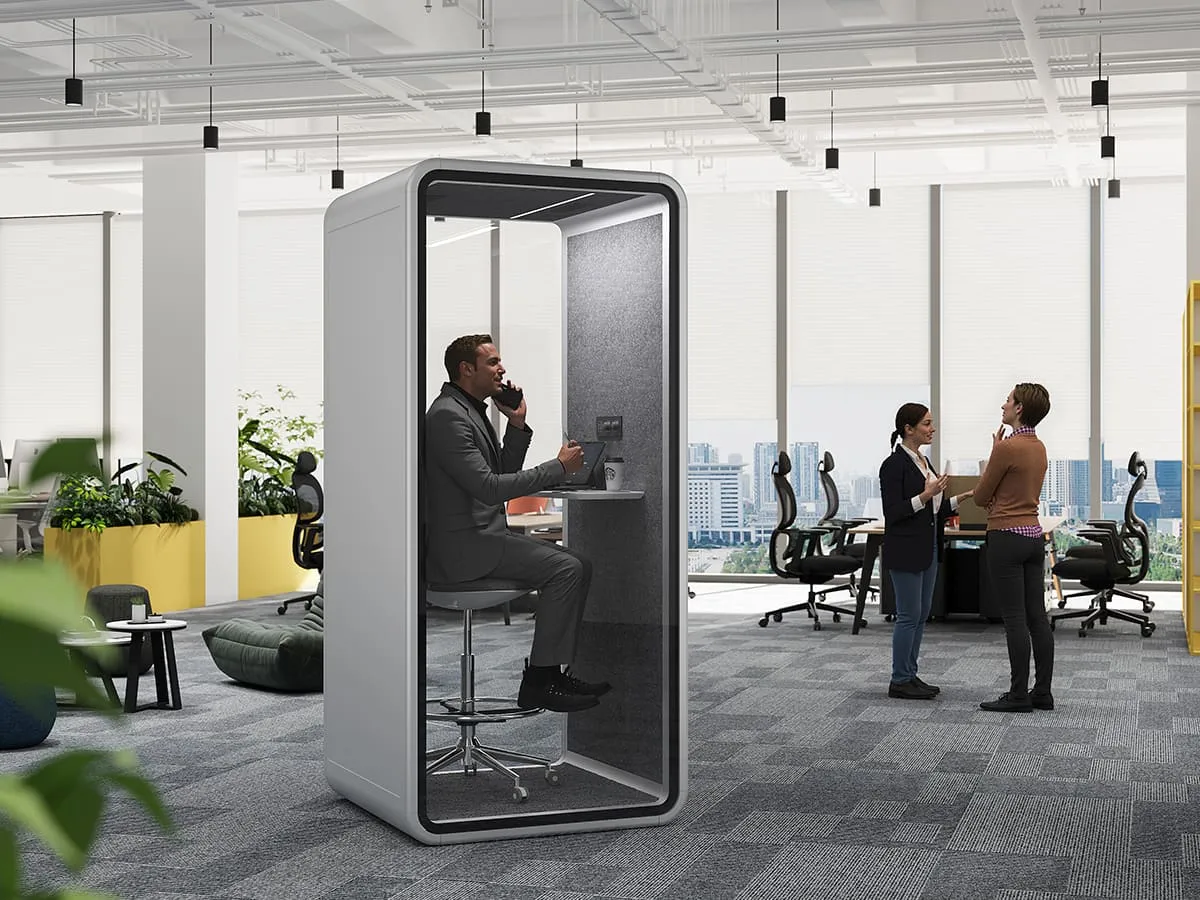
Meet&Co Office Pod Series D
What It Is
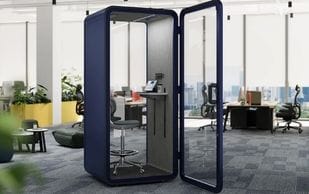
A phone booth is the smallest and most common type of office pod. It’s designed for one person to step into for a quick private call, video meeting, or brief focused task. Think of it as a modern version of the old-fashioned phone booth—but with power, ventilation, and a small work surface.
What It’s Best For
| Activity | Why It Works |
| Private phone calls | Isolates conversation; prevents spillover noise |
| Quick video meetings | Clean background; quiet environment |
| Brief confidential conversations | Privacy without booking a full meeting room |
| Short focused tasks | Block distractions for 15–30 minutes |
| Urgent privacy needs | Always available; no reservation required |
What to Expect Inside
- Seating: Usually a small stool or compact chair (not designed for extended comfort)
- Work surface: Small shelf or narrow desk—enough for a laptop and notepad, not much more
- Power: Standard outlets and USB ports
- Ventilation: Active fan; adequate for short sessions
- Acoustics: DS,A 25–30—good speech privacy for normal conversation
What to Look For
| Feature | Why It Matters |
| Door design | Solid door with acoustic seal; easy to open from inside |
| Ventilation fan noise | Should be quiet enough not to interfere with calls |
| Lighting | Adjustable or well-positioned for video calls |
| Seat comfort | Adequate for 15–30 minutes; don’t expect all-day comfort |
| Power access | Conveniently located for laptop charging |
Who Should Buy Phone Booths
- Open offices where employees take frequent calls at desks
- Shared workspaces needing readily available private spaces
- Any office where hallway calls are currently the norm
What Phone Booths Are NOT
- Not for extended work sessions: Seat and surface aren’t designed for hours
- Not for two people: Too cramped for collaboration
- Not for meetings requiring presentation: No display or whiteboard space
Focus Booth: The Deep Work Enclave
_17.webp)
Meet&Co Office Pod Series D
What It Is
A focus booth sits between a phone booth and a meeting pod. It’s designed for one person to spend extended periods in focused, uninterrupted work. Think of it as a private office in a box—with proper ergonomics, enhanced ventilation, and space to spread out.
What It’s Best For
| Activity | Why It Works |
| Deep work sessions | Blocks visual and auditory distractions for hours |
| Writing, coding, analysis | Proper desk space, comfortable chair |
| Long video calls or presentations | Room for camera positioning; monitor mount options |
| Sensitive document review | Complete privacy for confidential materials |
| Hybrid work days | Alternative to working from home when office is busy |
What to Expect Inside
- Seating: Proper ergonomic chair (or chair suitable for extended sitting)
- Work surface: Full desk or table (at least 30 inches wide)
- Power: Multiple outlets, USB, often with cable management
- Ventilation: Enhanced active ventilation (20+ liters per second) to prevent stuffiness
- Acoustics: DS,A 30–35—excellent speech privacy; minimal external noise
- Extra features: Often includes monitor mount, task lighting, coat hook
What to Look For
| Feature | Why It Matters |
| Seat comfort | Designed for 1–3 hour sessions, not just quick calls |
| Desk size | Enough space for laptop, documents, and a coffee cup |
| Ventilation rate | Look for 20+ liters per second; prevents stuffiness |
| Power placement | Accessible without stretching or awkward cable routing |
| Acoustic rating | DS,A 30+ ensures focus isn’t broken by external noise |
| Lighting quality | Task lighting for reading; adjustable for screen work |
Who Should Buy Focus Booths
- Companies with hybrid workers who need deep focus spaces
- Offices where open-plan distractions affect productivity
- Teams requiring quiet spaces for document review or analysis
What Focus Booths Are NOT
- Not for collaboration: Designed for one person only
- Not for quick calls only: Overkill if employees only need 15-minute privacy
- Not a replacement for offices: Multiple focus booths can supplement, not replace, permanent offices
Meeting Pod: The Team Collaboration Space
What It Is
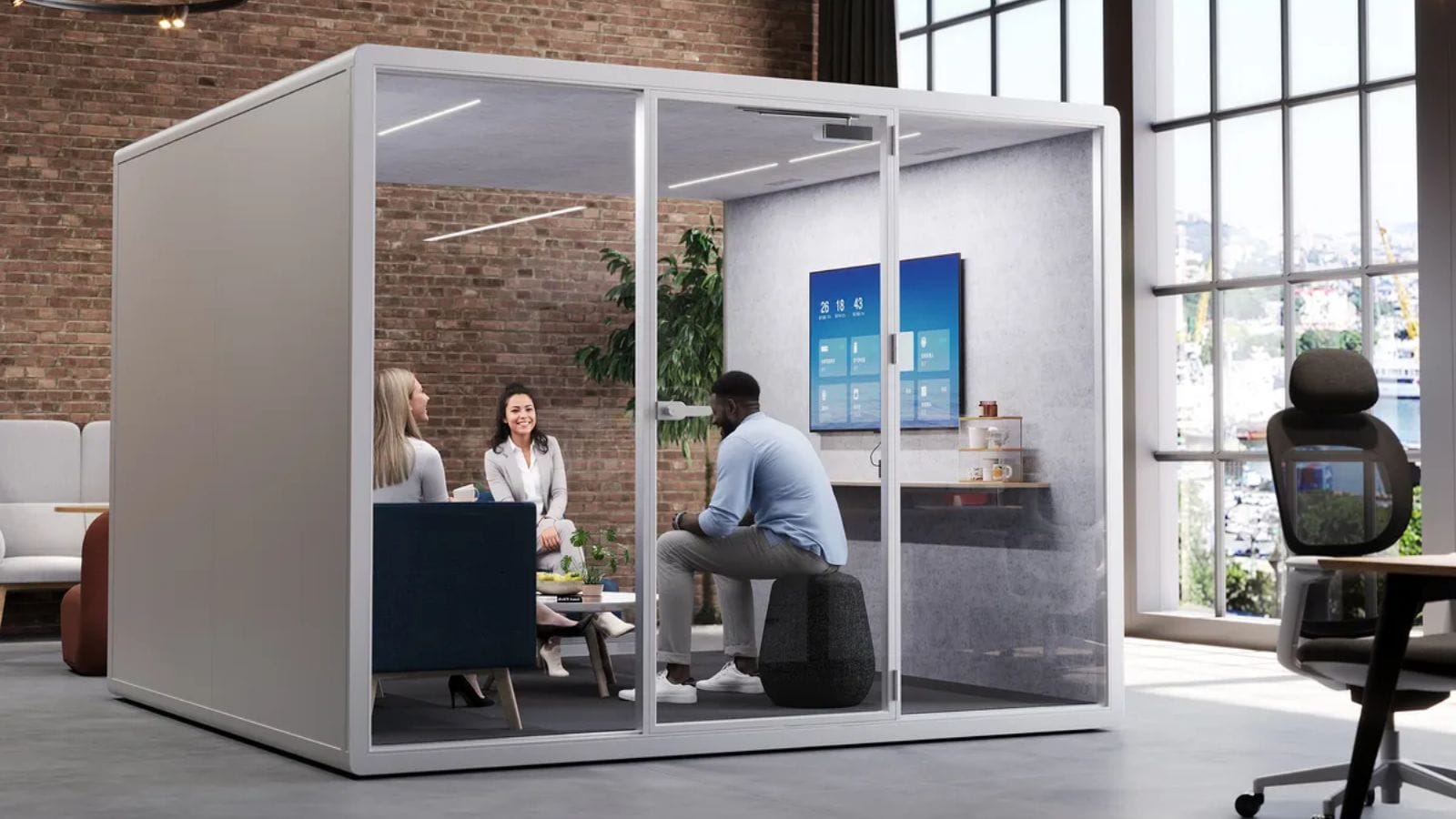
A meeting pod is a small, enclosed meeting room on wheels. It accommodates 2–4 people (sometimes up to 6) and is designed for team collaboration, hybrid meetings, and small-group discussions. Think of it as a conference room that can be placed anywhere.
What It’s Best For
| Activity | Why It Works |
| Small team meetings | Enclosed space for focused discussion |
| Hybrid collaboration | Built-in AV for remote participants |
| Client presentations | Professional setting without booking main conference room |
| Project brainstorming | Whiteboard surfaces, collaborative layout |
| Interview space | Private setting for candidate conversations |
What to Expect Inside
- Seating: 2–6 chairs (often on casters for flexibility)
- Table: Central table for laptops, documents, or shared materials
- AV capabilities: Mounted display, camera, speakerphone, or integration points
- Whiteboard: Often one wall or door is a whiteboard surface
- Power: Multiple outlets, USB ports, cable management
- Ventilation: Active HVAC or enhanced system designed for multiple occupants
- Acoustics: DS,A 30–35; some premium models offer higher
What to Look For
| Feature | Why It Matters |
| AV integration | Built-in display and camera for hybrid meetings |
| Seating flexibility | Chairs that can be repositioned; comfortable for meetings |
| Table size | Adequate for laptops, notepads, and shared materials |
| Whiteboard surface | Essential for brainstorming and presentations |
| Ventilation | Must handle 3–6 people for extended periods |
| Acoustic rating | DS,A 30+ ensures conversations stay private |
| Door accessibility | Easy entry/exit; ADA compliance if required |
Who Should Buy Meeting Pods
- Offices with more teams than conference rooms
- Hybrid organizations needing video-enabled spaces
- Open offices lacking small-group meeting areas
- Flexible workspaces requiring reconfigurable meeting spaces
What Meeting Pods Are NOT
- Not for individual work: Designed for collaboration, not focus
- Not for large meetings: 6-person maximum; larger groups need traditional conference rooms
- Not a phone booth: Overkill for quick calls
Also see: Office Pods vs. Traditional Meeting Rooms: A 2026 Cost-Benefit Analysis
Comparison Table: Choosing the Right Pod for Your Needs
| Factor | Phone Booth | Focus Booth | Meeting Pod |
| Session length | Short (15–30 min) | Medium–long (1–3 hours) | Medium (30–90 min) |
| Users | 1 | 1 | 2–6 |
| Typical task | Call, video meeting | Deep work, writing, coding | Team meeting, hybrid call |
| Seat | Stool or compact chair | Ergonomic chair | 2–6 chairs |
| Desk/table | Small shelf | Full desk | Central table |
| Ventilation | Basic fan | Enhanced fan | HVAC or enhanced |
| Acoustic rating | DS,A 25–30 | DS,A 30–35 | DS,A 30–35+ |
| AV | Power, USB | Power, USB, monitor mount | Display, camera, speaker |
| Whiteboard | No | Optional | Often included |
| Price | $7,000–12,000 | $8,000–15,000 | $15,000–30,000+ |
Decision Framework: Which Pod Type Do You Need?
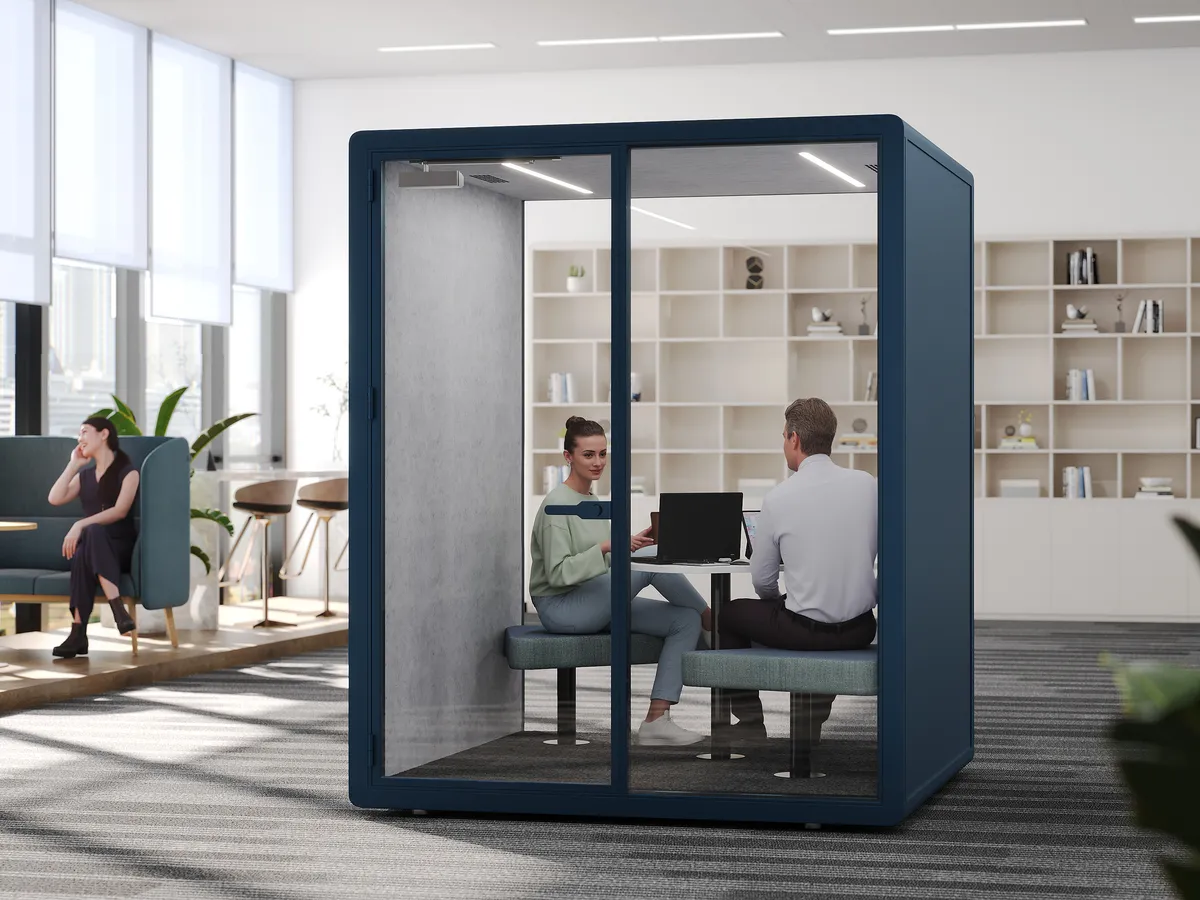
Meet&Co Office Pod Series A
Step 1: Identify Your Primary Use
| Primary Use | Recommended Pod Type |
| Employees frequently take private calls at desks | Phone booths |
| Team needs distraction-free space for deep work | Focus booths |
| Small teams need meeting space without booking large rooms | Meeting pods |
| Hybrid meetings with remote participants | Meeting pods (with AV) |
| Confidential document review or analysis | Focus booths |
| Quick, impromptu privacy needs | Phone booths |
Step 2: Consider Session Length
- 15–30 minutes: Phone booth works well
- 30–90 minutes: Phone booth or focus booth depending on task
- 1–3 hours: Focus booth (ergonomic seating, ventilation)
- Meetings: Meeting pod
Step 3: Evaluate Space and Budget
- Limited floor space: Phone booths (16–20 sq ft)
- More space available: Focus booths (20–25 sq ft) or meeting pods (36–80 sq ft)
- Tight budget: Phone booths ($7k–12k)
- Higher investment for better experience: Focus booths, meeting pods
Step 4: Consider the Mix
Most offices need a mix, not just one type. A typical 200-person office might deploy:
- 6–8 phone booths: For quick calls and video meetings
- 3–4 focus booths: For deep work and longer solo sessions
- 4–6 meeting pods: For team collaboration and hybrid meetings
This mix addresses the full range of privacy needs while using floor space efficiently.
Real-World Example: A Balanced Pod Strategy
A 300-person marketing agency faced constant complaints about noise, lack of privacy, and difficulty finding meeting space. After assessing needs, they deployed:
- 8 phone booths placed near high-traffic areas—used for quick calls, used 70% of the day
- 4 focus booths in quieter zones—used by writers, strategists, and analysts for 2–3 hour blocks
- 6 meeting pods with AV—constantly booked for team meetings, client calls, and hybrid collaboration
Six months later, employee satisfaction with private space increased by 45%, and noise complaints dropped significantly.
Also see: 10 Best Soundproof Office Pods for Distraction-Free Work: 2026 Guide
FAQ
1. Can I use a phone booth for a two-person meeting?
Technically, but it’s cramped and uncomfortable. If you anticipate regular two-person use, choose a focus booth with two seats or a small meeting pod.
2. What’s the difference between a focus booth and a phone booth?
A focus booth is larger, has a proper desk and ergonomic chair, better ventilation, and is designed for extended sessions (1–3 hours). A phone booth is compact, has a small shelf or stool, and is designed for quick calls (15–30 minutes).
3. Do meeting pods work for hybrid meetings?
Yes—if they have built-in AV. Look for pods with a mounted display, camera, and speakerphone integration. Some premium models offer all-in-one AV systems designed for hybrid collaboration.
4. How many pods does my office need?
A common rule: 1 phone booth per 20–30 employees, 1 focus booth per 40–60 employees, and 1 meeting pod per 40–60 employees. Adjust based on your team’s specific needs—call-heavy teams need more phone booths; collaboration-heavy teams need more meeting pods.
5. Can I put a focus booth in a quiet zone?
Yes—focus booths are designed for deep work and fit well in quiet zones. However, ensure they don’t block natural light or create visual clutter. Glass-front options maintain openness.
6. What’s the most common pod size mistake?
Buying all one type. Offices that buy only phone booths lack collaboration space; offices that buy only meeting pods waste space on quick calls. A mix covers all needs.
7. How long do pods last?
Quality pods from reputable manufacturers last 7–15 years with proper maintenance. Regular filter cleaning, door seal checks, and fan maintenance extend lifespan.
Conclusion
Phone booths, focus booths, and meeting pods serve distinct purposes in the modern office. Choosing the right type—and the right mix—depends on understanding what your team actually needs.
- Phone booths are for quick calls and short privacy needs. They’re compact, affordable, and essential in open offices.
- Focus booths are for deep work and extended solo sessions. They offer better ergonomics, ventilation, and comfort for hours of concentration.
- Meeting pods are for team collaboration and hybrid meetings. They provide enclosed space for small groups, often with integrated AV and whiteboard surfaces.
Before buying, audit how your team currently uses private space. Count how many people take calls, how many need focus time, and how many small meetings happen daily. Then build a mix that matches those patterns.
The right pods, deployed thoughtfully, transform an open office from noisy and distracting to productive and comfortable—without permanent construction.


_15.webp)