





 Meet&Co
Selecting the right office workstation material is crucial for creating a productive and comfortable workspace.
The material you choose affects durability, aesthetics, and employee comfort.
From traditional wooden desks to modern metal and composite workstations, each office workstation material offers unique advantages and limitations.
In this guide, we explore the most common materials, provide detailed comparisons, and help you choose the best option based on budget, ergonomics, and long-term use.
Whether you’re designing a home office or upgrading a corporate workspace, choosing the right material can significantly improve productivity and satisfaction.
Explore modern workstation solutions at Meet&Co.
Common Office Workstation Materials
Choosing the right material for your office workstation involves balancing aesthetics, durability, ergonomics, and budget.
Below, we break down the most popular options:
1. Wood-Based Materials
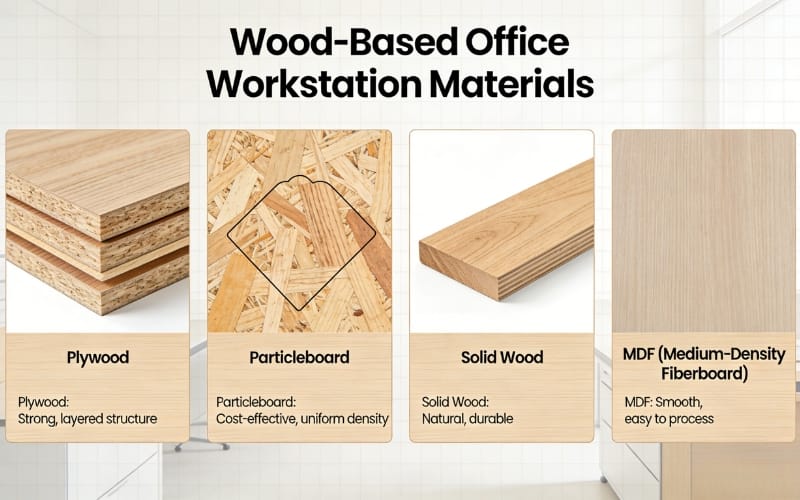
Types: Solid wood, plywood, MDF, particleboard
Advantages:
- Natural, warm appearance
- Eco-friendly options available
- Easy to customize and finish
Disadvantages:
- Price varies widely depending on quality
- Susceptible to scratches, dents, and moisture
- Heavy, sometimes difficult to move
Ideal Use Cases: High-end executive offices, creative studios, and home offices where aesthetics are a priority.
2. Metal-Based Materials
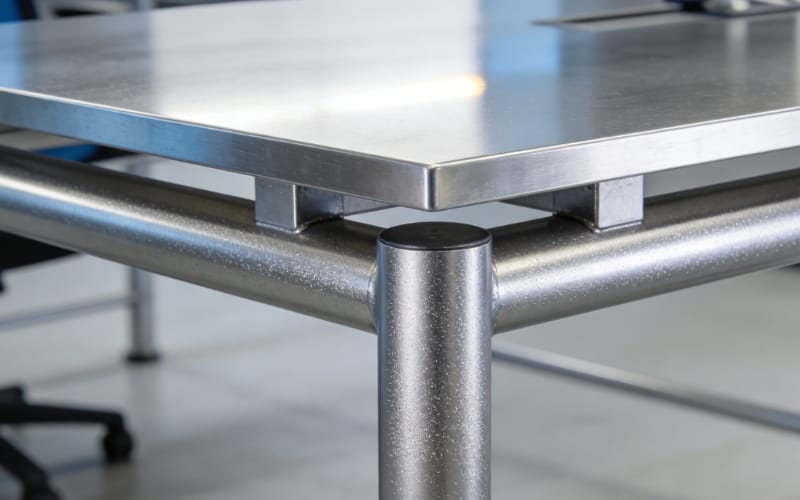
Types: Aluminum, stainless steel, powder-coated steel
Advantages:
- Extremely durable and strong
- High load-bearing capacity
- Modern and sleek appearance
Disadvantages:
- Can feel cold or industrial
- Higher manufacturing cost
- Limited customization for complex shapes
Ideal Use Cases: Open-plan offices, industrial-style workspaces, and environments requiring high durability.
3. Composite Materials
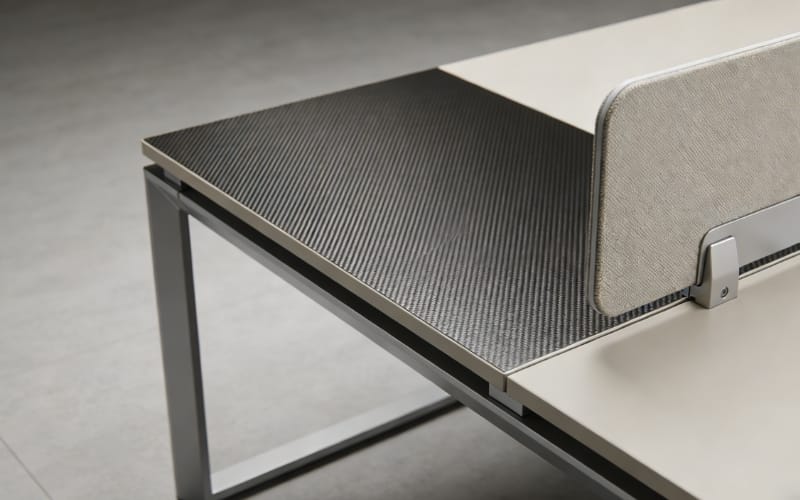
Types: MDF with laminate, PVC panels, glass fiber boards
Advantages:
- Cost-effective
- Lightweight and versatile
- Available in various colors and textures
Disadvantages:
- Less durable than wood or metal
- Can look cheap if low-quality
- Limited resistance to scratches and heat
Ideal Use Cases: Startups, temporary office setups, or budget-conscious projects.
For businesses looking for reliable yet affordable workstation solutions, composite materials are often the best choice.
Brands like Meet&Co offer practical designs that balance cost and functionality.
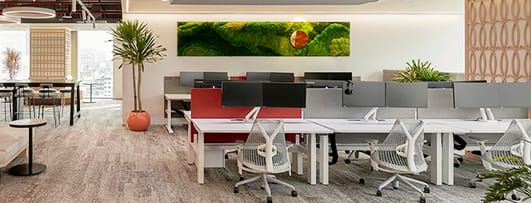
For example, the Reco Series B Office Workstation features durable MFC panels with a clean, modern layout, making it ideal for startups and growing teams.
Similarly, the Warnock Series A Office Workstation combines a sturdy steel frame with laminated surfaces, providing better stability while maintaining a budget-friendly price point.
These workstations show that composite materials can still deliver solid performance and a professional appearance when designed well, making them a popular choice for modern office environments.
4. Innovative & Eco-Friendly Materials
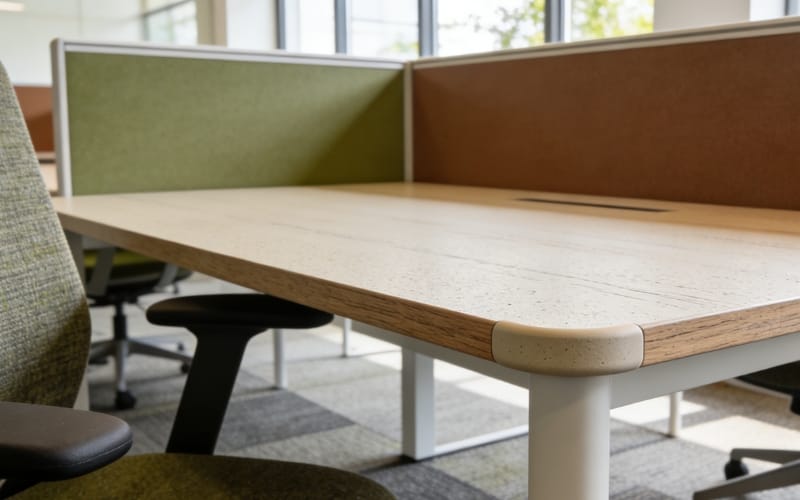
Types: Recycled plastics, bamboo, carbon fiber, glass desktops
Advantages:
- Sustainable and environmentally friendly
- Lightweight and modern design
- Offers unique aesthetics and high-tech appeal
Disadvantages:
- Higher price points
- Maintenance or repair can be difficult
Ideal Use Cases: Tech companies, design studios, and offices prioritizing sustainability and innovation.
Key Material Selection Criteria
When choosing the best office workstation material, consider the following factors:
- Durability and Scratch Resistance: Ensure the material can withstand daily use, heavy equipment, and frequent cleaning.
- Ergonomic Compatibility: Thickness, edge design, and stability contribute to comfort, especially for long work hours.
- Sustainability: Look for low VOC emissions, recycled content, or certified eco-friendly materials.
- Aesthetic and Style Matching: Select materials that complement your office design theme, from minimalist to executive elegance.
- Maintenance Costs: Factor in cleaning, repair, and potential replacement costs over time.
Real-World Material Comparisons
Here’s a practical comparison of materials in real office scenarios:
| Material | Durability | Ergonomics | Maintenance | Cost | Best Use |
|---|---|---|---|---|---|
| Solid Wood | High | High | Medium | $$$ | Executive Offices |
| MDF / Particleboard | Medium | Medium | Low | $ | Budget Offices |
| Metal | Very High | Medium | Low | $$ | Open Workspaces |
| Bamboo / Recycled | Medium | High | Medium | $$ | Eco Offices |
| Glass / Carbon Fiber | Medium | High | High | $$$$ | Design Studios |
Cost Analysis
Understanding cost goes beyond initial purchase. Consider long-term investment:
- Economy: $100–$300 (composite materials)
- Mid-range: $300–$700 (metal + laminate)
- High-end: $700–$1500+ (solid wood, premium materials)
Investing in durable materials reduces replacement frequency and improves long-term ROI.
Future Trends in Office Workstation Materials
- Sustainable and recycled materials
- Modular and adjustable workstations
- Hybrid materials (wood + metal)
- Anti-bacterial and scratch-resistant surfaces
Conclusion
Choosing the right office workstation material directly impacts productivity, comfort, and office aesthetics.
Wood offers elegance, metal ensures durability, and composites provide affordability.
The best choice depends on your workspace needs and budget.
For modern, ergonomic, and durable workstation solutions, visit Meet&Co Office Furniture to explore professional office furniture collections.