






 Meet&Co
You’ve finally decided to invest in a quality office chair. You’ve read the guides, set your budget, and narrowed down the options. But now you’re facing a surprisingly tough decision: mesh or leather?
It seems simple enough. Mesh chairs look modern and breathable. Leather chairs look classic and professional. But the choice goes much deeper than aesthetics. The material you choose affects your comfort throughout the day, your body temperature, your maintenance routine, and ultimately—your productivity.
Remote workers spend an average of 8+ hours daily in their office chairs. That’s over 2,000 hours per year. Making the wrong material choice means fighting your chair instead of focusing on work.
This Meet&Co office chair guide breaks down everything you need to know about mesh and leather office chairs. We’ll compare comfort, durability, maintenance, and how each material actually impacts your ability to get work done.
Mesh vs. Leather Office Chairs: Understanding the Materials
Before comparing, let’s clarify what we’re actually talking about.
1. Mesh Office Chairs
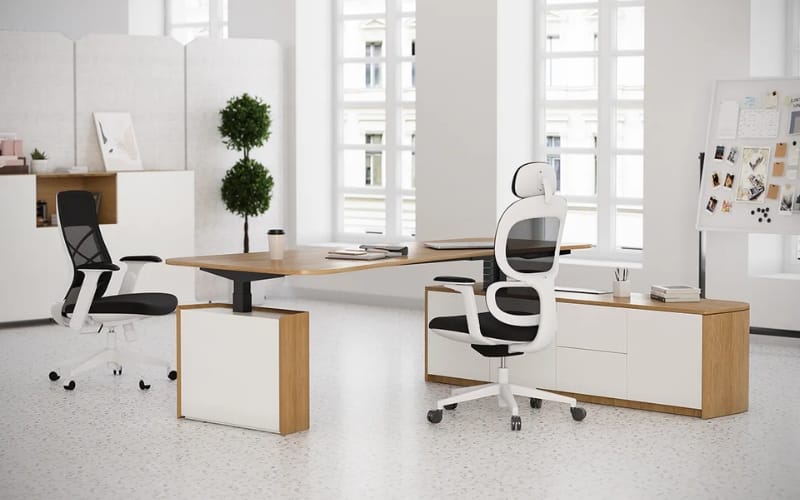
Mesh chairs use a woven synthetic fabric (usually polyester or nylon) stretched over a frame for the backrest and sometimes the seat. The material is characterized by thousands of tiny openings that allow air to pass through freely .
Common in: Mid-range to premium ergonomic chairs like Herman Miller Aeron, Steelcase Series 2, and many budget options
2. Leather Office Chairs
“Leather” in office chairs typically means one of three things:
| Type | What It Is | Durability | Price |
| Genuine leather | Real hide, top-grain or full-grain | Excellent (20+ years) | Very high ($800+) |
| Bonded leather | Leather scraps bonded with polyurethane | Poor (2–4 years before peeling) | Medium ($200–500) |
| PU leather / Faux leather | 100% synthetic polyurethane | Medium (3–6 years) | Low ($100–300) |
Most “leather” office chairs in the mid-range price bracket use bonded leather or PU leather. Genuine leather is rare and expensive.
The Productivity Angle: Why Material Matters
Productivity isn’t just about getting tasks done—it’s about maintaining focus and energy throughout the day. Your chair material affects productivity in three specific ways:
- Physical comfort: Discomfort creates distraction. If you’re constantly shifting, sweating, or feeling pressure, your brain can’t fully engage with work.
- Temperature regulation: Being too hot or too cold impacts cognitive function. Studies show that thermal discomfort reduces performance on complex tasks by up to 10%.
- Maintenance burden: Chairs that require constant cleaning or show stains easily add mental load. A chair that looks perpetually messy can subtly affect professional confidence during video calls.
Head-to-Head Comparison: Mesh vs. Leather
Let’s compare these materials across the factors that matter most for daily use.
| Factor | Mesh | Leather |
| Breathability | Excellent—air flows freely through weave | Poor—non-porous surface traps heat |
| Comfort in warm climates | Ideal—stays cool even without AC | Difficult—causes sweating, sticking |
| Comfort in cold climates | Can feel chilly initially | Warm to touch, cozy in winter |
| Durability | High—resists cracking, fading | Varies—genuine leather ages well; bonded leather fails quickly |
| Maintenance | Easy—vacuum, spot-clean | Easy for genuine/PU leather; bonded leather requires careful handling |
| Stain resistance | Moderate—liquids absorb if untreated | High—wipes clean easily |
| Pet friendliness | Good—claws slide off tight weave | Poor—bonded leather scratches easily; genuine leather shows marks |
| Initial feel | Firm, supportive | Soft, luxurious |
| Break-in period | Minimal—feels same over time | Leather softens and conforms with use |
| Typical lifespan | 7–12 years | Genuine: 15–20+ years; Bonded: 2–5 years |
| Price range | $150–$1,500 | Genuine: $800–$3,000; Bonded: $150–$500 |
Deep Dive: Mesh Chairs
1. The Breathability Advantage
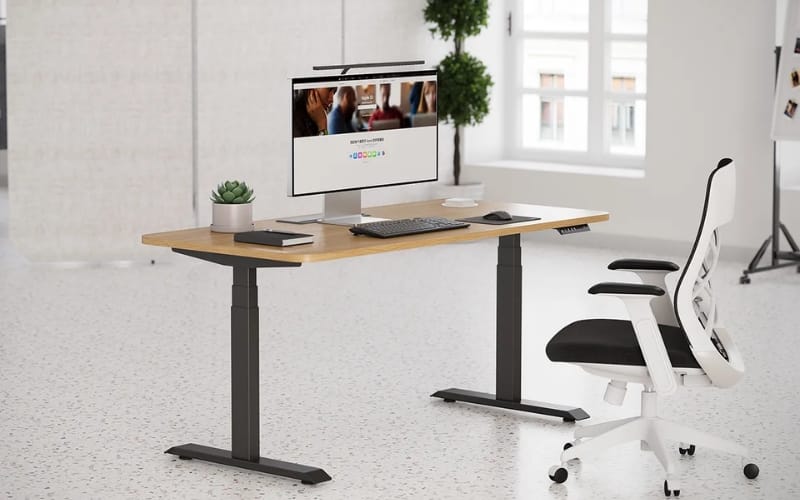
Mesh’s superpower is airflow. Because the backrest is essentially a porous membrane, heat from your body escapes continuously. For anyone who runs warm, works in a non-air-conditioned space, or lives in a humid climate, this is transformative.
Users consistently report that mesh chairs eliminate the “sticky back” feeling common with solid-backed chairs. One reviewer noted: “After switching to mesh, I stopped noticing my back at all—which is exactly what you want in a chair”.
2. Support and Ergonomics
Mesh conforms to your body shape without creating pressure points. High-quality mesh chairs use different tension zones (like Herman Miller’s 8Z Pellicle) to provide firmer support where needed and softer give elsewhere.
The material also responds instantly to movement. When you lean forward or shift position, mesh moves with you rather than resisting.
3. Drawbacks of Mesh
Mesh isn’t perfect. The material can feel firm initially, especially if you’re accustomed to plush seating. Some users report that mesh seats (as opposed to mesh backs) feel less comfortable for all-day sitting than padded foam.
Mesh also shows dust and debris more visibly than leather. In a home office, you may notice lint or pet hair accumulating in the weave.
Best for:
- Hot climates or warm offices
- People who tend to overheat
- Those prioritizing breathability above all
- Users who want minimal maintenance
Deep Dive: Leather Chairs
1. The Comfort and Aesthetic Appeal
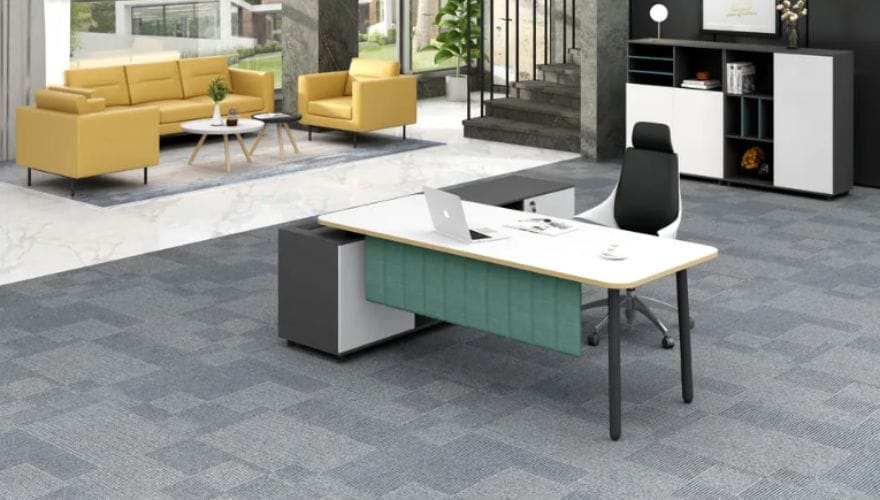
Leather chairs project professionalism. On video calls, a leather executive chair reads as “serious” and “established.” There’s a reason corner offices traditionally featured leather seating.
Quality leather (genuine, not bonded) develops a patina over time, becoming more beautiful with age. It feels substantial and luxurious in a way that synthetic materials rarely match.
2. Temperature Considerations
Leather’s relationship with temperature is complicated. In a climate-controlled office, leather feels pleasant—warm in winter, cool enough in summer. But without consistent temperature control, leather becomes problematic.
In warm conditions, leather absorbs and retains body heat. Skin sticks to the surface, creating discomfort and visible sweat marks. In cold conditions, leather feels initially chilly (though it warms quickly with body contact).
3. The Bonded Leather Problem
Here’s the truth most manufacturers won’t tell you: bonded leather fails. It’s not a matter of if, but when. The polyurethane coating eventually cracks and peels, leaving an ugly, irreparable mess.
If you’re buying a leather chair under $500, you’re almost certainly getting bonded leather. Plan on 2–4 years of use before visible deterioration begins.
Best for:
- Climate-controlled offices
- Professional environments where appearance matters
- People who don’t run hot
- Budgets that allow genuine leather (or acceptance of bonded leather’s limited lifespan)
Impact on Productivity: The Research
Thermal Comfort and Cognitive Performance
A Cornell University study found that office temperature significantly affects typing speed and error rates. Workers in thermally comfortable environments made 44% fewer errors than those who were too warm or too cold.
For mesh chair users, maintaining a comfortable temperature is easier—airflow prevents heat buildup even during long sessions.
Leather chair users in warm environments face a productivity challenge: the body diverts energy to temperature regulation, leaving fewer cognitive resources for complex tasks.
Distraction from Discomfort
The link between physical discomfort and distraction is well-documented. When your brain constantly registers “I’m too hot” or “this fabric is sticking to me,” attention fragments.
Mesh chairs minimize this sensory distraction by maintaining consistent comfort. Leather chairs create more temperature variation throughout the day.
Professional Presence
For roles requiring frequent video calls, appearance matters. Leather chairs photograph beautifully and convey authority. Mesh chairs look modern but can appear less “executive.”
However, a leather chair with visible peeling or cracking creates the opposite impression. Worn bonded leather signals neglect far more than an aging mesh chair does.
Which Should You Choose?
Your decision depends on your specific situation. Use this guide:
Choose Mesh If:
- You live in a warm climate or your home office lacks AC
- You tend to run hot or sweat easily
- You prioritize breathability above all
- You want minimal maintenance
- You prefer modern aesthetics
- You have pets (claws slide off mesh more easily)
Choose Genuine Leather If:
- You work in a consistently climate-controlled space
- You want the most professional, executive appearance
- You’re willing to invest $1,000+ for quality
- You appreciate materials that age beautifully
- You don’t have cats (sharp claws damage leather)
Choose Bonded Leather (Cautiously) If:
- You love the look of leather but have a tight budget
- You understand it will last 2–4 years max
- You’re renting and want something presentable short-term
- You accept that replacement is inevitable
Avoid Bonded Leather If:
- You have cats (they’ll destroy it quickly)
- You want a chair that lasts 5+ years
- You live in a warm climate (heat accelerates peeling)
- You’re investing in a long-term home office setup
Real-World User Experiences

Mesh User, 3 Years In
“I bought a mesh chair after years of cheap leather chairs that left me sweating. The difference is night and day. I don’t think about my back at all anymore—I just sit and work. My only complaint is that dust shows on the black mesh, but a quick vacuum solves it.”
Genuine Leather User, 5 Years In
“My leather chair was expensive, but it looks better today than when I bought it. The leather has softened and developed this rich patina. I keep my office at 72° year-round, so heat isn’t an issue. Would buy again without hesitation.”
Bonded Leather User, 18 Months In
“The chair looked great for the first year. Now the armrests are peeling, and the seat shows cracking. I’m already shopping for a replacement. Wish I’d known about bonded leather before buying.”
Maintenance Comparison
| Task | Mesh | Leather (Genuine) | Bonded Leather |
| Weekly | Vacuum | Wipe with dry cloth | Wipe with damp cloth |
| Monthly | Spot-clean | Apply conditioner (2–4x/year) | Gentle cleaning only |
| Stain removal | Blot immediately; mild soap | Leather cleaner | Damp cloth—avoid chemicals |
| Prevention | None needed | Keep out of direct sun | Avoid heat, sunlight, scratching |
| Lifespan | 7–12 years | 15–20+ years | 2–5 years |
Hybrid Options: Best of Both Worlds?
Some chair manufacturers offer hybrid chairs that combine materials—mesh backs with padded (often leather or vinyl) seats. These attempt to capture the breathability of mesh where you need it most (your back) with the plush comfort of padded seating.
Examples:
- Steelcase Leap with mesh back and leather seat (custom order)
- Herman Miller Aeron with aftermarket seat pad (though this compromises the Pellicle technology)
- Many budget chairs offer mesh backs with bonded leather seats
These hybrids can work well, but ensure the seat material suits your needs. A bonded leather seat will still face the same durability issues as a full leather chair.
The Verdict: Which Is Better for Productivity?
For most remote workers, mesh is the more productive choice.
Here’s why:
- Temperature regulation affects cognitive performance—mesh eliminates overheating as a distraction
- Consistent comfort means fewer adjustments and less fidgeting
- Lower maintenance burden means less mental load
- Modern mesh chairs offer excellent ergonomic support without compromise
Leather wins only in specific scenarios: climate-controlled executive offices, professional environments where appearance dominates, and for users willing to invest in genuine leather (not bonded).
As one ergonomics specialist put it: “Your chair should disappear beneath you. Mesh does that. Leather announces itself—sometimes pleasantly, sometimes not”.
FAQ
1. Do mesh chairs stretch out over time?
Quality mesh retains tension for years. Cheap mesh may sag, but reputable manufacturers use materials tested for 100,000+ sitting cycles.
2. Is leather hotter than mesh?
Yes. Leather is non-porous and traps body heat. Mesh allows continuous airflow, keeping you significantly cooler.
3. Can you repair peeling bonded leather?
No. Once the polyurethane coating separates from the backing, replacement is the only option. Prevention through gentle cleaning is essential.
4. Which is better for back pain?
Material matters less than ergonomic design. Both mesh and leather chairs can provide excellent lumbar support if properly designed. Focus on adjustability, not material.
5. Do mesh chairs work for heavy users?
Yes, if properly rated. Look for mesh chairs with weight capacities matching your size. Some mesh chairs support up to 400+ pounds .
6. How do I know if leather is genuine?
Check the manufacturer’s specifications. Genuine leather will be labeled as such and typically costs $800+. If it says “bonded leather,” “PU leather,” or “faux leather,” it’s synthetic.

_10-1.webp)
_4.webp)